Logistics in Construction: A Q&A with Estes Express

Efficient logistics and shipping are the backbone of any successful construction project. From ensuring materials arrive on time to managing costs, the challenges of logistics can make or break a project’s timeline and budget. To shed light on this critical aspect of the industry, we sat down with Estes Express, the CFA’s trusted shipping partner, to discuss the big picture of logistics from the inside and what challenges and solutions companies can utilize to reduce problems and costs.
Q1: CAN YOU GIVE US A BRIEF OVERVIEW OF ESTES EXPRESS AND THE SERVICES YOU PROVIDE?
Estes Express: Estes is a fourth-generation, asset-based, debt-free company that started during the Great Depression with a single truck in Richmond, Virginia. Over the years, we’ve grown significantly, now operating more than 300 terminals and 7,000 next-day lanes nationwide. While we specialize in LTL (less-than-truckload) freight, we also offer a range of services through our subsidiary, Estes Forwarding Worldwide, including flatbed services for oversized construction materials.
Q2: WHAT ARE SOME OF THE BIGGEST LOGISTICS CHALLENGES COMPANIES FACE IN TODAY’S CONSTRUCTION INDUSTRY?
Estes Express: There are a few that come to mind. Packaging is a huge challenge. Proper packaging not only protects your product, but improper packaging can cause damage to other freight during transit and lead to higher costs. Communication is another key factor, ensuring both shippers and carriers are aligned on details like delivery locations and special requirements can prevent unexpected delays that in projects that usually are on a strict timeline with little flexibility. Having confidence in communication is something that can improve your logistics a lot.
Additionally, things like fluctuating fuel costs and supply chain disruptions continue to impact pricing and availability in often unpredictable ways.
Q3: HOW HAS THE DEMAND FOR SHIPPING EVOLVED IN RECENT YEARS, ESPECIALLY WITH THE RISE OF E-COMMERCE AND SAME-DAY DELIVERY EXPECTATIONS?
Estes Express: The demand for faster shipping has definitely increased, especially with the influence of companies like Amazon. This has put pressure on LTL carriers to expand next-day lanes and improve efficiency. It isn’t just the speed that has evolved, companies are looking for consistency too, so balancing speed and consistency is what has changed the most for shipping companies. For Estes, adding more terminals has been a gamechanger, allowing us to meet these demands while maintaining our 97% on-time delivery rate.
Q4: WHAT IS LTL SHIPPING, AND WHY IS IT BENEFICIAL FOR CONTRACTORS IN THE CONSTRUCTION INDUSTRY?
Estes Express: LTL is ideal for shipping smaller quantities of freight, typically one to five pallets. It allows contractors to share trailer space and only pay for the portion they use, which can result in significant cost savings compared to renting an entire truck. For heavy items like tools or materials, consolidating shipments into LTL can also be more economical than using parcel services like UPS or FedEx, or even using their own trucks and transporting materials themselves.

Q5: WHAT ARE SOME COMMON MISTAKES COMPANIES MAKE THAT INCREASE THEIR SHIPPING COSTS?
Estes Express: Improper packaging is a big one. For example, if materials aren’t secured properly, they can tip over and cause damage, leading to additional costs. Another common issue is learning what freight class the material you are shipping falls under. Not knowing this or not providing accurate information about the shipment, such as whether a lift gate is needed or if the delivery or if there is limited road access to the drop-off point will often result in unexpected fees.
Q6: WHAT MADE ESTES INTERESTED IN PARTNERING WITH THE CFA?
Estes Express: We’ve worked with associations in the past and have seen the value they provide to their members, especially smaller companies that don’t ship frequently. By pooling the buying power of CFA members, we’re able to offer deeper discounts and reduce accessorial charges like lift gate fees or construction site deliveries. It’s a win-win for everyone involved.
Q7: WHY SHOULD CFA MEMBERS CONSIDER USING THE ESTES PROGRAM?
Estes Express: Beyond the discounts, our service is a major benefit. With over 97% on-time deliveries and a time-critical service for urgent shipments, we ensure materials arrive when and where they’re needed. Our program also eliminates minimum usage requirements, so members can use the service as little or as often as they need without any obligations.
Q8: HOW CAN CFA MEMBERS ENROLL IN THE ESTES PROGRAM, AND WHAT DOES THE PROCESS LOOK LIKE?
Estes Express: It’s a simple process. Members can reach out to us directly via phone or email to discuss their shipping needs. We’ll review their shipment data to determine the best program for them, and once they complete an onboarding form, they’ll gain access to our portal. From there, they can start shipping right away.
Logistics may not always be the most glamorous part of construction, but it’s undeniably one of the most important. With Estes Express as a trusted partner, CFA members can navigate the complexities of shipping with confidence, ensuring their projects stay on track and on budget.
Overcoming Concrete Permeability with Multi-crystalline Technology
By Mark Chew, VP Sales & Marketing US and Canada, ICC Distribution Group
While many attributes of the concrete foundation industry have remained constant throughout the years, notable changes including technological advancements and the advent of Portland-limestone cement (PLC), or 1L concrete have introduced new challenges. Additionally, the inherent porosity of concrete makes it vulnerable to moisture intrusion, thermal stress and environmental degradation.
Builders and engineers continually seek reliable methods to protect foundations from these elements. Uniquely formulated multi-crystalline solutions, such as Chem-Crete MCE, a Type S admixture, address these risks by performing exactly as the name would describe, providing multi levels of concrete enhancement and protection. By fundamentally altering the capillary network, they block water ingress at a microscopic level and ensure the concrete remains strong, dry and reliable for decades.
Integrating multi-crystalline admixtures can resolve structural vulnerabilities and optimize long-term foundation performance by addressing specific durability challenges faced by concrete foundations and meeting critical performance metrics for permeability-reducing admixture technology.
THE CHALLENGES TO FOUNDATION DURABILITY
The primary enemy of any concrete foundation is water. As concrete cures, the evaporation of excess water leaves behind a network of microscopic capillaries and pores. Groundwater and surface moisture can easily migrate through these voids via capillary action. Once water enters the foundation, it creates an environment conducive to structural failure. It transports harmful chemicals, facilitates mold growth and accelerates the deterioration of interior finishes.
Beyond simple water intrusion, concrete foundations must endure severe environmental conditions. In cold climates, water trapped within the concrete matrix expands as it freezes. This expansion generates immense internal pressure, leading to microcracking and eventual spalling.
Where footings, foundations and formwork meet exposed above-grade areas requiring protection from weather and ice accumulation, multi-crystalline products defend from caustic ingress. By minimizing the introduction of corrosive chemicals, they help ensure the long-term durability of structural steel and accessories.
With the industry shifting toward 1L concrete to meet sustainability goals, contractors are encountering new variables in mix design, bleed water management and workability. Managing porosity and ensuring structural integrity are the most critical steps in ensuring foundation longevity.
KEY CONSIDERATIONS FOR FOUNDATION OPTIMIZATION
When thinking of foundations, there are a few basics to consider in order to optimize both placement and long-term foundation protection, Multi-crystalline admixtures represent a proactive approach to concrete waterproofing. They are batched directly into the concrete mix, becoming an integral, permanent part of the concrete matrix.
- Flowability and consolidation. Modern mixes, especially those utilizing PLC, can sometimes present placement challenges. Whether pumped or directly chuted, multi-crystalline admixtures improve flowability and consolidation. This allows for ease in placement and limits the need for mechanical vibration. Better flowability offers a reduction in surface imperfections and aggregate separation. Ultimately, this smooth consolidation reduces callbacks, patching and costly surface repairs.
- Water and vapor mitigation. This advanced waterproofing technology works by integrating hygroscopic and hydrophilic crystalline structures throughout the entire concrete design. These crystalline formations permanently plug micro-cracks and capillary tracts, shutting down water migration pathways. The chemistry remains dormant within the concrete matrix, automatically reactivating to seal future moisture intrusions as they occur. This continuous internal defense minimizes structural vulnerabilities and protects interior walls from mold and mildew by starving the surface of moisture.
- Rebar and reinforcement protection. The structural integrity of a foundation relies heavily on its internal steel reinforcement. Multi-crystalline products provide robust protection of rebar and other reinforcing materials. By limiting the penetration of water and harmful chlorides, these admixtures ensure quality resistance to corrosion concerns over the long term, and they do so economically.
- Strength and shrinkage reduction. Beyond waterproofing, multi-crystalline admixtures actively enhance the mechanical properties of the concrete matrix. The resulting increase in strength helps reduce early-age imperfections and drying shrinkage cracking. Minimizing these initial cracks during the curing phase preserves the structural stability of the foundation.
- Extreme weather pouring. Temperature fluctuations during the initial pouring and curing stages can cause significant thermal stress on mass concrete foundations. In both hot and cold extremes, multi-crystalline products offer superior internal moisture management that also manages heat fluctuations. By regulating the hydration heat and reducing temperature peaks during the curing process, these admixtures prevent early-age thermal cracking. To understand the practical impact of advanced multi-crystalline technology, we can examine the performance data of Chem-Crete MCE. This specific admixture serves as a comprehensive case study in enhancing foundation durability and meeting critical performance metrics.
- Unmatched waterproofing capabilities. The primary function of a multi-crystalline admixture is to stop water movement. By significantly reducing porosity and water absorption, concrete dosed with MCE achieves a permeability reduction of more than 99.5%. This near-total elimination of water ingress ensures that the foundation remains impervious to external moisture.
- Superior durability. Concrete foundations treated with MCE have demonstrated remarkable resilience against environmental degradation. The treatment actively enhances resistance to freezing and thawing cycles. Testing has shown a 92% reduction in mass loss and a 17% improvement in dynamic modulus under freeze-thaw conditions.
- Chloride resistance. MCE mitigates chloride ion penetration by up to 91%. This dramatic reduction effectively prevents steel corrosion and subsequent paste disintegration in those areas of above grade and exposed form work.
- Dimensional stability. The structural stability of the concrete is also improved through a 72% reduction in drying shrinkage. This minimizes the initial risk of cracks forming during the curing phase. Additionally, its ability to mitigate Alkali Silica Reactions (ASR) ensures long-term stability, demonstrating reductions in length changes of up to 77%.
- Mechanical resilience. Beyond waterproofing, multi-crystalline admixtures such as MCE actively enhance the concrete matrix’s mechanical properties to ensure long-term structural integrity. Specifically, MCE increases overall compressive strength by 3-13% after curing and boosts flexural strength by up to 30% under freezing conditions to provide superior resilience against extreme winter weather.
The primary economic advantage lies in the extended lifecycle of the foundation itself. By eliminating water damage, preventing rebar corrosion and reducing mechanical wear, the concrete requires fewer repairs over its lifespan. A higher percentage of the initial investment is preserved, translating to significant savings in total lifecycle costs and making it a highly sustainable choice for modern construction projects.
The durability of concrete foundations dictates the success and safety of the entire structure above them. By understanding and addressing the root causes of concrete degradation, contractors can deliver vastly superior results. While new materials like 1L concrete introduce unique variables, multi-crystalline admixtures offer a scientifically proven method for conquering these challenges.
By prioritizing flowability, moisture mitigation, rebar defense, strength and thermal management, builders can ensure optimal placement and long-term performance. For engineers and contractors focused on producing resilient structures, adopting advanced internal waterproofing technologies is a critical best practice. Specify high-performance multi-crystalline admixtures to protect your projects, reduce maintenance liabilities and build foundations designed to last.
Un mercado desequilibrado: Demanda, desarrollo y perspectivas de futuro
De Chris Hancock, CEO, Builders Association of Greater Indianapolis
El sector de la construcción de viviendas en Estados Unidos opera en un mercado cada vez más desequilibrado, moldeado por persistentes presiones económicas, las limitaciones estructurales de la oferta y la evolución del comportamiento de los compradores. Según la National Association of Home Builders (NAHB), los constructores de todo el país siguen enfrentándose a una serie de retos que complican tanto la planificación como la producción. El aumento de los tipos de interés sigue siendo el obstáculo más importante, ya que afecta directamente a la asequibilidad y deja fuera a muchos compradores potenciales. Al mismo tiempo, las presiones inflacionarias, el aumento de los costos de mano de obra y materiales y la escasez crónica de terrenos urbanizados siguen ejerciendo presión sobre los márgenes. A estas realidades se suman la cautela de los consumidores, la incertidumbre en la política federal y los discursos de los medios de comunicación, que refuerzan la actitud de «esperar y ver qué pasa» entre los compradores. En conjunto, estas fuerzas han creado un entorno operativo difícil para los constructores de todo el país.
Un mercado nacional bajo presión
En todo Estados Unidos, el mercado de la construcción de viviendas nuevas se enfrenta a las mismas fuerzas macroeconómicas —problemas de asequibilidad, aumento de los costos de los préstamos, escasez de mano de obra e interrupciones en la cadena de suministro— pero sus efectos varían según la región. Si bien algunos mercados locales han demostrado su resiliencia, la producción nacional de viviendas continua por debajo del nivel necesario para satisfacer la demanda a largo plazo. Según la United States Census Bureau, el total de viviendas iniciadas y permisos concedidos aún no ha vuelto a los niveles anteriores a la Gran Recesión en términos per cápita, a pesar de que el crecimiento de la población y la formación de hogares continúan.
Este desequilibrio ha dado lugar a una escasez persistente de viviendas. Freddie Mac estima que en los Estados Unidos faltan varios millones de viviendas, una brecha que sigue aumentando a medida que la nueva oferta lucha por mantenerse al día con la demanda. La trayectoria del mercado inmobiliario nacional se mantiene cautelosamente optimista, pero su estabilidad dependerá de la eficacia con la que los constructores, los legisladores y las instituciones financieras aborden tres factores interrelacionados: la demanda, la oferta y la asequibilidad.
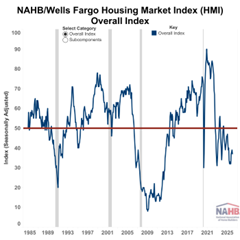
La demanda sigue ahí
A pesar del aumento de los tipos hipotecarios y las presiones inflacionarias, la demanda subyacente de vivienda en Estados Unidos permanece fuerte. Los fundamentos demográficos continúan respaldando las necesidades de vivienda a largo plazo. Los millennials, la generación más numerosa de la población activa, se encuentran ahora en la edad ideal para comprar una vivienda, mientras que la generación Z comienza a entrar en el mercado. Según el Joint Center for Housing Studies of Harvard University, la formación de nuevos hogares sigue limitada no por la falta de deseo de ser propietario, sino por la asequibilidad y el inventario reducido.
Los compradores primerizos siguen buscando viviendas que ofrezcan más espacio, estabilidad y valor a largo plazo, especialmente porque los costos de alquiler se mantienen elevados en muchas áreas metropolitanas. Al mismo tiempo, los compradores que buscan viviendas más pequeñas están desempeñando un papel cada vez más importante en el mercado. Muchos propietarios buscan reducir la superficie sin sacrificar la calidad, lo que impulsa la demanda de viviendas bien diseñadas y de bajo mantenimiento en comunidades consolidadas.
Otra tendencia nacional importante es el envejecimiento de la generación del baby boom. La mayor esperanza de vida y la preferencia por envejecer en el mismo lugar, a menudo en viviendas construidas a medida o significativamente mejoradas, han reducido la rotación del parque inmobiliario existente. Las viviendas que tradicionalmente habrían vuelto al mercado siguen ocupadas, lo que limita aún más el inventario de reventa y aumenta la presión sobre la nueva construcción para satisfacer la demanda.
Los datos nacionales sobre permisos de construcción ilustran esta división. Tras la crisis inmobiliaria de mediados de la década de 2000, las autorizaciones de nuevas viviendas disminuyeron drásticamente y nunca se recuperaron por completo hasta alcanzar los máximos anteriores. Aunque los permisos han tendido al alza en los últimos años, el crecimiento no ha igualado el aumento de la población ni las tasas de formación de nuevos hogares. El resultado es un déficit estructural de oferta que sigue impulsando los precios al alza y limitando las opciones de los compradores.
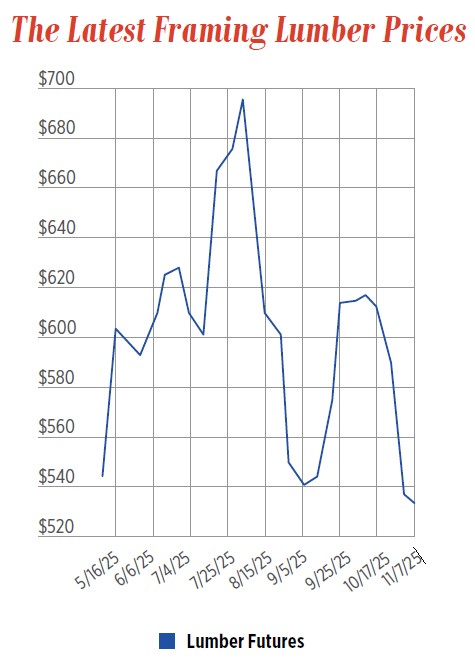
La construcción de viviendas no se ha recuperado de la Gran Recesión
Más de una década después de la Gran Recesión, la producción de viviendas en Estados Unidos se mantiene limitada estructuralmente. La falta de construcción acumulada tras el colapso del mercado inmobiliario ha dejado al país con un importante retraso en la demanda no satisfecha. Los economistas de Freddie Mac y del Urban Institute han señalado sistemáticamente la subproducción como uno de los principales factores de la actual crisis de asequibilidad, y han señalado que incluso un aumento sostenido de la construcción tardaría años en cerrar la brecha.
La lucha por el lado de la oferta
Por el lado de la oferta, los constructores se enfrentan a retos cada vez grandes que van mucho más allá del costo de la construcción en sí. La disponibilidad de materiales, aunque ha mejorado con respecto a las interrupciones de la época de la pandemia, permanece irregular. Los plazos de entrega de insumos clave como la madera, el acero, las ventanas y los componentes mecánicos siguen siendo significativamente más largos que los normales antes de la pandemia, lo que aumenta los costos de transporte y complica la programación de los proyectos.
El desarrollo y urbanización de terrenos se ha convertido en uno de los obstáculos más importantes para la expansión de la oferta de vivienda en todo el país. El costo de una vivienda terminada suele captar la atención del público, pero gran parte de la carga financiera se incurre mucho antes de que comience la construcción. La adquisición de terrenos, las aprobaciones de zonificación, las revisiones medioambientales, la instalación de infraestructuras y los requisitos de permisos añaden capas de costo, tiempo y riesgo. Según la NAHB, solo los costos regulatorios representan casi una cuarta parte del precio final de una vivienda unifamiliar nueva.
El aumento de los precios del suelo refleja una combinación de oferta limitada, competencia de los inversionistas institucionales y el alto costo de ampliar infraestructuras como carreteras, agua, alcantarillado y servicios públicos. En muchos mercados, la complejidad normativa y los largos plazos de aprobación limitan aún más la disponibilidad de terrenos edificables, lo que empuja a los constructores hacia viviendas de mayor precio que pueden absorber estos costos iniciales y los aleja de las viviendas de nivel básico.
A estos retos se suma el agravamiento de la escasez de mano de obra. Hay una escasez crítica de trabajadores cualificados, como carpinteros, electricistas, plomeros y albañiles. El National Center for Construction Education and Research (NCCER) estima que más del 40 % de la mano de obra actual del sector de la construcción se jubilará antes de 2031. Esta inminente pérdida de experiencia y conocimientos institucionales amenaza con ralentizar aún más la producción y aumentar los costos, a menos que se amplíen las vías de desarrollo de la mano de obra.
Implicaciones para la industria del concreto
Las presiones que configuran el mercado inmobiliario actual van más allá de los constructores de viviendas e influyen directamente en la industria del concreto, que se encuentra al frente de casi todos los proyectos de construcción. Desde la preparación del terreno para la obra y las infraestructuras hasta los cimientos y los trabajos de pavimentación, los contratistas y proveedores de concreto experimentan los cambios del mercado en las primeras fases del ciclo de construcción. A medida que la producción se ralentiza o se acelera, los efectos se hacen sentir inmediatamente en la demanda, la programación, las necesidades de mano de obra y las decisiones de inversión en todo el sector.
Volatilidad de la demanda y planificación de la producción
El aumento de las tasas de interés y las limitaciones de asequibilidad han moderado la construcción de viviendas en muchos mercados, creando ciclos de producción desiguales para los constructores. Dado que los trabajos de concreto suelen comenzar poco después de la preparación del terreno para la obra, las fluctuaciones en el inicio de las obras se traducen directamente en una demanda inconsistente de cimientos, losas y trabajos de infraestructura. Los contratistas se enfrentan a períodos de intensa presión en la planificación, seguidos de ralentizaciones que dificultan la gestión de la retención de la mano de obra y la utilización de los equipos. Si bien la demanda de viviendas a largo plazo se mantiene fuerte, la variabilidad de la producción a corto plazo complica las previsiones y la estabilidad operativa de los productores de concreto.
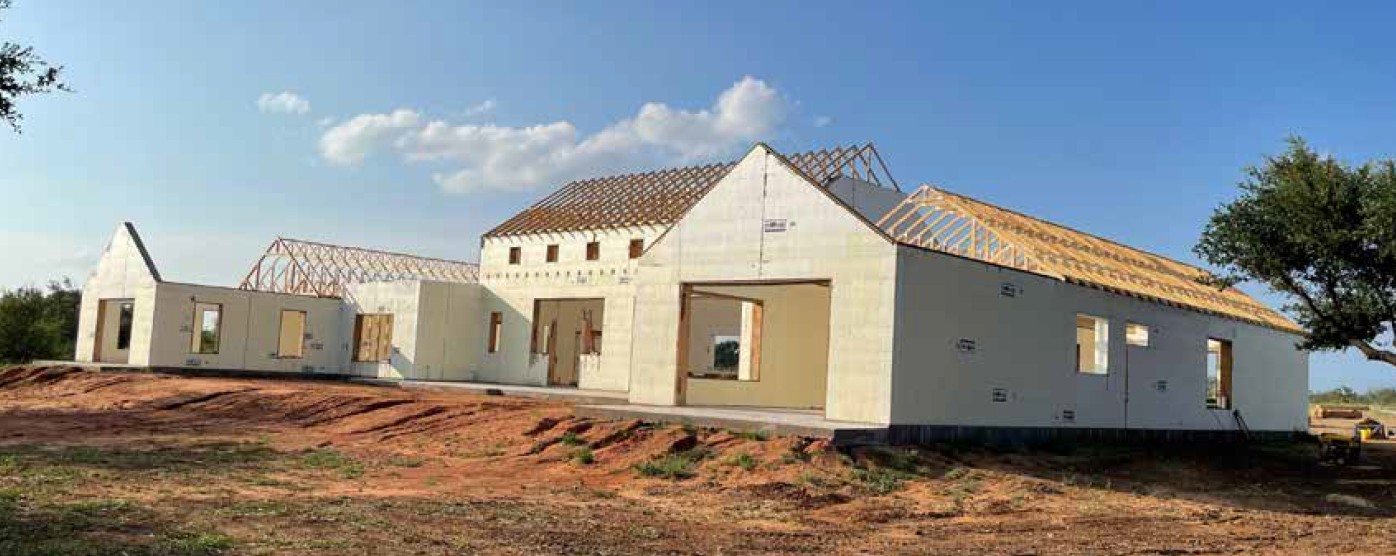
Los retrasos en el desarrollo reducen la actividad de construcción en la fase inicial
Los retos asociados al desarrollo y urbanización de terrenos, que van desde las aprobaciones regulatorias hasta los costos de infraestructura, también afectan a la industria del concreto en las primeras etapas de la construcción. Las carreteras, los servicios públicos, las aceras y la infraestructura comunitaria dependen en gran medida del concreto, lo que significa que los retrasos en la concesión de permisos o en las aprobaciones para el desarrollo de urbanizaciones ralentizan el flujo de proyectos que entran en construcción. A medida que los constructores planifican los proyectos con más cautela, los contratistas de concreto a menudo se encuentran con diferencias entre los lanzamientos de la comunidad y la reducción de la disponibilidad de terrenos, contribuyendo aún más a la irregularidad de los calendarios de producción.
La escasez de mano de obra intensifica la presión operativa
Al igual que muchos oficios de la construcción, la industria del concreto se enfrenta al envejecimiento de la mano de obra y a la limitada incorporación de mano de obra sustitutiva al sector. La naturaleza físicamente exigente del trabajo con concreto, combinada con la competencia de otras industrias por los trabajadores cualificados, ha hecho que la contratación y la retención sean cada vez más difíciles. Las limitaciones de mano de obra pueden alargar los plazos de los proyectos, aumentar la presión salarial y limitar la cantidad de equipos disponibles para satisfacer la creciente demanda de viviendas. Sin un esfuerzo sostenido por desarrollar la mano de obra, la disponibilidad de trabajadores seguirá siendo una limitación para la capacidad de producción.
El cambio hacia la construcción de alta gama modifica la combinación de proyectos
El aumento de los costos de desarrollo y regulatorios ha empujado a muchos constructores a centrarse en viviendas de mayor precio que pueden absorber mejor los gastos iniciales. Para los contratistas del concreto, este cambio suele traducirse en un menor número de proyectos de viviendas de nivel básico y una mayor participación en la construcción personalizada o de viviendas de mayor categoría. Aunque estas viviendas pueden requerir cimientos más complejos y trabajos especializados, el volumen total de unidades puede disminuir en comparación con la producción de nivel básico, cambiando la consistencia de la carga de trabajo y los supuestos de planificación.
Presión sobre los márgenes en toda la cadena de suministro de la construcción
Los retos de la asequibilidad continúan ejerciendo presión sobre los constructores que buscan formas de controlar los costos totales de construcción. A medida que aumenta la competencia y los incentivos se vuelven más comunes, el escrutinio de los costos se extiende a toda la cadena de suministro, incluidos los servicios de concreto. Los contratistas deben equilibrar el mantenimiento de los estándares de calidad y seguridad con la necesidad de operar de manera eficiente en un mercado en el que la sensibilidad al precio es cada vez mayor tanto entre los constructores como entre los compradores.
La asequibilidad es la incógnita
Aunque el crecimiento del precio de la vivienda se ha moderado en algunas partes del país, la asequibilidad todavía es una cuestión determinante para el mercado inmobiliario estadounidense. El aumento de los tipos hipotecarios, el incremento de los costos de construcción y el endurecimiento de las condiciones de concesión de préstamos han reducido significativamente el poder adquisitivo de muchos hogares. Según la National Association of Realtors, la proporción de hogares con ingresos medios que pueden permitirse una vivienda nueva de precio medio ha disminuido considerablemente en comparación con los niveles previos a la pandemia.
Los márgenes de los constructores, que aumentaron durante el periodo pospandémico debido al poder de fijación de precios y a la oferta limitada, pueden verse sometidos a presión en el futuro, ya que los costos del suelo y de la promoción siguen en aumento y los incentivos son cada vez más habituales. Sin embargo, los márgenes permanecen elevados en comparación con las normas históricas y reflejan unas estrategias de producción disciplinadas y un mercado que continúa favoreciendo a los vendedores frente a los compradores.
Los datos nacionales sobre la asequibilidad muestran un claro desajuste entre los ingresos de los hogares y los precios de las viviendas de nueva construcción. La demanda se mantiene más fuerte en los segmentos de nivel básico y precio moderado, pero gran parte de la nueva construcción actual se concentra en precios más altos. Esta desconexión ejerce una presión cada vez mayor sobre los compradores primerizos y de ingresos medios, y subraya la necesidad de reformas regulatorias y políticas que permitan la producción de viviendas asequibles.
Medidas políticas que pueden marcar la diferencia
Para abordar el reto nacional de la asequibilidad será necesaria una acción coordinada en todos los niveles del gobierno. Entre las posibles soluciones se incluyen:
- Incentivar el desarrollo responsable mediante desgravaciones fiscales, agilización de los permisos o reducciones de tasas para proyectos que incluyan viviendas asequibles.
- Modernizar las normas de zonificación y uso del suelo para permitir una mayor densidad, parcelas más pequeñas y un uso más eficiente de las infraestructuras existentes.
- Ampliar la inversión en infraestructura mediante asociaciones de financiación estatales y federales que apoyen la producción de viviendas.
- Fortalecer el desarrollo de la mano de obra mediante la inversión en formación profesional, programas de aprendizaje y carreras profesionales en oficios especializados.
- Fomentar la reutilización adaptativa y la remodelación de propiedades comerciales e industriales infrautilizadas.
- Mejorar la previsibilidad en el proceso de desarrollo mediante la estandarización de los plazos de revisión, las tasas y los requisitos reglamentarios.
- Respaldar a los compradores mediante ayudas específicas para el pago inicial, incentivos fiscales y programas de accesibilidad hipotecaria.
Si los responsables de políticas públicas logran reducir la incertidumbre y compartir la carga de los elevados costos iniciales de desarrollo, los constructores estarán en mejores condiciones de ofrecer viviendas a precios que se ajusten a lo que los hogares estadounidenses pueden permitirse de forma realista.
El futuro se construirá con acciones deliberadas
Es poco probable que los retos a los que se enfrenta el sector de la construcción de viviendas en Estados Unidos —inflación persistente, escasez de mano de obra, complejidad normativa y restricciones de suministro— se resuelvan rápidamente. Si bien las tendencias nacionales sugieren que los desequilibrios entre la oferta y la demanda pueden mejorar gradualmente, la industria del concreto se mantiene como un elemento fundamental para abordar la escasez de viviendas en el país. Todos los esfuerzos por aumentar la producción de viviendas, ya sea mediante la expansión del desarrollo, la inversión en infraestructura o métodos de construcción más eficientes, requieren concreto a gran escala. A medida que el mercado inmobiliario trabaja para restablecer el equilibrio entre la oferta y la demanda, la capacidad, la eficiencia y la fortaleza de la mano de obra de la industria del concreto desempeñarán un papel fundamental a la hora de determinar la rapidez con la que se pueden entregar nuevas viviendas.
Un legado respaldado por la certificación

Los programas de certificación establecen estándares medibles para los profesionales de oficios especializados, lo que demuestra su competencia técnica, el cumplimiento de las prácticas recomendadas y el crecimiento profesional continuo. Garantizar que los profesionales de la construcción residencial cumplan con estos estándares es fundamental para el éxito de nuestra industria. La certificación de Residential Foundation Technician es un esfuerzo colaborativo entre el American Concrete Institute (ACI) y la Concrete Foundations Association (CFA). Este programa evalúa la competencia de una persona en el uso de los principales recursos técnicos que definen tanto el diseño como las prácticas de construcción de cimientos de concreto residenciales. La CFA se reunió con Cole Beaudin, de Perma-Structo, Inc., también miembro de la Junta Directiva y del Comité Ejecutivo de la CFA, para hablar sobre cómo él y su equipo han utilizado el programa de certificación para mejorar el trabajo que realizan.
La relación de Beaudin con la CFA comenzó con su abuelo, quien ayudó a fundar la organización en 1975. Perma-Structo, Inc. ha estado vinculada a la CFA desde entonces. «Mi abuelo fue uno de los fundadores iniciales. En cierto modo, siempre me he sentido como en casa», afirma Beaudin. «Siempre ha formado parte de nuestra familia». Cuando llegaron las nuevas regulaciones ACI 332 a Wisconsin, la certificación respaldó el cumplimiento de Perma-Structo y le dio a la empresa una ventaja competitiva.
En Perma-Structo, Beaudin anima a los superintendentes, capataces y personal de oficina a seguir este programa de certificación específico. Considera que el proceso es una oportunidad para que todos los empleados tengan éxito. «Todos queremos sentir que es importante y sentirnos reconocidos. Esta es solo una oportunidad en la que los miembros del personal y los propietarios sienten que están triunfando en su organización». Este enfoque basado en normas también beneficia a las operaciones en la obra. Los inspectores consultan con frecuencia a Beaudin sobre la interpretación de los códigos y las prácticas recomendadas, gracias a la reputación de Perma-Structo de dar prioridad a la certificación. La guía de estudio creada para este programa está diseñada específicamente para ayudar a los estudiantes a reflexionar sobre las aplicaciones prácticas de estas normas.
La certificación ha mejorado el proceso de aprobación de su empresa con los inspectores, refuerza la confianza de los clientes y puede ayudar a conseguir nuevos negocios o referencias.
Beaudin recuerda la curva de aprendizaje que siguió al prepararse para el examen y señala que los recursos educativos de la CFA son esenciales. «La CFA tiene muchas presentaciones y diapositivas diferentes que se graban en el aula de la CFA. La Asociación lo pone muy fácil si se siguen esos recursos». El aula de la CFA, junto con la guía de estudio, agiliza el proceso de preparación y está diseñado para una amplia gama de funciones profesionales. El enfoque de Beaudin incorpora este programa de certificación en su programa de formación sistemática para técnicos, personal de oficina e incluso familiares involucrados en la empresa.
Según Beaudin, este programa de certificación vincula a los profesionales del concreto residencial con los estándares consistentes de la industria. Observa que el programa desalienta los atajos, una preocupación en un campo en el que la calidad de los proyectos puede variar en función de una serie de variables. En Perma-Structo, la certificación influye en la contratación y en el desarrollo profesional, y ayuda a la empresa a mantenerse al día con los cambios del sector.
Beaudin anima a otros contratistas a obtener la certificación y a abordar el proceso no solo como una forma de mantener un nivel de conocimientos, sino como una inversión en su crecimiento. En su opinión, el programa sienta las bases para la credibilidad profesional a largo plazo y el desarrollo empresarial.
La certificación ayuda a los contratistas a cumplir con los estándares de la industria, aumentar su experiencia y construir una reputación de calidad. Las personas interesadas en obtener esta certificación deben visitar la página de certificación en el sitio web de la CFA. Esta página incluye detalles y requisitos, enlaces a materiales de estudio y las próximas fechas de examen por ubicación.

Resumen de World of Concrete: Noche de los contratistas de cimentaciones, formación e innovación en la industria
World of Concrete volvió a demostrar por qué sigue siendo una cita ineludible para las industrias del concreto y la albañilería, al reunir a contratistas, proveedores, formadores y pioneros de todo el país. Para la CFA y sus miembros, la semana estuvo repleta de creación de contactos significativos, formación valiosa y conversaciones continuas sobre innovaciones tecnológicas.
Cada año, en la primera noche del programa, la CFA da inicio a la semana con la Foundation Contractors Night (Noche de los contratistas de cimentaciones), una tradición que continúa siendo uno de nuestros mayores encuentros de miembros de la CFA a lo largo del año. Se celebró en la azotea del hotel y casino The STRAT de Las Vegas, el evento proporcionó un espacio acogedor para que los miembros volvieran a conectar con caras conocidas, al tiempo que presentaba a nuevos contratistas y asociados nacionales a la comunidad de la CFA. Las conversaciones fluyeron con facilidad mientras los asistentes compartieron historias del sector y comentarios sobre las condiciones del mercado, al tiempo que se alejaron de las charlas de trabajo para relajarse y disfrutar de las amistades que han cultivado a través de la CFA.
La Foundation Contractors Night no sería posible sin el generoso apoyo de los patrocinadores de la CFA, cuyo compromiso continuo con la asociación desempeña un papel fundamental a la hora de reunir a los miembros año tras año. La CFA expresa su más sincero agradecimiento a todos los patrocinadores y a todos los que asistieron y contribuyeron al éxito de la velada. Eventos como este sirven para recordar que, aunque la industria sigue evolucionando, la fuerza de la CFA continúa arraigada en su gente y en las relaciones que establecen.
La CFA se enorgulleció de organizar tres cursos de capacitación para la industria durante el World of Concrete, dirigidos por Brent Anderson, que atrajeron una gran asistencia y participación de contratistas que buscaban perfeccionar sus habilidades y mantenerse a la vanguardia de las demandas de la industria. Los cursos, que se llevaron a cabo durante varios días, proporcionaron conocimientos prácticos y basados en la experiencia que los asistentes pudieron aplicar directamente a sus equipos y proyectos.
El éxito de estas sesiones de capacitación reforzó la creciente demanda de preparación y capacitación técnica que sea relevante, práctica e impartida por profesionales que comprendan las realidades del trabajo de cimentación. Muchos participantes comentaron que los cursos lograban el equilibrio adecuado entre los conocimientos técnicos, la aplicación en el mundo real y la resolución de problemas, lo que los hacía especialmente valiosos en el entorno actual de la construcción.
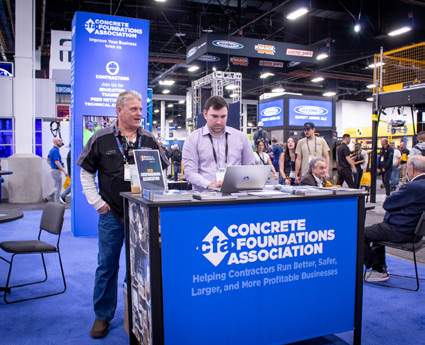
A lo largo de la semana, la parte más importante es, por supuesto, la feria comercial. La CFA contó con un pabellón que recibió un flujo constante de visitantes durante toda la semana y que sirvió como punto de referencia para conversar, resolver dudas y establecer contactos. Los miembros se detuvieron para saludar, compartir novedades de sus empresas y obtener más información sobre los próximos eventos de la CFA, las certificaciones y mucho más. Al mismo tiempo, el pabellón brindó la oportunidad de dar a conocer la Asociación, su misión y los recursos disponibles para los miembros a nuevos contratistas y socios del sector.
Para muchos visitantes que acudían por primera vez, el pabellón se convirtió en un punto de entrada para comprender cómo la CFA apoya a los contratistas de cimentaciones a través de la formación, la creación de contactos, la promoción y la colaboración entre pares. Estas conversaciones, ya fueran presentaciones rápidas o debates más largos, pusieron de relieve el interés continuo por las organizaciones que dan prioridad a las soluciones y comunidad impulsadas por los contratistas.
Mientras los miembros exploraban la feria comercial, la innovación surgió como un tema común en las conversaciones. Muchos señalaron que algunos de los avances más interesantes de la World of Concrete de este año no se limitaban a productos o materiales físicos, sino que se centraban en el software y la inteligencia artificial. Desde plataformas de gestión de proyectos hasta herramientas diseñadas para mejorar la comunicación entre la oficina y la obra, destacó la tecnología centrada en agilizar los flujos de trabajo y mejorar la eficiencia operativa.
Estas soluciones están cada vez más orientadas a resolver los retos reales a los que se enfrentan los contratistas cada día, mejorando la planificación, reduciendo las cargas administrativas y creando líneas de comunicación más claras con los equipos en la obra. La presencia y el crecimiento de estas tecnologías señalaron un cambio más amplio en el sector, en el que las herramientas digitales adquieren la misma importancia que los equipos y los materiales para el éxito de las empresas de cimentación.
En general, World of Concrete ofreció una experiencia completa a los miembros de la CFA y una semana productiva y estimulante. Desde las concurridas sesiones de formación y las interesantes conversaciones en el pabellón hasta la memorable Noche de los contratistas de cimentaciones, la semana reforzó el valor de la unión como sector.
Ahora que los contratistas regresan a casa y ponen en práctica nuevas ideas, la CFA espera continuar estas conversaciones a lo largo del año, apoyando a los miembros en su adaptación, crecimiento y liderazgo del futuro de la industria de los cimientos.



















Proteja su empresa contra las demandas judiciales
De Larry Oxenham, asesor sénior, American Society for Asset Protection (Sociedad Estadounidense para la Protección de Activos)
Las demandas judiciales no solo son una amenaza para las pequeñas empresas de todo Estados Unidos, sino que también son costosas y siempre están a la vuelta de la esquina. Como me dijo el propietario de una pequeña empresa: «Dedico tanto tiempo a intentar evitar demandas judiciales como a dirigir mi empresa».
Cada año se presentan más de 12 millones de demandas por un total de más de 160 000 millones de dólares, con un costo medio de más de 4500 dólares al año para cada pequeña empresa, además de la pérdida de tiempo y el aumento de las primas de los seguros.
¿Qué nivel de cobertura es suficiente y cuándo empieza a ser excesiva?
Nuestra estrategia es sencilla; por ejemplo, no creemos en litigar demandas, creemos en prevenirlas desde el principio.
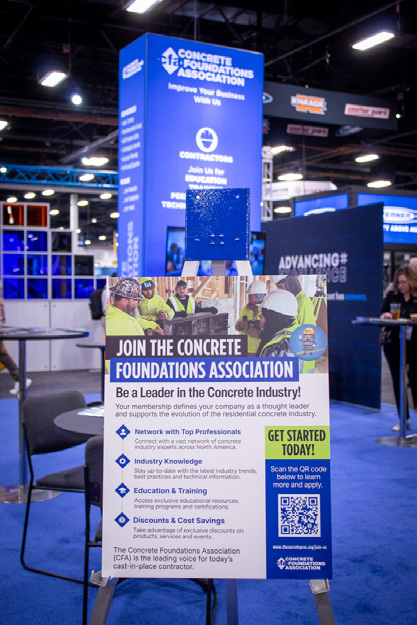
Llevamos más de 25 años enseñando esta estrategia a pequeñas empresas de todo el país. En la Concrete Foundations Convention 2026, le explicaré una técnica sencilla pero eficaz que le permitirá construir una barrera sólida entre usted y las demandas judiciales y, al final de la presentación, le mostraremos exactamente cómo poner en práctica esta estrategia para proteger todos sus activos empresariales y personales. Si desea asistir a la CFACON26 y a este seminario, visite el sitio web de la CFA o escanee el código QR.

Por qué la membresía es importante: Seneca Foundations en World of Concrete
Para muchos contratistas, World of Concrete es una oportunidad para ver nuevos productos y recorrer la feria comercial. Para Seneca Foundations, representa algo más importante: una inversión en las personas.
Este año, el propietario Curtis Graf llevó a cuatro miembros de su equipo a Las Vegas. La decisión de alejarse de las obras durante una semana completa no se tomó a la ligera. En un sector en el que el tiempo es producción y la producción genera ingresos, alejarse requiere compromiso. Para Seneca Foundations, ese compromiso refleja su creencia de que el crecimiento comienza con la formación y la conexión.
World of Concrete ofreció algo que rara vez está disponible durante la temporada alta: la oportunidad de alejarse y conectar como equipo. Lejos de las presiones diarias de los horarios y las inspecciones, el grupo tuvo tiempo para reflexionar y compartir nuevas ideas. Para los miembros más nuevos del equipo, la experiencia sirvió tanto de introducción como de inmersión en la industria de los cimientos de concreto en general. Para los líderes experimentados, fue una oportunidad para mantenerse al máximo nivel y reforzar las prácticas recomendadas.
A lo largo de la semana, el equipo de Seneca asistió a múltiples sesiones de capacitación, incluidos los cursos de capacitación de la industria de la CFA. Según Graf, las sesiones de la CFA destacaron como las más sólidas y prácticas de la semana. El contenido se ajustaba directamente a los retos reales a los que se enfrentan los contratistas de cimentaciones, desde la interpretación de los códigos hasta la ejecución de la obra y la comunicación con los inspectores.
Graf hizo hincapié en que la capacitación técnica no es opcional en las condiciones actuales del sector. Una comprensión clara de las normas y la capacidad de comunicarse con confianza con los inspectores pueden marcar una diferencia significativa en un proyecto. Invertir en ese conocimiento fortalece tanto a los miembros individuales del equipo como a la empresa en general.
Al mismo tiempo, Graf reconoció que las empresas a menudo no aprovechan al máximo los recursos de capacitación que tienen a su disposición. La CFA ofrece formación técnica y apoyo actuales durante todo el año, recursos que pueden potenciar a los equipos más allá de la experiencia de la feria comercial anual. Para Seneca Foundations, World of Concrete sirvió como un recordatorio del valor que aportan esas herramientas y de la importancia de un compromiso continuo.
Más allá del aula, la semana también reforzó el poder de las relaciones en el sector. El equipo asistió a la Noche de los contratistas de cimentaciones de la CFA, donde se reunieron miembros de todo el país para reencontrarse y ponerse al día. Eventos como este crean un espacio para conversaciones que no siempre tienen lugar en sesiones formales. Como debates sobre los retos en la obra, la evolución de los requisitos normativos y las lecciones aprendidas en la obra.
Para contratistas como Seneca Foundations, la creación de contactos no consiste en repartir tarjetas de visita. Se trata de aprender de compañeros que se enfrentan a las mismas realidades cotidianas. Se trata de escuchar cómo otros se adaptan, mejoran los procesos y navegan por los cambios del sector. Estas conexiones fortalecen no solo a las empresas individuales, sino también a la comunidad de la asociación en general.
La membresía de la CFA ofrece acceso a formación, recursos técnicos y una red nacional de profesionales comprometidos con la excelencia. La inversión de Seneca Foundations en asistir al World of Concrete y en llevar consigo a miembros clave del equipo refleja la comprensión de que el crecimiento requiere tanto conocimientos como comunidad.
Al final, la semana no se limitó a asistir a una feria comercial. Se trató de reforzar las normas, perfeccionar las habilidades y establecer relaciones dentro de la CFA que continúan mucho después de que el evento haya terminado. Para Seneca Foundations, ahí radica el valor de ser parte de la Asociación.
La próxima oportunidad para que los miembros aprovechen esos mismos beneficios es la Concrete Foundations Convention (CFACON) de 2026. Cada año, los miembros de la CFA se reúnen para compartir conocimientos prácticos e invertir en formación continua diseñada específicamente para contratistas de cimentaciones. Al igual que World of Concrete, la CFACON ofrece un espacio para alejarse de las operaciones diarias, relacionarse con compañeros y volver a casa con nuevas ideas y energía renovada. Para los contratistas que buscan hacer crecer sus equipos y profundizar sus conexiones en la industria, es otra oportunidad de convertir la membresía en un impacto medible.
Si desea asistir a la CFACON26, puede registrarse en el sitio web de la CFA o escanear el código QR.
Nota técnica CFA 014: Interpretación del espesor nominal de los muros de concreto (CFA-TN-014)
Introducción
Un tema frecuente de debate entre contratistas, diseñadores y autoridades encargadas del código es la interpretación del espesor «nominal» frente al espesor «real» de los muros de concreto. Esta Nota técnica aclara este tema mediante el examen de los códigos de la edificación y las normas industriales pertinentes. Comprender la relación definida por el código entre las dimensiones nominales y reales es esencial para garantizar el cumplimiento y la continuidad del proyecto.
Análisis de los requisitos del código
El International Residential Code (IRC) y la norma ACI 332, Residential Code Requirements for Structural Concrete, pueden utilizarse para responder a la pregunta de si un espesor nominal de muro de 8 pulgadas, que es un espesor real de muro de 7.5 pulgadas, cumple con el requisito del código para un muro real de 8 pulgadas. Las jurisdicciones estatales y locales, como el Uniform Dwelling Code (UDC) de Wisconsin, suelen adoptar o hacer referencia a estos documentos.
International Residential Code (IRC)
El IRC ofrece una definición clara de la tolerancia permitida para el espesor nominal de los muros. La sección R404.1.3.1 remite a los usuarios a la Tabla R608.3 para conocer las dimensiones de la sección transversal del concreto. La subnota «c» de esta tabla establece lo siguiente:
Espesor nominal del muro. El espesor real conforme a obra de un muro plano no debe ser inferior a 1/2 pulgada ni superior a 1/4 de pulgada con respecto a la dimensión nominal indicada.
Según esta definición, un muro con un espesor nominal de 8 pulgadas puede tener un espesor real conforme a obra no inferior a 7 1/2 pulgadas. En el sector de los cimientos residenciales, es habitual que la longitud de los anclajes de los encofrados utilizados en los muros encofrados dé como resultado un espesor real de 7 5/8 pulgadas, por lo que se cumple plenamente con esta disposición del IRC. Además, muchos encofrados de muros de cimentación tienen una textura de ladrillo estampado que da lugar a una variabilidad en el espesor real del muro, dependiendo de la sección transversal específica que se mida.
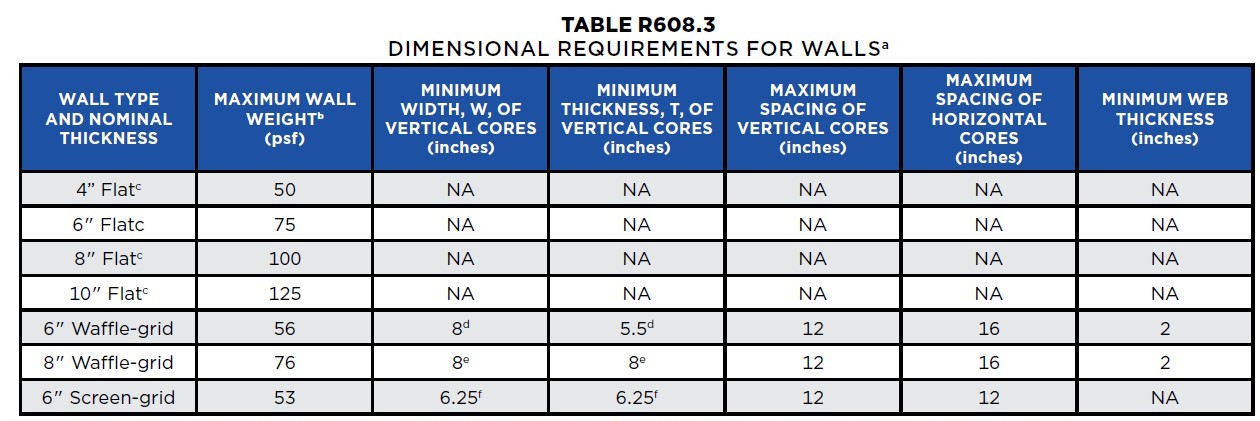
Tabla R608.3: Requisitos dimensionales para los murosa
Para SI: 1 pulgada = 25,4 mm; 1 libra por pie cuadrado = 0,0479 kPa, 1 libra por pie cúbico = 2402,77 kg/m3, 1 pulgada cuadrada = 645,16 mm2, 1 pulgada4 = 42 cm4.
NA = No aplicable.
- Ancho «W», espesor «T», espaciado y espesor del alma, consultar las Figuras R608.3(2) y R608.3(3).
- El peso del muro se basa en un peso unitario del concreto de 150 pcf. Para muros planos, el peso se basa en el espesor nominal. Los valores tabulados no incluyen ningún margen para acabados interiores y exteriores.
- Espesor nominal del muro. El espesor real conforme a obra de un muro plano no debe ser inferior a 1/2 pulgada ni superior a 1/4 de pulgada con respecto a la dimensión nominal indicada.
- Se supone que el núcleo vertical tiene forma elíptica. Se permite otra forma de núcleo siempre que el espesor mínimo sea de 5 pulgadas, el momento de inercia, I, alrededor de la línea central del muro (sin tener en cuenta el alma) no sea inferior a 65 pulgadas4 y el área, A, no sea inferior a 31.25 pulgadas cuadradas. La anchura utilizada para calcular A e I no debe exceder las 8 pulgadas.
- Se supone que el núcleo vertical es circular. Se permite otra forma de núcleo siempre que el espesor mínimo sea de 7 pulgadas, el momento de inercia, I, alrededor de la línea central del muro (sin tener en cuenta el alma) no sea inferior a 200 pulgadas4 y el área, A, no sea inferior a 49 pulgadas cuadradas. La anchura utilizada para calcular A e I no debe exceder las 8 pulgadas.
- Se supone que el núcleo vertical es circular. Se permite otra forma de núcleo siempre que el espesor mínimo sea de 5.5 pulgadas, el momento de inercia, I, alrededor de la línea central del muro no sea inferior a 76 pulgadas4 y el área, A, no sea inferior a 30.25 pulgadas cuadradas. La anchura utilizada para calcular A e I no debe exceder las 6.25 pulgadas.
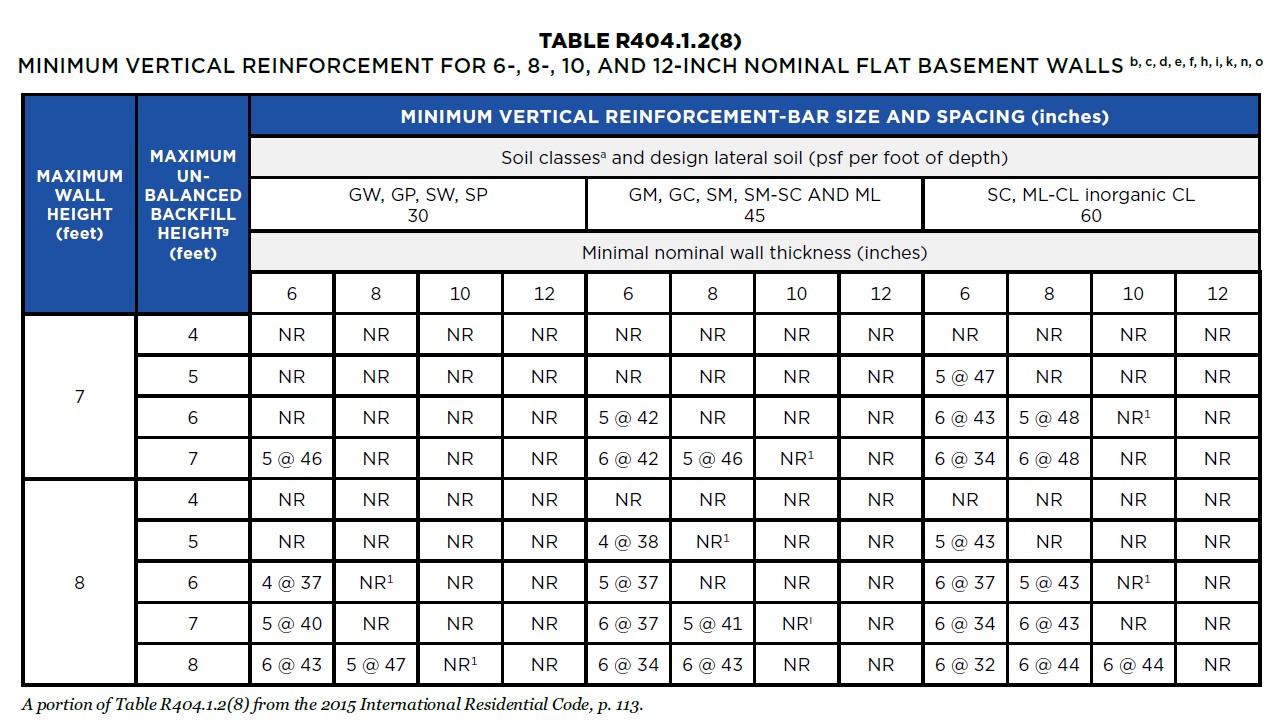
Tabla R404.1.2(8): Refuerzo vertical mínimo para muros de sótano planos nominales de 6, 8, 10 y 12 pulgadasb, c, d, e, f, h, I, k, n, o
Parte de la Tabla R404.1.2(8) del International Residential Code de 2015, p. 113.
Tablas de refuerzo de muros del IRC
Arriba se muestra una parte de la Tabla R404.1.2(8) del International Residential Code actual, una de las siete tablas del Capítulo 4 sobre cimientos relacionados con muros de concreto y requisitos de refuerzo. Cuatro de estas tablas tratan sobre la construcción de muros de concreto planos, construidos con encofrados de concreto aislado (ICF) o encofrados de concreto desmontables. Todas estas tablas utilizan el término «nominal» en el título y proporcionan notas al pie que hacen referencia a la tolerancia dimensional aceptable identificada en la Tabla R608.3. Esta tabla muestra el enfoque de la construcción de muros utilizando una variedad de soluciones de espesor de muro y patrones de refuerzo. La subnota «i» de esta tabla establece lo siguiente: Véase la Tabla R608.3 para conocer la tolerancia del espesor nominal permitido para muros planos.
Las tablas de muros anteriores en R404.1.1 tratan los estándares mínimos para muros de cimentación de unidades de mampostería de concreto (CMU, por sus siglas en inglés) de espesor nominal, haciendo referencia a dimensiones completas de 6 a 12 pulgadas. El estándar de la industria para las dimensiones de la mampostería y la madera tiene una larga trayectoria en el uso de referencias nominales para inferir las dimensiones reales. Este enfoque también es coherente en los estándares de edificación, donde tantos sistemas de encofrado diferentes —que generan aún más variabilidad en el espesor de la sección transversal del muro— están diseñados específicamente para interactuar con, o adaptarse a, la experiencia y las expectativas de esta relación nominal frente a la real en la mampostería y la madera.

Fig. 1: Encofrados de concreto colocados para los cimientos de una vivienda que muestran un espesor nominal de pared de 8 pulgadas con un espesor real de 7 5/8 pulgadas. Concrete Foundations Assoc.
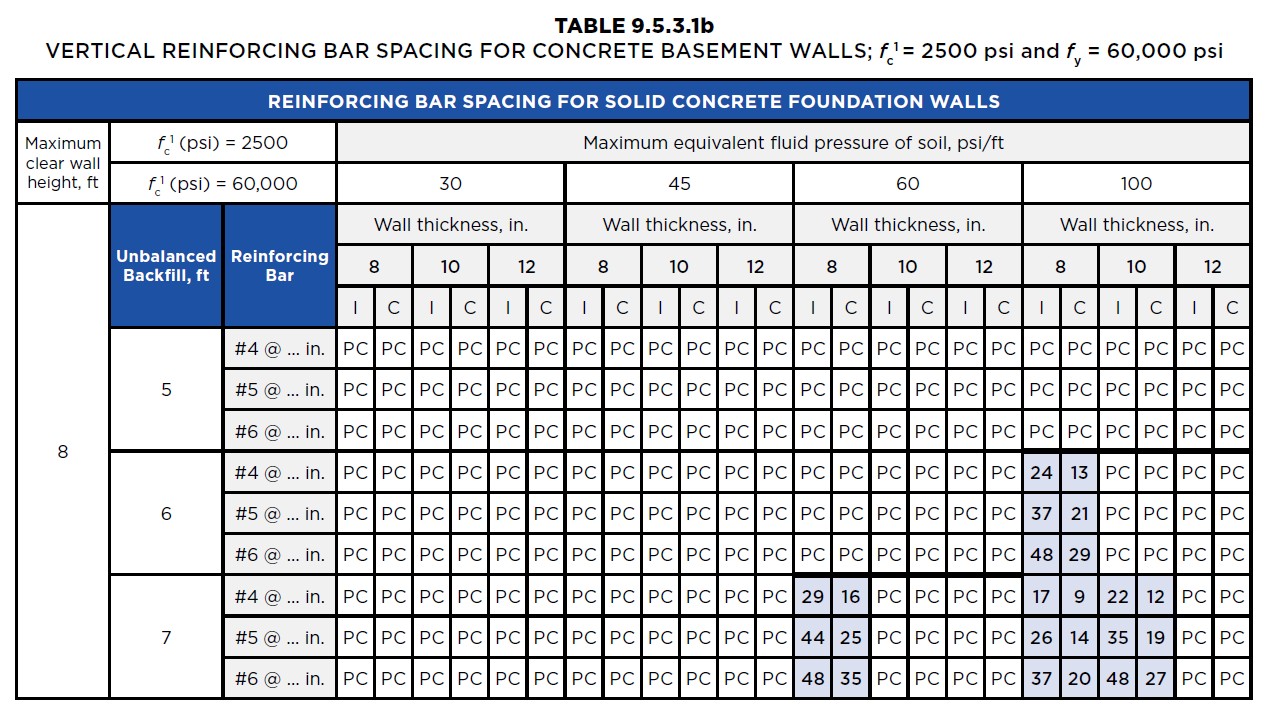
Tabla 9.5.3.1b: Espaciado vertical de las barras de refuerzo para muros de sótano de concreto; fc1 = 2500 psi y fy = 60 000 psi.
ACI 332: Requisitos del código residencial para el concreto estructural.
La norma ACI 332 se ha establecido como una alternativa aceptada en el IRC y a menudo se cita o se elige directamente en los códigos estatales, como el UDC de Wisconsin. Ofrece requisitos preceptivos más detallados para los muros de concreto residenciales. La norma proporciona tablas para muros de concreto simple y reforzado basadas en espesores mínimos específicos y reales.
- La Sección 9.3.1.2 del ACI 332-20 establece que el espesor mínimo uniforme de los muros será de 7.5 pulgadas.
- Las Tablas 9.5.3.1 (a) a (j) del ACI 332-20 son tablas preceptivas basadas en un «Espesor mínimo real especificado del muro» de 7.5 pulgadas, 9.5 pulgadas y 11.5 pulgadas, pero en la Tabla se refieren a ellas como 8 pulgadas, 10 pulgadas y 12 pulgadas.
El norma ACI 332 valida directamente la suficiencia estructural de un espesor real de muro de 7.5 pulgadas para aplicaciones en las que se especifica una pared nominal de 8 pulgadas. Los valores de rendimiento y las tablas preceptivas del ACI 332 se han diseñado teniendo en cuenta este espesor mínimo real, lo que confirma que un muro de 7 5/8 pulgadas funciona según lo previsto en las condiciones de diseño especificadas.
El UDC permite un espesor de muro «nominal» y, al remitirse al ACI 332, acepta implícitamente la base de ingeniería que respalda un espesor real mínimo de 7.5 pulgadas. La preocupación del inspector de que un muro de 7 5/8 pulgadas no cumpla con los requisitos estructurales de un muro de 8 pulgadas se aborda por el hecho de que el IRC y ACI 332 ya han tenido en cuenta esta tolerancia en sus diseños preceptivos.
Conclusión y recomendaciones
Los códigos de la edificación aportan evidencia clara que respalda el uso de un espesor real de muro, considerado estándar en la industria, de hasta 1/2 pulgada menos cuando se especifica un espesor nominal.
- El IRC permite explícitamente un espesor conforme a obra de hasta 1/2 pulgada menos que la dimensión nominal. Un muro de 7 5/8 pulgadas está dentro de esta tolerancia para un muro nominal de 8 pulgadas.
- La norma ACI 332 establece sus tablas preceptivas para muros de cimentación con un espesor real mínimo de 7.5 pulgadas, lo que confirma la validez estructural de esta dimensión.
- Los contratistas que se enfrenten a dificultades con los funcionarios responsables del código en esta materia deben estar preparados para hacer referencia a estas secciones específicas del IRC y el ACI 332 para justificar sus métodos de construcción.
Un conocimiento profundo de estas disposiciones del código puede ayudar a facilitar conversaciones productivas con los inspectores, evitar retrasos en los proyectos y garantizar que los muros de cimentación se acepten como conformes con los estándares establecidos por la industria. Cuando los códigos locales parecen simplificados o ambiguos, remitirse a los códigos modelo fundamentales (IRC) y a las normas de referencia (ACI 332) proporciona la aclaración necesaria.
Obtenga más información sobre este y todos nuestros boletines técnicos en el sitio web de la CFA. ¿Quiere poner a prueba sus conocimientos? Obtenga más información sobre la certificación y dónde encontrar los códigos IRC y ACI en www.cfaconcretepros.org/certification.
Al igual que con cualquier mezcla de concreto, es esencial realizar lotes de prueba para confirmar las propiedades específicas del concreto. Los resultados finales pueden verse afectados por diversos factores, como la temperatura, la humedad y los componentes específicos utilizados en la mezcla. Recomendamos consultar a un profesional local especializado en cimientos de concreto para obtener orientación.
Tenga en cuenta que ninguna información proporcionada en este documento debe interpretarse como una garantía, ya sea expresa o implícita. Esto incluye, pero no limitándose a, cualquier garantía implícita de idoneidad para un fin determinado.
Boletín técnico de la CFA que se puede descargar
La CFA ofrece una variedad de notas técnicas listas para descargar en el sitio web de la CFA. Estas son los Boletines técnicos disponibles actualmente:
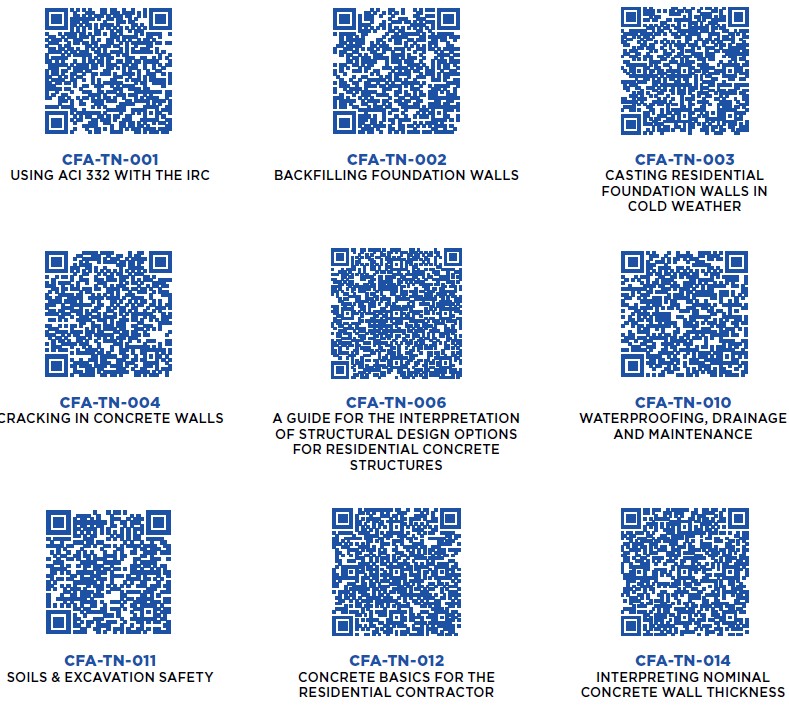
CFA-TN-001: Uso de la norma ACI 332 con el IRC (en inglés)
CFA-TN-002: Relleno de muros de cimentación (en inglés)
CFA-TN-003: Colocación de muros de cimentación residenciales en clima frío (en inglés)
CFA-TN-004: Grietas en los muros de concreto (en inglés)
CFA-TN-006: Guía para la interpretación de las opciones de diseño estructural para estructuras residenciales de concreto (en inglés)
CFA-TN-010: Impermeabilización, relleno y mantenimiento (en inglés)
CFA-TN-011: Seguridad en suelos y excavaciones (en inglés)
CFA-TN-012: Conceptos básicos sobre el concreto para el contratista residencial (en inglés)
CFA-TN-014: Interpretación del espesor nominal de los muros de concreto (en inglés)
Las 10 consultas técnicas más frecuentes en la construcción de cimientos de concreto

Los profesionales de la construcción toman cientos de decisiones al día. Navegar por las complejidades de dirigir una empresa por sí sola ya es bastante difícil. Pero para estar al día de los avances del sector, la evolución de los códigos, los nuevos materiales y la presión constante para garantizar la integridad estructural en plazos ajustados, todos necesitamos recurrir de vez en cuando al asesoramiento de un colega.
La CFA no solo es una autoridad técnica fundamental para el sector del concreto colado en el sitio, sino que también ofrece recursos valiosos como las líneas directas CFA Member Connect. Este programa proporciona a los miembros de la CFA acceso directo a expertos del sector que pueden abordar sus retos técnicos y consultas empresariales más urgentes. Al aprovechar estos recursos, los profesionales pueden ir más allá del simple cumplimiento y comprender el «porqué» de los requisitos técnicos y cómo sus compañeros abordan cuestiones similares. Este recurso para miembros no solo le pone en contacto con expertos del sector y con el equipo de la CFA, sino que la CFA también colabora con el equipo de ingeniería del American Concrete Institute para ayudar a los miembros a revisar cuestiones relacionadas con los códigos y normas técnicas.
Este artículo recoge las diez preguntas más frecuentes que recibió la línea directa CFA Member Connect en 2025 y un resumen de los recursos técnicos proporcionados. Si bien estas consultas representan las preguntas técnicas que nos han planteado, nuestra línea directa Member Connect 411 también conecta a los miembros con soluciones empresariales. Una vez que haya terminado de leer esta lista, consulte el programa completo de la línea directa CFA Member Connect y la base de datos de consultas aquí.
- ¿Una variación en la cota del borde superior del muro justifica el rechazo de una cimentación?
Respuesta: Normalmente no. Según la norma ACI 3321, las tolerancias aceptables para la nivelación de un muro de cimentación son de ±0,75 pulgadas. Las variaciones dentro de este rango suelen ser cuestiones estéticas o de estructura, más que fallos estructurales. No ponen en riesgo la integridad de la cimentación.
No se precipite a demoler o a realizar reformas costosas. En su lugar, corrija las variaciones que se encuentren dentro de la tolerancia permitida lijando o colocando parches en la superficie. Este enfoque práctico garantiza una superficie de apoyo nivelada para los sistemas de suelo sin retrasos ni gastos innecesarios.
- ¿Cuánto tiempo debe esperar un contratista para retirar los nuevos encofrados de aluminio para evitar daños?
Respuesta: Los encofrados nuevos carecen de una capa de óxido de aluminio curada y son muy susceptibles de sufrir daños por la mezcla alcalina del concreto. Para evitarlo, se debe retrasar el desmontaje hasta que el concreto haya adquirido la resistencia suficiente. Esto, por lo general, significa esperar entre 24 y 48 horas según la temperatura ambiente y del diseño de la mezcla.
Priorice la longevidad del equipo sobre la velocidad durante los primeros vertidos con un nuevo conjunto de encofrados. Evite el desmontaje al día siguiente, especialmente en climas fríos, para proteger la delicada capa de óxido y prolongar la vida útil de su inversión.
- ¿Por qué los resultados de las pruebas muestran iones de cloruro cuando no se ha añadido cloruro de calcio a la mezcla?
Respuesta: Los agregados y las fuentes de agua contienen de forma natural trazas de cloruros. Aunque la norma ASTM C12182 analiza los cloruros solubles en agua, su mera presencia no indica un incumplimiento de la especificación de «sin cloruro de calcio». Siempre que los niveles permanezcan por debajo de los límites permitidos establecidos en la norma ACI 3183, el concreto cumple con la normativa.
Es fundamental proporcionar la documentación del proveedor del preparado que confirme que no se ha añadido cloruro de calcio intencionadamente a la mezcla e informar a las partes interesadas del proyecto de que las trazas de cloruros son naturales e inevitables en la mayoría de los casos. Se debe prestar atención al cumplimiento de los límites máximos especificados, más que a la simple presencia de iones cloruro.
- ¿Se requieren pasadores doblados para conectar una losa sobre la rasante del suelo a un muro de cimentación en zonas no sísmicas?
Respuesta: No. Para los proyectos de la categoría de diseño sísmico A, ni el International Residential Code (IRC) 20184 ni la norma ACI 3321 exigen una conexión con pasadores rígidos. Para el soporte lateral, la fricción y la interconexión mecánica entre la losa y el muro de cimentación suelen ser suficientes.
Otra opción es un machihembrado diseñado u otro mecanismo de interconexión en la junta entre la losa y el muro para proporcionar estabilidad adicional sin necesidad de pasadores. Este enfoque satisface los requisitos de estabilidad estructural, proporciona el soporte lateral necesario y resuelve el problema de no poder penetrar en los encofrados de aluminio con pasadores.
- ¿Las bajas resistencias obtenidas en los ensayos a siete días son indicativas de que el concreto no cumplirá la resistencia de diseño a los 28 días?
Respuesta: No necesariamente. El aumento de la resistencia del concreto es logarítmico, no lineal, y está fuertemente condicionado por el diseño de la mezcla y las condiciones de curado. El Informe de investigación sobre climas fríos5 de la CFA proporciona datos relevantes sobre este tema. Por ejemplo, la mezcla n.º 9, una mezcla de cemento Tipo I de 5.5 sacos, alcanzó aproximadamente 3200 PSI a los siete días y finalmente alcanzó 4290 PSI a los 28 días. Del mismo modo, la mezcla n.º 10, con un reductor de agua, alcanzó aproximadamente 3500 PSI a los siete días y finalizó en 4470 PSI. Estos ejemplos muestran que, incluso con variaciones en el rendimiento a los siete días, una mezcla de 4000 PSI correctamente diseñada tiene un alto potencial para alcanzar o superar su resistencia especificada a los 28 días, incluso en condiciones de temperatura de curado menos que ideales.
Antes de dar por hecho que se ha producido un fallo, verifique las condiciones de curado de los cilindros de prueba y mantenga un curado adecuado del concreto en el sitio. Espere a obtener los resultados definitivos de la prueba de 28 días antes de considerar medidas más drásticas, como la toma de muestras del núcleo.
- ¿Qué causa las burbujas de hidrógeno y los «surcos tipo gusano» en las superficies de concreto moldeadas contra aluminio?
Respuesta: Este problema común se debe a una reacción química. La alta alcalinidad (pH > 12) del concreto fresco reacciona con el aluminio elemental, produciendo gas hidrógeno y, en ocasiones, creando burbujas y marcas antiestéticas en la superficie del concreto. Esta reacción superficial es especialmente común en encofrados nuevos o sin curar. Además, la unión química entre el aluminio y los materiales cementosos provoca la acumulación de concreto en los encofrados, que es mucho más fuerte que la adhesión física.
Un método eficaz consiste en tratar previamente los encofrados de aluminio para crear una capa protectora de óxido de aluminio. Esto se puede lograr utilizando productos de curado patentados o lechada de cal. El método más eficaz consiste en sumergir los encofrados en un entorno controlado con una solución especializada. Otros métodos incluyen la aplicación de un recubrimiento resinoso o en polvo a los encofrados de aluminio, el uso de agentes desmoldantes altamente reactivos para los primeros vertidos y el uso de una mezcla de concreto con bajo contenido en álcali.
- ¿La presencia de formación de alveolos exige la demolición y reemplazar un muro de cimentación?
Respuesta: Rara vez. La formación de alveolos suele ser un problema superficial causado por una consolidación inadecuada del concreto. Según las normas ACI 3321 y ACI 546R6, la reparación solo es estrictamente necesaria si el refuerzo queda expuesto o si la profundidad del hueco pone en riesgo la capacidad de carga del muro.
Evalúe la profundidad de los alveolos antes de actuar. Para áreas con formación de alveolos menores (menos de 0.5 pulgadas de profundidad), suele ser suficiente un parche con una mezcla de mortero de una parte de cemento Portland por dos partes y media de arena. Para áreas más grandes o profundas, se debe picar el concreto defectuoso hasta llegar al material sano y rellenar con mortero de reparación. La norma ACI 546R6 ofrece orientación detallada sobre los procedimientos de reparación.
- ¿Debe interrumpirse la colocación del concreto si se rocía aceite para encofrados sobre el refuerzo?
Respuesta: No. Este es un punto de controversia habitual, pero la normativa es clara. La sección 4.2.41 de la norma ACI 332-20 y su comentario establecen explícitamente que los contaminantes comunes de la superficie, como el aceite para encofrados, no son perjudiciales para la resistencia de la unión. Las barras deformadas se basan en la interconexión mecánica con el concreto, un mecanismo que no se ve afectado por una ligera capa de aceite. El mecanismo de unión se basa principalmente en la interconexión mecánica que proporcionan las deformaciones de la barra, y los contaminantes como el aceite para encofrados se eliminan por fricción durante el proceso de carga.
Las preocupaciones sobre el aceite para encofrados probablemente se derivan de una interpretación conservadora de especificaciones más antiguas, como la ACI 301-967, que exigía que el refuerzo estuviera libre de materiales perjudiciales para la unión. Sin embargo, las investigaciones y los códigos actualizados, incluida la ACI 332-201, proporcionan pruebas claras de que el aceite para encofrados no es un material perjudicial.
Se puede proceder a la colocación del concreto, ya que la presencia de aceite para encofrados en el refuerzo no pone en riesgo la integridad estructural ni la resistencia de la unión del sistema de concreto y barras de refuerzo.
- ¿Es aceptable rellenar un muro de cimentación sin arriostramiento?
Respuesta: Por supuesto que no. Se trata de un requisito estructural y de seguridad no negociable. El International Residential Code (IRC) R404.1.78 exige que no se coloque relleno contra un muro hasta que este tenga la resistencia suficiente y haya sido anclado al piso superior o fijados adecuadamente para evitar daños. Este requisito garantiza que el muro pueda resistir las fuerzas laterales ejercidas por el relleno.
Existen métodos de arriostramiento rentables que se utilizan habitualmente, como los sistemas de arriostramiento temporales como vigas de madera o acero, los arriostramientos en esquinas y arriostramientos desplazados como el relleno hasta la altura en total en las esquinas para proporcionar arriostramiento natural, además de los contrafuertes interiores o contrafuertes exteriores, como las zonas engrosadas de los muros moldeadas integralmente con el muro principal, que son especialmente eficaces para muros de gran longitud. Incorpore el arriostramiento en su flujo de trabajo estándar.
El material de relleno y el método de colocación influyen significativamente en la presión ejercida sobre el muro. El uso de suelos con buen drenaje o rellenos granulares puede reducir la presión lateral. El relleno debe colocarse en capas (elevaciones) de no más de dos pies y compactarse ligeramente para evitar una presión excesiva.
- ¿Se puede colocar el concreto de forma segura cuando la temperatura ambiente desciende por debajo de los 20 °F sin necesidad de costosos recubrimientos preceptivos?
Respuesta: Sí. Tanto la norma ACI 306R9 como el estudio CFA Cold Weather Research5 de 2004 demuestran que los parámetros críticos de rendimiento son la temperatura interna del concreto y su madurez, y no la temperatura del aire ambiente. El concreto se puede colocar y curar con éxito a temperaturas tan bajas como 10 °F, siempre que se utilicen diseños de mezcla adecuados y medidas de protección mínimas. El proceso de hidratación es exotérmico, lo que significa que genera su propio calor. Esto permite que el concreto siga ganando resistencia incluso en aire bajo cero.
En lugar de adherirse a requisitos locales excesivamente restrictivos, puede proponer métodos alternativos respaldados por la norma ACI 3069 y la investigación de la CFA5. Entre ellos se incluyen el uso de un diseño de mezcla adaptado al clima frío, como uno con cemento Tipo III o aditivos aceleradores, el empleo de una protección mínima durante las primeras 24 a 48 horas para retener el calor y evitar la congelación, así como también la supervisión de las temperaturas del concreto en el sitio mediante medidores de madurez para garantizar que el concreto alcance los 500 PSI antes de congelarse.
Conclusión
Los retos técnicos en los trabajos de cimentación suelen derivarse de interpretaciones erróneas de la intención del código o de la dependencia de prácticas obsoletas. Como muestran estas consultas más frecuentes, las respuestas se encuentran en un profundo conocimiento de la ciencia de los materiales, referencias específicas a los códigos y el acceso a la orientación de expertos.
Las líneas directas CFA Member Connect dan poder a los miembros para resolver rápidamente las disputas, aclarar cuestiones complejas y mantener la eficiencia de los proyectos. Al aprovechar este programa, la base de datos de consultas anteriores y los recursos que proporciona, los profesionales pueden construir con confianza respaldada por pruebas y utilizar métodos de construcción seguros, conformes e innovadores.
Al igual que con cualquier mezcla de concreto, es esencial realizar lotes de prueba para confirmar las propiedades específicas del concreto. Los resultados finales pueden verse afectados por diversos factores, como la temperatura, la humedad y los componentes específicos utilizados en la mezcla. Recomendamos consultar a un profesional local especializado en cimientos de concreto para obtener orientación.
Tenga en cuenta que ninguna información proporcionada en este documento debe interpretarse como una garantía, ya sea expresa o implícita. Esto incluye, pero no limitándose a, cualquier garantía implícita de idoneidad para un fin determinado.
Fuentes
- ACI Committee 332. “Code Requirements for Residential Concrete (ACI 332-20) and Commentary.” Farmington Hills, Michigan: American Concrete Institute, 6 de julio de 2020.
- ASTM Subcommittee C09.69. ASTM C1218/C1218M-20 Standard Test Method for Water-Soluble Chloride in Mortar and Concrete. West Conshohocken, Pensilvania: ASTM, 2020.
- ACI Committee 318. ACI 318-25: Código de construcción para concreto estructural—Requisitos para el código y comentario. Farmington Hills, Michigan: American Concrete Institute, 2025.
- International Code Council, Inc. 2018 International Residential Code. Country Club Hills, Illinois: International Code Council, 2017.
- Concrete Foundations Association. “Cold Weather Research Report (2004).” Concrete Foundations Association de Norteamérica, 2004.
- ACI Committee 546. “ACI 546R-14: Guide to Concrete Repair.” Farmington Hills, Michigan: American Concrete Institute, septiembre de 2014.
- ACI Committee 301. 301-96: Especificaciones para el concreto estructural. Farmington Hills, Michigan: American Concrete Institute, 2002.
- International Code Council, Inc. 2015 International Residential Code:1.7. Country Club Hills, Illinois: International Code Council, Inc., 2014.
- ACI Committee 306. ACI 306R-16: Guide to Cold Weather Concreting. Farmington Hills, Michigan: American Concrete Institute, 2016.
Interpretación del espesor nominal de los muros de concreto
En el mundo de la construcción residencial con concreto, un tema que surge con frecuencia es la interpretación del espesor «nominal» frente al espesor «real» de los muros de concreto.
La conversación suele comenzar con un contratista frustrado y un inspector de edificios escéptico. En la mayoría de los casos, la disputa se centra en una fracción de pulgada y en si los sistemas de encofrado estándar cumplen con los requisitos del código.
¿Por qué sigue ocurriendo esto y, lo que es más importante, cómo pueden los contratistas armarse con las referencias de código adecuadas para resolver estas disputas rápidamente?
El escenario es casi siempre el mismo. Un contratista de cimentaciones está colocando muros para un proyecto residencial utilizando un sistema de encofrado estándar configurado para un espesor de muro de 7 5/8 pulgadas. Esta es la práctica estándar de la industria para lo que comúnmente se conoce como un «muro de 8 pulgadas».
Sin embargo, surgen problemas cuando un inspector de obras cuestiona esta medida. El inspector puede argumentar que el código local o estatal no define explícitamente el espesor «nominal» ni permite que un muro de 7 5/8 pulgadas sustituya al requisito de 8 pulgadas. En algunos casos, los inspectores incluso cuestionan la integridad estructural, sugiriendo que la ingeniería detrás de un muro de 7 5/8 pulgadas no puede soportar la misma presión del suelo que un muro completo de 8 pulgadas sin reforzar.
Para los contratistas que llevan décadas construyendo estos muros, esta reacción puede parecer un cambio repentino en las reglas del juego. Se ven obligados a pensar en formas de aportar pruebas y demostrar que se trata de un estándar del sector.
La raíz de esta confusión suele estar en la falta de transparencia y coherencia de los códigos de edificación. Históricamente, la consolidación de tres códigos modelo independientes en el International Residential Code (IRC) provocó la pérdida de algunos datos fundamentales y ecuaciones básicas. Cuando los estados adoptan estos códigos, a menudo con sus propias modificaciones, las definiciones pueden volverse confusas. Sin embargo, la respuesta existe si se sabe dónde buscar.
Una consulta reciente de Wisconsin pone de relieve esta cuestión a la perfección. El Uniform Dwelling Code (UDC) de Winsconsin es una adopción típica del IRC por parte del estado. Aunque simplifica muchas cosas, puede carecer del detalle minucioso que se encuentran en documentos más especializados.
Afortunadamente, el UDC de Wisconsin (concretamente la sección SPS 32.01) hace referencia a la norma ACI 332, Residential Code Requirements for Structural Concrete. Se trata de la norma de referencia para los cimientos de concreto residenciales, que proporciona el nivel de detalle que los códigos de edificación generales suelen omitir.
La norma ACI 332-16 aclara inmediatamente la confusión en la sección 8.2.1.2, al establecer que «el espesor mínimo uniforme del muro es de 7.5 pulgadas». Además, las tablas preceptivas de la norma ACI 332 se basan en el «espesor mínimo real especificado del muro» de 7.5, 9.5 y 11.5 pulgadas. Esta distinción es fundamental. Desde su creación, la norma ACI 332 ha ordenado mínimos en términos de espesor real para evitar la confusión en el mercado causada por el término «nominal».
El IRC también respalda esta interpretación, aunque hay que profundizar un poco más. La sección R404.1.3.1 del IRC exige que los muros de concreto cumplan con las formas y dimensiones requeridas por la tabla R608.3.
Si se observan las notas al pie de esa tabla, aparece la definición de «nominal»:
«Espesor nominal del muro. El espesor real conforme a obra de un muro plano no debe ser inferior a 1/2 pulgada ni superior a 1/4 de pulgada con respecto a la dimensión nominal indicada».
Esto confirma que un muro nominal de 8 pulgadas puede tener en realidad un espesor de 7.5 pulgadas y seguir cumpliendo con el código. Dado que los sistemas de encofrado de aluminio estándar suelen producir muros de 7 5/8 pulgadas, se encuentran cómodamente dentro de esta tolerancia permitida.
Comprender estas referencias es algo más que ganar una discusión; se trata de mantener los proyectos dentro de la planificación prevista y mantener relaciones creíbles con los funcionarios responsables del código. Cuando un código estatal como el UDC de Wisconsin simplificó las tablas, eliminó inadvertidamente los matices necesarios para las condiciones específicas del sitio. Por ejemplo, la tabla de Wisconsin para muros de cimentación de concreto está demasiado simplificada para condiciones de suelo consolidado y no detalla explícitamente los requisitos de refuerzo para condiciones variables.
Al consultar las tablas más completas del IRC 2015 (tablas R404.1.2(1) a (8)) o las diez tablas distintivas de la norma ACI 332, los contratistas pueden demostrar que sus sistemas de muros no solo cumplen con la normativa, sino que a menudo están diseñados según estándares más altos que los que implica el código estatal simplificado.
Dado que esta cuestión es tan generalizada, basarse únicamente en explicaciones ad hoc o en búsquedas individuales en el código no es eficaz. La industria necesita una voz unificada y confiable para zanjar de una vez por todas el debate entre «nominal y real».
Para abordar esta cuestión, la Concrete Foundations Association (CFA) ha elaborado una nueva Nota técnica dedicada a este tema específico. Puede consultar la CFA-TN-014: Interpreting Nominal Wall Thickness (Interpretación del espesor nominal de los muros), en el sitio web de la CFA (en inglés). Este recurso consolida las secciones pertinentes del código IRC, ACI 332 y ejemplos específicos de cada estado en un único documento de fácil consulta. El objetivo de esta Nota técnica es proporcionar a los miembros una herramienta «lista para usar». Cuando un inspector cuestiona un muro de 7 5/8 pulgadas, el contratista puede simplemente presentar este documento, que describe claramente la ruta del código que valida el sistema. Esta iniciativa subraya el valor de la CFA, que toma obstáculos técnicos complejos y los transforma en soluciones prácticas que permiten que su empresa continúe avanzando.
Continúe leyendo el siguiente artículo para profundizar en este tema.
Al igual que con cualquier mezcla de concreto, es esencial realizar lotes de prueba para confirmar las propiedades específicas del concreto. Los resultados finales pueden verse afectados por diversos factores, como la temperatura, la humedad y los componentes específicos utilizados en la mezcla. Recomendamos consultar a un profesional local especializado en cimientos de concreto para obtener orientación.
Tenga en cuenta que ninguna información proporcionada en este documento debe interpretarse como una garantía, ya sea expresa o implícita. Esto incluye, pero no limitándose a, cualquier garantía implícita de idoneidad para un fin determinado.