The Purpose and Impact of the New CFA Technical Committee

Building concrete foundations requires a solid understanding of changing building codes, emerging materials and safe construction practices. Contractors face new challenges on job sites every day. To help our members navigate these complexities, the Concrete Foundations Association (CFA) has revised the CFA Technical Committee.
This dedicated group of professionals was established to support the broader mission of the CFA. Their primary focus is to help staff review and develop technical resources and documents. The group will also help monitor important industry committees and ensure the accuracy of the educational materials provided by the CFA.
Understanding the function of this new committee is important for all members. This article explores the core purpose of the group, its key activities and how its behind-the-scenes work directly supports the concrete foundations industry.
STRUCTURE OF THE TECHNICAL COMMITTEE
The committee operates under the direction of the CFA Board of Directors. It is composed of industry professionals with diverse backgrounds in concrete construction. To ensure a thorough review process and prevent the workload from falling on just one or two people, the committee maintains a roster of at least five members.
The committee recently had its first meeting and is planning to meet a minimum of four times annually to discuss ongoing projects, draft resources and plan future initiatives. By centralizing this review process, the committee helps the CFA maintain a high standard of quality assurance across all its published materials.
We want to thank the following dedicated members who have stepped up to the plate to help launch this committee a pave the way to ensure it serves as an efficient and helpful resource:
- Kirby Justesen
- Amanda Kurt
- Bruce Neal
- Evan Resetar
- Scott Smith
- Sean Smith
- Russ Talpey
A TIERED APPROACH TO TECHNICAL INQUIRIES
One of the most valuable services the CFA provides is fielding technical inquiries from our members. Because the CFA receives questions regarding codes and practices, a streamlined process is necessary. The Technical Committee plays a specific role in a newly defined three-tiered response system.
First, the CFA staff handles initial responses within six hours. The staff directs inquiries to existing CFA resources, provides information as available and suggests outside consultants when necessary.
The second line of response involves ACI Engineering. Inquiries that require more code-related technical information are sent to this group with a target turnaround of 48 business hours. This option provides technical context but does not offer specific design guidance. If a member requires dedicated design help, the CFA team can help connect them with outside engineering consultants.
The CFA Technical Committee serves as the third line of support. They can review inquiries within the month for individuals who need an added layer of information beyond what the CFA staff and ACI can provide. This tiered system ensures members get answers quickly while preserving the committee’s bandwidth for broader resource development.
DRAFTING RESOURCES, TOOLS AND GUIDELINES
The bulk of the committee’s work centers on collaborating with the CFA team to develop, review and maintain valuable resources like our Tech Notes. These documents address specific challenges and standard practices within residential concrete construction. The committee is actively reviewing and finalizing several important Tech Notes for the membership. Completed notes include guidance on using ACI 332 with the International Residential Code, backfilling foundation walls, casting residential foundation walls in cold weather and most recently, interpreting nominal concrete wall thickness.
MONITORING INDUSTRY COMMITTEES & STANDARDS
To keep the CFA and its members ahead of the curve, the Technical Committee actively monitors other industry updates and activities. This monitoring is critical for advocating for the residential concrete sector and ensuring that new codes do not negatively impact contractors.
Committee members keep a close eye on the American Concrete Institute and its specific subcommittees. This includes monitoring ACI 380 for residential concrete work and ACI 332. The team also tracks ACI C655 to stay informed on the latest testing and certification criteria and standards for the Residential Concrete Foundation Certification . By keeping a pulse on these external committees, the CFA Technical Committee can advise the association on upcoming changes and help prepare members for shifting regulatory landscapes.
The Technical Committee also supports CFA’s goal of education by soliciting and contributing content for various educational platforms. They play an active role in shaping the technical topics covered in the CFA Magazine and are even planning a technical panel discussion at the upcoming CFACON.
The establishment of the CFA Technical Committee marks a significant step forward for the association. By dedicating a specific group to review documents, draft resources and monitoring industry standards, the CFA is better equipped to support its members and help staff maintain excellence within our organization.
Through their virtual meetings and deep industry knowledge, the committee ensures that contractors have access to vetted tools and accurate information. As the concrete foundations industry continues to evolve, this committee will remain a steadfast resource for promoting safety, accuracy and professional excellence across every project.
Post-Tensioned Slabs-on-Ground: PTI Certification Requirements
By Brandon Harman, Engineer, Post-Tensioning Institute
CODE REQUIREMENTS FOR PTI CERTIFICATION
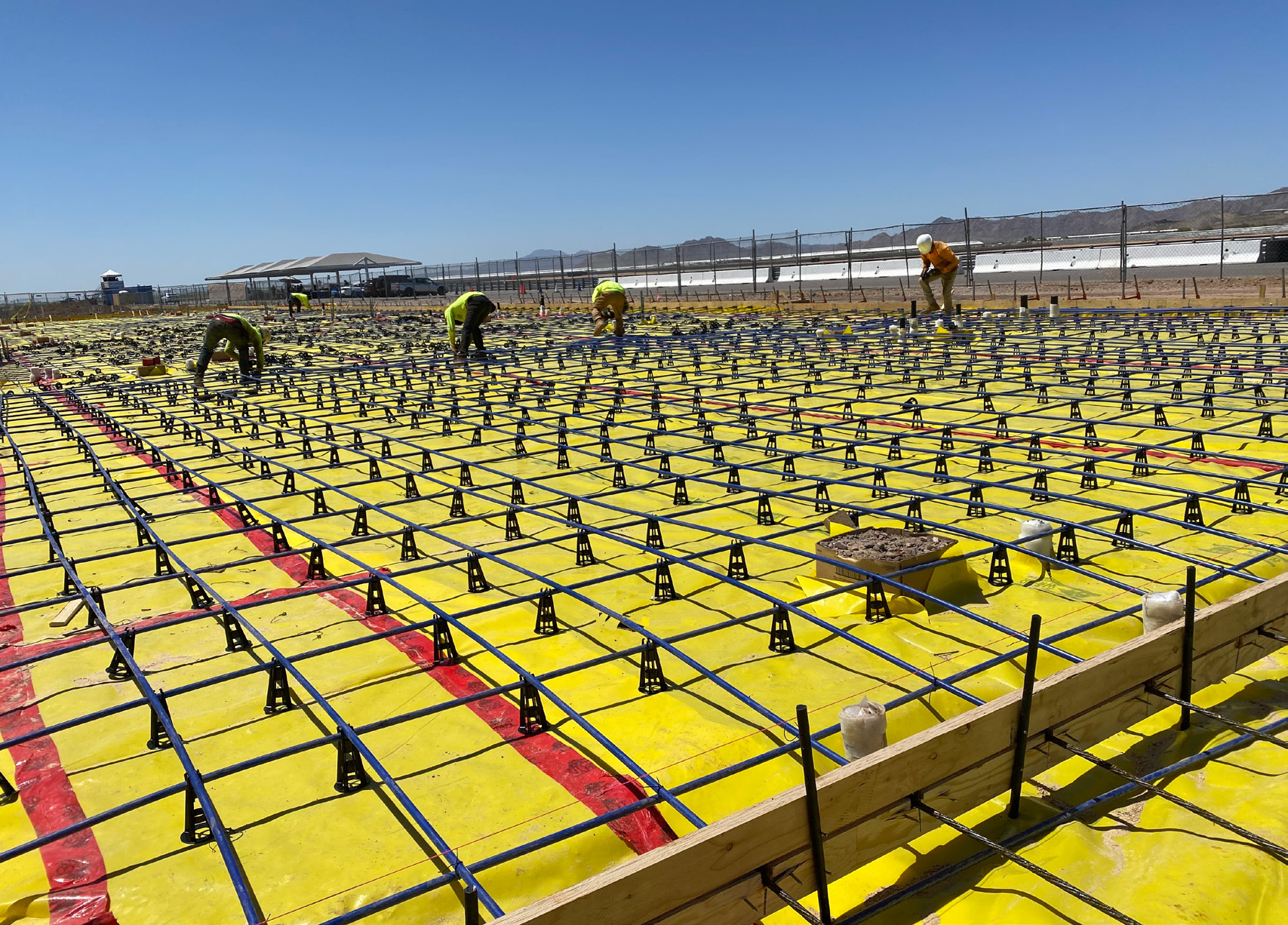
New code changes in the 2024 edition of the International Residential Code (IRC) directly influence the construction of residential post-tensioned slabs-on-ground (PT-SOG). Prior to the 2024 edition of the IRC, Section R506 “Concrete Floors (On Ground)” only referred to ACI 332 for the design and construction of concrete slab-on-ground floors. The 2024 edition of the IRC added a new Section R506.2 “Post-Tensioned Slab-on-Ground Floors,” which states that “post-tensioned concrete slab-on-ground floors placed on expansive or stable soils shall be designed in accordance with PTI DC10.5.”
PTI DC10.5-19 Standard Requirements for Design and Analysis of Shallow Post-Tensioned Concrete Foundations on Expansive and Stable Soils was also added to the IRC as a reference. DC10.5 refers to PTI M10.6 Specification for Unbonded Single Strand Tendons Used for Slab-on-Ground Construction, which requires that post-tensioning materials used in PT-SOG are sourced from Post-Tensioning Institute (PTI) certified plants and that installation and stressing of these materials are performed by PTI-certified field personnel.
A code pathway to DC10.5 and thus M10.6 can also be found in the International Building Code (IBC) for post-tensioned slabs-on-ground governed by the IBC. Post-tensioned concrete construction for multilevel, elevated structures adapted to similar code requirements long ago and has realized the short- and long-term benefits of having material from certified plants installed by certified personnel.
PT-SOG is no exception and stands to benefit from higher quality materials and workmanship, resulting from code requirements for PTI plant certification and PTI field personnel certification.
PTI CERTIFICATION BENEFITS
PTI certification benefits stakeholders across the residential construction industry by improving the quality of materials and workmanship for PT-SOG, which supports overall project objectives for quality, durability, safety and productivity by providing:
• Higher-quality post-tensioning (PT) system materials manufactured by certified plants.
• Higher-quality installation, stressing and finishing of PT materials by Post-Tensioning Institute (PTI)-certified field personnel.
• Improved safety during stressing of PT tendons due to training and education received by certified field personnel.
• Schedule savings from more efficient PT operations and fewer issues coordinating PT with other trades on the project.
• Fewer troubleshooting incidents (for the contractor and licensed design professional) that are more commonly encountered when using non-certified personnel.
• Improved structural durability and lower life-cycle costs due to higher-quality materials and workmanship.
• Fewer contractor warranty issues and greater risk mitigation.
To realize the benefits of PTI certification required by the code, it is imperative that licensed design professionals, owners, contractors, inspectors and municipalities take an active role in enforcing these code requirements. Materials and workmanship from non-certified plants and personnel are inferior, as they do not comply with code requirements and do not support overall project objectives for quality, durability, safety and productivity.
PTI FIELD PERSONNEL CERTIFICATION
PTI Level 1 & 2 Slab-on-Ground Installer & Inspector field personnel certification is a two-day workshop designed specifically for installation and inspection of single strand unbonded tendon systems in residential and light commercial slabs-on-ground. Attendees of this workshop can earn the following certifications, depending on their background, experience and exam score:
- • PTI Level 1 Slab-on-Ground Installer
- • PTI Level 2 Slab-on-Ground Installer
- • PTI Level 1 Slab-on-Ground Inspector
- • PTI Level 2 Slab-on-Ground Inspector
Code requires that field personnel be certified as follows:
- Installer Certification
- Crew Foreman – PTI Level 1 Slab-on-Ground Installer
- Tensioning Certification
- Crew Foreman – PTI Level 2 Slab-on-Ground Installer
- Remainder of Personnel – PTI Level 1 Slab-on-Ground Installer
- Inspection Certification
- Inspector – PTI Level 2 Slab-on-Ground Inspector
In February 2026, PTI presented a webinar titled “PTI’s Certification Programs: Field Personnel and PT Supplier Plants,” which is a great resource to learn more about PTI certification programs. This free webinar is available on demand on the Post-Tensioning Institute website at post-tensioning.org/academy or by scanning the QR code at the bottom of the page. For more information on PTI Certification, please visit post-tensioning.org/certification.

Fifty Years of Change in the Concrete Foundation Industry: How Collaboration and Innovation Continue to Shape the Work of Foundation Contractors
By MPW Construction Services
Over the past fifty years, the concrete foundation industry has experienced dramatic transformation. Advances in technology, improvements in jobsite safety, increased specialization and the ability of contractors to learn from one another have reshaped how foundation work is performed across North America. Since then, organizations such as the Concrete Foundations Association (CFA) have played a significant role in this evolution by providing contractors with a forum to share ideas, refine best practices and adopt new technologies.
For many contractors, the lessons learned through the CFA have helped guide decisions about equipment investment, safety practices and business strategy during both prosperous and challenging economic cycles.
THE INDUSTRY FIFTY YEARS AGO
In the mid-1970s, many concrete foundation contractors operated with limited mechanization. Forms were often handled manually, concrete placement relied heavily on direct discharge from ready-mix trucks, and drainage stone and foundation backfill were commonly placed using shovels and buckets. Equipment that is standard today—such as conveyor trucks, specialized pumping equipment, robotic layout systems and advanced form handling—was either unavailable or not yet widely adopted. Contractors relied primarily on craftsmanship, field experience and trial-and-error learning. While these companies built strong reputations in their local markets, opportunities to learn from peers in other regions were limited. As the industry matured, contractors began seeking opportunities to collaborate and learn from one another. This need helped drive the growth of organizations such as the CFA.
Through conferences, technical publications and contractor-to-contractor networking, the CFA created an environment where companies could exchange practical knowledge about construction methods, equipment and management practices.
For many contractors, this exchange of ideas accelerated the adoption of new technologies and improved business practices. Participation in the association also helped contractors better understand emerging issues affecting the industry, including waterproofing systems, safety standards, equipment innovations and changes in building codes.
TECHNOLOGY AND INNOVATION
Over the past several decades, foundation construction has been significantly influenced by technological innovation. Mechanized conveying systems have reduced manual material handling. Crane-handled form systems have improved efficiency and safety. Layout technology has evolved from tape measures and string lines to robotic instruments integrated with CAD-based design files. These advances have enabled contractors to complete projects more efficiently while maintaining higher levels of precision. They have also expanded the industry’s ability to construct increasingly complex foundation systems.
Many of these innovations spread across the industry through collaboration among contractors and the sharing of experience through organizations such as the CFA.
Another important development within the industry has been the growing emphasis on jobsite safety. Over the past several decades, contractors have adopted formal safety programs, required personal protective equipment and implemented structured training for field employees. These changes have significantly improved working conditions for crews performing physically demanding work. Industry organizations have played an important role in sharing safety knowledge and encouraging contractors to adopt best practices that protect workers while maintaining productivity.
Like much of the construction sector, foundation contractors have also had to navigate significant economic cycles. Periods of strong housing demand have often been followed by downturns that forced companies to adapt quickly. The housing collapse beginning in 2007 demonstrated the vulnerability of contractors heavily tied to residential construction. Many companies responded by diversifying their services to include commercial foundations, excavation and other related construction activities.
The ability to share experiences and strategies with other contractors has proven valuable during these difficult periods. Industry associations provide a network where companies can learn how others are adapting to changing market conditions.
Today’s foundation contractors operate in an environment that is far more technologically advanced and professionally connected than it was several decades ago. Modern equipment, digital layout systems and improved construction methods have increased productivity and precision. At the same time, industry collaboration has helped contractors raise standards for safety, quality and professionalism.
Organizations like the CFA continue to play a key role by bringing contractors together to share knowledge, address industry challenges and encourage innovation. As the concrete foundation industry moves forward, the ability to adapt to new technologies, shifting markets and evolving construction practices will remain essential. Equally important will be the continued collaboration among contractors who recognize that sharing knowledge strengthens the entire industry.
The past fifty years have demonstrated that when contractors work together—through organizations like the CFA—they are better equipped to improve construction practices, support their workforce and deliver lasting value to the communities they serve.
Bad Concrete or Bad Testing? Handling Low Cylinder Breaks in Concrete Testing
By CFA Staff
Based on the CFA Classroom resource, “When Bad Breaks Happen,” presented by Kim Basham. The 2018 presentation has been updated to include current references to codes and standards.
The integrity of any construction project relies heavily on the materials used. When compressive strength evaluation results fall short of expectations, it often triggers project delays, increased costs and liability concerns. However, low cylinder breaks are frequently misunderstood. A failing test does not automatically dictate that the concrete structure itself is fundamentally flawed.
The online Concrete Foundations Association (CFA) Classroom contains a past CFA Convention presentation where leading industry voice Kim Basham, KB Engineering LLC, presented on handling project situations where compressive tests fail to reach specified strengths. His insights provide a guide for determining whether a true problem exists and how to disprove liability for poor performance.
Concrete cylinder testing serves as the standard method for verifying that the concrete delivered to a site meets the specified mix design. However, these cylinders represent the concrete as delivered rather than the concrete as it cures in the actual structure.
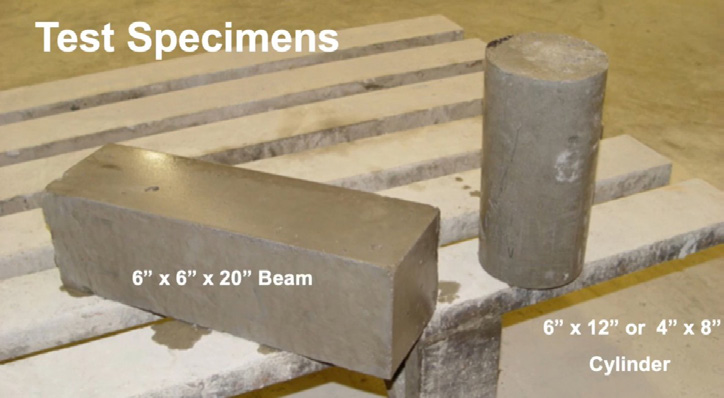
To maintain consistency, cylinders must be cast and cured according to strict ASTM-C31 standards. A standard strength test consists of the average of either two six-by-12 cylinders or three four-by-eight cylinders. Because a flaw in a larger six-by-12 cylinder has less impact on the overall result than the same flaw in a smaller four-by-eight cylinder, testing requires three of the smaller specimens to ensure an accurate average.
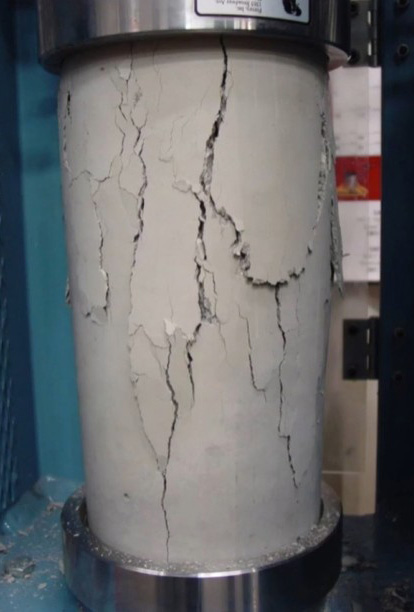
Furthermore, ASTM standards ensure that cylinders are created and broken consistently, but they do not interpret the results or determine ultimate pass/fail status. To ensure testing accuracy, the American Concrete Institute (ACI) 301 requires that anyone making field cylinders for acceptance must hold an ACI field grade certification level one. Cylinder strength, measured in pounds per square inch (PSI), is calculated by dividing the load at failure by the cross-sectional area. It is worth noting that only the center one-third of a cylinder is effectively tested during a break, as the material fails due to tensile forces perpendicular to the loading direction.
COMMON CAUSES OF LOW CYLINDER BREAKS
When low cylinder breaks occur, the root cause usually falls into one of two categories: bad concrete or bad testing. Far too often, testing irregularities are the actual culprit behind a low break.
Improper sampling is a frequent issue. According to standard procedures, testers must take two samples from the middle third of the ready-mix truck load. There is a strict 15-minute time limit to collect this sample and begin making the specimens. If testers pull concrete from the very beginning or end of a load, or if they let the concrete sit too long before casting, the resulting cylinder will not accurately represent the batch.
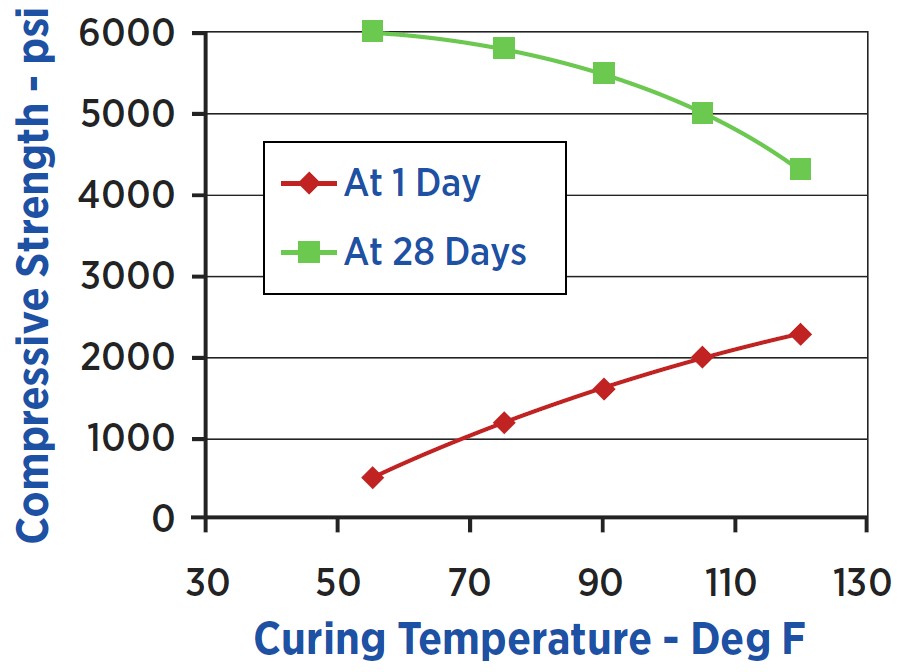
Curing conditions also play a massive role. Standard curing involves highly controlled temperatures, while field curing reflects the ambient conditions of the job site. For concrete rated at 5,000 PSI or less, standard curing requires cylinders to be kept between 60 and 80 degrees Fahrenheit for the first 48 hours. After this initial period, they must be maintained at 73.5 degrees (plus or minus three degrees) for the remainder of the 28-day cycle. Today, the testing lab is responsible for providing the initial cure box. If cylinders are left exposed to extreme heat or freezing temperatures on site, their strength will be severely compromised, leading to low breaks that do not reflect the actual structural concrete.
To properly evaluate concrete, professionals must understand the acceptance criteria and the natural statistical variation inherent in the material. Concrete is a heterogeneous mixture of water, cement and aggregates. Because of this, some statistical variation in test results is completely normal and expected.
Industry standards dictate that the average of any three consecutive tests must equal or exceed the specified strength. Furthermore, no single test can fall more than 500 PSI below the specified strength for concrete rated at 5,000 PSI or less. For high-strength concrete greater than 5,000 PSI, no single test can fall below the specified strength by more than 10%.
If a test result is within 500 PSI of the target but the running average drops below the specified strength, the immediate action should be adjusting plant procedures rather than rejecting the concrete outright. Understanding these statistical allowances prevents knee-jerk reactions and keeps projects on schedule while maintaining safety standards.
IN-PLACE STRENGTH EVALUATION
When standard cylinders fail to meet the acceptance criteria, the focus must shift to compressive strength evaluation of the concrete actually in the structure. Cores drilled from the hardened concrete are the definitive method for acceptance or rejection.
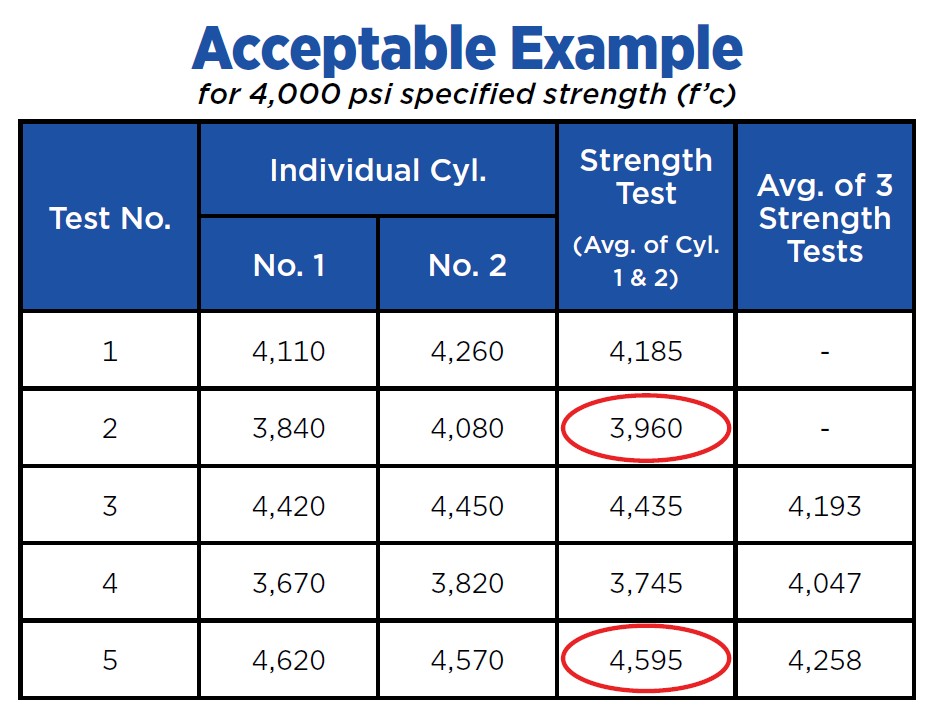
According to guidelines, the average strength of three cores must be at least 85% of the specified strength, with no individual core breaking at less than 75%. Cores should be taken from the same general location to ensure a consistent sample set. The core diameter should be a minimum of 3.7 inches, ideally with a length-to-diameter ratio of two. ASTM recommends waiting at least 14 days before drilling cores to allow the concrete to gain sufficient strength and to prevent damage during the drilling process.
Moisture and orientation also affect core breaks. Dry cores can break 15% to 20% higher than wet cores. Additionally, horizontal cores typically break 7% to 9% lower than vertical cores due to the orientation of bleed water channels trapped under aggregate particles during the initial pour. For non-destructive testing, equipment like the Windsor probe offers a more reliable assessment than a standard rebound hammer. Acoustic tests can also provide estimates, where a sound transmission from various non-destructive testing (NDT) methods of 16,000 feet per second roughly correlates to a strength of 4,000 PSI.
FACTORS AFFECTING CONCRETE STRENGTH
Several environmental and mechanical factors influence the ultimate strength of your concrete. The water-cement ratio is arguably the most critical variable. Adding just one gallon of water over the mix design can lower the concrete’s strength by approximately 200 PSI.
Curing temperatures dramatically alter strength development. A poorly cured slab can exhibit a 35% difference in strength compared to a properly cured specimen. You can expect about a 15% strength difference between standard laboratory-cured specimens and field-cured specimens left exposed to ambient site conditions.
Stress history and micro-cracking also play a vital role in in-place strength. If a core is taken from an area where the concrete has already been subjected to structural stress, shrinkage or temperature fluctuations, micro-cracking will have occurred. This internal damage will artificially lower the core’s tested strength, misrepresenting the material’s initial quality. Important variables to verify include water content, air content, unit weight and the concrete placing techniques used on the day of the pour.
RECOMMENDATIONS
Effective project leaders do not just react to problems. They anticipate them and use structured frameworks to find solutions. If you are faced with low cylinder breaks, follow this checklist to identify the root cause and protect your project.
- Verify the low strength report. Check the math on the break report. Ensure the compressive strength was calculated correctly by dividing the load by the exact cross-sectional area.
- Review the batch tickets. Look closely for any instances of water additions on site. Note whether the water was added all at once or gradually, as this impacts the mix integrity.
- Investigate curing conditions. Confirm that the initial cure box was utilized and that temperatures were maintained between 60 and 80 degrees for the first 48 hours.
- Examine testing procedures. Verify that the testing technician held the proper ACI field grade certification and that samples were pulled from the middle third of the load within the 15-minute time limit.
- Evaluate structural capacity. If any strength value falls below the specified strength by 500 PSI, work with the structural engineer to investigate and ensure the structural load capacity is not jeopardized.
- Plan for coring carefully. If cores are required, wait 14 days, select appropriate locations free from high stress and account for moisture content before breaking.
Navigating concrete strength issues requires a strategic approach grounded in industry standards. Low cylinder breaks are stressful, but they are manageable when you understand the mechanics of concrete cylinder testing, statistical variation and in-place evaluation methods. By focusing on proper testing protocols, monitoring curing conditions and utilizing a systematic checklist when issues arise, you can protect your project’s timeline and budget while ensuring complete structural safety.
Continuous learning is the best defense against liability and project delays. To gain a deeper understanding of these concepts and hear real-world examples of overcoming material challenges, view Basham’s full presentation in the CFA Classroom. In the CFA Classroom you can also find additional learning modules including the ACI Residential Concrete Foundation Technician Certification training course. Equipping yourself and your team with this knowledge will empower you to handle future structural challenges with absolute confidence.
As with any concrete mixture, it is essential to conduct trial batches to confirm the specific properties of the concrete. Final results can be affected by various factors, such as temperature, humidity and the specific components used in the mixture. We recommend consulting a local concrete foundation professional for guidance.
Please note that no information provided herein should be interpreted as a warranty or guarantee, whether expressed or implied. This includes, but is not limited to, any implied warranty of fitness for a particular purpose.
REFERENCES
ACI Committee 214. “ACI 214R-11: Guide for Evaluation of Strength Test Results of Concrete,” American Concrete Institute, Farmington Hills, Mich. 2011.
ACI Committee 214. “ACI 214.4R-21: Guide for Obtaining Cores and Interpreting Compressive Strength Results.” American Concrete Institute. Farmington Hills, Mich. 2010.
ACI Committee 228. “ACI 228.1R-19: In-Place Methods to Estimate Concrete Strength,” American Concrete Institute. Farmington Hills, Mich. 2003.
ACI Committee 228. “ACI 228.2R-13: Nondestructive Test Methods for Evaluating Concrete in Structures.” American Concrete Institute. Farmington Hills, Mich. 2013.
ACI Committee 318. “ACI 318-25: Building Code Requirements for Structural Concrete.” American Concrete Institute. Farmington Hills, Mich. 2014.
Bungey, J. H. Testing of Concrete in Structures. 2nd Ed. Surrey University Press. New York, N.Y. 1989. The Concrete Society. “Technical Report #32 Analysis of Hardened Concrete: A Guide to Tests, Procedures and Interpretation of Results.” 2nd ed. Sandhurst, Berkshire, UK. 2014.
Malhotra, V. M., and Carino, N. J. Handbook on Nondestructive Testing of Concrete. 2nd ed. CRC Press. Boca Raton, Fla. 2003.
A Conversation with incoming CFA President Ken Kurszewski

We sat down with Ken Kurszewski, president of Cru Concrete, Inc., to discuss his recent experience with low cylinder breaks. Kurszewski shared valuable insights from his career, including lessons learned and strategies for managing challenges in concrete construction.
Q1: IN YOUR EXPERIENCE, HOW OFTEN DO LOW CYLINDER BREAKS OCCUR, AND WHAT CHALLENGES HAVE YOU SEEN THEM CREATE FOR CONTRACTORS?
Kurszewski: In my career, I’ve only encountered this issue once, and it happened very recently. We poured a foundation in January, covered it with blankets and returned five days later to strip the forms. Unfortunately, Wisconsin experienced an extremely cold stretch—10 out of 14 nights were below zero. The builder questioned the concrete’s strength because they needed to place precast on it. Core drilling and strength tests showed results below accepted standards, but it had only been 18 days since the pour, and the cold temperatures had slowed the curing process.
I immediately turned to the CFA website and watched Kim Basham’s webinar on bad breaks multiple times to learn everything I could about ASTM and ACI standards. We waited until the 28-day mark and retested, ensuring the process followed ASTM standards. The results showed the concrete was within acceptable strength ranges, but without that knowledge, we might have prematurely replaced an $80,000 foundation. This experience highlighted the importance of understanding testing standards and the impact of curing conditions.
Q2: HAVE YOU ENCOUNTERED SITUATIONS WHERE LOW CYLINDER BREAKS WERE WRONGLY BLAMED ON BAD CONCRETE?
Kurszewski: Yes, in this case, the builder initially blamed the concrete, saying it was bad. However, we knew the extremely cold temperatures had slowed the curing process. The first round of testing wasn’t done according to ASTM standards, which added to the confusion.
I ensured the second round of testing was done correctly. The results showed the concrete, specified for 3,000 PSI, tested at 2,750 PSI. According to ASTM standards, this was within the acceptable range of 80-85% of the specified strength. Understanding these standards and the curing process helped us avoid unnecessary replacement and significant costs.
Q3: WHAT LESSONS HAVE YOU LEARNED ABOUT TRAINING TEAMS TO HANDLE CONCRETE STRENGTH ISSUES EFFECTIVELY?
Kurszewski: One key lesson I’ve learned is the importance of having a knowledgeable point person who understands the specifics of concrete testing and curing standards. It’s also critical to recognize that not everyone involved—like the builder’s engineer in this case—may be an expert on these standards. Training teams to rely on accurate resources and ensuring they understand the nuances of field versus lab testing can make all the difference in resolving issues effectively.
Q4: FROM YOUR PERSPECTIVE, WHAT’S THE BEST WAY TO MANAGE LIABILITY CONCERNS OR DELAYS CAUSED BY LOW CYLINDER BREAKS?
Kurszewski: Constant communication is key. In this case, I felt it was important to handle the situation personally, given the scale of the issue. I directly contacted the owner of the general contracting firm to ensure clear and consistent communication.
Having a thorough understanding of the testing standards and the curing process also helped manage liability concerns. By ensuring the tests were conducted properly and the results were interpreted correctly, we avoided unnecessary costs and delays. Additionally, leveraging resources like the CFA hotline or webinars can provide valuable guidance when navigating these challenges.
Q5: WHAT ADVANCEMENTS IN CONCRETE TESTING HAVE YOU SEEN DURING YOUR CAREER, AND WHICH ONES DO YOU THINK HAVE HAD THE BIGGEST IMPACT?
Kurszewski: Honestly, we’ve been fortunate not to encounter many issues with concrete strength over the years. Since I’ve owned the company in 2009, this was the first time we had to core drill a foundation to assess strength. That said, this experience underscored the importance of understanding the differences between field and lab testing, as well as the specific conditions required for accurate results.
Adapting to New Materials and Industry Demands in the Concrete Industry
By CFA Staff
In the concrete construction sector, each project often has at least one challenge that requires a lot of creativity and research to solve. In addition, the standards for materials, tools and methods are constantly changing. Sustainability targets, new performance expectations and operational constraints require a more adaptive mindset for planning and delivery. Understanding and responding to these factors is no longer optional for project success; it has become a driving force behind every material decision.
This article is the first in a series that examines how the industry is responding to ongoing changes and details practical, strategic planning approaches for concrete construction projects, using insights from the UC Davis webinar series, “Addressing Barriers in Innovative Concrete Implementation.”
CHALLENGES IN MATERIAL INNOVATION
The expectation to reduce embodied carbon exists alongside established objectives for structural safety and long-term durability. Some teams are optimizing concrete mixes to achieve efficient use of supplementary cementitious materials (SCMs), while others are evaluating design alternatives to meet these performance and sustainability mandates. There is a balance to maintain; reducing emissions cannot lead to compromised strength or reliability. For many projects, this means careful alignment of material selection with project-specific goals, context and available resources.
Vertical construction, including commercial high-rise buildings, often involves tight schedules. Adopting new materials can pose a risk; contractors may hesitate if they believe it could cause delays or disrupt established timelines. In contrast, horizontal construction—such as highway pavements—is frequently influenced by legislative requirements for lower carbon emissions. Recognizing these sector-specific pressures is essential for developing practical strategies. By selecting technology and materials that fit each project sector, teams can support key delivery requirements and achieve project goals more effectively.
The industry faces reported shortages of traditional SCMs such as fly ash and slag. Nationally, supplies sometimes seem stable, but in practice, regional limitations force producers to seek and evaluate alternative sources. This ongoing dynamic means that relying solely on standard materials is less viable, making diversification part of the normal planning process.
This shift brings variability in material properties. Imported cements and natural pozzolans might produce inconsistent test results—projects sometimes encounter unexpected water absorption or shrinkage. Teams must find solutions that safeguard durability and address carbon reduction targets. Selecting and validating new materials is not a static exercise, but a dynamic process with multiple moving parts. Effective planning often means revisiting assumptions as data is gathered from field and lab work.
To this effect, new alternative materials are now being considered across the industry. These include natural pozzolans, remediated fly ash, calcined clay and low-carbon cements. Each alternative brings its own set of characteristics and testing requirements. Sometimes, trial results prompt immediate changes. At other times, collaboration is required to resolve issues as they emerge. This process is rarely linear; verification often involves a cycle of assessment, feedback and adaptation that continues throughout a project’s duration.
LOGISTICAL HURDLES IN ADOPTING NEW MATERIALS
Replacing one material with another is not a straightforward task. It is a multi-stage process that calls for advanced planning and careful allocation of resources. Some teams spend as much as six months on testing—spanning mortar trials, concrete lab tests, plant-scale evaluations and project mock-ups—all to confirm field performance. For every step, project managers must adapt and match their process to new constraints.
Storage space at concrete plants is limited, and finding room for new materials often becomes a logistical puzzle. Some teams use super sacks, large, flexible polypropylene containers, to accommodate these additions. However, super sacks bring their own set of challenges. Loading processes can become more complicated, and incorrect sequencing sometimes leads to balling in mixing trucks.
Air quality permits may also restrict opportunities for material testing, making compliance costly and bringing added complexity to the process. On job sites, contractors regularly encounter technical hurdles. Shrinkage issues appear without warning, while pumping finer pozzolans can become problematic when filters shrink. By proactively identifying these challenges, project managers are better equipped to build contingencies into their plans and control project costs.
Structured communication is a key factor in managing logistical challenges. When suppliers, producers, engineers, contractors and owners engage in open dialogue, it becomes possible to identify and resolve issues related to material performance more quickly. Without collaboration, projects risk delays or higher costs. Sometimes a single conversation can clarify a technical issue or uncover a practical solution that saves both time and resources. Consider how a project team can avoid unnecessary setbacks by simply sharing a test result or discussing an unexpected field observation early in the process. Through routine communication and a willingness to adapt, teams can better coordinate their approach and minimize risks as the project moves forward.
The current environment for concrete materials presents measurable challenges and process adjustments. Navigating SCM shortages and logistical requirements requires the use of tested materials, documented communication and appropriate technology for project execution. Projects that demonstrate consistent planning, data sharing and integration of available digital tools are positioned to meet specified workflow objectives.
The next article in this series will address specific strategies for overcoming barriers in innovative concrete implementation.
The concepts of this article were taken from a presentation by UC Davis. As with any concrete mixture, it is essential to conduct trial batches to confirm the specific properties of the concrete. Final results can be affected by various factors, such as temperature, humidity, and the specific components used in the mixture. We recommend consulting a local concrete foundation professional for guidance.
Please note that no information provided herein should be interpreted as a warranty or guarantee, whether expressed or implied. This includes, but is not limited to, any implied warranty of fitness for a particular purpose.
Case Study
WALLS TO NOWHERE COQUITLAM, BRITISH COLUMBIA, CANADA
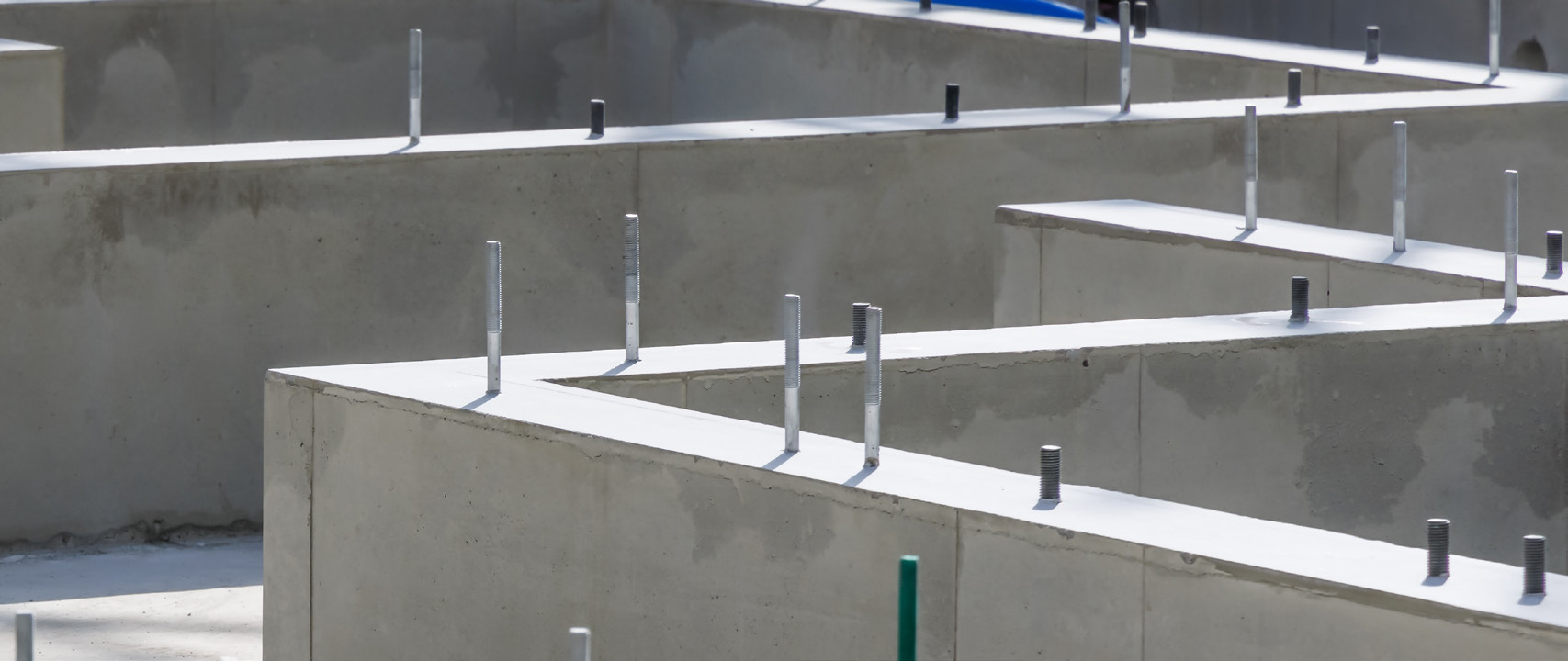
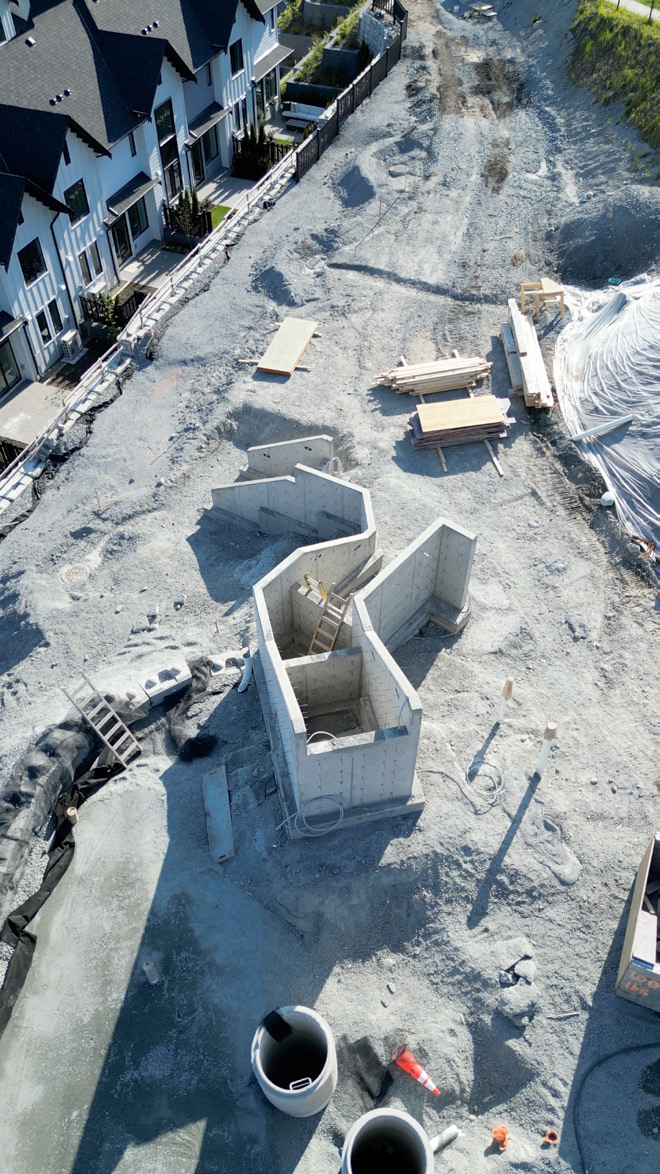
The Walls to Nowhere project in Coquitlam, British Columbia, required layout and forming for several odd-angle corners including two 53-degree, one 58-degree and one 45-degree angle. Warped plywood affected the ability to connect bevels at these corners.
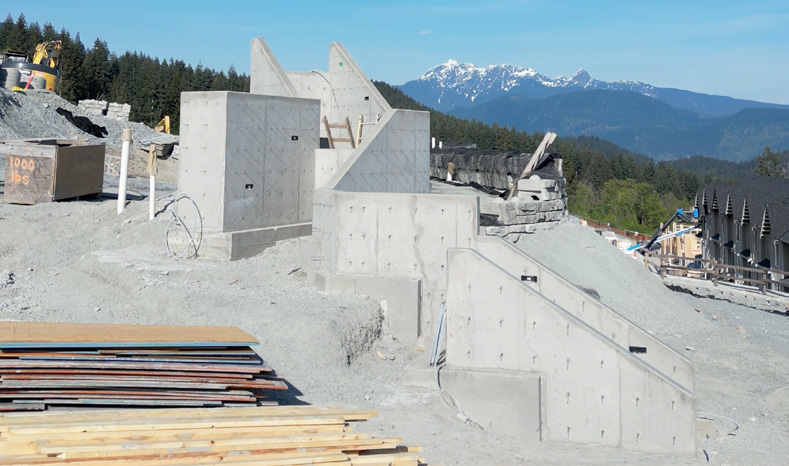
The team addressed these challenges by beveling the plywood at each odd angle and using chamfer strips for 90-degree edges. To manage warped plywood, mitered walers were applied to close gaps. The project team used AutoCAD and BricsCAD for 3D modeling of the footings, walls and form panels. A Leica Robotic Total Station was used for layout and installation accuracy. These techniques enabled precise formwork, reduced on-site adjustments and contributed to a faster project timeline with fewer errors. This project was named a 2025 CFA Project of the Year for its innovative solutions to challenges and the group’s seamless teamwork.
CFACON26: Your Path to Industry Excellence
Companies attend industry events for different reasons, but the most successful share a commitment to continuous learning, adaptability and operational excellence. CFACON26 is designed to support those goals.
From July 21–23, 2026, the cast-in-place concrete industry will convene in Milwaukee, Wis., for three days of education, exhibits and meaningful networking. Hosted at the Brookfield Conference Center, CFACON26 brings together commercial and residential foundation contractors, designers, manufacturers and suppliers focused on strengthening their businesses and advancing the industry.
TUES JULY 21
CFACON26 begins with a focus on industry fundamentals. The morning features the Residential Concrete Foundation Technician Certification Exam, available to both first-time candidates and those seeking renewal.
Afternoon activities include the National Associates Meeting, Board of Directors Meeting and Technical Committee Meeting. The day concludes with the highly anticipated Kick-Off Reception in the Exhibit Hall, offering an ideal setting to connect with peers, explore innovative products and services and spark conversations that will carry through the week.
WED JULY 22
Wednesday offers a full agenda of educational sessions, including topics like Building Smarter with AI, Cold Weather Concrete, The Future of Cement: Type IL and Emerging Blends, as well as a technical panel, where industry experts will address current challenges, emerging technologies and evolving standards in cast-in-place concrete. This panel offers attendees a valuable opportunity to ask questions, engage in open dialogue and gain practical insights directly from technical leaders shaping the industry’s future.
The day also features the Awards Luncheon Gala, a distinguished celebration of excellence within the industry. The 2026 Project of the Year Awards will showcase technical achievements in cast-in-place concrete, while the Professional Awards will honor individuals who have made significant contributions to poured wall construction. The evening concludes with an exhilarating social event at the iconic Harley-Davidson Museum. Attendees will enjoy exclusive access to explore the legendary exhibits, immersing themselves in the storied history and culture of this renowned brand, all while connecting with peers in a vibrant and unforgettable setting that’s uniquely Milwaukee.
THURS JULY 23
Thursday focuses on the future of the industry directly. Morning sessions include 3D Concrete Printed Housing: Headlines versus Implementation, followed by session on navigating the 2026 economy. CFACON26 concludes on a high note with a special local Milwaukee experience, giving attendees the chance to unwind, connect and celebrate three impactful days of learning and collaboration.
CFACON26 concludes on a high note with a special local Milwaukee experience, giving attendees the chance to unwind, connect and celebrate three impactful days of learning and collaboration.
CFACON26 YOUR PATH TO DON’T MISS OUT ON CFACON26
Registration for CFACON26 is now open. Limited exhibit space and sponsorship opportunities remain available for those looking to elevate their brand presence. Whether you plan to attend, exhibit or sponsor, now is the time to secure your spot. Commit to your company growth, finalize your travel plans and take part in the conversations shaping the future of the cast-in-place concrete industry. We look forward to seeing you there! Visit cfaconcretepros.org/events or scan the QR code to reserve your spot.
Glass Fiber Reinforced Polymer as a Replacement for Steel: Q&A with Industry Leaders
Glass Fiber Reinforced Polymer (GFRP) is competing with steel for the position of the preferred method of reinforcement in concrete foundations. GFRP’s high tensile strength, low weight and natural resistance to corrosion reduce maintenance, streamline installation and improve both safety and long-term ROI. We asked three leading fiberglass rebar manufacturers who are all CFA members—GatorBar, Mateenbar and MST Rebar—to share their thoughts about the benefits, challenges and applications of GFRP.
Q1: HOW WOULD YOU EXPLAIN GFRP TO A CONTRACTOR WHO IS UNFAMILIAR WITH IT, AND WHAT ARE ITS PRIMARY MATERIAL PROPERTIES COMPARED TO TRADITIONAL STEEL REBAR?
MST Rebar: GFRP rebar serves the same fundamental purpose as traditional steel reinforcement—it provides tensile capacity—but it does so using a different material system. GFRP is a composite material made of high-strength glass fibers, which provide the tensile capacity, embedded within a durable resin matrix that gives the bar its shape and protects the fibers.
GatorBar: GFRP is a lightweight, non-rusting alternative to traditional steel rebar. It has very high tensile strength but a lower modulus of elasticity than steel, meaning it is less stiff and behaves differently under load. Because it does not corrode in harsh environments, it can significantly extend the service life of concrete structures. Its lighter weight also makes it easier to handle and install, though it must be designed and detailed specifically for its material properties.
Mateenbar: Fiberglass, or GFRP, rebar is lighter weight than steel, easy to cut and has a higher tensile strength than comparable steel products. GFRP reinforcing bars are manufactured using a pultrusion process where strands of glass fiber are pulled through a vinyl ester resin bath and then through a die to mold the glass and resin material into bars that cure to solid form. This precision manufacturing ensures consistent performance, which is critical for structural reliability.
Q2: WHAT ARE THE KEY PERFORMANCE DIFFERENCES BETWEEN GFRP AND STEEL REINFORCEMENT, AND HOW DO THOSE DIFFERENCES IMPACT REAL-WORLD APPLICATIONS?
MST Rebar: From a practical standpoint, one of the most noticeable differences for contractors is weight—GFRP rebar is approximately 75% lighter than steel, making it easier to transport, handle and install on site.
Mateenbar: Unlike steel reinforcing bars, GFRP reinforcing bars do not exhibit any yielding under load. GFRP reinforcing bars have a higher tensile strength but a lower tensile modulus. Additionally, they are lighter in weight, and the materials are non-ferrous, so there is no corrosion. As with any construction material it is critical to always require GFRP that meets or exceeds the relevant ASTM standards and specifications.
GatorBar: GFRP features two times the tensile strength and is four times lighter than steel. It is rust-free, corrosion-free and longer lasting than traditional rebar. Its lightweight nature can reduce installation costs by 35 to 45% based on field studies measuring labor savings. The lighter weight also improves transportation efficiency, one truckload of GFRP #3 is equivalent to about seven truckloads of steel.
Q3: IN WHAT TYPES OF RESIDENTIAL FOUNDATION APPLICATIONS DOES GFRP PROVIDE THE MOST VALUE, AND WHERE MIGHT IT NOT BE THE BEST FIT?
Mateenbar: GFRP is perfect for projects like foundations, driveways, pool decks, patios, sidewalks and more. In addition, it is ideal for light industrial projects like single-story buildings and residential foundations. Its lightweight design simplifies handling while delivering high tensile strength, making it the ideal solution for residential projects, light industrial applications and masonry reinforcement.
GatorBar: GFRP provides the most value in residential applications such as slabs-on-grade, driveways, patios, basement floors, footings, stem walls and ICF walls. Its corrosion resistance makes it especially beneficial in wet, coastal or chemically aggressive environments where steel reinforcement can deteriorate. However, GFRP may not be the best fit in applications requiring ductility or certain fire-rated structural performance unless specifically engineered, since it does not yield like steel and behaves differently under load.
Q4: WHAT DESIGN, INSTALLATION OR INSPECTION CONSIDERATIONS SHOULD CONTRACTORS BE AWARE OF WHEN WORKING WITH GFRP COMPARED TO TRADITIONAL REBAR?
Mateenbar: Since the resin used in the bars cures during the manufacturing process, GFRP bars are not able to be bent in the field. Put another way, any bent shapes need to be formed in the bar in the manufacturing facility (like steel, prior to delivery at the job site in most markets). Because of this process the bends are exact, which we see as an advantage. The bars are formed around the necessary pins and cured in place meaning tolerances, shape and dimensions are exact and more importantly the same time after time. Concrete construction follows the building codes, of course, and ICC-ES equivalency evaluations reports exist for easy conversion of foundations to GFRP reinforced concrete; ours is ICC EER-5548.
MST Rebar: Contractors should be aware that GFRP reinforcement is not always a direct one-to-one replacement for steel in structural applications. Designs using GFRP follow codes such as ACI 440.11, which may result in different bar spacing or placement compared to steel designs under ACI 318. To simplify this process, pre-engineered solutions—such as ICC-ES evaluation reports (e.g., EER-4664)—are available to provide standardized reinforcement layouts for residential foundations without requiring project-specific engineering.
Q5: WHAT IS THE BIGGEST CHALLENGE FACING THE CONCRETE INDUSTRY MOVING AWAY FROM STEEL TO GFRP?
GatorBar: The biggest challenge facing the concrete industry in moving from steel to GFRP is industry familiarity and design comfort with steel versus limited experience with FRP properties. Engineers are highly accustomed to steel’s behavior, while GFRP’s lower modulus of elasticity and elastic‑to‑failure behavior are often misunderstood as disadvantages. Because GFRP does not yield like steel and behaves differently in crack control and stress distribution, it requires adjusted design approaches and education. Overcoming this knowledge gap and changing long‑established specifications is the primary barrier to widespread adoption.
MST Rebar: The primary challenge is education and familiarity. While GFRP reinforcement has been extensively tested and used in real-world applications, many engineers, contractors and inspectors are still more familiar with traditional steel reinforcement. Expanding the use of GFRP requires increased familiarity among engineers for design and specification, awareness among contractors of installation practices and comfort among inspectors with code acceptance and compliance.
For more industry insights, educational materials and project support, visit the CFA website at cfaconcretepros.com or scan the QR code.

Please note that no information provided herein should be interpreted as a warranty or guarantee, whether expressed or implied. This includes, but is not limited to, any implied warranty of fitness for a particular purpose.
ABOUT THE COMPANIES
GatorBar is a 100% USA-made GFRP manufactured by Neuvokas Corporation as an alternative to steel reinforcement. It is lightweight, corrosion-resistant, high-strength and ICC-certified (ESR- 526), designed to extend concrete service life while improving installation efficiency. Learn more about them by visiting gatorbar.com or by scanning the QR code.

Mateenbar leads innovation in fiberglass rebar, producing products like Greenbar2X for residential and light industrial projects and Mateenbar60 for larger infrastructure. With a long history in manufacturing and a focus on sustainability, Mateenbar supports the industry with technical guidance and nationwide distribution. Visit their website at mateenbar.com or by scanning the QR code.

MST Rebar is known for its engineered solutions and expertise in composite reinforcement, providing durable GFRP bars that meet modern performance and compliance standards. Their commitment to quality helps contractors succeed with reduced corrosion risk and maintenance needs. Visit their website at mstbar.com or by scanning the QR code.

Exhibitors and Sponsors Support CFA at CFACON26
This year’s CFACON will be held in Milwaukee, Wis., from July 21-23. CFACON is made possible by its sponsors and exhibitors. Here is a sample of who is sponsoring or exhibiting at CFACON26.
Mateenbar
Exhibitor
Mateenbar Composite Reinforcements (Mateenbar) is the global leader in Glass Fiber Reinforced Polymer (GFRP) rebar, delivering innovative, sustainable and corrosion-free reinforcement solutions for concrete construction. Manufactured in the USA and fully BABA-compliant, Mateenbar meets or exceeds all industry standards, codes and specifications, including ASTM, ACI and TMS. Across two product lines, Mateenbar serves a wide range of markets, from residential and light commercial foundations to critical infrastructure. Greenbar2X® is specifically designed for cast-in-place concrete, offering lightweight handling and unmatched corrosion resistance.
Mateenbar60™ provides a high-strength GFRP solution ideal for demanding structural applications. Pre-made GFRP bends are available to streamline installation. As a trusted partner in the concrete industry, Mateenbar supports CFA’s mission by advancing durable, high-performance reinforcement solutions that enhance residential construction quality and sustainability. Come by and learn more at CFACON this summer!
Bolsinger Rebar
Exhibitor
Bolsinger Rebar Inc. is a family-owned, independent rebar fabricator based in Cascade, Iowa, proudly serving the Midwest with a focus on quality, value and customer-first service. With over 25 years of industry experience, our team specializes in rebar sales, fabrication, pre-tied cages, wire mesh and accessories designed to improve jobsite efficiency and performance. At CFACON26, we’ll be showcasing our fabrication capabilities and value-added services, including pre-assembled rebar cages that help contractors save time and reduce labor on site. We’ll also highlight our ability to supply full truckload direct shipments for competitive wholesale pricing. Stop by our booth to learn how Bolsinger Rebar can help streamline your next project and build stronger foundations for the future.
Rub R Wall
Exhibitor
Better walls. Better waterproofing. One manufacturer. We don’t have MBAs or Ivy League degrees. We make decisions on job sites, not in boardrooms and that’s exactly how Pow-R-Wall and Rub-R-Wall got built. Pow-R-Wall is our ICF system designed with poured wall contractors in mind. Familiar enough to transition into, built to compete with the forms you already trust. Less concrete, less bracing, engineered drawings included per project. Rub-R-Wall has been keeping foundations dry for over 30 years. One application, no callbacks, no excuses. Together they’re a complete below-grade system from a single manufacturer who stands behind both. No piecemeal warranties. No finger-pointing between suppliers. You’ve invested in poured walls and that expertise has real value. We’re here to help you build on it.
BIK Boom Trucks
Exhibitor
From our humble beginnings over 35 years ago, BIK Boom Trucks has continued to grow by standing on one great principle: to “Provide quality products and service at an affordable price.” With this philosophy as a backbone, BIK Boom Trucks has become a paramount player in the supply of truck-mounted unloaders. BIK serves a multitude of different industries with our Knuckle Boom Trucks and Truck Mounted Forklifts, including specialized Quality Boom Trucks for Foundation Contractors and General Construction! We have models ranging from the BIK FC-70, which handles 2,200 lb. at 70 ft, to the FC-110, which handles 1,600 lb. at 110 ft horizontally. As technology continues to evolve, BIK will be there to deliver the same great service that has brought us this far.
Western Forms
Guest Social Sponsor
Western Forms is honored and excited to exhibit and support the CFA Summer Convention. The CFA represents the best of the best in the industry, and the team at Western Forms is
grateful for longstanding relationships and the opportunity to build new ones through the CFA. This year, the Western team will be in attendance to ask questions and learn how we can help advance the foundation industry. We’ll also feature poetry readings by Jim Aylward and Financial Form Advice from Tom Carkhuff F.F.A. The CFA challenges us to be better and defend the title that comes with 70 years of elite aluminum forming technology. See you in Milwaukee!
Concrete Forms Services
Hospitality Sponsor
Concrete Forms Services, a long-time supporting member of the CFA offers Concrete Contractors a way to drastically reduce their lumber bill on their footings. The Aluminum EzFootings system imparts a light fast assembling system with a multi-use tie that acts as your spreader and rebar chair all in one which is comparable in cost to adobe blocks or rebar chairs, only the EzFooting ties allow you to order your concrete exact, because there is no lapping or bulging when using our ties, which adds to the amount of concrete required to finish the job. Concrete Forms Services has a tried and proven track record of more than 23 years in the industry and most customers report a 40-50% time savings versus lumber. Ask our fellow CFA members who own and have been using them for years what they think, then come see us at our booth, it’s worth checking out.
GatorBar
Exhibitor
GatorBar is a trusted manufacturer of high-performance FRP (fiberglass reinforced polymer) rebar, engineered to deliver superior strength, durability and corrosion resistance in concrete reinforcement applications. Designed as a long-lasting alternative to traditional steel rebar, GatorBar is lightweight, non-corrosive and ideal for infrastructure, marine, bridge and flatwork projects where longevity matters most. At CFACON26, we’ll be showcasing our full line of GatorBar products and discussing how our solutions can extend service life while reducing maintenance costs. Our team will be on hand to answer questions, provide product insights and explore partnership opportunities. Stop by our booth to grab a free GatorBar hat or T-shirt—while
supplies last.
GMX, Inc.
Presenting Sponsor
Better drainage, superior durability, competitively priced, environmentally friendly, flexible and bends easily. And it doesn’t itch! What more needs to be said? Fiberglass protection boards just can’t match the standard of excellence set by GMX’s Thermal Drain. Thermal Drain can be ordered in R-3, R-5 and R-10 versions with board thicknesses of 3/4,1-1/4 and 2-1/2 inches. GMX manufactures waterproofing systems for the residential market and a full line of commercial waterproofing products and systems. Since 1895, GMX has provided solutions for the most challenging waterproofing problems. We welcome the opportunity to put our experience at your service.
Cranes & Equipment
Hospitality Sponsor
Founded in 1982, Cranes & Equipment Corporation has proudly supported the concrete foundation industry for more than four decades. What began as a small operation building form handling trucks for poured wall contractors has grown into a trusted provider of crane sales, service, parts and inspections across multiple industries. From the start, our mission has remained the same: deliver quality equipment backed by dependable service and long-term customer relationships. As a long-standing member of the Concrete Foundations Association since 1987, we value the partnerships and shared knowledge that help move our industry forward. Today, our employee-owned team continues to build custom crane solutions and provide responsive support that keeps contractors productive and projects on schedule—carrying forward the same dedication and work ethic that defined our company from day one. Swing by our booth at CFACON and say “Hi!”
Progressive Foam Technologies
Hospitality Sponsor
Progressive Foam Technologies is a leading manufacturer of foam insulation products for home exterior, interior and foundation applications—and is also the inventor of insulated vinyl siding. We are excited to add ReadyClad®, rigid insulation with built-in furring strips for cladding installations, to our expanding portfolio of high-performance solutions. For over 34 years, PFT’s insulation solutions have made homes more energy efficient, durable, beautiful and comfortable. We are dedicated to helping Home Builders and Contractors meet their unique goals with our expanding product portfolio and programs that deliver higher levels of performance and benefits their customers’ desires.
Retti
Wednesday Social Sponsor
Retti is the only field‑operations software built specifically for poured wall concrete contractors and designed to match the real pace, pressure, and precision of concrete work. It keeps your schedule clean, your crews aligned, and your day from turning into chaos. With Retti, everyone sees the same plan—what’s pouring, who’s on it, what changed, and what’s coming next. Crews get clear instructions before they roll out, the office gets real updates from the field, and extras get documented the moment they happen so nothing slips through the cracks. Retti is set up around the way your team actually works and talks. Contractors across the country use Retti to bring more calm, control, and predictability to their days—so they can focus on doing great work instead of putting out fires. Heading to CFACON26? Swing by our booth to see how Retti can work for you and your crews.
Nox-Crete
Wednesday Social Sponsor
Now is a great time to clean your aluminum forms…the easy way! Fall and winter are a great time to start thinking about how to remove hard concrete buildup from your aluminum forms. Form Clean is a powerful, chemically active, dual-purpose product designed to quickly soften hard concrete buildup while also working as a form release agent. Using Form Clean as a replacement for your everyday form release agent for two to three weeks is generally sufficient to remove most concrete buildup. Once your forms are clean, you can switch back to your everyday release agent. If your aluminum forms accumulate more buildup, simply switch back to Form Clean to soften and remove the buildup. Stop by our booth at CFACON to learn more!
Caught in Action: The Foundation of Excellence with Ekedal Concrete
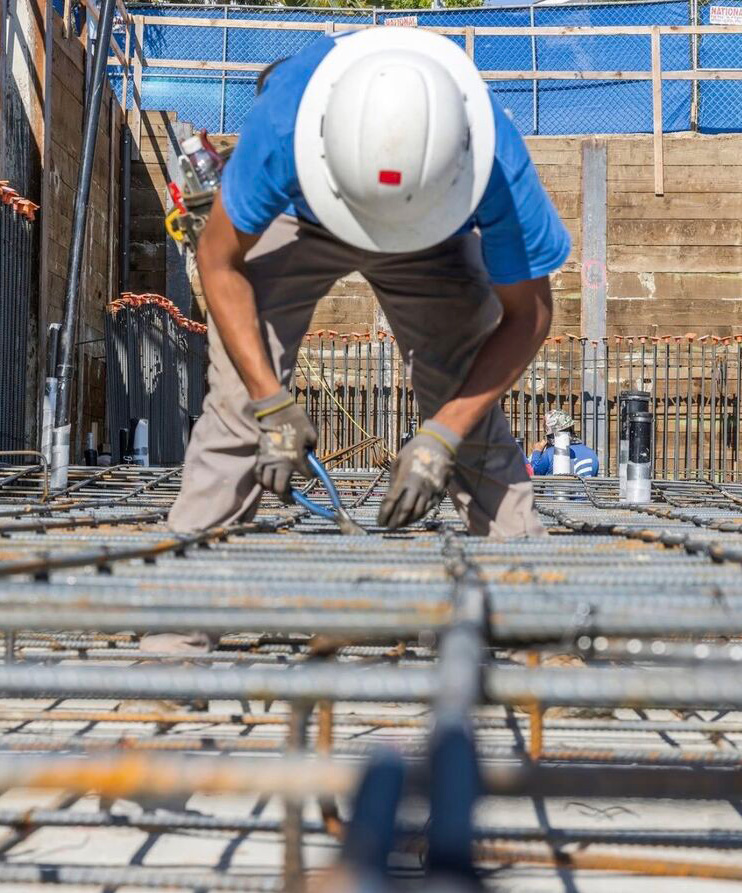
In the world of concrete construction, the final product often steals the spotlight. But as Ekedal Concrete, from Irvine, Ca., reminds us, a good finish starts long before the final pour. It’s the unseen details, the groundwork, the preparation and the materials that truly set the stage for success.
“Our reputation is everything, especially in high-end residential work where expectations are extremely high,” says Ryan Ekedal, president of Ekedal Concrete. “We approach every project knowing that we’re not just building foundations, we’re building trust, and that drives us to deliver at the highest level every time.”
One of those critical, yet often overlooked, elements is rebar. While it might not be the first thing that comes to mind when admiring a finished project, rebar plays a pivotal role in the structural integrity of concrete. It’s the backbone that ensures the finished product not only looks great but also stands the test of time.
“The unseen work is what determines the long-term performance of the structure,” Ekedal emphasizes. “If the foundation isn’t right, nothing above it matters, so we take pride in executing the details that ensure strength, durability, and peace of mind for decades.”
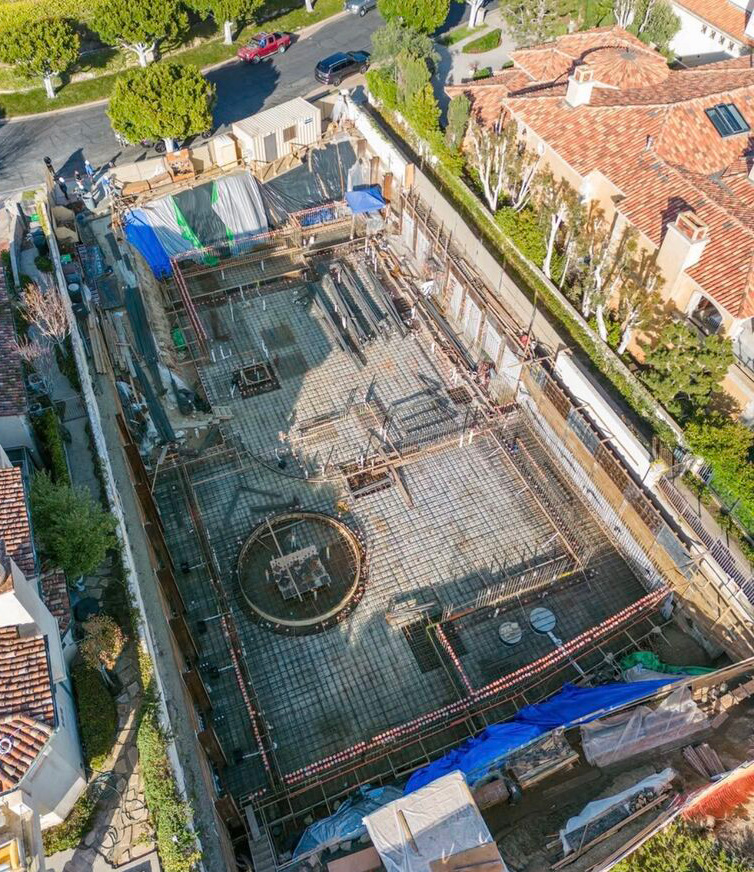
This philosophy is at the heart of Ekedal Concrete’s approach to every project. By focusing on the details that others might overlook, they ensure that their work not only meets but exceeds expectations. It’s a commitment to craftsmanship that sets them apart in the industry.
“Take the same pride in what’s hidden as you do in what’s visible,” Ekedal advises. “The best companies understand that true craftsmanship is built from the ground up, and cutting corners in the early stages always shows up later.”
As Ekedal Concrete continues to set the standard for excellence in the industry, their dedication to quality and attention to detail serve as a reminder that the foundation is just as important as the finish. After all, the strength of any structure lies in the care and precision of its beginnings.
Do you have photos of exceptional work or aspects of your business “caught in action” you would like to nominate? Send them directly to CFA Membership Director, Trenton Baty, at trenton.baty@cfaconcretepros.org.