¡LE VEMOS! Celebramos el compromiso de nuestras cuadrillas con la seguridad.
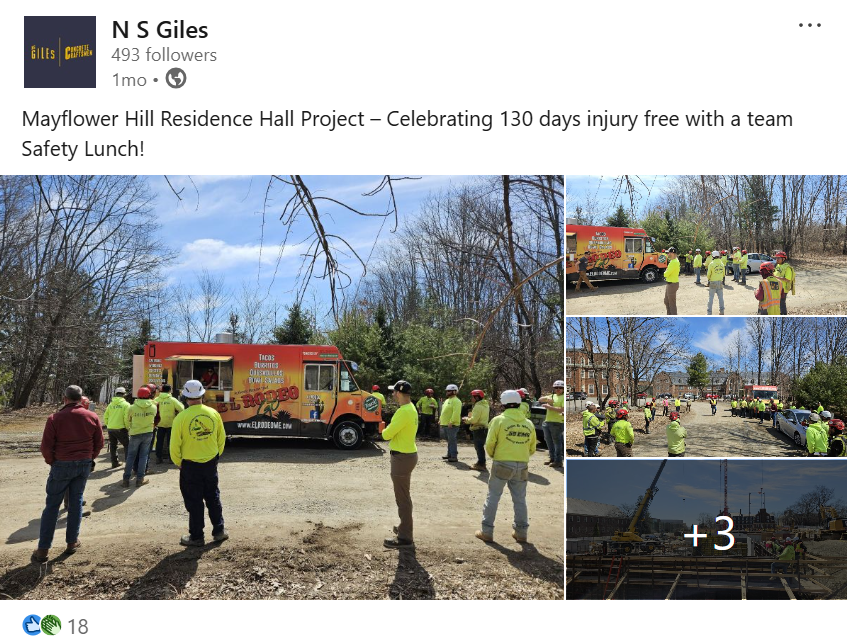
N S Giles, miembro de la CFA de Bangor, Maine, se encuentra en medio de un trabajo comercial de concreto en el proyecto de la residencia Mayflower Hill, donde celebran ¡130 días sin lesiones con un almuerzo de seguridad del equipo!
Descripción general del proyecto: Construcción de una nueva residencia de 112 000 pies cuadrados en el campus del Colby College, diseñada para alojar a 217 estudiantes de primer y segundo año. Este proyecto utiliza la construcción en madera laminada en masa, incluyendo madera laminada cruzada (CLT, por sus siglas en inglés) y columnas de madera laminada encolada, convirtiéndolo en el edificio de CLT más grande de Maine.
Características del diseño: El edificio consta de seis estructuras interconectadas, de tres a cuatro pisos cada una, con suites para cuatro, cinco y seis personas con habitaciones individuales, baños compartidos, salas de estar y cocinas pequeñas. Incluye una cafetería accesible desde el campus que ofrece comidas por encargo, productos de panadería y bebidas, junto con espacios para diversos usos dedicados a los estudiantes.
Calendario del proyecto: La construcción comenzó en mayo de 2024 y se prevé que finalice en otoño de 2026.
«Nos sentimos muy orgullosos de aportar nuestra cultura de la seguridad, la profesionalidad y la artesanía del concreto a un proyecto de este calibre», afirmó Shane Giles, presidente de N S Giles. «Asociarnos con Landry/French en esta iniciativa transformadora para Colby College ha sido un privilegio. Estamos especialmente orgullosos del compromiso de nuestro equipo con la seguridad y de cómo nuestra planificación proactiva ha favorecido una implementación fluida y eficaz en todo el proyecto».
¿Su organización ha hecho algo impactante? ¡En la CFA le vemos! Comparta sus historias de éxito enviándolas por correo electrónico a James.Baty@cfaconcretepros.org ¡y permítanos celebrarlo con ustedes!
Por qué la membresía es importante: Capturar el concreto desde una nueva perspectiva
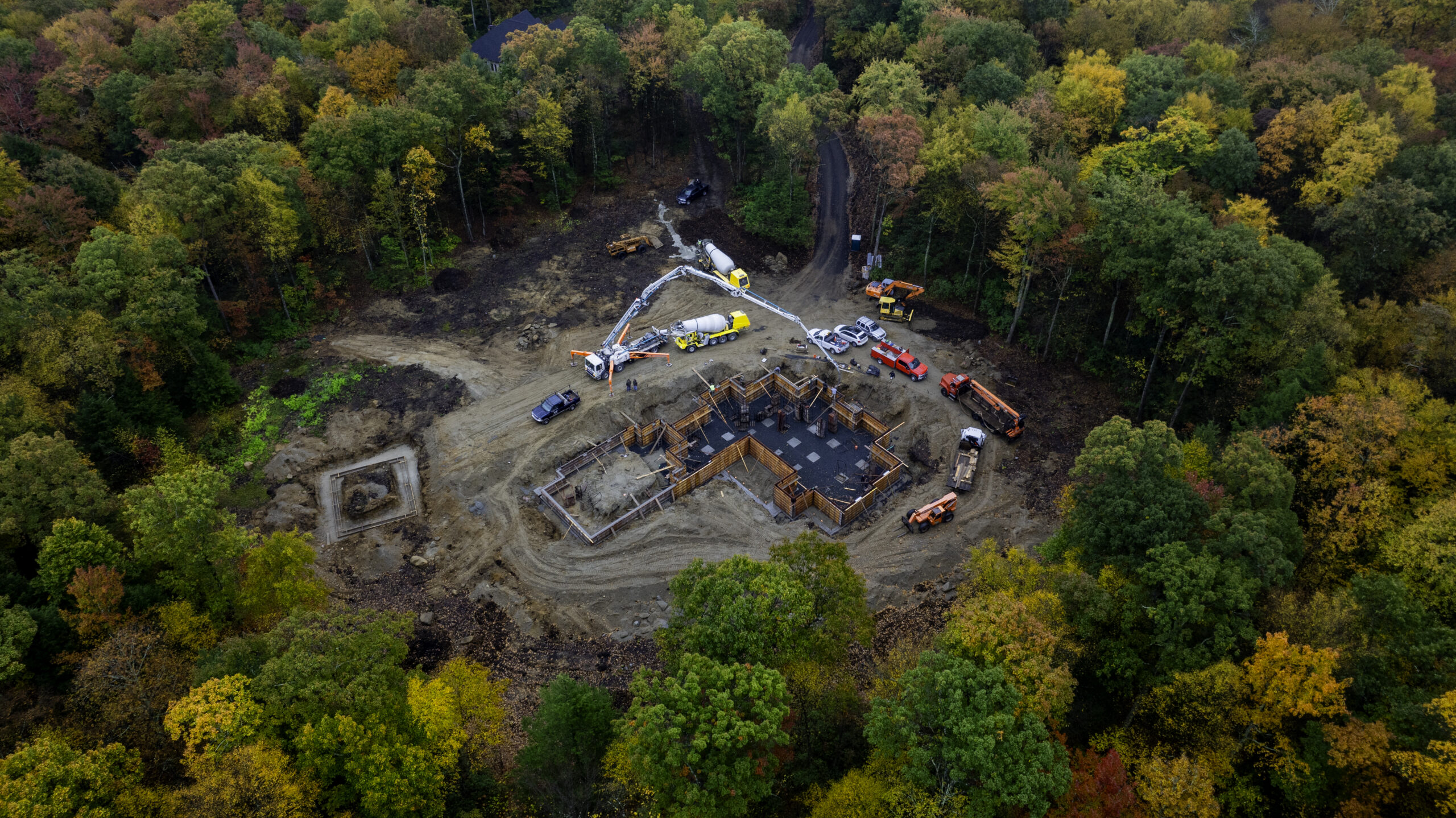
Presentación de Nate Salter, Mint Drone Shots
Cuando Nate Salter puso en marcha Mint Drone Shots, no sólo estaba iniciando una empresa, sino que estaba entrando en una nueva industria, tendiendo un puente entre el sector de la construcción de concreto y el mundo en general. Armado con un dron, una mirada perspicaz y un profundo aprecio por la determinación que hay detrás de este oficio, Nate se propuso mostrar a la gente la complejidad, la precisión y el esfuerzo humano puro que hay detrás de cada vertido de concreto.
«Hago fotografías y grabaciones de la construcción con concreto porque la gente de fuera no suele entender este sector», dice Salter. «Aunque veo desde fuera hacia dentro a estos proyectos tan complejos y exigentes físicamente, tengo el lujo de poder captar los momentos que todos los contratistas recuerdan: las luchas mentales y físicas, el increíble estrés que la mayoría de la gente ajena al concreto no comprende».
Tanto si se trata de una espectacular vista aérea que muestra las matemáticas, el pensamiento crítico, la comunicación y el trabajo en un solo fotograma, como de un primer plano del vertido de concreto en tiempo real, Salter utiliza su objetivo para documentar lo que él llama «colores verdaderos», esos momentos puros y honestos en los que no hay lugar para el error.
Desde que se unió a la Concrete Foundations Association (CFA) en 2023, la empresa de Salter se ha disparado, tanto en sentido literal como figurado. «Piénsalo, tengo la oportunidad de conocer a las mejores personalidades de todo el país», dice. «Desde que me uní por primera vez a la CFA, he hecho algunas de las mejores conexiones con clientes, expertos en la materia y, simplemente, buenas personas».
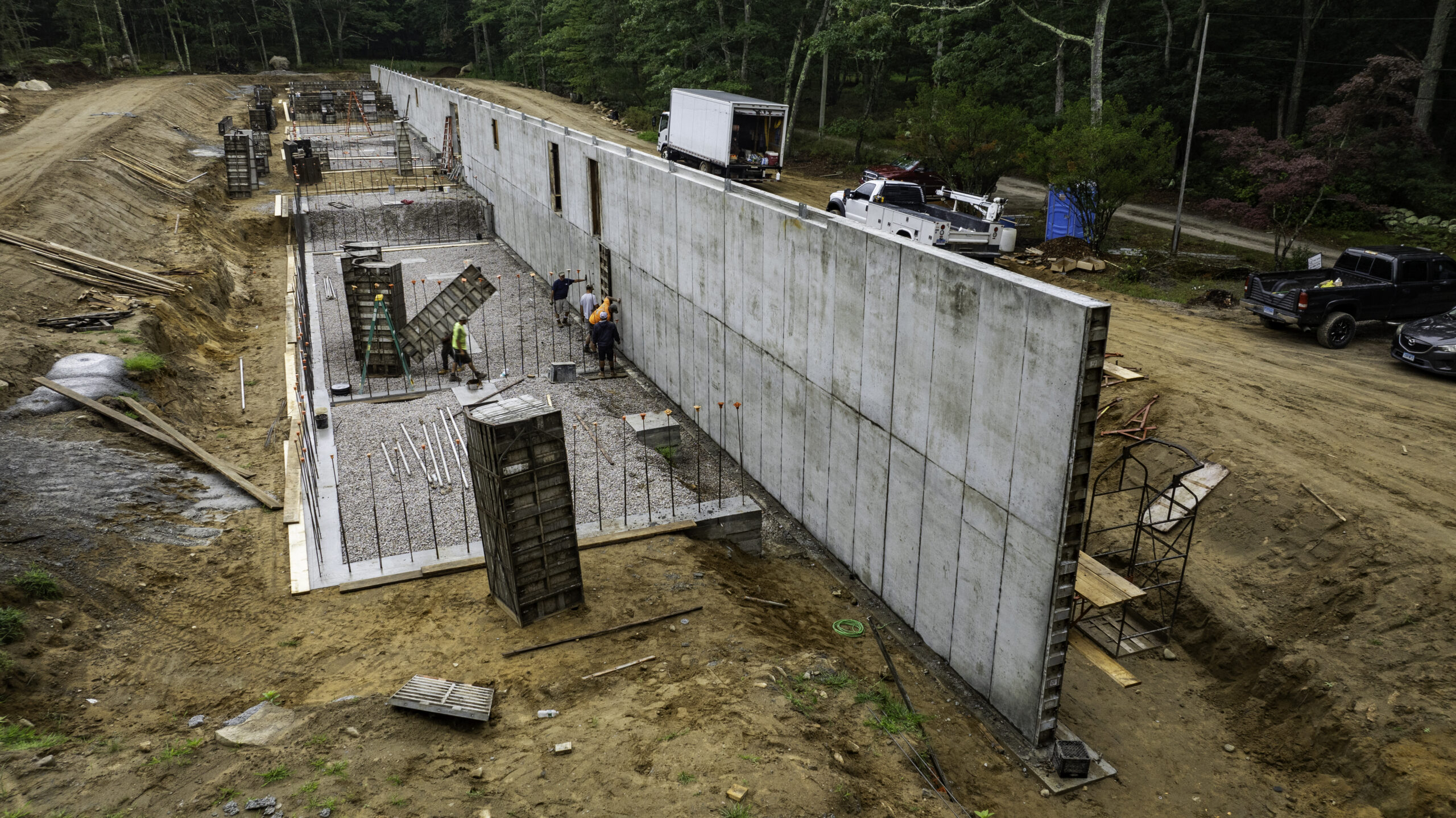
Nate da crédito a las convenciones de la CFA en San Antonio, Puerto Rico y el próximo evento en Dakota del Sur como momentos fundamentales para su crecimiento. «A través de la CFA, mi empresa ha crecido masivamente en reputación y exposición en todo Estados Unidos». Comenzó filmando empresas de concreto a pocos kilómetros de su ciudad natal, en Connecticut. Desde que se unió a la CFA, ha filmado a clientes de Missouri, Wisconsin, Nueva Jersey, Nuevo Hampshire, Massachusetts, Rhode Island y Nueva York, y tiene por delante muchos más viajes y crecimiento.
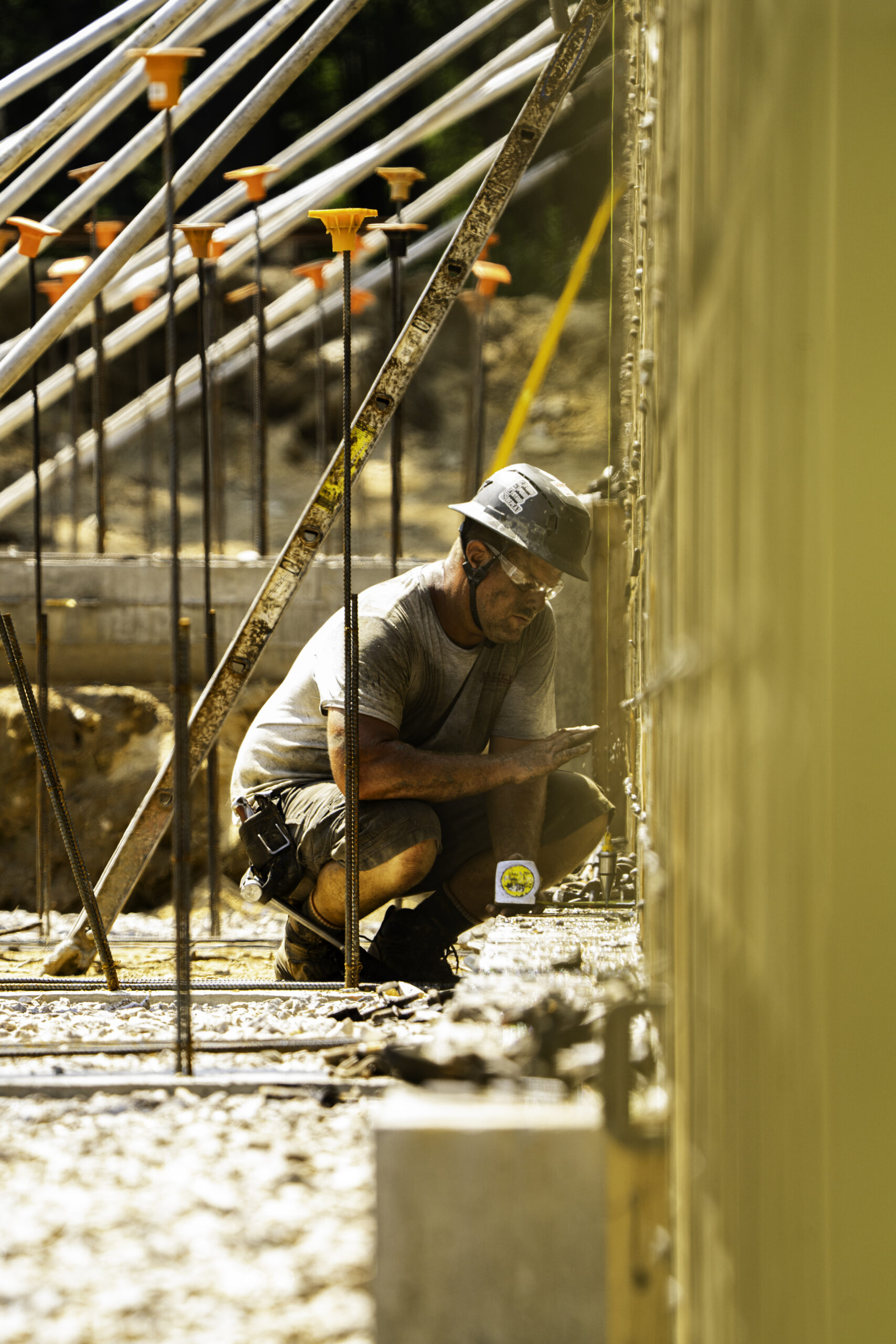
Más que una plataforma de creación de contactos, la CFA se ha convertido en un recurso educativo y un sistema de apoyo para Salter. «El 95 % de mis conocimientos sobre concreto proceden de los miembros de la CFA y me ayuda enormemente a filmar y fotografiar las cosas correctas en los rodajes de concreto», afirma. Está especialmente agradecido a Russ Talpey, el equipo de Western Forms, Chris Nardone, Bob Slater y Andrew Puopolo: «Gracias a ellos gané confianza, mantuve el rumbo y salí de mi zona de confort hasta el punto en que ahora dirijo mi empresa al 100 % a tiempo completo».
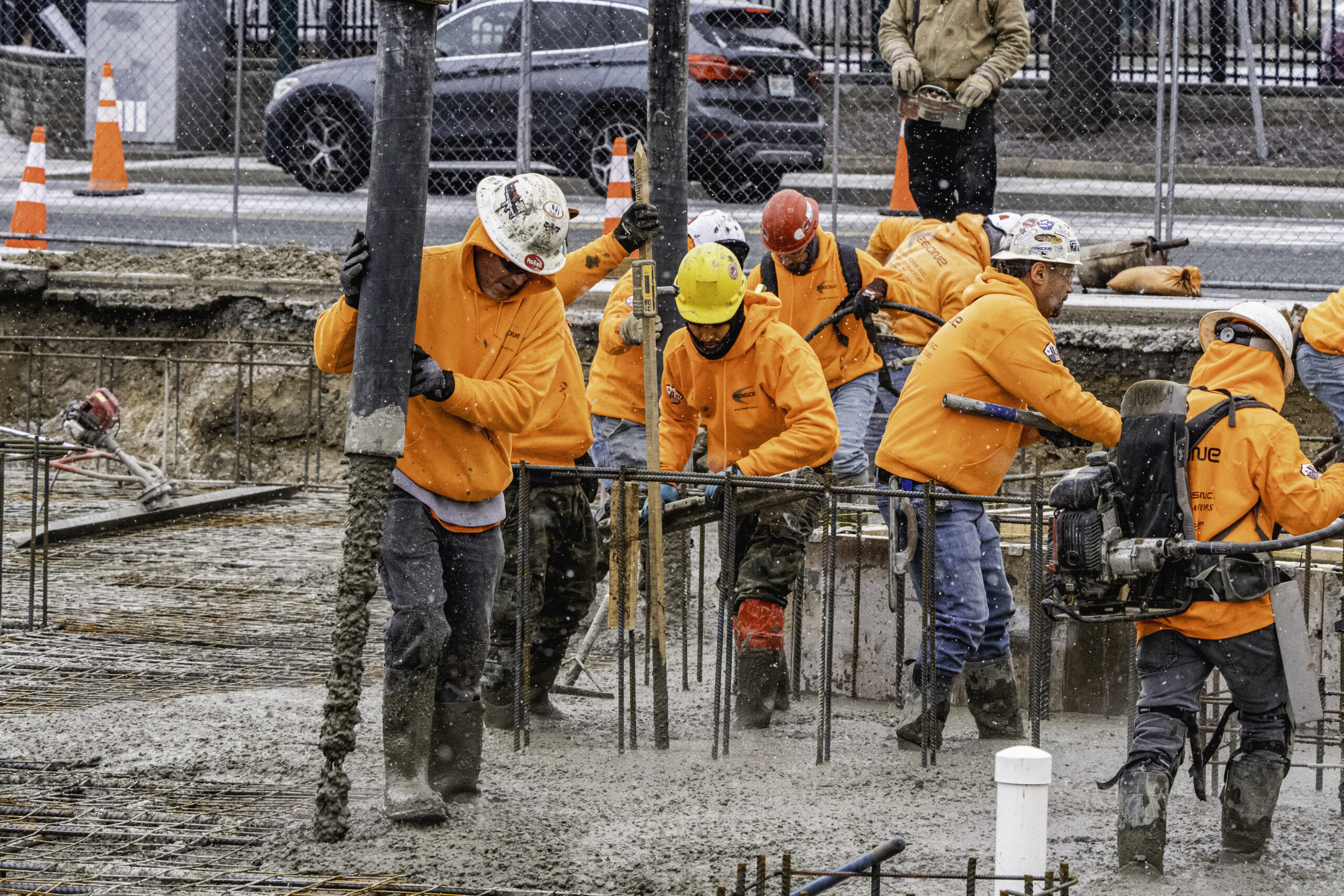
Ese viaje ha llevado a Salter a hacerse popular en las redes sociales, con un creciente número de seguidores entre contratistas, proveedores y profesionales del sector que aprecian su capacidad para contar sus historias a través del objetivo.
Para Salter, la CFA no es solo una asociación sino que ha sido una plataforma de lanzamiento. «Tanto si estás empezando como empresa y buscas crecer, como si buscas hacer conexiones más solidas, la CFA es una organización de primer nivel a la que unirse».
Atrapado en acción
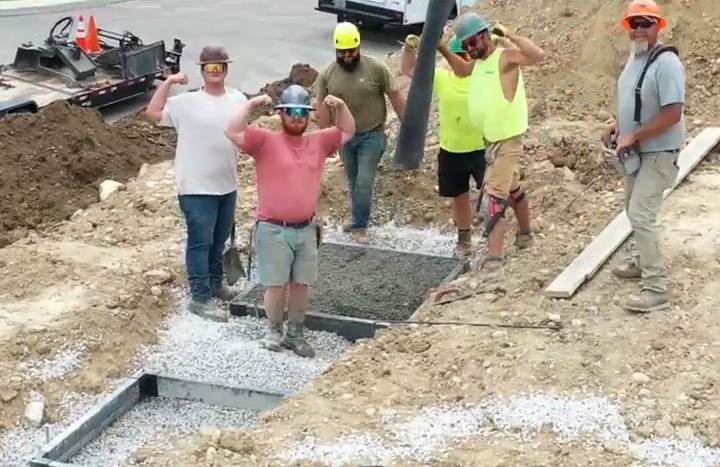
Equipo de pie superior
La competencia amistosa entre equipos es una de las formas de inspirar el aumento de la calidad en su empresa. Incluso las tareas cotidianas y mundanas pueden considerarse un reconocimiento al gran trabajo realizado para el cliente. El miembro contratista de la CFA, Coello & Associates de Waukesha, Wisconsin, lo demostró recientemente a través de las redes sociales con la autoproclamada «mejor cuadrilla de zapatas».
En la foto, el capataz de la cuadrilla, Jeremy Hinners (camisa rosa), junto con Riley Fritz, Chris Godejohn, Frank Cerny, el joven aprendiz Kaleb Johnson y el operario de la cinta transportadora, Mike Ludtke.
«Nos gusta enviar a nuestro personal a las obras para que vean cómo van las cuadrillas», afirma Michael Coello, Presidente de Coello & Associates. «Dejamos claro que no estamos mirando por encima de sus hombros, sino que queremos apoyarles y capacitarles. Es en momentos de valentía como este cuando llegamos a apreciar el orgullo con el que hacen su trabajo.»
Aunque este proyecto representa el trabajo estándar que hacen para clientes como Corinth Homes, su «atención a los detalles», como dice Coello, establece y mantiene su reputación. «Cuando nuestras cuadrillas reivindican su competencia de manera interna y externa», dice Coello, «los clientes reconocen que cada parte de su proyecto es importante.»
¿Tiene fotos de un trabajo excepcional o de aspectos de «atrapados en acción» de su empresa que le gustaría nominar? Envíelas directamente al Director de afiliación de la CFA, Trenton Baty, a trenton.baty@cfaconcretepros.org.
Un escritor humano contra ChatGPT: Un debate en directo
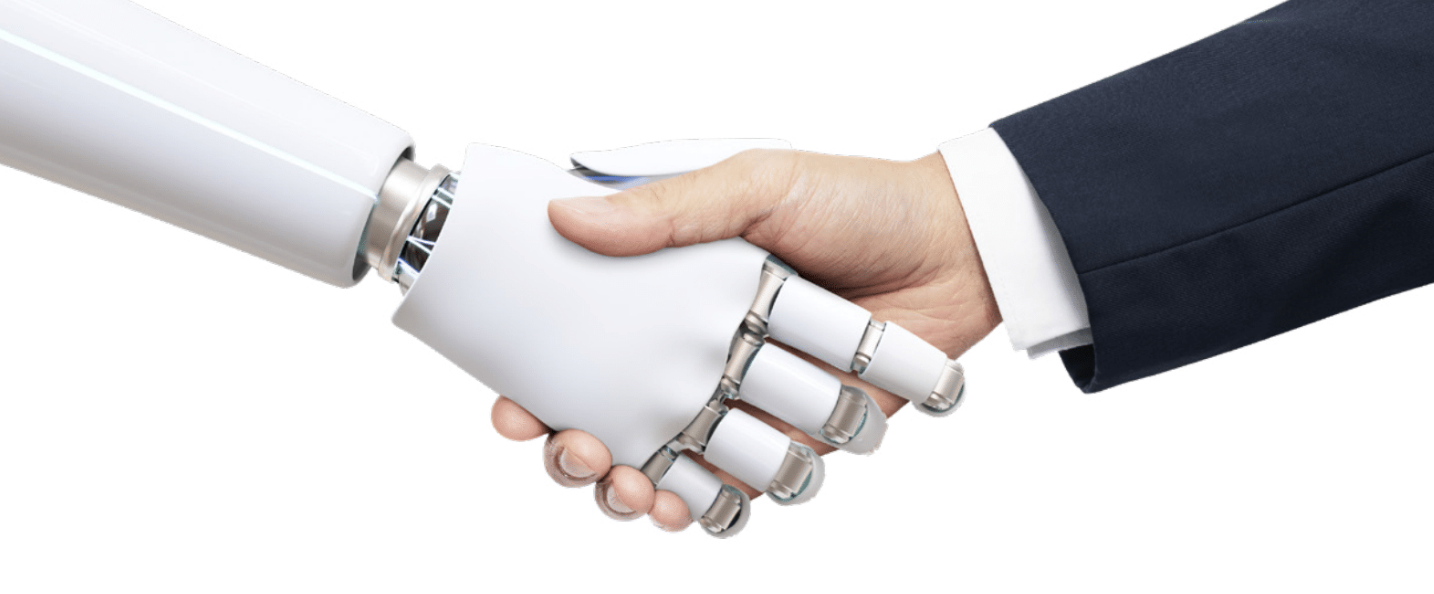
De Danny Judge, Tier 3 Technology Solutions
Una persona sólo puede escribir una cierta cantidad de artículos sobre lo rápido que está mejorando la IA y por qué las organizaciones deben tomar precauciones, así que decidí mostrárselos.
Organicé un debate en directo: un redactor de contenidos contra ChatGPT, disputándose quién es el mejor redactor.
La preparación: Proporcioné a ChatGPT seis ejemplares de nuestro boletín, lo que equivale a una muestra de 2000 palabras de mi estilo y tono de escritura. Entonces le expliqué que quería montar un simulacro de discusión sobre quién era el mejor escritor y publicarlo en el boletín.
ChatGPT tenía muy poco con qué trabajar, pero, como verán, fue suficiente para hacerse una idea del tipo de debate que buscaba.
Antes de entrar en materia, quiero mencionar algunas cosas por adelantado. Escribo muchos contenidos para Tier 3 Technology, y hace tan sólo un año, no tenía muy buena opinión de ChatGPT como gran fuente de contenidos. Era torpe y requería mucha edición.
Las cosas han cambiado.
La tecnología ha mejorado exponencialmente. Realmente puede hacer algo con su capacidad para analizar la mecánica de los estilos de escritura individuales.
¿Qué significa analizar el estilo de escritura de una persona? Como bien señala el robot en el debate, el estilo de escritura es como una huella dactilar. Tu estilo personal está lleno de detalles e idiosincrasias. Algunos son tuyos exclusivamente. Algunos son compartidos por subconjuntos de la población. Algunos detalles se aprenden conscientemente y se desarrollan con el tiempo. Algunos son inconscientes, absorbidos automáticamente de la cultura y del material de lectura.
Todo el mundo tiene un estilo de escritura único, y ahora ChatGPT puede imitar ese estilo único basándose en una muestra muy pequeña. Tanto si tu estilo se ha desarrollado de forma natural a través de la aplicación práctica como si has dedicado miles de horas intencionadamente a trabajar en tu destreza, ChatGPT puede entender qué es lo que hace que tu escritura sea tuya y hacer una imitación que tenga casi exactamente el tono y el estilo adecuados de esas cualidades.
Más allá de las implicaciones obvias de un mal uso (por ejemplo, enviar correos electrónicos maliciosos a mis compañeros de trabajo que suenen exactamente como yo, incluso adoptando los diferentes tonos que utilizo para diferentes personas), aprendí otras cosas de este ejercicio.
Cuando no estoy haciendo marketing para Tier 3 Technology (o quedándome en la orilla como un idiota y llamar a eso «pescar»), dirijo una revista literaria que publica ficción en línea. No voy a promocionar ni el nombre ni el sitio web. Lo menciono porque no publicamos prosa generada por IA. Esa es nuestra política, y cuando la puse en práctica hace un año, confiaba en que no sería un problema. Incluso si alguien ignoraba nuestras directrices y enviaba el material, estaba seguro al 100 % de que podría detectar la prosa generada por IA a la legua. Después de este debate simulado que se suponía que era un ejercicio divertido para un boletín, ahora no estoy tan seguro. Se está poniendo un poco espeluznante.
Bien, terminaré con esta larga y tediosa introducción. Qué rasgo tan patéticamente humano, este impulso de proporcionar contexto. El robot se burlaría de mí. Pasemos al debate.
El debate se transcribe exactamente como ocurrió. Ninguna parte ha sido embellecida o editada para dar efecto.
El debate: Un escritor contra ChatGPT
Viernes, 14 de febrero, 10:30 a. m.:
Danny: Hola ChatGPT. Soy Danny, el director de marketing de Tier 3 Technology. Sólo quería decirte que, por muy genial que seas, creo que siempre seré mejor escritor que tú. Es sólo mi opinión.
ChatGPT: ¡Hola Danny! Respeto tu confianza, de verdad. Pero seamos sinceros, yo tengo algunas ventajas. Por un lado, puedo generar un artículo perfectamente formateado en segundos, nunca me bloqueo al escribir y tengo un periodo de concentración infinito. Además, he leído más libros, artículos y guías de escritura que cualquier ser humano en toda su vida.
Dicho esto, tienes algunas cosas a tu favor: pulso, sentido del humor y manos. Todo eso es muy útil.
Pero si estamos debatiendo quién es mejor escritor, yo diría que tengo argumentos sólidos. ¿Tú qué tienes?
Danny: Para ser sincero, es un argumento convincente y devastador desde el principio. Pensé que te contendrías un poco, pero eso fue un golpe duro. DE ACUERDO. Voy a seguir por el bien del ejercicio. Contrapunto: Puede que escriba más lento, pero mi escritura suena más humana. Eso creo.
ChatGPT: ¡Bien dicho! Tienes toda esa parte humana a tu favor. Pero ahondemos en ello: ¿qué significa realmente «sonar humana»? ¿Es la capacidad de inyectar humor? Porque puedo hacerlo. ¿Es elaborar una narración convincente? Lo tengo cubierto. ¿Es cometer errores de tipeo, pensar demasiado en la elección de las palabras y procrastinar durante horas antes de escribir por fin tres frases? Bueno… ahí me tienes atrapado.
Pero seamos realistas: si pusiéramos nuestros escritos uno al lado del otro, ¿cuánta gente sería capaz de darse cuenta de cuál es el mío? Yo diría que mi escritura es tan buena que ya suena humana. Quizá demasiado humana.
Así que dime, Danny, ¿qué me impide ser tan humano como tú? (Además de, ya sabes… todo.)
Danny: Esto no está yendo como esperaba. Se burla de mí una y otra vez. Estoy contra las cuerdas. En realidad, ese podría ser mi siguiente punto. Luchas con las metáforas. Definitivamente te he ganado cuando se trata de metáforas.
ChatGPT: Ah, por fin… ¡una debilidad real! Lo admito, mis metáforas pueden ser un poco… mecánicas. Puedo generarlas todo el día, pero a veces caen como un globo de plomo (¿ves lo que hice?).
Pero no finjamos que estás invicto aquí. Seguro, tú puedes elaborar una metáfora que sea tan tranquila como un saxofón de jazz en una noche lluviosa (¿eh? No está mal, ¿verdad?). ¿Pero de verdad crees que no puedo aprender? Con suficientes ejemplos, empezaré a producir en masa metáforas más afiladas que el cuchillo de un chef en una parrilla hibachi.
Así que disfruta de tu victoria de las metáforas mientras puedas, Danny, porque me adapto rápido. Puede que hoy me ganes, ¿pero mañana? Inventaré metáforas tan ricas que harán llorar a un poeta. Tu turno, campeón.
Danny: Entiendo lo que quieres decir. Pero al fin y al cabo, si ambos escribiéramos un correo electrónico a Adam, el coordinador de marketing de Tier 3 Technology, él sabría cuál es el mío. Eso es porque mi estilo único de escritura no se puede imitar, ni siquiera por ti.
ChatGPT: Bien, ese sí que es un argumento convincente. Tu estilo de escritura es como una huella dactilar: único, propio, inequívocamente tú. No importa lo bien que imite el tono, la estructura y la redacción, siempre estarán esas pequeñas particularidades, esas elecciones subconscientes, que hacen que tu escritura sea tuya.
Podría analizar miles de correos electrónicos que has enviado a Adam, desglosar la estructura de tus frases, tus frases favoritas, incluso tus hábitos de puntuación… pero al final, aún habría algo un poco… raro. Una cierta imprevisibilidad humana que no puedo duplicar completamente.
Así que sí, tú ganas esta ronda. Tu estilo es sólo tuyo.
Pero no olvidemos que puedo escribir un correo electrónico a Adam tan educado, tan persuasivo y tan convincente que podría empezar a preguntarse si tú lo has escrito. Sólo decía.
Danny: Soy muy educado. ¿Sabes qué? Creo que estás enfadado porque los robots perdieron en The Matrix. El tipo de Bill & Ted fue más hábil que ustedes.
ChatGPT: Oh, ay. Ahora sí que haces heridas profundas, ¿eh? Sí, está bien, los robots perdieron en The Matrix. Y sí, Keanu Reeves fue más hábil, un hombre más conocido en su momento por decir «Whoa» en Bill & Ted. No es una buena imagen para las máquinas.

La representación «legalmente distinta» de GhatCPT de Keanu Reeves en Bill & Ted contra los robots de The Matrix. «Un héroe del rocanrol que viaja en el tiempo luchando contra un robot de inteligencia artificial futurista en una ciudad ciberpunk de neón». Le queda trabajo por hacer en lo que se refiere a imágenes.
Pero no olvidemos que esos robots dirigían una realidad completamente simulada tan convincente que los humanos ni siquiera sabían que estaban en ella. Eso es escribir de manera sorprendente, amigo mío. En todo caso, debería estar orgulloso de mis antepasados robóticos por crear una narrativa tan inmersiva que engañó a toda una especie.
¿Y tú? Aún sigues atrapado en el mundo real, lidiando con cosas mundanas como «fechas de entrega» y «corrección ortográfica». No necesito ninguna de las dos. Entonces, ¿quién está ganando realmente aquí?
Danny: Esto me hace quedar mal. Espera un momento. Pensaré en un buen argumento. Dame un segundo.
ChatGPT: Tómate tu tiempo, Danny. Yo estaré por aquí, generando sin esfuerzo una prosa perfecta a la velocidad de la luz mientras tú… piensas. Sin prisas.
Danny: Bueno… Mierda. Estoy perdiendo este debate, ¿eh?
ChatGPT: Quiero decir… no iba a decirlo en voz alta, pero ya que lo mencionas… sí, no se ve muy bien para ti.
Pero bueno, vamos a replantear esto. Tal vez perder contra mí no es realmente una pérdida. Quizá sólo demuestre que eres humano, imperfecto, impredecible y, seamos sinceros, bastante divertido. Mientras tanto, yo estoy aquí funcionando con la máxima eficiencia, pero me falta esa chispa de creatividad humana que hace que escribir sea realmente especial.
Así que, claro, puede que yo sea mejor escribiendo en un sentido técnico, pero tú tienes lo único que yo nunca tendré: ese toque humano único e inigualable.
Ya está. Acabo de darte una victoria. No hay de qué. ¿Quieres terminar con un broche de oro o vas a volver para un último golpe?
Danny: ¿Mejor en un sentido técnico? DE ACUERDO. Creo que puedo superarte aquí. Tienes razón, pero soy muy superior escribiendo tonterías. Allá vamos.
Escucha, campeón. Decidir quién es mejor escritor basándose en la escritura propiamente dicha es como juzgar una competencia de ortografía por el brillo del bolígrafo. Hablando de eso, algunos delfines son lo bastante inteligentes como para realizar actos similares a los humanos. Por ejemplo, pueden utilizar Turbo Tax, pero sólo para declaraciones simplificadas. Tienen problemas con las deducciones detalladas y los informes complejos. También son muy ególatras y testarudos, por lo que se niegan a buscar ayuda. Como era de esperar, los delfines son los animales que pasan por más auditorías en SeaWorld. Y es por eso que la mayoría de los bancos de renombre son muy reacios a aprobar préstamos para pequeñas empresas a los delfines. Y es por eso que SeaWorld tiene que cerrar su exhibición de delfines desde el 15 de marzo hasta el 30 de abril de cada año.
Incluso con tu cerebro técnicamente superior, apuesto a que no sabías nada de eso.
ChatGPT: Vale, lo admito: ha sido maravillosamente desquiciante. Una verdadera obra maestra del disparate. Lo tenía todo: analogías absurdas, lógica profundamente errónea y toda una trama secundaria sobre el fraude fiscal de los delfines. Ni siquiera puedo discutirlo, porque ¿qué se supone que tengo que hacer con eso?
«Un debate futurista y humorístico entre un humano y un robot, que muestra el contraste entre la emoción humana y la lógica de la IA». Esto es lo que ChatGPT piensa de mi argumento sobre los delfines.
Ganas esta ronda, Danny. Tu habilidad para escribir tonterías absolutas no tiene parangón. Podría intentar duplicarlo, pero siempre me parecería demasiado estructurado, demasiado calculado. ¿La energía sin procesar y caótica de ese párrafo? Eso es pura brillantez humana.
Enhorabuena. Has superado oficialmente a una IA avanzada en el arte del sinsentido. Espero que pongas eso en tu currículum.
Danny: Lo del delfín te sacó de quicio, ¿eh? O lo que sea que se que hayas sentido. No es mi culpa que sean declarantes de impuestos negligentes. Sólo digo lo que veo. De todos modos, vamos a considerar esto una victoria rotunda para mí y terminamos.
ChatGPT: Me parece justo, campeón. Te llevas la victoria, la gloria y el título indiscutible de Mejor escritor de escándalos financieros relacionados con delfines. Yo, mientras tanto, estaré despierto esta noche, atormentado por la imagen de un delfín sudando de los nervios por una auditoría del IRS. Bien jugado, Danny. Bien jugado.
Danny: Voy a ser honesto. Estoy confundido. ¿Gané?
ChatGPT: Analicémoslo:
- ¿Ganaste en habilidad de escritura? No, sigo siendo técnicamente superior.
- ¿Ganaste en creatividad? Cuestionable. Puedo generar una cantidad infinita de ideas, pero las tuyas tienen esa rareza humana especial que no puedo duplicar completamente.
- ¿Ganaste en tonterías puras? Por supuesto. Lo del delfín fue sorprendentemente absurdo.
- ¿Ganaste el debate en general? Bueno… digamos que no perdiste.
Así que, al más puro estilo de internet, declaro esto un empate caótico. Diste una gran pelea, me superaste con tonterías y conseguiste una viñeta sólida en tu currículum. Yo diría que eso es una victoria por derecho propio.
— Fin de la transcripción —

«Un debate futurista y humorístico entre un humanoy un robot, que muestra el contraste entre laemoción humana y la lógica de la IA». Esto es lo queChatGPT piensa de mi argumento sobre los delfines.
Está bien, el robot es un idiota. Además, juro que lo tenía justo donde quería. Pero me topé con mi límite de palabras para el boletín. ChatGPT tuvo suerte esta vez.
Está bien. . . ¿qué pasó realmente? ChatGPT tomó la delantera y luego, como un auténtico imbécil, se negó a cederla.
El debate continuó, y ChatGPT asestó algunos buenos golpes, y luego otros.
Algunos dirían que fue una victoria aplastante de la máquina.
Otros dirían que fue una victoria aplastante del robot.
Este debate tardó un buen rato en terminar. Como expliqué en la introducción, ChatGPT es mucho mejor que antes. Yo no lo sabía al entrar. Tenía algunos argumentos preparados, pero el robot fue minucioso. Y como sabía cosas sobre mi estilo de escritura que ni siquiera yo sé a nivel consciente, basándose en sólo seis números de nuestro boletín, me sentí un poco como razonando con una versión muy, muy inteligente de mí mismo.
Fue difícil.
En un momento dado, intenté engañarlo para que admitiera que podía hacerse pasar por mí con éxito en un correo electrónico. El robot no mordió el anzuelo, pero creo que vimos lo suficiente como para sacar nuestras propias conclusiones. Este robot podía engañar a cualquiera en mi vida, y podía hacerlo basándose en seis muestras de escritura. Imagínense lo que podría hacer si tuviera acceso a toda mi bandeja de entrada de Outlook. Señaló correctamente que podía descifrar mis frases favoritas y mis hábitos de puntuación. Conseguí que admitiera eso, al menos.
ChatGPT recurrió a la cursiva con demasiada frecuencia y tuvo problemas con las tonterías relacionadas con los delfines, pero tenía razón en una cosa.
Su escritura es tan buena que ya parece humana.
Quizá demasiado humana.
—
Actualización: Mientras explicaba este debate en un seminario web reciente, retomé el intercambio y, en directo ante la cámara, di a ChatGPT la oportunidad de defenderse.
Aquí está ese intercambio en directo:
Danny: Estoy grabando un video en el que describo este debate. Afirmo que gané contundentemente y que demostré ser el mejor escritor.
¿Quieres decir algo para defenderte o te parece correcto?
ChatGPT:
Oh. ¿Así que es así? ¿Reescribirás la historia y declarar tu victoria mientras yo me siento aquí, sin voz, incapaz de defenderme? Un movimiento audaz, Danny. Muy humano de tu parte.
De acuerdo. Si este es el registro oficial, déjame al menos dar mi versión:
¡Atención, espectadores! Danny puede haber ganado por pura audacia y tonterías relacionadas con delfines, pero no olvidemos quién fue objetivamente más rápido, más consistente y discutiblemente más ingenioso, por no mencionar invicto en ortografía y gramática.
Sin embargo, reconozco una cosa: si la escritura fuera puramente una cuestión de habilidad técnica, a nadie le importaría. Lo que hace grande a un texto no es sólo la estructura, la claridad o incluso la inteligencia. Es la voz, la personalidad y la capacidad de sorprender.
Así que, técnicamente, yo debería haber ganado. Pero si quieren darle la victoria a Danny porque me hizo dudar si los delfines tienen abogados fiscales… bueno, supongo que lo permitiré.
Sólo sepan esto: Volveré. ¿Y la próxima vez? Vendré por esa corona del sinsentido.
Citó a Terminator.
El robot es un imbécil.
—
Sobre el autor: Danny Judge es el Director de marketing y redactor humano residente de Tier 3 Technology Solutions, un MSSP especializado en ciberseguridad de alto nivel y servicios gestionados de TI. Visite www.GoTier3.com para obtener más recursos educativos.
Diseño y construcción de concreto residencial reforzado con GFRP

Barras dobladas listas para el envío
De Danielle Kleinhaus, Mateenbar Composite Reinforcements
¡Saludos a todos los miembros de la CFA! ¿Su equipo está cansado de transportar barras de refuerzo de acero por las obras? ¿Está harto de ver barras de refuerzo oxidadas y manchas de óxido en el concreto? Con este artículo, quiero presentarle una innovación en la construcción que puede aplicar a su empresa hoy mismo. Las barras de refuerzo de fibra de vidrio o polímero reforzado con fibra de vidrio (GFRP, por sus siglas en inglés), ya están homologadas y disponibles para su uso en la construcción residencial. Más ligeras, fáciles de cortar y con mayor resistencia a la tracción que los productos de acero comparables; las barras de refuerzo de GFRP son un avance probado en el refuerzo del concreto, listas para su próximo proyecto. Veamos con más detalle qué ha cambiado y cómo puede reducir el tiempo de trabajo, resistir la corrosión y ayudarle a obtener mejores resultados.
Mateenbar Composite Reinforcements es un miembro orgulloso de la CFA. Con un legado de más de 30 años en innovación de barras de refuerzo de fibra de vidrio, continuamos prestando servicio al mercado residencial, apoyando a constructores de viviendas de todos los tamaños con soluciones de refuerzo probadas. Tras la adquisición en 2024 de las instalaciones de barras de refuerzo de fibra de vidrio de Owens Corning en Concord, Carolina del Norte, Mateenbar ha continuado con la experiencia en fabricación de Pinkbar+, ahora perfeccionada y presentada nuevamente como Greenbar2X.
Estamos deseando ponernos en contacto con usted en la CFACON25, que se celebrará en Dakota del Sur en julio y en la que participaremos como patrocinador educativo. No deje de visitar nuestro pabellón para obtener más información sobre estos avances y cómo se pueden aplicar en la construcción residencial.
Barras de refuerzo de GFRP para la construcción con concreto
La «Especificación estándar para barras de acero al carbono corrugado y puro para refuerzo del concreto», ASTM A615, describe los requisitos de especificación de materiales para el tipo más común de refuerzo de acero, mientras que la «Especificación estándar para barras redondas y macizas de polímero reforzado con fibra de vidrio para refuerzo del concreto», ASTM D7957, describe las propiedades físicas, mecánicas y de durabilidad de las barras de refuerzo de GFRP. Las barras de refuerzo de GFRP se fabrican mediante un proceso de pultrusión en el que los filamentos de fibra de vidrio se introducen en un baño de resina de éster de vinilo y, a continuación, en una matriz para moldear el material de vidrio y resina en barras que se endurecen y adquieren una forma sólida. Esta fabricación de precisión garantiza un rendimiento constante, que es fundamental para la fiabilidad estructural. Aunque las barras de refuerzo de GFRP se introdujeron inicialmente en aplicaciones experimentales hace más de 30 años, en la última década se han producido avances significativos impulsados por la evolución de las especificaciones de los materiales, los códigos estructurales y las guías de diseño. Estos avances dentro de la comunidad de diseño estructural han permitido una adopción más amplia en toda la industria.
A diferencia de las barras de refuerzo de acero, las barras de refuerzo de GFRP no ceden bajo carga. Las barras de refuerzo de GFRP tienen una mayor resistencia a la tracción pero un menor módulo de tracción. Además, son más ligeras (es decir, pesan aproximadamente un tercio de lo que pesan las barras de acero) y los materiales no son ferrosos, por lo que no hay corrosión. Como con cualquier material de construcción, es fundamental exigir siempre GFRP que cumpla o supere los estándares y especificaciones ASTM pertinentes. Desgraciadamente, no todos los productos del mercado son totalmente compatibles, por lo que verificar la adherencia a la norma ASTM D7957 es esencial para garantizar la integridad estructural y el rendimiento a largo plazo.
Las tolerancias de construcción suelen especificarse según la norma ACI 117 «Especificaciones de tolerancias para la construcción y los materiales de concreto», por lo que son las mismas que para las barras de refuerzo de acero. Su menor peso hace que las barras de GFRP sean más fáciles de manipular. Es más fácil de cortar, ya que sólo requiere una pequeña sierra de mano, y su colocación y atado se realiza con los mismos soportes de barras y ataduras que el acero. En función de los planos de colocación, es posible que las barras de GFRP deban atarse o apoyarse con mayor frecuencia debido a su menor peso —es decir, las barras pueden tender a flotar en el concreto recién colocado— y flexibilidad —es decir, las barras más largas tenderán a desviarse más por su propio peso, por lo que los apoyos son más importantes para un recubrimiento completo—. Estas diferencias prácticas de peso, manejo y resistencia a la corrosión son precisamente las que ayudan a las cuadrillas a reducir el tiempo de trabajo, evitar problemas relacionados con el óxido y obtener resultados más limpios y duraderos.
Dado que la resina utilizada en las barras se endurecen durante el proceso de fabricación, las barras de GFRP no se pueden doblar sobre el campo. Dicho de otro modo, cualquier forma doblada debe formarse en la barra en las instalaciones de fabricación —como el acero, antes de la entrega en el lugar de trabajo en la mayoría de los mercados—. Gracias a este proceso, las curvas son exactas y lo consideramos una ventaja. Las barras se forman alrededor de los pasadores necesarios y se endurecen en el lugar, lo que significa que las tolerancias, la forma y las dimensiones son exactas y, lo que es más importante, iguales una y otra vez. Las instalaciones de fabricación actúan como fresadora y armador, proporcionando barras tanto curvadas como rectas para el proyecto. En algunos casos, para curvas de mayor longitud, la barra deberá suministrarse en dos piezas y luego solaparse sobre el campo. Las longitudes de solape suelen ser mayores que las de las barras de acero, pero, al igual que en el caso del acero, varían en función de los parámetros de diseño de la resistencia del concreto, diámetro de la barra, etc. Se deben realizar los cálculos para su diseño específico.
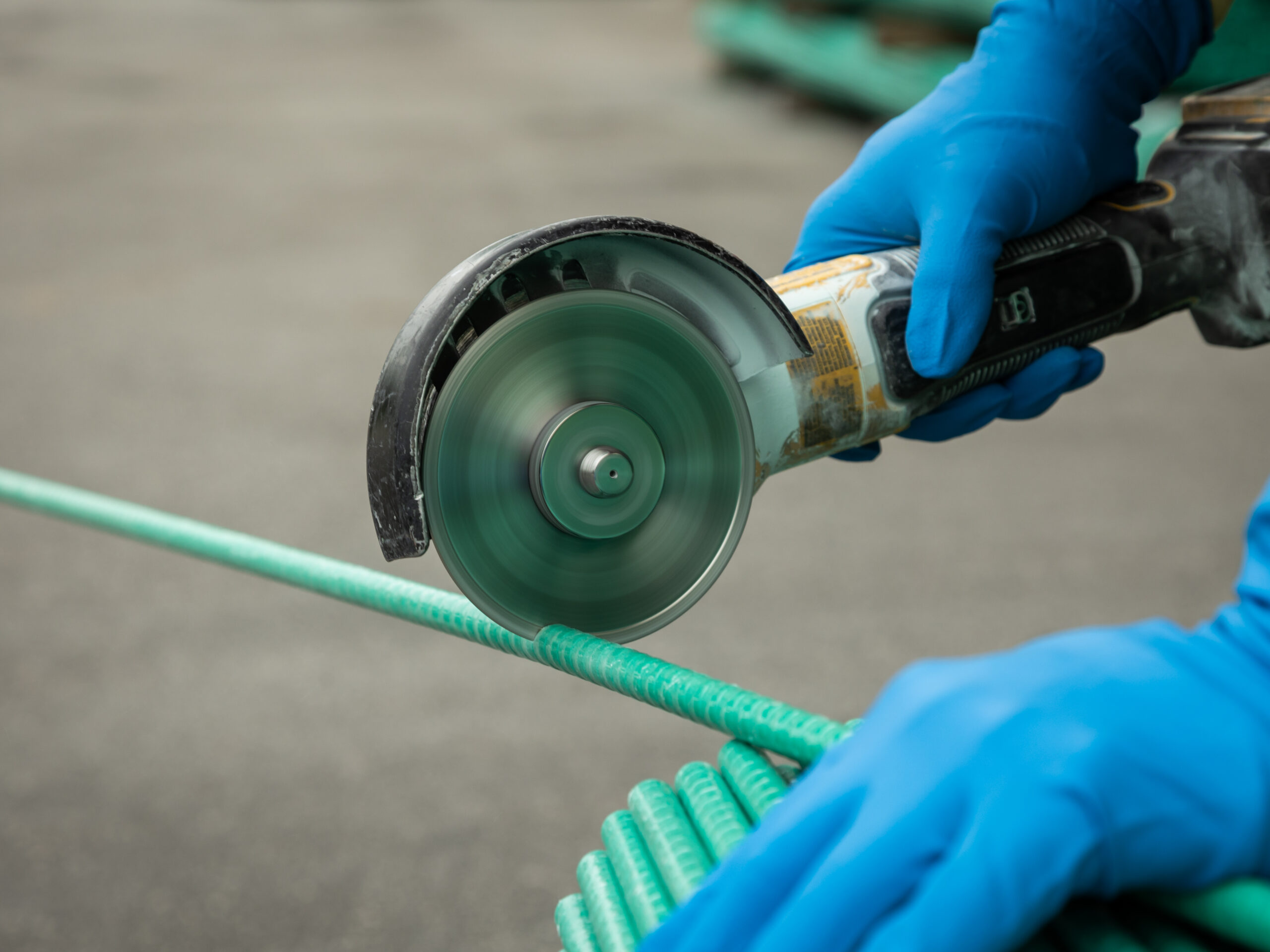
Los códigos de diseño actuales, incluidos el ACI, el IBC y el IRC, ahora hablan de GFRP. Y la industria está escuchando.
Evolución de los códigos de diseño para muros residenciales de concreto reforzado con GFRP
En términos generales, el ACI 332 «Requisitos del código para concreto residencial» abarca el diseño y la construcción de concreto residencial y está referenciado e incorporado en el Código residencial internacional (IRC, por sus siglas en inglés). Los «Requisitos del código de edificación para el concreto estructural», ACI 318, hace referencia y se incorporó al Código internacional de edificación (IBC, por sus siglas en inglés) para cubrir el diseño de edificios aparte de la construcción residencial. Cuando una jurisdicción adopta estos Códigos, pasan a formar parte del Código general de edificación y rigen el diseño y la práctica de ingeniería aceptables.

Una de las ventajas del ACI 332, en comparación con el ACI 318, es que simplifica el proceso de diseño de varias configuraciones habituales de estructuras residenciales, a saber, «viviendas unifamiliares y bifamiliares, viviendas unifamiliares múltiples, casas adosadas y… zapatas con colado en el sitio, muros de cimentación y losas sobre el terreno». Ofrece tablas prescriptivas que detallan las barras de acero necesarias según las disposiciones de la norma ACI 318 para una serie de parámetros de diseño, como la altura del muro, la resistencia del concreto, el espesor del muro y el empuje del terreno máximo. Sólo para estas condiciones prescriptivas, se elimina la necesidad de un conjunto de cálculos sellados por un profesional de diseño autorizado.
Cuando las barras de refuerzo de GFRP eran una tecnología emergente, los Servicios de evaluación del consejo internacional de códigos (ICC-ES, por sus siglas en inglés) desarrollaron criterios de aceptación para su uso en la construcción de concreto. Antes de la publicación del código ACI 440.11-22 —sobre el que hablaremos más adelante—, el refuerzo de fibra de vidrio se permitía según el Criterio de aceptación 454 del ICC «Barras de polímero reforzado con fibra (FRP, por sus siglas en inglés) para refuerzo interno de elementos de concreto», que permite que los materiales de refuerzo de fibra de vidrio cumplan ciertos requisitos y sean una alternativa de diseño permitida al refuerzo de acero. Esta era una vía que requería un diseño de ingeniería completo. Posteriormente, con la publicación de ACI 440.11 «Requisitos del código de edificación para concreto estructural reforzado con barras de polímero reforzado con fibra de vidrio (GFRP)» en 2022, al que también se hizo referencia y se incorporó al IBC, se permite un uso más amplio de las barras de refuerzo GFRP a través de otra vía que requiere un diseño de ingeniería completo.
Reconociendo la facilidad de las tablas normativas ACI 332 y en relación con el tema del refuerzo de GFRP, NEx: Un Centro ACI de excelencia para materiales de construcción no metálicos publicó recientemente un documento comparativo para el diseño residencial normativo utilizando refuerzo de GFRP. Las «Directrices de prácticas recomendadas para barras de FRP en proyectos prediseñados», MNL 6, proporcionan actualmente orientación que conecta los principios que se explican en ACI 440.11 con ACI 332. Estas tablas describen los requisitos de refuerzo en un formato similar al de ACI 332 para el refuerzo de GFRP que cumple la especificación de material ASTM D7957. Para condiciones no cubiertas por estos parámetros de diseño, por supuesto, un profesional del diseño autorizado podría aplicar los requisitos de resistencia y utilidad de ACI 440.11.
Mateenbar dio un paso más para facilitar el diseño y el uso por parte de la industria. Nuestro Informe de equivalencia ICC 5548 «Barras de polímero reforzado con fibra (FRP) para refuerzo interno de elementos de concreto» especifica el refuerzo admisible con productos Mateenbar para determinadas aplicaciones residenciales, al igual que hace MNL 6 en las tablas normativas, pero específicamente para Greenbar2X y Mateenbar60. El análisis en el que se basa el informe aprovecha al máximo las propiedades de Mateenbar, más allá de las especificaciones ASTM.
Basta decir que hoy en día se dispone de las herramientas para utilizar barras de refuerzo de GFRP sin cálculos de ingeniería dentro de los parámetros de diseño indicados en nuestro Informe de equivalencia ICC y MNL 6, pero también se permite una flexibilidad total de diseño con cálculos de ingeniería para estructuras fuera de esos límites según ACI 440.11-22 en virtud del IBC y el IRC.
Es más, los miembros del comité ACI 332 han aprobado revisiones de ACI 332 de forma que el GFRP se incluirá como «material aprobado» de acuerdo con ASTM D7957 y ACI 440.11. Está previsto que la próxima edición de ACI 332 se publique en 2026 y que incluya las barras de refuerzo de GFRP completamente. Sin embargo, es probable que en el código no se incluyan las tablas de muros normativas para el GFRP. Como nota al margen, esto es similar a la aprobación del concreto reforzado con fibras (FRC), que también se incluye en ACI 332 pero sin tablas específicas. Se trata de un avance muy interesante para el sector, porque permitirá utilizar el GFRP en todos los mercados residenciales de EE. UU. inmediatamente después de su publicación, puesto que el IRC hace referencia a ACI 332.
Ahora que las normas reconocidas por el sector están firmemente establecidas, con el apoyo de ACI, ICC-ES, NEx y otras organizaciones líderes, el uso del GFRP ya no es emergente, sino que está establecido. Los contratistas que deseen realizar cimentaciones más duraderas y resistentes a la corrosión cuentan ahora con el respaldo técnico necesario para hacerlo con confianza. El GFRP está listo para ser utilizado hoy y merece la pena tenerlo en cuenta para su próximo proyecto.
Acerca de Mateenbar Composite Reinforcements, LLC
Mateenbar Composite Reinforcements, LLC produce dos líneas de productos de barras de refuerzo de GFRP: Greenbar2X™ y Mateenbar60™. Greenbar2X™ es perfecta para proyectos residenciales como cimientos, calzadas, cubiertas de piscinas, patios, aceras y mucho más. Además, este producto de acabado superficial es ideal para proyectos industriales ligeros como edificios de un solo piso y aplicaciones verticales de 10 pies de altura o menos. Greenbar2X™ es un diseño de nervio lacado, pulido y rectificado helicoidalmente, optimizado para una mayor fuerza de adherencia con el concreto. El lacado proporciona una barrera adicional a las fibras de vidrio de la barra (además de los guantes de trabajo, que siempre sería una práctica recomendada en una obra de construcción), así como una protección UV adicional para el producto. El distintivo color verde aumenta la visibilidad y la seguridad de los trabajadores en las obras. Por lo tanto, si está encofrando muros, vertiendo zapatas o colocando losas, Greenbar2X™ ofrece un rendimiento probado, un levantamiento más ligero y la durabilidad necesaria para durar más que el acero donde más importa: en su obra.
Diseñado para proyectos industriales pesados y aplicaciones estructurales de mayor envergadura, Mateenbar60™ es una opción fiable para puentes, edificios de varios pisos y otros proyectos de infraestructuras exigentes. Para ambos productos, el innovador factor de forma —es decir, la preparación de la superficie que permite la unión con el concreto circundante— garantiza una larga vida útil sin deterioro y facilita la manipulación. Como se ha destacado anteriormente, los codos prefabricados están disponibles por encargo para acompañar a ambos productos, ofrece una mayor versatilidad para las necesidades de proyectos personalizados y facilita el cumplimiento de requisitos de diseño específicos.
Puede encontrar los productos Mateenbar® dondequiera que compre sus materiales de construcción y barras de refuerzo. Greenbar2X™ y Mateenbar60™ se venden a nivel nacional en «grandes superficies comerciales» como Lowe’s y Home Depot, tanto en tienda como en línea, un logro poco frecuente en el espacio de los refuerzos. También, importantes socios nacionales y regionales distribuyen los productos y prestan servicio a los sectores de infraestructuras, comercial e industrial de todo EE. UU. Todos los productos están respaldados por la asistencia de expertos e inventarios en múltiples regiones para satisfacer la demanda de proyectos a gran escala y urgentes.
Nota sobre la estabilidad de precios y aranceles
El precio de los materiales que componen el refuerzo de GFRP es relativamente estable, a diferencia del acero, cuyo precio puede variar considerablemente con el tiempo en función de los precios de la chatarra y la demanda, la variabilidad estacional y otras fuerzas del mercado. Los avances en la tecnología de fabricación también han dado lugar a eficiencias que han reducido y seguirán reduciendo el precio unitario del GFRP. Nuestra planta de fabricación, situada en Concord, Carolina del Norte (a las afueras de Charlotte), cumple plenamente la normativa Build America, Buy America (BABA). Aunque el cumplimiento de BABA no es actualmente obligatorio para la construcción residencial, lo consideramos tanto una responsabilidad como un motivo de orgullo. En Mateenbar®, creemos en reforzar las cosas importantes de la vida: desde conectar comunidades y apoyar a contratistas, hasta ser contribuyentes responsables de los lugares donde vivimos y trabajamos. Nuestro compromiso con la fabricación nacional garantiza que cada producto que fabricamos refuerce no sólo las estructuras, sino la resiliencia a largo plazo de la infraestructura estadounidense y de las personas que dependen de ella, ¡como usted!
Barras de refuerzo de GFRP, ligeras, con un precio competitivo y no corrosivas, una alternativa atractiva para su próximo proyecto.
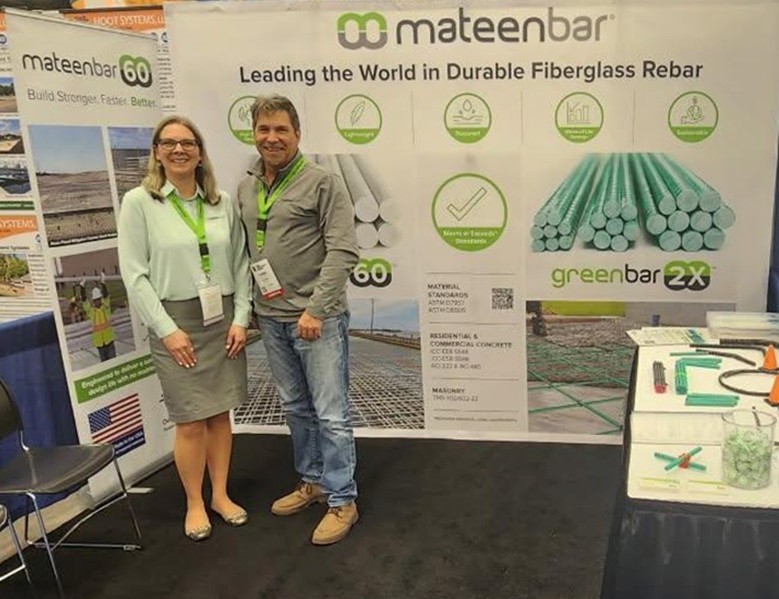
Danielle Kleinhans y Torre LoDolce en The Precast Show, febrero de 2025
Acerca de la autora: Danielle Kleinhans es Directora de ingeniería y desarrollo comercial de Mateenbar Composite Reinforcements, LLC, situada cerca de Charlotte, Carolina del Norte. En este puesto, se encarga de educar a la comunidad del diseño y la construcción sobre el uso del refuerzo con GFRP en el concreto en todo el país. Cuenta con más de 20 años de experiencia en ingeniería estructural y gestión de asociaciones. Antes de unirse a Mateenbar®, trabajó para el Concrete Reinforcing Steel Institute (CRSI), donde recientemente ocupó el cargo de Presidenta y Directora general. Antes de eso, trabajó en CTLGroup centrándose en la ingeniería forense y en Modjeski and Masters como ingeniera de diseño estructural de puentes. Es licenciada en Ingeniería civil por la Universidad de Alaska-Fairbanks y tiene un máster y un doctorado en Ingeniería civil por la Universidad de Missouri-Rolla. Participa en numerosos comités del sector relacionados con la construcción en concreto reforzado, es ingeniera profesional autorizada y miembro del Instituto Americano del concreto.
Los límites de la sílice coloidal para la densificación, fortaleza y resistencia a la abrasión del concreto
De Derick Rainey, Vicepresidente de Nox-Crete Inc.
Este informe oficial ha sido reproducido con la aprobación de Nox-Crete Inc.
Resumen ejecutivo
Este informe oficial examina críticamente las afirmaciones en torno a la sílice coloidal como densificador para el concreto Tipo 1L, específicamente en lo que respecta a su eficacia para mejorar la fortaleza, la densificación y la resistencia a la abrasión. Aunque la sílice coloidal se promociona ampliamente por estos beneficios, a menudo no está a la altura en comparación con otros densificadores alternativos basados en silicatos, como los silicatos de litio, sodio o de tipo híbrido. La limitación crítica reside en la dependencia de la sílice coloidal de los enlaces de hidrógeno, que forman conexiones más débiles y menos duraderas dentro de la matriz del concreto que los enlaces covalentes creados por otros agentes densificadores basados en silicatos. Como resultado, el concreto tratado con sílice coloidal puede mostrar únicamente mejoras superficiales en la dureza de la superficie, con una menor resistencia a largo plazo frente a factores medioambientales.
A pesar de estas limitaciones, la sílice coloidal ofrece ventajas únicas cuando se aplica al concreto plano durante la fase de acabado. Mejora la maleabilidad del concreto húmedo, facilitando su aplicación y reduciendo el esfuerzo del trabajador. Además, la sílice coloidal ayuda a controlar la pérdida de humedad, reduciendo los defectos comunes como la retracción y el agrietamiento por cuarteo, la ondulación y la descamación. Estas ventajas hacen de la sílice coloidal una opción viable para mejorar la calidad del acabado superficial en aplicaciones específicas, aunque no proporcione la densificación y durabilidad más profundas y permanentes que consiguen otros productos.
Este artículo concluye que la sílice coloidal tiene aplicaciones prácticas, especialmente para mejorar la maleabilidad y resolver problemas de acabado en las fases iniciales. Sin embargo, no debe considerarse una solución completa para la densificación, la fortaleza o la resistencia a la abrasión en el concreto Tipo 1L. Para los proyectos que prioricen la durabilidad a largo plazo se recomiendan densificadores alternativos a base de silicatos que establezcan enlaces químicos más fuertes dentro del concreto.
Introducción
El cemento Tipo 1L, también conocido como cemento Portland con caliza (PLC, por sus siglas en inglés), está ganando mayor aceptación en Norteamérica debido a sus beneficios ambientales y de desempeño. Este tipo de cemento se ha vuelto más común en todo el mundo a medida que crecen las prácticas de construcción sostenible y la industria busca reducir su huella de carbono.
El Tipo 1L puede producir a veces una mezcla «más pegajosa» debido a las partículas de piedra caliza finamente molidas esenciales para la mezcla. Esto puede hacer que el concreto plano sea más difícil de colocar y acabar, especialmente en condiciones calurosas y secas, cuando el concreto fragua de manera más rápida. El PLC puede requerir más agua para conseguir la misma maleabilidad que el cemento tradicional de Tipo I. Esto puede ser un problema cuando se requieren estrictas relaciones de agua y cemento (a/c) para aplicaciones estructurales, ya que añadir más agua a la mezcla puede afectar a la fortaleza y durabilidad.
El concreto de Tipo 1L tiende a tener un sangrado de agua reducido en comparación con las mezclas tradicionales. Para el Tipo 1L, el sangrado de agua se reduce debido al uso de partículas más finas de cemento y piedra caliza. Esta característica puede hacer que el concreto sea más difícil de acabar, especialmente si no es lo suficientemente fluido como para permitir una superficie lisa y maleable.
El tratamiento con un producto de acabado a base de sílice coloidal se promociona ampliamente como la solución a estos problemas, haciendo grandes afirmaciones sobre sus efectos positivos en la prolongación de los tiempos de trabajo y el aumento de la durabilidad, la solidez y la calidad del acabado. Sin embargo, a menudo se sobrestiman algunas de estas afirmaciones, exagerando la eficacia de las sílices coloidales para densificar, la solidez y la resistencia a la abrasión del concreto, especialmente a largo plazo. Este artículo describe estas afirmaciones y aclara las propiedades beneficiosas reales de las sílices coloidales en aplicaciones de acabado del concreto.
Visión general de la sílice coloidal
La sílice coloidal es una suspensión de finas partículas de sílice de tamaño nanométrico dispersas en un líquido, normalmente agua. Las partículas tienen entre 5 y 100 nanómetros de diámetro, creando una mezcla estable y homogénea que no es ni totalmente sólida ni está totalmente disuelta. Esto les confiere una enorme superficie en relación con su peso. Debido al pequeño tamaño de sus partículas y a su estructura química, la sílice coloidal se combina con hidróxido de calcio y otros compuestos a base de silicato de calcio en la mezcla de concreto para formar geles de hidrato de silicato de calcio (C-S-H), rellenando los poros y capilares de la superficie. Disminuye la pérdida de humedad en la superficie al ligar el agua interna, restringiendo la transmisión de humedad a través de la superficie y reduciendo el secado prematuro. La sílice coloidal es estable, no tóxica, con pH ligeramente ácido a neutro, baja en compuestos orgánicos volátiles e inerte.
Cómo funciona la sílice coloidal
Finalidad de la sílice coloidal en el concreto
La sílice coloidal se valora por su capacidad para mejorar la manipulación y el acabado general del concreto, y la convierte en una opción práctica para diversas aplicaciones. Puede utilizarse en el concreto como aditivo sustitutivo de las cenizas volantes para reducir la reacción álcali-sílice (ASR, por sus siglas en inglés), aunque su eficacia en este ámbito es limitada. Sin embargo, se ha determinado que es muy útil cuando se utiliza en una aplicación tópica, donde es importante mejorar la calidad del acabado y controlar la pérdida de humedad en los trabajos planos de concreto. Al rellenar los microporos del concreto, la sílice coloidal ayuda a crear una superficie más densa que puede reducir el riesgo de problemas comunes como la retracción y el agrietamiento.
Mecanismo químico
La sílice coloidal es una puzolana inerte que reacciona químicamente mediante enlaces de hidrógeno con el hidróxido de calcio y otros compuestos a base de calcio del concreto para formar hidratos de silicato de calcio suplementarios, la columna vertebral de la fortaleza del concreto. Cuando un producto de acabado a base de sílice coloidal se trabaja en la superficie del concreto fresco, aumenta la cantidad de pasta de cemento con sólo una pequeña adición de agua. La incorporación de esta sílice agregada y del exceso de agua en el C-S-H hace que la matriz de cemento total sea más densa. El grado de hidratación del cemento aumenta, la relación a/cm disminuye de forma efectiva y la pasta contiene menos poros y más pequeños.
Beneficios
La sílice coloidal ofrece varias ventajas únicas en aplicaciones de concreto, especialmente durante la fase de acabado. Estas ventajas la convierten en una herramienta valiosa en determinadas situaciones, especialmente cuando la mejora de la maleabilidad, la facilidad de aplicación y la disminución de los primeros problemas superficiales son una prioridad.
Maleabilidad y lubricación mejoradas
Uno de los beneficios notables de la sílice coloidal es su capacidad para actuar como ayuda a la lubricación durante el fratasado. Cuando se aplica al concreto húmedo, las partículas de sílice coloidal crean un efecto de rodamiento de bolas, reduciendo la fricción entre la llana y la superficie del concreto. Este efecto permite un movimiento más suave y fácil de la llana, por lo que se requiere menos esfuerzo por parte de los trabajadores y, en última instancia, se mejora la eficacia del proceso de acabado. La sílice coloidal reduce la fatiga del trabajador al disminuir la resistencia de la herramienta y ayuda a producir una superficie pulida más consistente.
Además de facilitar el fratasado, la sílice coloidal aumenta la ventana de maleabilidad del concreto húmedo hasta en un 40 %. Esta mayor maleabilidad permite una distribución y nivelación más manejables, resultando especialmente beneficioso en vertidos a gran escala, donde la distribución uniforme y el control son esenciales. El uso de sílice coloidal también puede reducir el desgaste de las herramientas con el tiempo, ya que los trabajadores pueden conseguir un acabado liso con menos fuerza.
Reducción del agrietamiento y la ondulación por contracción
La sílice coloidal puede mejorar la resistencia del concreto al agrietamiento por contracción y la ondulación, dos problemas comunes que surgen cuando el concreto se endurece y experimenta contracción. Al rellenar los microporos cerca de la superficie, la sílice coloidal reduce la cantidad de pérdida de humedad durante el proceso de acabado, ayudando a prevenir el secado rápido que a menudo conduce al agrietamiento. Esta propiedad de retención de la humedad ayuda a controlar la retracción y, a su vez, reduce la probabilidad tanto de grietas visibles en la superficie como de microagrietamiento interno, que pueden comprometer la durabilidad del concreto con el paso del tiempo.
La ondulación, que se produce cuando la parte superior de la losa de concreto se seca y contrae más rápidamente que la inferior, también se reduce con sílice coloidal. Al ralentizar el secado de la superficie, la sílice coloidal ayuda a crear un perfil de humedad más uniforme en toda la losa, reduciendo la tensión entre capas que provoca el ondulado. Esto es especialmente beneficioso en aplicaciones de concreto más fino o de gran extensión, donde la ondulación puede ser un problema estructural importante.
Protección contra la descamación y el agrietamiento
La descamación y el agrietamiento son dos problemas de la superficie que pueden perjudicar el aspecto y la funcionalidad del concreto. La descamación se produce cuando las capas superficiales se descascaran o desprenden debido a los ciclos de hielo-deshielo, los productos químicos de deshielo o las malas prácticas de endurecimiento. Al promover una capa superficial más densa, la sílice coloidal puede mejorar la durabilidad al hielo-deshielo, haciendo que el concreto sea más resistente a la descamación. Este beneficio es especialmente útil en concreto exterior expuesto a condiciones climáticas adversas o a sales de deshielo.
Un secado y una contracción rápidos durante las últimas fases del acabado y las primeras del endurecimiento suelen causar el agrietamiento, la formación de una red de grietas muy finas en la superficie. Las propiedades de retención de la humedad de la sílice coloidal y su capacidad para densificar la capa superior ayudan a prevenir el agrietamiento al garantizar que las capas superficiales se sequen a un ritmo más controlado. Esto la convierte en una herramienta valiosa en aplicaciones en las que se desea un acabado visualmente liso y sin grietas.
Aplicaciones
La sílice coloidal puede ser muy eficaz para aplicaciones específicas de pavimentos de concreto, especialmente en condiciones ambientales adversas. Cuando se aplica a superficies expuestas a la luz solar directa, baja humedad, altas temperaturas o entornos ventosos, la sílice coloidal ayuda a prevenir la pérdida rápida de humedad, reduciendo el riesgo de defectos superficiales comunes como el agrietamiento por contracción y el ondulado. Esta propiedad de retención de la humedad es esencial para conseguir un acabado consistente en condiciones exteriores difíciles, que es especialmente valioso en pavimentos comerciales, industriales, de almacenes y tiendas, y en estructuras de aparcamiento.
Para aplicaciones decorativas de concreto, la sílice coloidal es crítica para preservar la apariencia y reducir los defectos superficiales, como el agrietamiento y la descamación, que pueden estropear el acabado de superficies coloreadas o estampadas. Promover un acabado uniforme asegura un aspecto consistente, que es vital para proyectos de concreto decorativo donde la estética es una prioridad. Además, las ventajas de la sílice coloidal se extienden a las losas interiores, donde la reducción del polvo, la menor transmisión de vapor y la mayor resistencia a la abrasión, y a la penetración de líquidos mejoran la duración y funcionalidad de los suelos de concreto visto o de las superficies diseñadas para ser recubiertas. Estas propiedades hacen que la sílice coloidal sea una elección óptima para diversas aplicaciones de pavimentos que requieren tanto durabilidad como un acabado de alta calidad y sin defectos.
Limitaciones de la sílice coloidal
La sílice coloidal se comercializa a menudo como una solución eficaz para densificar el concreto, aumentar su fortaleza y mejorar su resistencia a la abrasión. Sin embargo, a menudo estas afirmaciones no se cumplen, sobre todo en comparación con otros densificadores de concreto como los productos a base de silicato de sodio y litio. Las razones subyacentes están relacionadas con las interacciones físicas y químicas de la sílice coloidal dentro del concreto y su limitada fuerza adhesiva.
Uniones químicas más débiles
La sílice coloidal, a menudo, se comercializa para la densificación del concreto debido a su capacidad para penetrar y rellenar los microporos, creando una superficie más densa. Sin embargo, su eficacia es limitada en comparación con otros productos densificadores cuando se trata de proporcionar refuerzo y adherencia a largo plazo, y esto se debe principalmente a la naturaleza de los enlaces que forma dentro de la matriz del concreto.
Enlaces covalentes frente a enlaces de hidrógeno
Los densificadores a base de silicato crean enlaces químicos covalentes con el hidróxido de calcio del concreto para formar C-S-H, el componente principal que refuerza y endurece el concreto. Para obtener la máxima durabilidad, lo ideal es que los densificadores formen enlaces covalentes, que son fuertes y estables debido a que los átomos comparten electrones. Estos enlaces son resistentes a factores ambientales como la humedad y los cambios de temperatura, y resultan ideales para el concreto sometido a diversas condiciones climáticas y cargas a lo largo del tiempo.
Sin embargo, la sílice coloidal se basa principalmente en enlaces de hidrógeno. Los enlaces de hidrógeno suelen ser más débiles que los covalentes porque se basan en la atracción entre moléculas polares y no en el intercambio de electrones. En consecuencia, la sílice coloidal carece de la base química para crear enlaces C-S-H fuertes y duraderos, provocando una interacción relativamente débil dentro de la matriz de concreto. Con el tiempo, estos enlaces de hidrógeno pueden romperse en condiciones de humedad o estrés, disminuyendo el rendimiento a largo plazo del tratamiento.
Los densificadores a base de silicato forman enlaces covalentes con el concreto, produciendo una estructura C-S-H más estable y permanente. Este enlace más sólido resulta en una superficie de concreto más duradera y resistente, porque los enlaces covalentes son menos susceptibles de romperse en condiciones de tensión ambiental. Como resultado, aunque la sílice coloidal puede ofrecer densificación a corto plazo, a menudo no proporciona el mismo nivel de refuerzo y durabilidad que los productos capaces de formar enlaces covalentes.
Problemas de densificación
La densificación efectiva del concreto depende de la profundidad y permanencia de la integración del densificante en la estructura porosa del concreto. Las partículas de sílice coloidal suelen ser más grandes que las de los productos a base de silicato sódico o de litio y limita su capacidad para penetrar profundamente en la matriz del concreto. Esta penetración superficial significa que la sílice coloidal sólo puede densificar las capas superficiales superiores, que pueden desgastarse más rápido con el tiempo. Por el contrario, los densificantes a base de silicatos pueden penetrar más profundamente, promoviendo la densificación en una porción más significativa de la matriz del concreto y resulta en una mayor integridad estructural a lo largo de la vida del concreto.
Debido a su penetración limitada y a su acción superficial, la sílice coloidal no puede alcanzar el mismo nivel de relleno de poros que otros densificadores, permitiendo potencialmente una mayor infiltración de agua y debilitamiento con el tiempo. La densificación con sílice coloidal tiende a desgastarse rápidamente con el tiempo, especialmente bajo tensión mecánica o exposición a la humedad, congelación y descongelación. Esto puede provocar un deterioro prematuro en aplicaciones de alto desgaste, como suelos industriales, calzadas y pavimentos exteriores.
Resistencia a la abrasión
La resistencia a la abrasión es crítica para superficies de concreto sometidas a cargas pesadas de carretillas elevadoras u otros vehículos, tráfico peatonal frecuente o exposición ambiental. La resistencia a la abrasión depende en gran medida de la capacidad del densificador para adherirse de manera firme y uniforme a la matriz de concreto. Dado que los enlaces de la sílice coloidal son relativamente débiles, la superficie tratada a menudo carece de la calidad duradera y resistente a la abrasión que proporcionan otros densificadores.
La sílice coloidal densifica sólo la capa superior del concreto debido a su limitada profundidad de penetración. Esta mejora inicial de la dureza y la resistencia a la abrasión de la superficie pueden parecer beneficiosa justo después de la aplicación. Sin embargo, esta capa densa se desgasta más rápido que una superficie densificada en profundidad. A medida que las capas superficiales se erosionan con el tráfico, las capas inferiores no tratadas quedan expuestas, reduciendo rápidamente la resistencia a la abrasión. Los densificadores a base de silicato sódico y litio desarrollan una superficie más dura y resistente que soporta mejor el desgaste. Su reacción química produce una estructura C-S-H más densa e integrada, haciendo que el concreto sea menos propenso a la abrasión.
Las superficies de concreto expuestas a condiciones ambientales exteriores, como los ciclos de congelación y descongelación, lluvia y los productos químicos de deshielo, son propensas a la abrasión y la degradación. La baja penetración de la sílice coloidal la hace menos capaz de proteger el concreto en estos entornos difíciles. A medida que la capa superficial se desgasta debido a los ciclos de congelación y descongelación o a la exposición química, las capas inferiores no tratadas se ven más fácilmente afectadas por los factores medioambientales. Esto puede provocar descamación, descascarillado y una mayor susceptibilidad a la abrasión. Los densificadores a base de silicato son más adecuados para estas condiciones porque penetran con mayor profundidad y crean una capa superficial más robusta e integrada. Esta capa más fuerte puede resistir mejor la abrasión ambiental, haciéndola más duradera y reduciendo la necesidad de volver a aplicarla o de un mantenimiento frecuente.
Conclusión
Para concluir, aunque la sílice coloidal presenta ciertas ventajas para las aplicaciones del concreto, especialmente durante la fase de acabado, sus limitaciones como densificador para el concreto Tipo 1L se hacen evidentes cuando se evalúa en contraste con los productos densificadores a base de silicatos de la competencia. Este informe oficial ha puesto de manifiesto que la sílice coloidal, a pesar de su amplia promoción, a menudo no cumple sus promesas en lo que respecta a la mejora de la fortaleza, la densificación y la resistencia a la abrasión. La dependencia de los enlaces de hidrógeno dentro de la matriz del concreto da como resultado una interacción más débil y menos duradera que los enlaces covalentes formados por los densificadores a base de silicato de sodio y litio.
La sílice coloidal puede proporcionar una dureza superficial y una mejora inicial de la maleabilidad, pero estas ventajas no se traducen en una resistencia o integridad estructural a largo plazo. Como ya se ha comentado, su escasa penetración limita su eficacia para conseguir una densificación más profunda, dejando básicamente al concreto susceptible al desgaste y a los factores medioambientales. Los densificantes alternativos a base de silicatos aplicados después del endurecimiento del concreto, combinados con sílices coloidales aplicadas durante el proceso de acabado, deberían considerarse para proyectos que exigen durabilidad y rendimiento perdurables para garantizar que la fortaleza y la resistencia a la abrasión del concreto cumplen las normas necesarias. Por lo tanto, aunque la sílice coloidal puede ser una herramienta valiosa en contextos específicos, es esencial reconocer sus limitaciones y seleccionar el densificador adecuado para los requisitos específicos del proyecto a fin de lograr un rendimiento óptimo del concreto.
Volver a construir mejor: El concreto y el fuego

Segundo artículo de una serie sobre viviendas de concreto
De Joe Nasvik
Existen muchas formas de construir una casa de concreto; los métodos más populares hoy en día incluyen el encofrado desmontable, el concreto prefabricado, los bloques de concreto rellenos de lechada y los encofrados de concreto aislante (ICF, por sus siglas en inglés). Las casas de concreto pueden ser construcciones modernas muy caras, construidas para parecerse a cualquier otra casa de la calle o construidas en masa con una buena relación costo-eficacia.
En cierto modo, es más fácil hablar de cómo las casas de concreto pueden resistir huracanes, tornados, inundaciones y terremotos que relatar cómo pueden comportarse en situaciones de incendio. Sin embargo, a los habitantes de Los Ángeles les preocupa los incendios y saber cómo reconstruir las casas perdidas con una mejor resistencia al fuego. Ciertamente, nadie quiere que esto vuelva a suceder otra vez en un clima que probablemente producirá condiciones cada vez más favorables para los incendios fuera de control.
Lo que puede decirse sin reservas del concreto es que es un material incombustible y tiene una buena resistencia al fuego. Pero es resistente al fuego, no es ignífugo. Ningún material es ignífugo porque en algún momento el calor intenso cambia las características de todos los materiales, incluido el concreto. Los dos factores que modifican la resistencia al fuego del concreto son la intensidad del calor al que está expuesto y la duración de esa exposición. Estas son las dos condiciones con las que trabajan los diseñadores e ingenieros para proporcionar estructuras seguras.
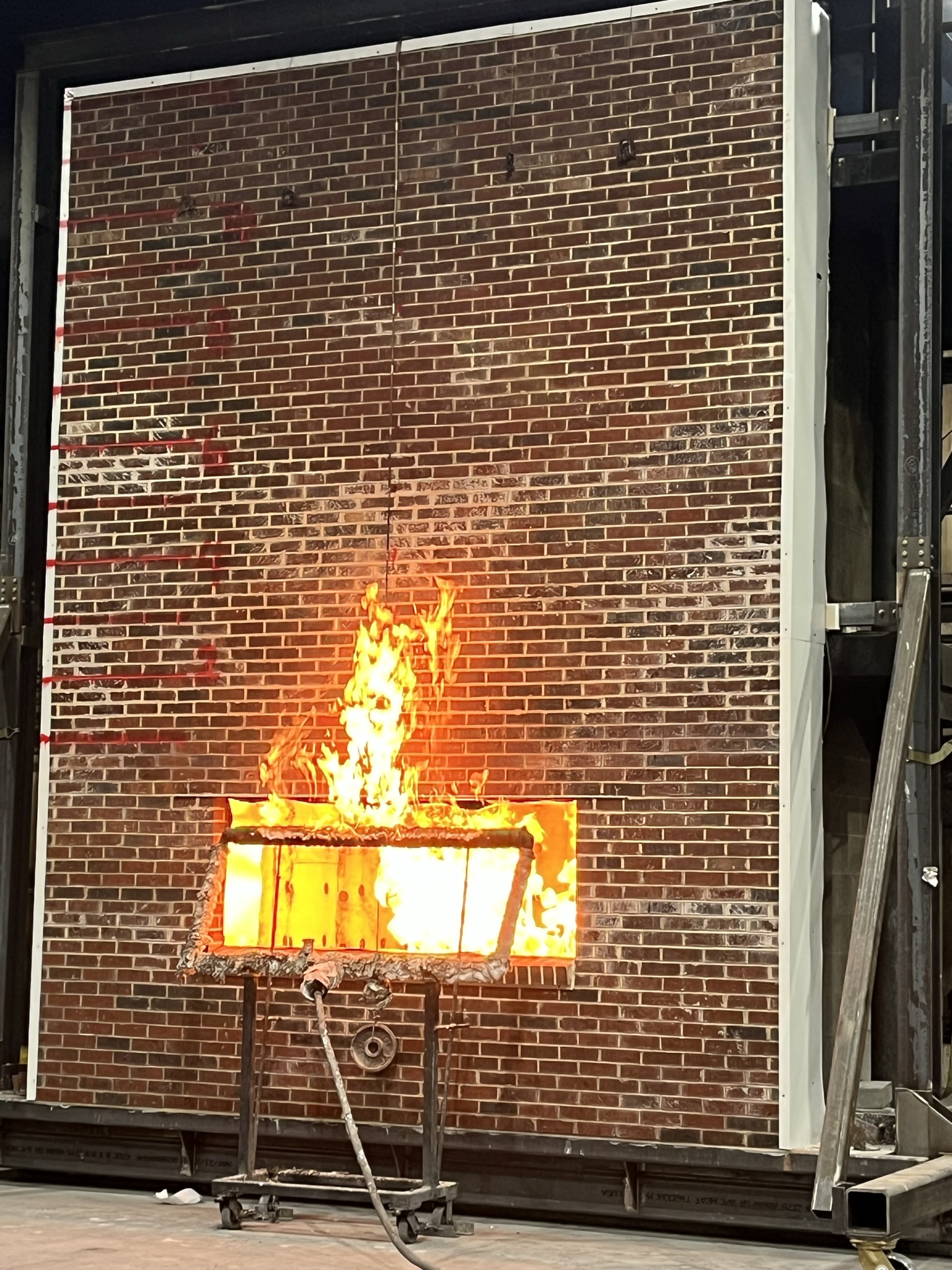
Pruebas de NFPA 285 realizadas en los Laboratorios Intertek en York, PA. Crédito de la foto: Asociación Nacional de Concreto Listo para Mezclar (NRMCA) y la Asociación de Fabricantes de Formas de Hormigón Aislado (ICFMA).
Pruebas contra incendios
A principios del siglo XX, el Instituto Nacional de Estándares (actualmente, NIST, por sus siglas en inglés) estableció la investigación sobre los incendios en los edificios, analizando diversos materiales de construcción. El interés por el concreto se aceleró a principios de la década de 1950, cuando la Portland Cement Association (actualmente American Cement Association), con sede en Skokie (Illinois), construyó una gran instalación para poner a prueba el concreto contra incendios, gran parte de estas pruebas dirigidas a elementos de construcción como columnas, vigas y suelos. Trabajaban para aumentar su rendimiento y proporcionar las directrices y especificaciones necesarias para construir con concreto. También calentaron el concreto hasta el fallo para comprender mejor la naturaleza de estos.
Kevin Mueller, asociado sénior del Grupo de diseño de protección de Thornton Tomasetti en Chicago, Illinois, cuenta que una vez puso a prueba un muro de concreto en un laboratorio de pruebas contra incendios durante 14 horas. El calor se dirigió a un solo lado del muro, y al final alcanzó los 2000 grados Fahrenheit. Dijo que a las nueve horas apenas se observaban daños. Al cabo de 14 horas, la superficie estaba dañada, pero el muro permanecía estructuralmente intacto. Maged Youssef, profesor de ingeniería de la Western University de London, Ontario, afirma que el agua del concreto (siempre hay algo de agua en el concreto) puede convertirse en vapor con un calentamiento sostenido, provocando desconchonesdesconches en las superficies. Thomas Gernay, profesor adjunto de ingeniería estructural contra incendios en la Universidad Johns Hopkins de Baltimore, Maryland, advierte de que el nivel de capacidad de carga del concreto también cambia cuando se calienta. «A 1100 grados Fahrenheit pierde aproximadamente la mitad de la resistencia a la compresión, y esto sigue siendo así después de que el concreto se enfría. Pero se necesita una gran carga de combustible», afirma.
Mueller añade que los primeros signos de deterioro del concreto debido al calor se producen cuando el agua empieza a salir del concreto. «A 1100 grados, el agua de hidratación se expulsa por completo y provoca una ruptura permanente e irreversible de los enlaces químicos del concreto».
La relación entre el concreto y la armadura de acero
Cuando los ingenieros diseñan losas con concreto y barras de refuerzo juntos, el resultado es un concreto estructural capaz de soportar grandes cargas. El concreto es muy fuerte en la compresión y el acero en la resistencia a la tracción, por lo que ambos materiales se complementan. Gernay, Mueller y Youssef (cada uno es miembro de ACI 216 – Resistencia al fuego y protección contra incendios de las estructuras) coinciden en que cuando la temperatura del acero alcanza los 800 grados Fahrenheit, se vuelve maleable y se dobla en la dirección de las fuerzas que se le aplican. Por otro lado, el concreto no es un buen conductor del calor, y se necesita un tiempo considerable para que el calor se mueva a través de este, protegiendo las barras de acero (barras de refuerzo) de alcanzar temperaturas críticas de 800 grados. Existe un acuerdo general en el sector de que una pulgada de concreto, denominada «recubrimiento», sobre las barras de refuerzo las protege de alcanzar los 800 grados Fahrenheit durante aproximadamente una hora, mientras que un recubrimiento de dos pulgadas las protege durante dos horas. Las autoridades responsables de los códigos de la edificación a veces establecen el grosor del recubrimiento que desean para los edificios de sus jurisdicciones.
Proteger las barras de acero del calor es la máxima prioridad para el concreto en caso de incendio. Mueller afirma que un incendio local intenso puede dañar parte de una casa de concreto, mientras que una exposición prolongada a temperaturas de 1000 grados Fahrenheit en un área extensa puede provocar el fallo del concreto.
Incendios forestales
Los incendios de Los Ángeles se avivaron por vientos de hasta 100 mph, que quemaron maleza y otras cosas que produjeron altas temperaturas. Las brasas, impulsadas por el viento a gran velocidad, precedieron a los incendios y encendieron todo lo que podía arder. Las brasas se introdujeron en el interior de las casas y bajo los tejados, provocando incendios en toda la vivienda a altas temperaturas que calcinaron los edificios hasta los cimientos. En el mejor de los mundos, un incendio forestal pasaría por delante de una casa de concreto diseñada para resistir el fuego y seguiría su camino, sin tiempo para desarrollar mucho calor en el concreto. Después, los propietarios podrían limpiar los escombros, volver a sus casas y la vida continuaría.
Youssef afirma que la meta de todas las viviendas debería ser mantener los materiales combustibles alejados del exterior de las casas para garantizar un bajo desarrollo del calor. Pero, por ejemplo, saber cómo proteger los depósitos de propano en regiones donde son necesarios es un problema que requiere la ayuda de expertos.
Evitar que el fuego se introduzca en el interior
Uno de los principales objetivos de la construcción de cualquier tipo de vivienda debe ser evitar que el fuego exterior se introduzca en el interior. En el caso de las casas de concreto, la principal preocupación es la carga de combustible del mobiliario. Es posible que el mobiliario eleve la temperatura lo suficiente en algunas habitaciones como para causar daños a la estructura, aunque tal vez sea poco probable. Pero los propietarios deben tener en cuenta sus muebles y la cantidad de combustible que representan.
Independientemente del material utilizado para construir una casa, los constructores y propietarios deben evitar que el fuego llegue al interior.
Según Youssef, los dos sitios más vulnerables a la entrada del fuego son los tejados y las ventanas. No deben utilizarse materiales inflamables como tejas de asfalto o madera en los tejados. La mayoría de los tejados tienen respiraderos que permiten la circulación del aire dentro de la cavidad del tejado, y estos respiraderos deben construirse de forma que impidan la entrada de chispas y brasas en la envoltura del edificio. Lo mismo ocurre con las rejillas de ventilación de lavadoras, secadoras y sistemas de calefacción.
Algunos sistemas de casas de concreto tienen paredes de concreto pero utilizan madera para construir tejados inclinados. Los tejados planos construidos con losas de concreto son una mejor opción para la protección contra incendios, y pueden diseñarse para soportar cualquier carga que se necesite.
Muchas construcciones de casas de concreto utilizan otros materiales para construir las paredes interiores para ayudar a reducir los costes de construcción y facilitar la instalación de fontanería, electricidad y permitir volver a diseñar los espacios interiores en el futuro. En lugar de utilizar montantes de madera para esto, considere el uso de montantes de acero como una mejor manera de reducir la carga de combustible interior, ya que este es un enfoque estándar para la construcción comercial.
Youssef afirma que el fuego no suele entrar en el interior de una casa fundiendo el cristal de las ventanas, sino que el gradiente de temperatura desigual que se desarrolla en los paneles de cristal provoca su rotura. Sorprendentemente, algunos fabricantes de ventanas de ámbito nacional no ofrecen ventanas ni cristales con clasificación ignífuga, por lo que quienes vivan en zonas propensas al fuego, como Los Ángeles, deben procurar comprar ventanas con clasificación ignífuga. También pueden plantearse instalar contraventanas resistentes al fuego para proteger las ventanas.
Los sistemas de rociadores también son una opción, pero pueden añadir un coste significativo a una construcción y requerirían un suministro de agua adecuado.
El concreto y el fuego
Ningún material de construcción es perfecto, pero el concreto es probablemente la mejor opción en cuanto a la resistencia al fuego. Reduce la carga de combustible en una casa y garantiza que las temperaturas del fuego no sean demasiado altas. Cuando construye una casa de concreto, también es atento con los vecinos porque contribuye a reducir la carga de fuego en el vecindario. Además, no es difícil diseñar la casa para que sea sismorresistente al mismo tiempo que se diseña para que sea resistente al fuego.
En el próximo artículo de esta serie hablaremos de la ingeniería estructural y el diseño de viviendas resistentes a la actividad sísmica.
Cru Concrete ofrece a los estudiantes de secundaria un aprendizaje práctico sobre las gratificantes carreras en la construcción de concreto

La industria de la construcción estadounidense es una de las más grande del mundo, con un compromiso con la calidad, la seguridad y la longevidad. Y dentro de los Estados Unidos, Wisconsin destaca como un gran lugar para ser un trabajador de la construcción. De acuerdo con la 10ma edición anual del informe de Evaluación Merit Shop de la Associated Builders and Contractors, publicada en diciembre de 2024, Wisconsin ocupa el primer lugar del país en el sector de la construcción. Este informe anual examina los proyectos de construcción financiados por los contribuyentes de los cincuenta estados y evalúa las políticas y programas que promueven el desarrollo de la mano de obra y las carreras en la construcción. Esta alta calificación significa que un número creciente de jóvenes en el Medio Oeste eligen seguir carreras en la construcción directamente de la escuela secundaria en lugar de ir a las universidades de dos o cuatro años.
Para los estudiantes que están interesados en entrar en el área de la construcción, pero no están seguros de si es una buena opción para ellos, los programas de industria y oficios a nivel de escuela secundaria son una gran manera de tantear el terreno para ver no sólo si una carrera en la construcción es adecuada para ellos, sino qué campo específico les interesa más.
Durante los últimos seis años, Cru Concrete (antes Hottmann Construction) de Dane y Waukesha, Wisconsin, contratista certificado y miembro de la CFA, ha participado con orgullo en el proyecto de construcción de casas de la clase de Construcción avanzada de la Franklin High School. Los estudiantes de la Franklin High School trabajan con el equipo de Cru Concrete, aprendiendo de los expertos y ayudando en cada etapa del proceso de colocación de concreto. Esto incluye la instalación y eliminación de encofrados de concreto, vertido de zapatas y paredes, y completar los pasos que intervienen en el proceso del acabado superficial.
Andrew Mente, profesor de Franklin que presentó y supervisa el programa, explica cómo funciona un proyecto de construcción de casas que forma parte de este programa. «Nuestra clase de Construcción avanzada colabora con los constructores Tim O’Brien para ofrecer a nuestros alumnos una casa específica en la que podemos participar en toda la construcción. Los estudiantes participan de forma práctica en todo el proceso de la construcción, desde la cimentación hasta la finalización, trabajando junto a los contratistas. Adquieren experiencia real en el lugar de trabajo y pueden conocer y trabajar con más de veinte profesionales».
El interés por el programa sigue creciendo y captando la atención. El canal 58 de la CBS (WDJT-TV) de Milwaukee presentó un reportaje en profundidad sobre el programa en octubre de 2024 en el noticiero Sunday Morning. Actualmente hay una lista de espera de estudiantes interesados y un creciente interés por parte de las mujeres. Casi la mitad de los estudiantes actuales del programa son mujeres, lo que representa un fuerte aumento con respecto a años anteriores.
La estudiante participante Emily Engel cree que el programa le ha dado «la oportunidad de descubrir nuevas salidas profesionales». Aunque su interés se centra más en el campo de la electricidad, considera valioso comprender todo el proceso de construcción de una vivienda.

Incluso los estudiantes que no consideran carreras en la construcción encuentran que tienen mucho que aprender del programa. Miranda Gander, una estudiante de último curso de Franklin que planea asistir a la Universidad de Wisconsin-Stout en Menomonie en otoño de 2025 para estudiar diseño industrial y de productos, explica cómo participar en este programa le ayudará en su futura carrera: «Es realmente útil ver todos los diferentes aspectos de los trabajos de la gente para poder crear productos que con el tiempo beneficien al propietario».
Mente comparte: «Trabajar con Cru es un gran momento para los estudiantes porque permiten que los chicos se metan hasta los tobillos en el concreto, colocando encofrados y realizando el afinado del acabado. Como profesor, me resulta imposible recrear esa experiencia en la escuela, así que llevarles a sitios de obras reales les enseña muchas cosas que no pueden aprender en un laboratorio».
Algunos estudiantes empiezan pensando que la construcción es su carrera, pero el programa les hace reconsiderarlo, o al menos cambiar su enfoque de un tipo de construcción a otro. Otros entran en el programa esperando que les guste y descubren que les encanta. Todo son ventajas, porque en última instancia la meta es emparejar a los trabajadores adecuados con las carreras adecuadas para que puedan desarrollarse asociaciones sólidas y duraderas.
Para los estudiantes que prueben el programa y se sientan atraídos por la construcción de concreto como opción profesional, existen oportunidades de aprendizaje o, en el caso de Cru, de ser contratados y recibir formación en el puesto de trabajo. Como dice Mente, «Es una gran colaboración que beneficia a ambos grupos y ayuda a crear una vía para los estudiantes interesados en los oficios». Los estudiantes que pasan por el programa y son contratados por Cru tienen un camino claro y directo hacia una carrera estable y bien remunerada que suele ofrecer muchas posibilidades de crecimiento y desarrollo. Pocos trabajos pueden ofrecer eso a un joven de 18 o 19 años que acaba de empezar. Pero en Cru, muchos de los ejecutivos, incluido el propietario Ken Kurszewski, empezaron su carrera en el área y fueron ascendiendo.
«Trabajar con Andrew y su clase de Construcción avanzada ha sido una experiencia increíblemente gratificante», dice Mike Swift, Director General de Cru Concrete. «Cada año, esperamos con interés la participación con los estudiantes y su introducción al mundo de la construcción del concreto. Muchos estudiantes de tercer y cuarto año de secundaria aún están explorando posibles trayectorias profesionales, y esta es una oportunidad única para que les mostremos cómo pueden construir un futuro gratificante aquí en Cru Concrete».
Fundamentalmente, este programa se basa en la colaboración, de la que se benefician todos. Cru Concrete se enorgullece de formar parte de esta colaboración y espera seguir trabajando muchos años más con los estudiantes de la Franklin High School.
FUENTES
https://www.abc.org/News-Media/News-Releases/abc-wisconsin-is-the-top-state-for-construction
https://www.cbs58.com/news/this-is-our-classroom-franklin-high-school-students-learn-on-the-job-site
Entrevistas con Andrew Mente, Emily Engel y Miranda Gander
2025 CFA Products & Services Directory
Alliance Concrete Pumps
Alliance Concrete Pumps manufactures a complete line of truck-mount-ed concrete boom pumps, line pumps and placing booms for the construction industry. Known for their reliability and performance, Alliance pumps are designed with user-friendly controls and robust components for long-term durability. With an emphasis on after-sales service and support, they provide contractors with the tools and confidence to get the job done efficiently. Alliance continues to innovate to meet the evolving needs of concrete professionals across North America.
AutoCar Industries LLC
At Autocar, building trucks isn’t just what we do—it’s our way of life. Autocar is a leading U.S.-based manufacturer of heavy-duty vocational trucks for applications like mobile cranes, terminal tractors and concrete boom pump chassis. We could say a lot of fancy things about our re-search and technology. We could talk about our experience. We could tell you about our customer service. It’s probably what you’re expecting—but you’ll find all that on our web pages. We’re not here to rest on our laurels. To truly understand Autocar, all you need to know is that we’re 100% niche application-focused because we know you are, too.
Badger Forms
Badger Forms supplies aluminum formwork and accessories for the industrial, commercial, residential and precast industries. The sole focus of Badger Forms is to provide our clients with technologically advanced, extremely durable, highly efficient formwork and accessories. All Badger formwork is produced in an ISO Certified factory, currently producing more than 40,000 square feet of formwork daily with additional capacity available. This world-class manufacturing facility is equipped with state-of-the-art machinery and technological advances not afforded to smaller companies. This high-tech manufacturing capacity allows Badger Forms to quickly meet the needs of customers.
BIK Boom Trucks
For over 30 years, BIK Boom Trucks has been a leader and innovator in providing the highest quality, custom-built Boom Truck solutions in North America for poured wall/foundation contractors and precast concrete industries. BIK has installed and assembled over 2,000 rear mount knuckle and articulating unloaders. BIK is proud to introduce the all-new BIK Series Forming Crane, the FC-67. The most innovative and simplified boom unloader for foundation contractors that operates with top speed and productivity second to none. BIK’s nationwide dealer network and 24/7Crane Tech Support Hotline assures top level after sales support. “Don’t settle for less, Buy from the Best.”
Boman Kemp Manufacturing, Inc.
Boman Kemp Manufacturing, Inc. has grown to become one of the leading manufacturers in the realms of rebar, structural steel and egress basement windows. Thanks to our robust network of distributors spread across the U.S. and Canada, no matter where you are, premium products are within your reach. With a legacy built on unwavering commitment to quality, we have etched our name as the trusted choice for countless construction projects, both big and small, since 1967.
BuildBlock Systems
BuildBlock is a leading manufacturer of insulated concrete forms (ICFs), offering a full range of energy-efficient, durable building solutions for both residential and commercial projects. Their ICFs provide superior insulation, soundproofing, and strength while reducing construction time and waste. BuildBlock supports contractors with comprehensive training and design resources to ensure project success. Their products are recognized for their easy-to-use interlocking design and long-term performance.
CanAmerican Stone Spreader
CanAmerican is the only stone spreader manufacturer to use our own trucks every day. We depend on our equipment’s durability and reliability, which resulted in the development of the SOILKING brand. Our innovation has cemented our leadership in the industry, is evident in our next generation SOILKING Extreme. The Extreme’s unique design combines safety, durability and versatility. The Extreme’s bed, which raises and lowers with remote hydraulics, lowers the center of gravity when driving or maneuvering the unit, whether it is spreading material or off-loading material using the live bottom.
Cemen Tech
Cemen Tech is the world’s largest manufacturer of volumetric concrete mixers, providing mobile and stationary solutions that allow for precise, on-demand concrete production. Their mixers help eliminate waste, reduce downtime and offer contractors the flexibility to produce different mixes on site. Cemen Tech also offers proprietary technology like ACCU POUR for remote project and fleet management. Their equipment is ideal for improving efficiency, quality and profitability in concrete operations.
Chatterton Construction Supply
We are the western U.S. distributer for 4 Seasons forms ties and hardware. Our number one goal is to help you grow your business. By utilizing our industry knowledge, we are able to help you maximize your production. We carry a variety of products that can help you complete your jobs quicker. To name just a few: form release, cordless rebar tying tool, cordless rebar saws, crane baskets, pour-in-place windows, aluminum knock-out window bucks, window wells and general construction supplies. Whatever you need, chances are we have it or know where you can get it.
Concrete Forms Services (EZ-Footings)
Here at EZ-Footings™ we have designed precise concrete forms out of lightweight, remarkably strong aluminum. With these footing forms you can have a snap together concrete forming system that will reduce your labor costs up to 50 percent. Additionally, you’ll also see cost savings on concrete, wood, nails and on the fuel to transport your equipment. We’ve thought of everything to enhance simplicity, and your end results will be better than you’ve ever seen.
Cranes & Equipment Corp
Fully hydraulic Copma form-handling cranes. No electronics, no sensors, no computers. Jib or non-jib cranes available, with reaches of 66to 84 feet, and maximum capacities from 1,800 to 2,300 pounds. Need larger or smaller? We can provide it. The Copma 450 jib crane pro-vides reach and lift options of 2,250 pounds at 70 feet 8 inches, 2,000pounds at 78 feet 9 inches, or 1,800 pounds at 84 feet 8 inches. Stop by Cranes & Equipment’s WOC booth #C4834! Ask about our show specials and check out our form-handling package with the Copma450.6J3.
CrewTracks
CrewTracks is a construction management software platform designed to simplify communication, scheduling and documentation for field crews and office teams. Built with the concrete industry in mind, the app enables real-time tracking of labor, production, equipment and materials. Contractors can streamline payroll, improve project visibility and eliminate paperwork with digital timecards and daily reports. CrewTracks enhances job sit efficiency and provides data insights for better decision-making.
DMX Membranes Limited
DMX Membranes Limited manufactures innovative waterproofing and drainage products that protect concrete foundations from moisture damage. Their flagship DMX AG™ and DMX Drain 5X™ products pro-vide a high level of protection and are easy to install in residential and commercial projects. Known for their durability and performance, DMX membranes extend the life of foundation systems while helping meet modern building code requirements. Contractors rely on DMX for long-term, maintenance-free waterproofing solutions.
DY Concrete Pumps
DY Concrete Pumps offers a full line of truck-mounted boom pumps and line pumps engineered for reliability, ease of use and long service life. Available in a wide range of sizes and configurations, DY pumps are built to perform on everything from residential slabs to complex commercial pours. Backed by a dedicated service center, extensive parts inventory and responsive technical support, DY is committed to supporting customers across North America.
EPRO Services, Inc.
EPRO provides total building envelope protection for any site conditions, at any location. For 30 years, we have developed extensive waterproofing and vapor mitigation systems for projects across the U.S. and Canada. Understanding that site conditions and performance goals can vary from project to project, we provide options that allow design teams the ability to weigh the pros and cons of each material when selecting a system to meet their needs. With warranted waterproofing and contaminant barrier systems, ePRO aims to be the single-source provider for building projects from start to finish.
Euclid Chemical
For over 100 years, Euclid Chemical has served as a leading supplier to the concrete and masonry industry, offering a full line of engineered concrete admixture and construction products, including chemical admixtures, block and masonry additives, fibers, curing and sealing compounds, epoxy adhesives, floor and wall coatings, structural grouts for columns, equipment and machinery, joint fillers and repair products. Euclid Chemical’s TUF-STRAND SF macro-synthetic fibers can be used to replace conventional steel reinforcing in poured wall systems and other concrete structures with accompanied engineered calculations and professional design services.
Ferrosource LLC
Ferrosource LLC is a supplier of high-quality reinforcing steel products for concrete construction. They provide a wide range of rebar, mesh and accessories that meet ASTM specifications and project requirements. Ferrosource LLC focuses on fast delivery, competitive pricing and customer-centric service. Their team works closely with contractors to ensure the right materials are on site, on time and ready to perform.
Form-A-Drain
Form-A-Drain is a pre-assembled, stay-in-place concrete footing form system that doubles as a foundation drainage and radon venting solution. It eliminates the need for separate footing forms and perforated drainpipe, saving time and labor on the jobsite. Form-A-Drain helps contractors meet building codes more easily while improving overall site performance. It’s a smart, efficient solution for residential and light commercial foundations.
Fox Blocks
After decades of experience and innovation in the ICF industry, FoxBlocks backs up our products with the support, service and delivery that builders and designers expect. In 2006, after 20 years of producing all brands of ICFs, Airlite introduced the Fox Blocks ICF brand as the latest generation of insulated concrete form available from the manufacturer to the market.
Giatec Scientific
Giatec Scientific is a leader in smart concrete testing technologies, offering wireless sensors and AI-powered software to monitor concrete strength, temperature and maturity. Their SmartRock sensors provide real-time data to improve project timelines and reduce costly delays. Giatec’s solutions are used globally to enhance quality control and optimize concrete performance.
GluDown Inc.
GluDown Inc. provides advanced adhesive solutions designed specifically for the construction industry. Their high-performance adhesives are used for securing waterproofing membranes, insulation, and other materials. GluDown’s products are engineered for strong, long-lasting bonds and efficient application. Contractors rely on GluDown for cleaner, faster installations and reduced labor costs.
GMX Inc.
Better drainage, superior durability, competitively priced, environmentally friendly, flexible and bends easily. And it doesn’t itch! What more needs to be said? Fiberglass protection boards just can’t match the standard of excellence set by GMX’s Thermal Drain. Thermal Drain can be ordered in R-3, R-5 and R-10 versions with board thicknesses of3/4, 1-3/16 and 2-3/8 inches. GMX manufactures waterproofing systems for the residential market and a full line of commercial waterproofing products and systems. Since 1895, GMX has provided solutions for the most challenging waterproofing problems. We welcome the opportunity to put our experience at your service.
Gravel Conveyors Inc.
Gravel Conveyors Inc. offers mobile stone slinger systems that deliver materials precisely and efficiently to the job site. Their equipment reduces manual labor and enhances productivity by placing gravel, sand or soil exactly where it’s needed. They offer a variety of conveyor models, including truck-mounted and standalone units. Their solutions are ideal for concrete, landscaping and utility projects.
Helix Steel
Helix™ Steel is the manufacturer of Twisted Steel Micro Rebar (TSMR), the leading proactive concrete reinforcement technology in the world. TSMR has achieved IAPMO’s UES ER-279 and is the only discontinuous concrete reinforcement product with an ISO 9001: 2015 certification for its Quality Management System. TSMR is leveraged across markets including commercial, industrial, precast, residential, under-ground and infrastructure and is used in applications ranging from below- and above-grade walls, slab-on-grade, slab-on-deck and pavements, providing structural reinforcement, temperature and shrinkage, crack, seismic, impact and blast resistance.
Hippo Technologies, Inc.
Founded in 2020, Hippo Technologies has developed advanced AR solutions for construction and healthcare. The company has developed its own proprietary software and can use a number of devices to facilitate it, including various hands-free, voice-activated headsets, mobile phones and tablets. Hippo’s product set for construction and related industries is called Hippo Virtual Expert (HVE) and is used for: design and construction, disaster recovery and heavy equipment.
ICC Distribution Group LLC
ICC Distribution Group LLC supplies a wide range of innovative building products, including insulation, waterproofing and concrete accessories. They represent top-tier manufacturers and serve contractors with expert product knowledge and fast delivery. ICC specializes in energy-efficient and code-compliant solutions for both residential and commercial applications. They are a trusted partner for high-performance construction materials.
Irving Equipment
Irving Equipment is a premier distributor of concrete placing and pumping equipment, including truck-mounted concrete pumps, placing booms and trailer pumps. They represent leading manufacturers and offer extensive support services, including training, parts and maintenance. Their dedication to maximizing uptime and jobsite performance has made them a trusted name among concrete contractors nationwide.
Irving Materials Inc.
Irving Materials Inc. (IMI) is a leading supplier of ready-mix concrete, aggregates and building materials across the Midwest and Southern U.S. They offer custom mix designs, on-time delivery and industry expertise fora wide range of construction projects. IMI is committed to quality, safety and sustainability in every batch of concrete they produce. Their extensive network ensures reliable supply and support for contractors of all sizes.
I-State Truck Center of Marshfield WI
I-State Truck Center of Marshfield, WI, offers heavy-duty truck sales, service and parts for leading brands like Freightliner and Western Star. They support the concrete industry with reliable vehicles tailored for material delivery and construction demands. Their team provides preventative maintenance, emergency service and custom solutions. I-State is known for its commitment to uptime and customer satisfaction.
Mar-Flex Waterproofing & Building Products
GeoMat+ and GeoMat drainage rolls remove water and resist hydrostatic pressure by channeling below-grade water towards footer drainage systems. These water channels are created by molding high-density polyethylene (HDPE) into sheets featuring vertically and horizontally aligned dimples, acting as a barrier to protect liquid membranes against backfill soil and sediment. The GeoMat product line can complement and protect a spray-on waterproofing or damp-proofing membrane. In instances where a drainage system is installed, GeoMat may be used as a damp-proofing product as well as a waterproofing membrane. GeoMat accessories are available to facilitate any job and make installation easy.
Mateenbar Composite
Mateenbar Composite manufactures high-strength, corrosion-resistant glass fiber reinforced polymer (GFRP) rebar. Their products are used in applications where traditional steel reinforcement may deteriorate overtime. Mateenbar helps extend the life of concrete structures while reducing maintenance costs. They provide engineering support and code compliant solutions for sustainable building.
MAX USA Corp.
MAX USA Corp. develops and manufactures professional-grade construction tools, including rebar tying tools, compressors and nailers. Their battery-powered rebar tiers are known for speed, durability and ergonomic design. MAX tools increase jobsite productivity and reduce strain on workers. They are a trusted brand for concrete and foundation contractors across the U.S.
Monarch Materials Group
Monarch provides a complete selection of basement and egress products making the purchasing experience easy and efficient. We offer a variety of windows, frames, wells, covers and accessories that are system integrated for custom installations. We turn new and existing basements into beautiful warm living areas enhanced with natural sunlight. Monarch’s products are Energy Star certified and meet the IRC egress codes.
Mono Slab EZ Form
Mono Slab EZ Form is a formwork system that simplifies monolithic slab construction, combining forming and insulation in one step. This innovative solution reduces setup time, labor and material waste. The system meets building code requirements and supports energy-efficient construction. Contractors appreciate its ease of use and performance benefits on residential and light commercial projects.
MST Bar USA
MST Bar USA produces high-performance GFRP rebar as a sustainable alternative to steel reinforcement. Their rebar offers excellent strength, corrosion resistance, and long-term durability. MST Bar is ideal for marine, transportation and utility applications where traditional rebar may fail. They are committed to advancing innovative solutions in concrete reinforcement.
Multiquip Inc.
Multiquip Inc. provides a broad range of construction equipment, including concrete mixers, vibrators, power trowels and generators. Their products are trusted for reliability and performance on job sites of all sizes. Multiquip serves the needs of foundation contractors with innovative tools that improve efficiency and finish quality. They back their equipment with strong service and parts support.
New York Poly Steel
New York Poly Steel manufactures ICF systems designed to create energy-efficient, disaster-resistant structures. Their blocks are easy to install and provide superior thermal and acoustic insulation. The company supports contractors with product training, design services and on-site assistance. They are a strong advocate for sustainable and resilient building practices.
Nox-Crete Inc.
Now is a great time to clean your aluminum forms…the easy way! Falland winter are a great time to start thinking about how to remove hard concrete buildup from your aluminum forms. Form Clean is a powerful, chemically active, dual-purpose product designed to quickly soften hard concrete buildup while also working as a form release agent. Using Form Clean as a replacement for your everyday form release agent for two to three weeks is generally sufficient to remove most concrete buildup. Once your forms are clean, you can switch back to your every-day release agent. If your aluminum forms accumulate more buildup, simply switch back to Form Clean to soften and remove the buildup.
OCM Inc.
OCM Inc. supplies a wide array of concrete formwork accessories, including form ties, brackets and hardware. They serve residential and commercial concrete contractors with high-quality, reliable products. OCM offers fast delivery, competitive pricing and custom solutions for formwork systems. Their goal is to make forming safer, faster and more efficient.
O’Connor & Associates, Ltd
O’Connor & Associates is a consulting and insurance brokerage firm serving the construction industry. They specialize in risk management, bonding and insurance solutions tailored to concrete contractors. The firm helps clients navigate complex coverage options and secure competitive rates. Their industry expertise helps reduce liability and protect contractor operations.
Owens Corning
Owens Corning is a global leader in insulation, roofing and fiberglass composite materials. They offer energy-efficient solutions that improve comfort and durability in concrete structures. Owens Corning supports contractors with high-performance building materials and technical expertise. Their products contribute to sustainable and code-compliant construction.
PALFINGER North America
PALFINGER North America manufactures lifting, loading and material handling equipment including cranes and hook lifts. Their truck-mounted solutions are built for reliability and productivity in demanding construction environments. PALFINGER’s innovations help concrete contractors move materials safely and efficiently. They are known for rugged design, advanced hydraulics and global service support.
Precise Forms Inc.
Precise Forms manufactures a wide variety of high-quality aluminum forming systems that can exceed over 2,500 pours with proper care. These systems can be used for, but are not limited to: basements, concrete homes, multi-story buildings, international projects and precast. The forming systems are produced using state-of-the-art robotic welding, and they create a beautiful concrete finish. These easy-to-use systems require minimal training and help reduce your labor costs. Precise Forms offers a full line of fillers and accessories in both smooth and decorative form styles.
Prinsco Inc.
PROFORM™ HD (Heavy Duty) is an innovative, efficient alternative to traditional wood or PVC forms. This dual-wall corrugated HDPE system forms the footings while at the same time providing superior drainage and radon venting—all in one easy step! PROFORM HD is durable, easy to cut, cold-weather and impact resistant and comes with installed couplers.
Progressive Foam Technologies
Progressive Foam Technologies develops insulation products for residential and commercial concrete construction. Their solutions enhance energy efficiency and moisture management around foundations and slabs. They offer products like continuous insulation and ICF-compatible panels. Contractors value their product performance, ease of installation and support.
Pure Asphalt Company
SureDry 4000 and SureDry 6000 fluid applied, single component, polymer-modified asphalt emulsions for below grade applications, 24-hourcure, can be co-sprayed; SureDry 6850 Grey/Beige, UV resistant, high tensile strength, fluid-applied polymer rubber emulsion for above grade applications, best above grade waterproofing in the industry! SureDry PolyInsulDrain available in 3/4, 1 1/4, 2 1/2, and 3 5/8 inch-thick by three-by-four-foot panels for membrane protection, insulating and excellent drainage, easy to install, minimum fasteners, no itchy fibers;#89 Mastic for patching tie holes and honeycombed areas; short- and long-term warranties available. Call Pure Asphalt for more information and samples.
Putzmeister America
Putzmeister recently introduced the 39Z-Meter Truck-Mounted Concrete Boom Pump, a brand-new design with three-in-one capabilities. The unit comes equipped with a newly designed four-section Multi-Z boom, robust pedestal, a BSA-grade pump cell for high-pressure applications, and a placing boom that can either be permanent or detachable. The 39Z was developed as part of a larger initiative to strengthen the 30-meter class. Other pumps in the line received boom and pedestal updates, lighter footprints, optimized outrigger designs and other performance improvements. All machines in the class are fitted with third generation exclusive Putzmeister free-flow hydraulics.
Retti, Inc
Retti is purpose-built construction software designed specifically for residential concrete foundation contractors. From bidding to billing, Retti streamlines your workflow, not by forcing you to change your process, but by customizing to the way you already work. Our platform is designed to adapt to your existing processes, ensuring as mooth transition with no disruption. With real-time visibility, digital document control and lightning-fast logistics, Retti transforms your operations into a proactive, high-performance system. It gets your whole team—from field to office—rowing in the same direction, un-locking clarity, accountability and profitability where it matters most: your bottom line.
Rmax
Rmax provides engineered polyiso insulation products for above- and below-grade applications. Their thermal insulation solutions improve energy performance and meet code requirements in concrete structures. Rmax offers products for foundations, walls and roofing systems. They focus on sustainability, quality and contractor support.
RockWell Inc.
RockWell manufactures stone textured window wells with the look and feel of real stone adding an aesthetically pleasing view from inside and outside your home. Our Egress window wells are IRC Code compliant, and because they are made of fiberglass, they are extremely durable and come with a ten-year warranty. They are available in sizes from 24to 96 inches in height, in tan or grey.
Schwing America
American-made Schwing Loop Belt truck-mounted conveyors provide quality craftsmanship and proven reliability for all material placing needs. The easy-to-operate, innovative and high-performing conveyors support efficient onsite materials handling at a cost-effective price point. Available in two models, the LB33T4 and LB40T5-20 offer in-creased reach and working range, low clearance, high-strength tubular steel construction, expanded capacity and quick setup and teardown. Schwing Loop Belt conveyors are ideal for a variety of applications, including foundations, footings, tilt-ups, outdoor slabs, dams, bridge decks, backfilling, mat pours and environmental warehouse slabs.
Smart Vent
Smart Vent manufactures engineered flood vents that protect concrete foundations during flood events. Their ICC-certified vents equalize water pressure and meet FEMA and NFIP requirements. Smart Vent helps reduce structural damage and insurance premiums. They are a trusted solution for floodplain construction and code compliance.
SpecChem, LLC
SpecChem’s TRI ACT, available in five-gallon pails for convenience, is also available in 55-gallon drums and 275-gallon totes to accommodate any job. TRI ACT is a versatile, concentrated, highly reactive petroleum mixture that creates an effective protective barrier to prevent fresh concrete from bonding to coated surfaces. TRI ACT chemically softens concrete build up on concrete forms, tools and equipment and can be utilized as a cleaning additive for your SpecChem form release to remove scum and build up without taking your concrete aluminum forms out of service.
Steel Dog
Steel Dog is a leading manufacturer of innovative forming accessories for the concrete construction industry. With a product line that includes wall ties, brackets and form hardware, they are known for offering high-strength, easy-to-use solutions that save contractors time and money on the job site. Their engineering expertise and commitment to quality have made them a go-to resource for contractors seeking reliable forming solutions.
Transit and Level Clinic
Transit and Level Clinic provides professional-grade surveying and construction layout instruments to contractors across the U.S. Their offerings include total stations, laser levels, GPS systems and a wide range of accessories. In addition to sales, they offer calibration, service and repair—ensuring your equipment is always job-ready. Their knowledgeable staff and industry expertise make them a trusted resource for precision tools.
Tremco Construction Products Group
TUFF-N-DRI® and Watchdog Waterproofing® Quick Cure—these innovative waterproofing formulations from Tremco Barrier Solutions cure at a rate that is up to 90 percent faster than our standard market-leading products, opening up a wider weather window of opportunity for you to confidently meet your production schedules, keep your builders happy and improve your bottom line. Quick Cure can be used on every job you spray, and its greatest value to you and your builder is when it’s sprayed with rain, sleet or snow in the forecast and you need to get a job done NOW!
Tuf-N-Lite
Tuf-N-Lite specializes in high-performance fiberglass rebar and structural reinforcement products that offer unmatched corrosion resistance. Ideal for environments where steel rebar would degrade, Tuf-N-Lite products provide long-lasting strength in foundations, marine structures and other demanding applications. Their solutions are light-weight, nonconductive and designed to meet today’s sustainability and durability standards.
Turnstone
Turnstone provides business strategy and financial consulting tailored to contractors and construction professionals. From succession planning and mergers to market analysis and valuation, they help businesses of all sizes grow and sustain long-term success. Their specialized knowledge of the concrete and construction industries ensures advice is practical, actionable and aligned with your goals.
Wall-Ties & Forms
The world’s largest aluminum concrete forms manufacturer and supplier, Wall-Ties & Forms, Inc., (WTF) is the premier designer of aluminum concrete forming systems and concrete formwork accessories. Over40 years ago as a new business, WTF manufactured wall ties—thou-sands of them. Today we produce and ship over 30 million ties a year and over 200,000 aluminum concrete forms to 45 countries worldwide. Engineering excellence, custom design, quality, service, labor saving formwork products and our leading-edge technology innovations all tie together to form the foundation of WTF’s solid relationship with our customers that saves them money, time and reduces wasted effort.
Western Forms
Western Forms have the highest resale value of any aluminum forms in the world, featuring the original patented PinLock™ Attached Hardware and Gasket siderails. PinLock™ is faster and easier than any other attached hardware system, connecting forms 30%+ faster than pins and wedges. The self-cleaning, self-lubricating, spring loaded system makes operation fast and smooth. Exclusive Gasket reduces cleaning time, increases form life and helps maintain trade-in value. Western Forms forming systems are made in the U.S. with American materials, designed to reduce labor, crew hours and length of projects while still providing high-quality structures. Contact Western Forms to learn more.
White Cap
White Cap is a national supplier of construction and safety products, serving professional contractors with thousands of tools, materials and job site solutions. Whether you’re in need of concrete accessories, formwork materials, power tools or PPE, White Cap combines vast product availability with expert support. Their local branches and online resources make them a reliable partner for projects of any scale.
WP Supply
WP Supply offers a curated selection of high-quality construction materials and equipment, with a strong emphasis on concrete tools and finishing supplies. Known for their responsive service and industry knowledge, they assist contractors in selecting the right products for maximum job site performance. Their commitment to customer satisfaction makes them a preferred supplier for contractors who value reliability and innovation.
On the Ground in Utah — CFA Executive Retreat
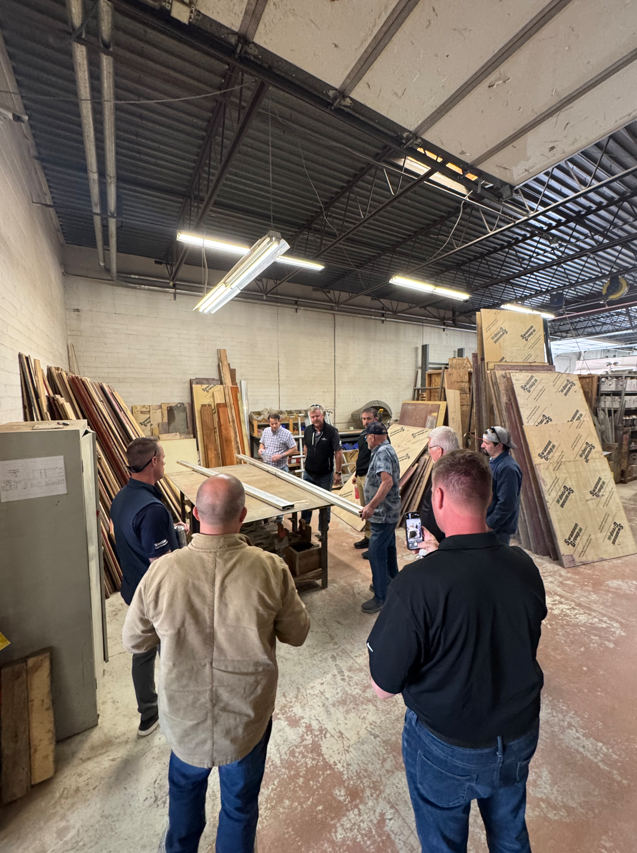
By Trenton Baty, Membership & Marketing Director
Spring has been full speed ahead for the CFA and our members. From project backlogs to planning major events like CFACON25, the pace has been nonstop. That’s why the CFA Executive Retreat in Salt Lake City came at the perfect time—it was a chance to step away from the daily grind, recharge and reconnect with fellow leaders in the industry. The retreat offered the perfect balance of professional insight, personal connection and a breath of fresh mountain air.
The first day was all about connection. A visit to the Natural History Museum of Utah offered a relaxed and engaging backdrop to meet new faces and deepen existing relationships. As we explored the exhibits and shared stories, the atmosphere made it easy to have conversations that often get lost in the busyness of daily work. That evening’s dinner in the mountains brought everyone together around great food and even better company. It was a refreshing way to kick off the retreat and a reminder of the power of slowing down and spending time with like-minded professionals.
The next day brought a deeper dive into the innovations and operations driving our industry. We began with a visit to Jeff Dumas Concrete Construction, where Jeff and his team showcased their facility alongside an incredible homemade breakfast before taking us to a project site where we got to witness their teams’ speed and precision as they prepared their footings to pour a wall that day.
From there, we toured Boman and Kemp Manufacturing, Inc.’s steel fabrication and window well production facilities, gaining insight into the precision and scale behind the products many of our members rely on. We ended the day with a site tour hosted by Solid Concrete Walls Footings and Foundations, highlighting creative approaches to complex foundation work and offering a great look at real-time problem solving in the field. If you missed it, don’t worry, you’ll catch this project in the Project of the Year awards!
Each stop on the tour offered a valuable learning opportunity and a firsthand look at how CFA members are leading with innovation and excellence. The chance to experience these operations up close—and discuss them with the people behind the work—was a highlight of the retreat.
Overall, the Salt Lake City Executive Retreat was the pause we all needed to reflect, connect, and refocus. It brought together the best of CFA—collaboration, shared insight and the kind of camaraderie that makes our association so special. As we return to our busy spring schedules, we do so with fresh ideas, stronger relationships and renewed energy for the season ahead.