PROYECTOS DEL AÑO 2025: GANADORES DE LA CATEGORÍA
La 26.º edición del concurso anual de la Concrete Foundations Association invitó a sus miembros a presentar susproyectos más destacados, compitiendo por el reconocimientocomo algunos de los logros más célebres en la historia del sector. Las candidaturas, una colección de 24 propuestas únicas y complejas, abarcaban 11 categorías, lo que finalmente dio lugara que 14 proyectos fueran galardonados este año.
Si bien los proyectos en sí mismos son el eje central de este programa, las estadísticas que los acompañan destacan el liderazgode la Asociación y los notables acontecimientos importantes alcanzados. Las candidaturas, que representaban a 13 estadosde EE. UU. y una provincia canadiense, procedían de lugarestan diversos como Utah y California en el oeste, Connecticut y Rhode Island en el este, Columbia Británica en el norte y Texasy Georgia en el sur. Un total de 15 miembros contribuyerona las candidaturas de este año, lo que demuestra la amplia participación y el compromiso de los miembros de la CFA. Los proyectos variaban considerablemente en cuanto a su escala, desde el más grande, con una superficie construida de 14 760 pies cuadrados, hasta el más pequeño, con solo 111 pies cuadrados. Un proyecto especialmente impresionante utilizó casi 1130 yardas cúbicas de concreto y 186 186 libras de barras de acero. En total, en el concurso se emplearon 8590 yardas cúbicas deconcreto y 889 161 libras de barras de acero, además de otrosmuchos materiales esenciales, lo que subraya la magnitud y complejidad de los trabajos presentados.
Para muchos miembros de la CFA, este programa de premios esuna plataforma vital para promocionar sus empresas y mostrarsu experiencia. Entre los participantes de muchos años se encuentran Herbert Construction Company de Marietta, Georgia, SCW Footings and Foundations de Salt Lake City, Utah, Custom Concrete de Westfield, Indiana, Talpey Construction, LLC de Old Saybrook, Connecticut, y Ekedal Concrete, Inc. de Irvine, California. Estas empresas, entre otras, reconocen el valor dela CFA para promover la excepcional calidad de su trabajo y obtener el reconocimiento del sector.
«Es increíble ser testigo del crecimiento del programa depremios Proyectos del Año a lo largo de los años», dijo James Baty, director ejecutivo de la CFA. «En 2020, celebramos seis ganadores, y ahora, solo cinco años después, estamos reconociendo catorce proyectos. Este crecimiento refleja el entusiasmo denuestros miembros por compartir el trabajo innovador y únicoque hacen».
Baty también hizo hincapié en el alto nivel de exigencia de los miembros de la CFA: «Cada año, me inspira ver cómo nuestros miembros siguen subiendo el listón de la calidad y los avances tecnológicos en el sector del hormigón en el sitio. Estos premios son un testimonio de su innovación, artesanía y creatividad, quese ponen de manifiesto en todos los proyectos presentados».
GRAN PROYECTO DEL AÑO
VIVIENDA UNIFAMILIAR DE 5001 A 10 000 PIES CUADRADOS
MILLS FOUNDATIONS
PARSONS RESIDENCE − STONEBRIDGE SUBDIVISION
BRANSON WEST, MISSOURI

Esta vivienda unifamiliar es un excelente ejemplo de métodos de construcción avanzados y resolución innovadora de problemas para superar las difíciles condiciones del sitio. El proyecto subraya la importancia de la planificación meticulosa y la precisión técnica en la construcción de viviendas.
Con una superficie de 5300 pies cuadrados, el sistema de muros encofrados se diseñó a medida para adaptarse a una espectacular diferencia de elevación de 35 pies en la propiedad. Para garantizar la estabilidad estructural y una integración perfecta, los cimientos incorporaron 32 escalones en la zapata continuos.
El equipo construyó muros estructurales y de contención de hasta 20 pies de altura. Estos elementos requirieron 197,25 yardas cúbicas de hormigón y 6000 libras de acero de refuerzo, lo que destaca la escala y complejidad del proyecto.
Para estabilizar el sitio, se construyeron aproximadamente 200 pies lineales de muros de contención, equilibrando tanto la integridad estructural como el diseño funcional. Además, se emplearon 141 pies lineales de encofrados apilados para construirmuros de hasta 20 pies de altura, atendiendo a los pronunciados cambios del desnivel. También se integró un hueco de ascensorde tres niveles en el sistema de muros vertidos, lo que demostróla capacidad del equipo para coordinar con precisión elementos estructurales complejos.
El proceso de construcción se enfrentó a los retos de las altas temperaturas. Para garantizar que el concreto siguiera siendo maleable y estructuralmente sólido, se añadió a la mezcla un retardador y un superplastificante. Este ajuste prolongó eltiempo de acabado y preservó la calidad del concreto.
La eficiencia de las operaciones en el sitio se consiguió gracias a la simplificación de las entregas de material y a la estrecha colaboración entre los subcontratistas.
Este proyecto aportó varias ideas clave. La cimentación escalonada proporcionó una solución práctica para los desniveles extremos, mientras que el concreto resistente al calor, conseguido mediante modificaciones en la mezcla, atendió con éxitolas limitaciones medioambientales. Además, la integración decomponentes estructurales como los muros de contención yel hueco del ascensor optimizó tanto la funcionalidad como el diseño, dando como resultado una construcción muy eficiente yduradera.

CIMENTACIÓN UNIFAMILIAR < 2000 PIES CUADRADOS
UNI-FOUNDATIONS INC.
LAKE HOLIDAY PROJECT
CROSS JUNCTION, VIRGINIA
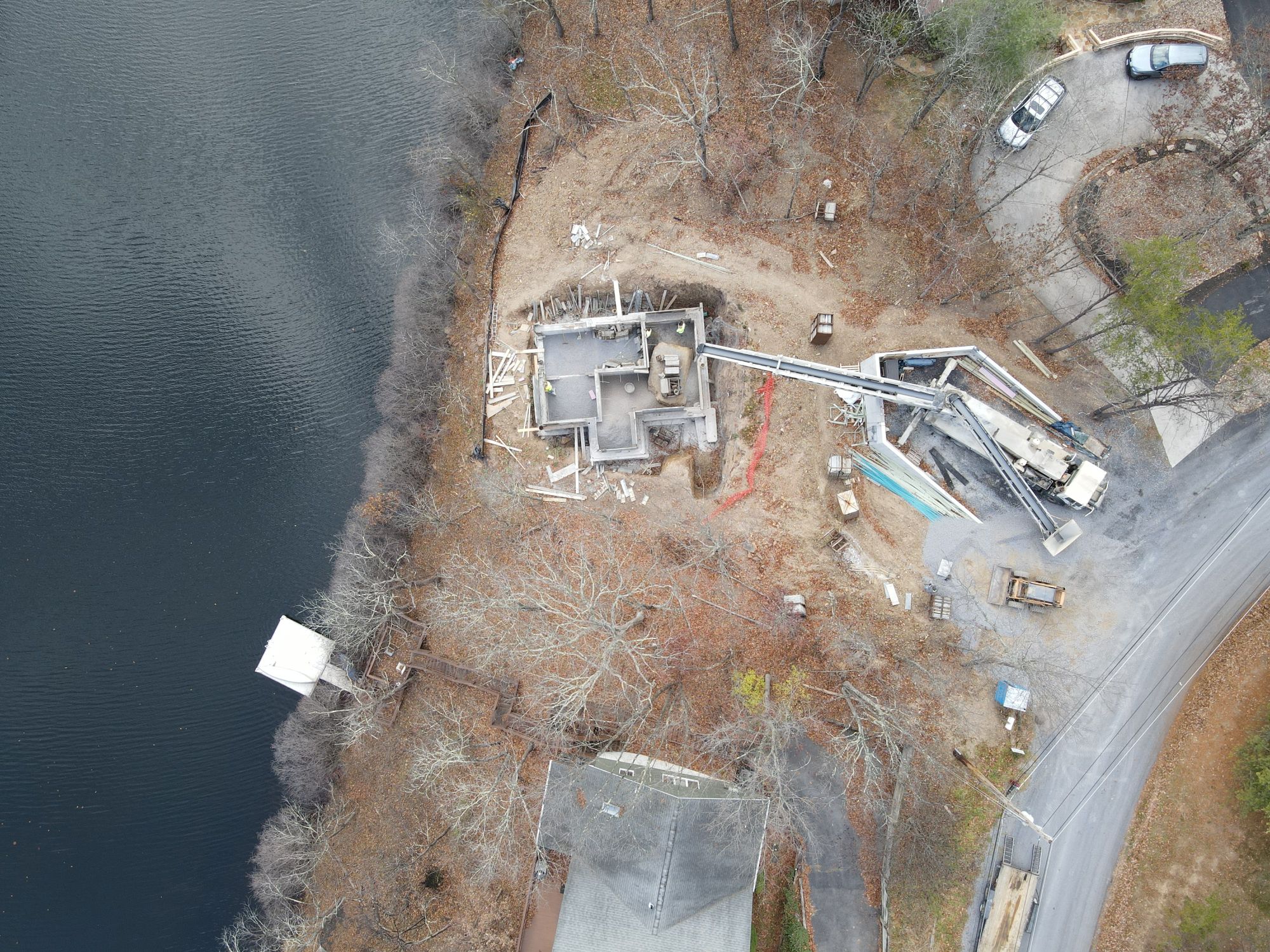
El proyecto consistió en construir una residencia compacta enun terreno con una pendiente pronunciada, lo que exigía planteamientos innovadores debido a los importantes desniveles. La cimentación incluía zapatas de 12 pulgadas de grosor. Las zapatas exteriores medían 36 pulgadas de ancho, mientras quelas interiores tenían 24 pulgadas. Había un total de 10 zapatas escalonadas de entre 1 y 5 pies de altura. El refuerzo de fibra devidrio, especificado a petición del propietario, se utilizó en todala edificación, eliminando la necesidad de las barras de acero tradicionales.
Los muros variaban considerablemente en altura y grosor para adaptarse al terreno. Las alturas oscilaban entre los 32 pies en las secciones exteriores más altas y los 25 pies, conparedes interiores que abarcaban desde 9 pies hasta un mínimo de 3 pies.
El grosor de los muros oscilaba entre 10 y 24 pulgadas, lo que demuestra la precisión en la adaptación estructural. El volumen total de concreto para los muros fue de aproximadamente 130 yardas cúbicas.
El muro de contención de la zona de estacionamiento, que soporta un puente peatonal que proporciona el único acceso a la residencia fue de notable complejidad. Este elemento requirió una meticulosa planificación y colocación, añadiendo 80 yardas cúbicas de concreto adicional. El acceso limitado ala obra exigió el transporte manual de encofrados y materiales, complementado con el uso de grúas cuando era posible. Este proyecto alcanzó la excelencia en ingeniería afrontando retos únicos y ofreciendo un resultado de alta calidad adaptado a las exigentes condiciones del lugar.

CIMENTACIÓN UNIFAMILIAR 2000–5000 PIES CUADRADOS
MJ LORENZ CONCRETE
CHRISTMAS LAKE CURVE
SHOREWOOD, MINNESOTA
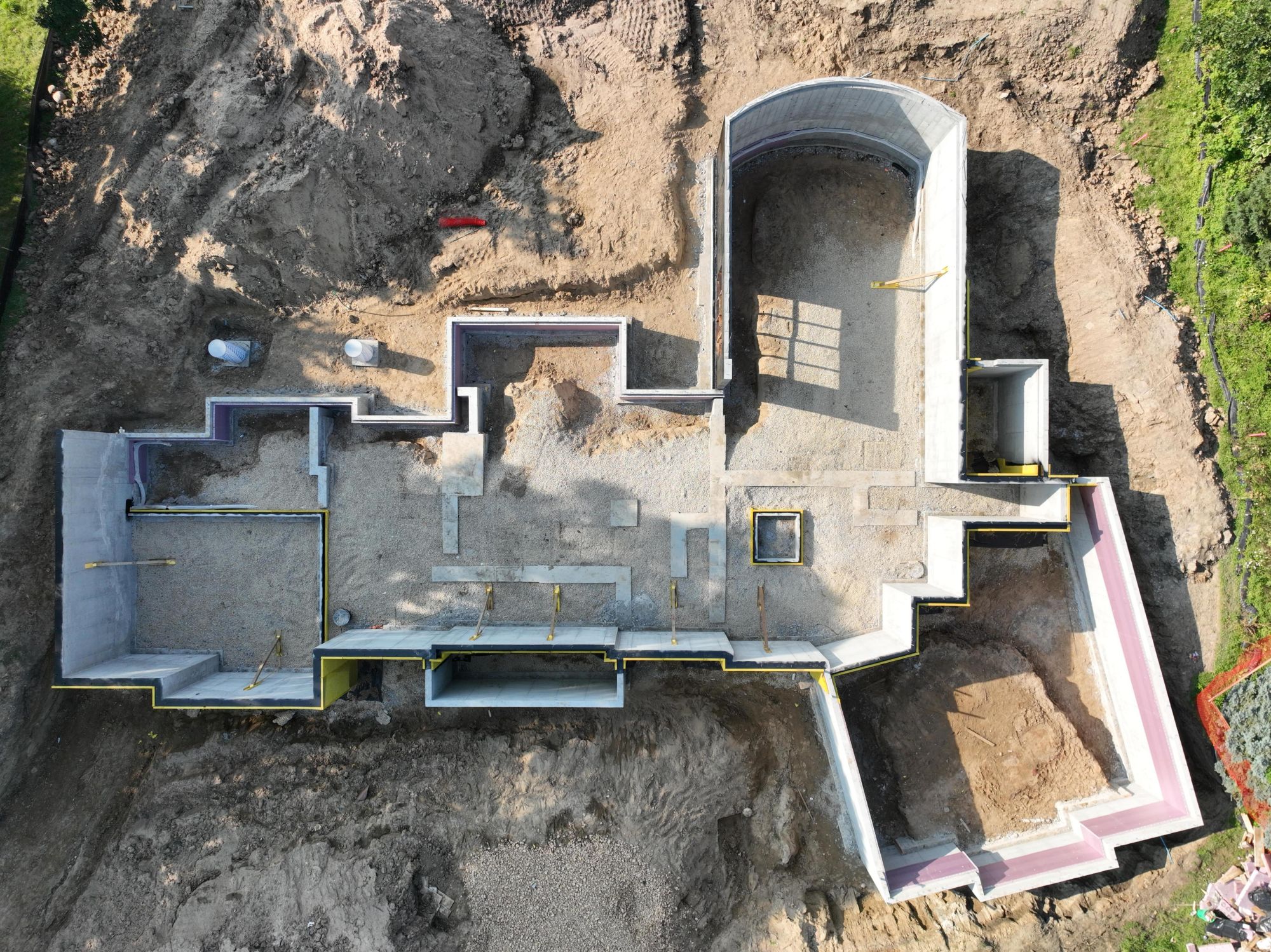
Este proyecto residencial consistió en la construcción de una cimentación de concreto colado en el sitio que requirió 207 yardas cúbicas de concreto y 8000 libras de acero de refuerzo. Las zapatas, que medían entre 20 y 24 pulgadas de ancho y 10pulgadas de espesor, incluían dos barras de refuerzo continuas del nº 4 y mamparos estructurales para gestionar los múltiples desniveles. Las técnicas de encofrado de las zapatas de los muros curvos utilizaron secciones de tablas cortas para darles una forma precisa.
Los muros, con alturas variables de4 pies, 10 pies y 9 pulgadas, 11 piesy 9 pulgadas, 13 pies y 14 pies y 7 pulgadas, presentaban espesores de 8 pies, 10 pies y 14 pies. Un muro curvo con una saliente de apoyo prefabricado y una saliente exterior de ladrillo presentaba retos únicos. La espuma aislante se cortó y se biselaron las esquinas para crear salientes sin juntas, y se utilizaron tirantes de pared unilaterales debido a la complejidad de los detalles. Se empleó la tecnología de estación total paratrazar con precisión las líneas curvas del muro y de las líneas de bastidor después del vertido.
A pesar de las complejidades, todo el montaje del muro se realizó en una sola colada, cumpliendo los objetivos de seguridad y planificación. Este enfoque meticuloso garantizó el cumplimiento de los plazos del contratista general. El proyecto demostró sudestreza en el manejo de geometrías complejas, la aplicación de técnicas avanzadas de trazado y la coordinación de soluciones detalladas de refuerzo y encofrado para entregar una estructura de alta calidad lista para el ensamblaje.

CIMENTACIÓN UNIFAMILIAR 10 000–15 000 PIES CUADRADOS
HERBERT CONSTRUCTION CO.
LAKE RABUN HOUSE
LAKEMONT, GEORGIA

Este proyecto de construcción presenta una propiedad residencial con intrincadas exigencias técnicas, abordadas con éxito mediante una planificación precisa y técnicas innovadoras. El proyecto total abarcó 14 760 pies cuadrados, utilizando 1130 yardas cúbicas de concreto y un armazón de acero reforzado con un peso aproximado de 186 186 libras, clasificado por tamaños de barras de refuerzo n.º 4, 5, 6, 7 y 8. Los muros alcanzaron alturas de hasta 35 pies, con espesores variables y configuraciones complejas, incluidos diseños en radio e inclinados.
Se incorporaron 88 detalles de encofrados de zapata distintos, incluidos 34 escalones en la zapata con un total de casi 62 pies lineales, con un control preciso de las cotas. El proyecto requirió 23 vertidos de concreto e incluyó múltiples cotas de la parte superior del muro, lo que creó complejidades estructurales que exigían ajustes continuos.
Entre las innovaciones personalizadas se incluyeron soportes de estilo Hancock, que facilitaron la elevación del segundo y tercer muro y se mejoraron con andamios integrados que cumplían con las normas de la OSHA. La pronunciada pendiente del sitio exigió una construcción por fases y una logística precisa. Encada fase se integraron sellos de junta preformado en puntos clave para garantizar la durabilidad y la resistencia al agua.
Entre los retos planteados se incluyeron la gestión de las modificaciones del plan durante la construcción, fomentando una estrecha colaboración entre arquitectos, ingenieros y subcontratistas. Los planos de diseño asistido por computadora (CAD, por sus siglas en inglés) contribuyeron a una planificación detallada, mientras que los materiales especializados, como un fortificante acrílico en las juntas de control, mejoraron la durabilidad. A pesar de las estrechas condiciones y el acceso remoto, el equipo ejecutó el proyecto con precisión técnica, logrando una estructura residencial excepcional que ejemplifica la artesanía de alta calidad.

ELEMENTO ESTRUCTURAL SIN CIMENTACIÓN
SDP CONCRETE LTD.
WALLS TO NOWHERE
COQUITLAM, COLUMBIA BRITÁNICA, CANADÁ

El proyecto consistió en la construcción de muros de concreto colado en el sitio con un volumen total de 32 yardas cúbicas, de las cuales 15 yardas cúbicas se destinaron a las zapatas y 17 yardas cúbicas a los muros. Las zapatas se diseñaron con precisión, con dimensiones de 2 pies por 10 pulgadas. Se introdujo una complejidad adicional apilando dos tablones de madera de dos por diez en algunas zonas y apilando un tablón de dos porcuatro encima de otro de dos por diez en otras. Los escalones tenían entre 5 pies y 8 pies y 7 pulgadas de ancho y 32 pulgadas de alto.
Las estructuras de los muros se diseñaron con un espesor de 8 pulgadas y alturas inferiores a 10 pies. Entre las características singulares se incluyeron cinco muros inclinados que sobresalen 12 pulgadas por encima de los futuros peldaños de las escaleras, así como ángulos de esquina de 53, 58 y 45 grados. Se emplearon técnicas de encofrado de última generación, como madera contrachapada biselada para juntas perfectas y listones de chaflán para bordes limpios y visibles. Para garantizar un acabado arquitectónico, las paredes se encofraron con contrachapado nuevo revestido de papel, tirantes tipo snap y maderade 2x.
Los procesos clave incluyeron el modelado 3D basado en CAD para obtener diseños precisos, estaciones totales robotizadas para un posicionamiento exacto y la colaboración con herramientas de excavación con GPS. A pesar de las dificultades, como la deformación de la madera contrachapada, el equipo cumplió los ajustados plazos en 13 días, demostrando una previsión, un trabajo artesanal y un uso eficiente de los recursos excepcionales. Este proyecto muestra una meticulosa atenciónal detalle, garantizando tanto la precisión técnica como la excelencia estética.

CASA DE CONCRETO SOBRE RASANTE
ORIGIN CONCRETE, INC.
SUMMER RESIDENCE
MALABAR, FLORIDA
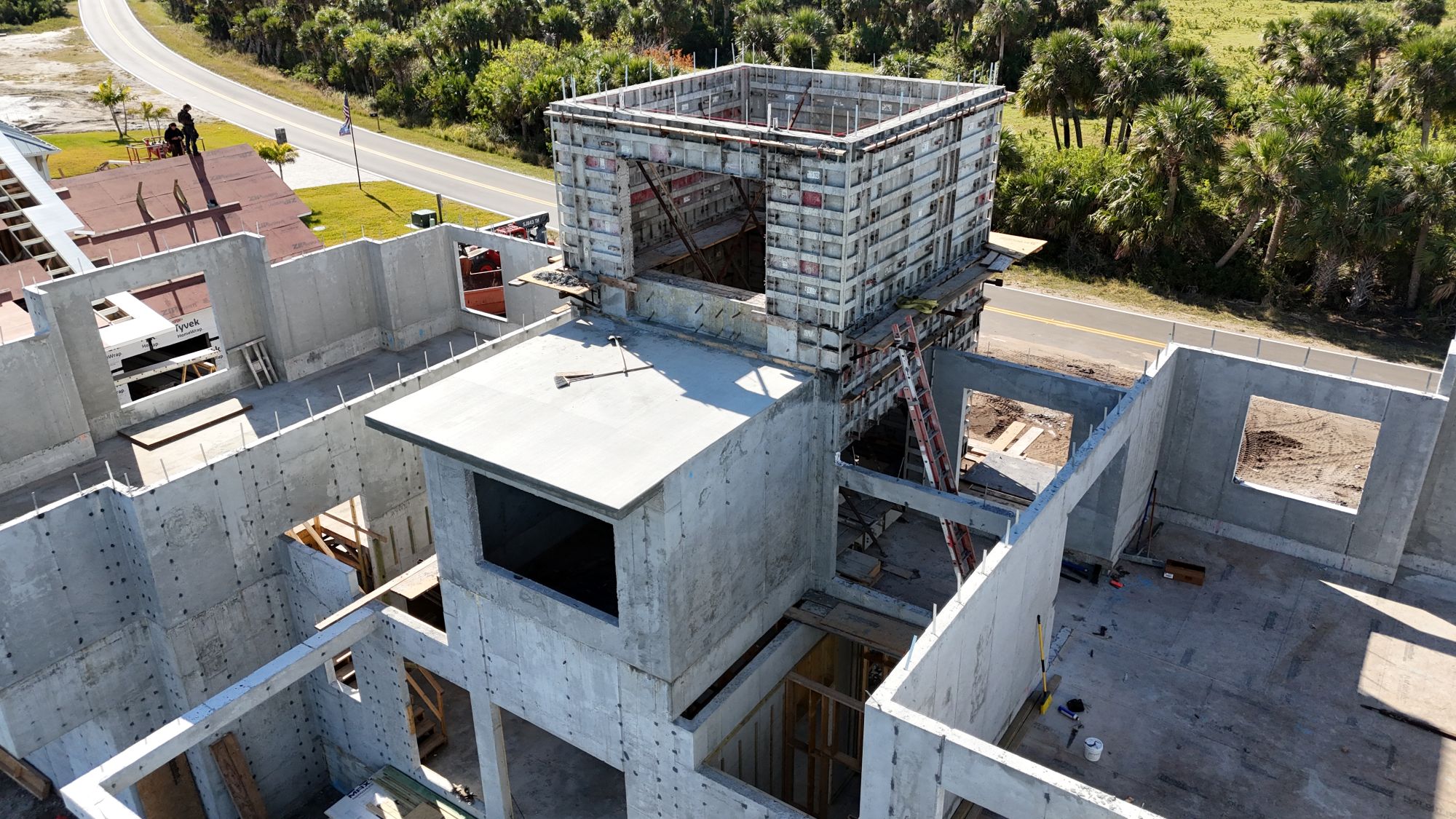
Este proyecto residencial abarca 9496 pies cuadrados y utiliza438,5 yardas cúbicas de concreto, reforzado con 47 000 libras de acero. Las estructuras de los muros son notablemente complejas, con alturas que van de 4 a 41 pies y espesores de 6,8 y 12 pulgadas. La construcción integra seis zonas de murosen voladizo y una cubierta en voladizo situada a 32 pies sobre el nivel del suelo. Otras características son los muros de obra enradio, las vigas en voladizo y numerosas aberturas de precisión que requieren tolerancias estrictas.
El proyecto utilizó materiales y sistemas avanzados para alcanzar sus objetivos. Todos los encofrados se ejecutaron con sistemas diseñados amedida. El refuerzo se ató con atadoras de barras de refuerzo automatizadas para mejorar la eficacia y la uniformidad. El concreto incorporó microrefuerzos para mejorar su resistencia y durabilidad, y el bombeo se realizó con equipos de alta capacidad. Las juntas de control se completaron con productos impermeabilizant esespecializados para garantizar la larga duración y el rendimiento en condiciones variables.
La planificación y la colaboración excepcionales fueron clave para abordar los retos técnicos, con aportes en la fase de diseño para perfeccionar las soluciones estructurales. Esta residencia es un ejemplo de resistencia y versatilidad arquitectónica, y demuestra el potencial del concreto para realizar diseños muy complejos. Al aprovechar materiales y técnicas innovadores, el proyecto ofrece una solución de vivienda duradera y resistentea los desastres que cumple criterios funcionales y estéticos.

PROYECTO COMERCIAL DE CONCRETO SOBRE RASANTE
FOX BLOCKS
WHITE SHIELD OLD SCOUTS VETERANS’ MEMORIAL CENTER
WHITE SHIELD,DAKOTA DEL NORTE

El proyecto cuenta con una estructura de 12 lados que abarca 10 900 pies cuadrados de muros de encofrado de concreto aislado (ICF, por sus siglas en inglés), destacando la precisión y la innovación. Este diseño requería medidas angulares exactas para las 12 esquinas, garantizando la integridad estructural y logrando una geometría inspirada en las técnicas de construcción tradicionales.
El sistema ICF proporcionaba un aislamiento continuo de doble capa, tiras de fijación integradas y un sistema de interconexión reversible. Estas características minimizaban los puentes térmicos mientras mejoraban el rendimiento estructural. Se incorporaron placas de anclaje para madera laminada encolada (glulam) dentro de los muros para fijar la estructura del techo. El sistema estructural del techo incluía un anillo de compresión central y una claraboya en forma de cúpula geométrica a medida, que garantizaba una distribución eficaz de la carga y maximizaba la luz natural.
Taludes de tierra especializados a lo largo del perímetro exterior sirvieron como aislamiento adicional, mejorando el rendimiento energético de la edificación e integrándolos visualmente con suentorno. Estas opciones de diseño permitieron reducir en un 35% la intensidad del consumo energético y optimizar la eficiencia térmica en climas rigurosos.
La construcción de los muros de ICF se completó en 25 días, lo que supuso un ahorro de aproximadamente 40 días en comparación con los métodos tradicionales y una reducción de costos de $120 000 en condiciones invernales extremas. El proyecto demuestra la adaptabilidad y eficiencia de los sistemas de encofrado avanzados, logrando sostenibilidad y durabilidad a la vez que se satisfacen las complejidades culturales y técnicas con soluciones innovadoras.

El resto de los mejores
Junto con los ganadores de cada categoría, otros siete proyectos recibieron puntuaciones de evaluación lo suficientemente altas comopara ser galardonados este año. Seis increíbles proyectos de SCW Footings & Foundations de Salt Lake City, Utah, se consideraron excepcionales: Nocek Residence, Fox Mountain Retreat, Marshall Pavilion, Hyde Residence, Velvaere Lot 27 y Cutler Residence. FoxBlocks, de Omaha, Nebraska, también obtuvo la muy valorada Texas Ranch House. La diversión de la temporada de premios CFA notermina aquí; en el número de invierno de Concrete Facts, cubriremos «el resto de los mejores» de los proyectos premiados.
We See You: Custom Concrete Shouts Out Their Interns
This summer, Custom Concrete, out of Westfield, Ind., took time to celebrate the next generation of industry leaders by highlighting the contributions of their interns on National Intern Day. Each intern played a meaningful role within the company, applying their skills to projects and processes that make a lasting impact.
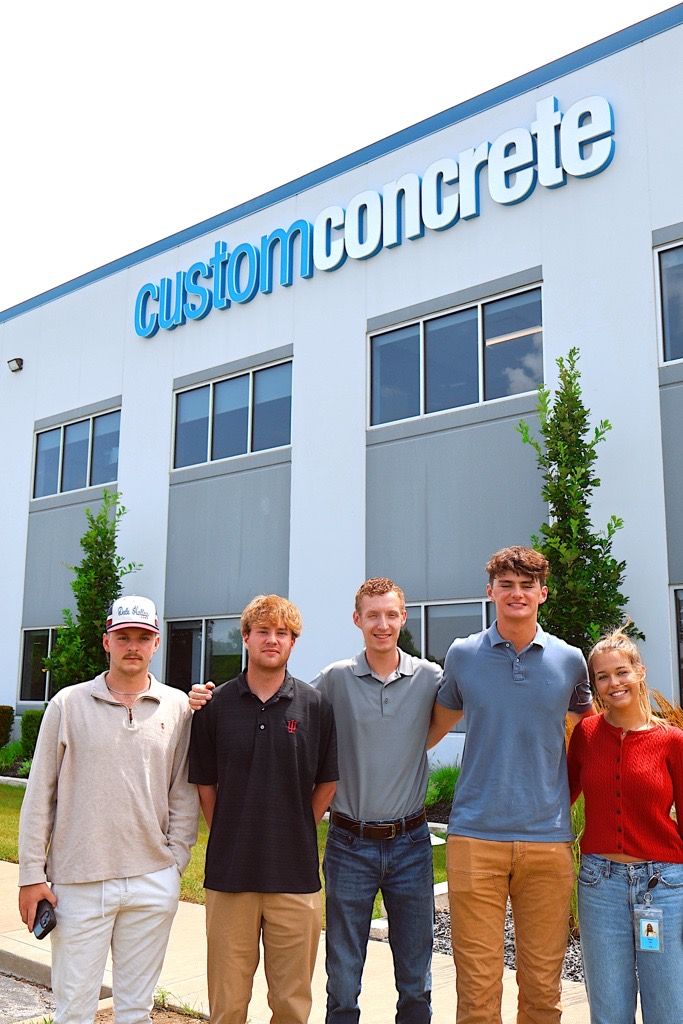
From preconstruction planning and quality control to HR innovation, marketing and field operations, Custom Concrete’s interns gained hands-on experience while leaving their mark on the organization. Among their contributions were support for a major datacenter project, modernizing HR documentation, strengthening brand communication and even working directly alongside crews on active job sites.

“We’re incredibly grateful for the energy, curiosity and dedication each of these interns has brought to our team,” the company shared. “We’re proud to celebrate our talented interns and the meaningful work they’ve accomplished this summer.”
The team expressed gratitude to interns Cameron, Charlie, Cody, Emma and Max, recognizing each of them for their unique impact throughout the summer. Whether in the office or on the job site, their commitment and energy added value not only to Custom Concrete but to the broader concrete construction community.
Custom Concrete’s shout-out serves as a reminder that investing in young professionals helps shape the future of the industry, while also reinforcing the company’s culture of learning, mentorship and appreciation.

Has your organization done something impactful? We at the CFA see you! Share your success stories by emailing them to James.Baty@cfaconcretepros.org and let us celebrate with you!
Caught in Action: Beaver Concrete Construction
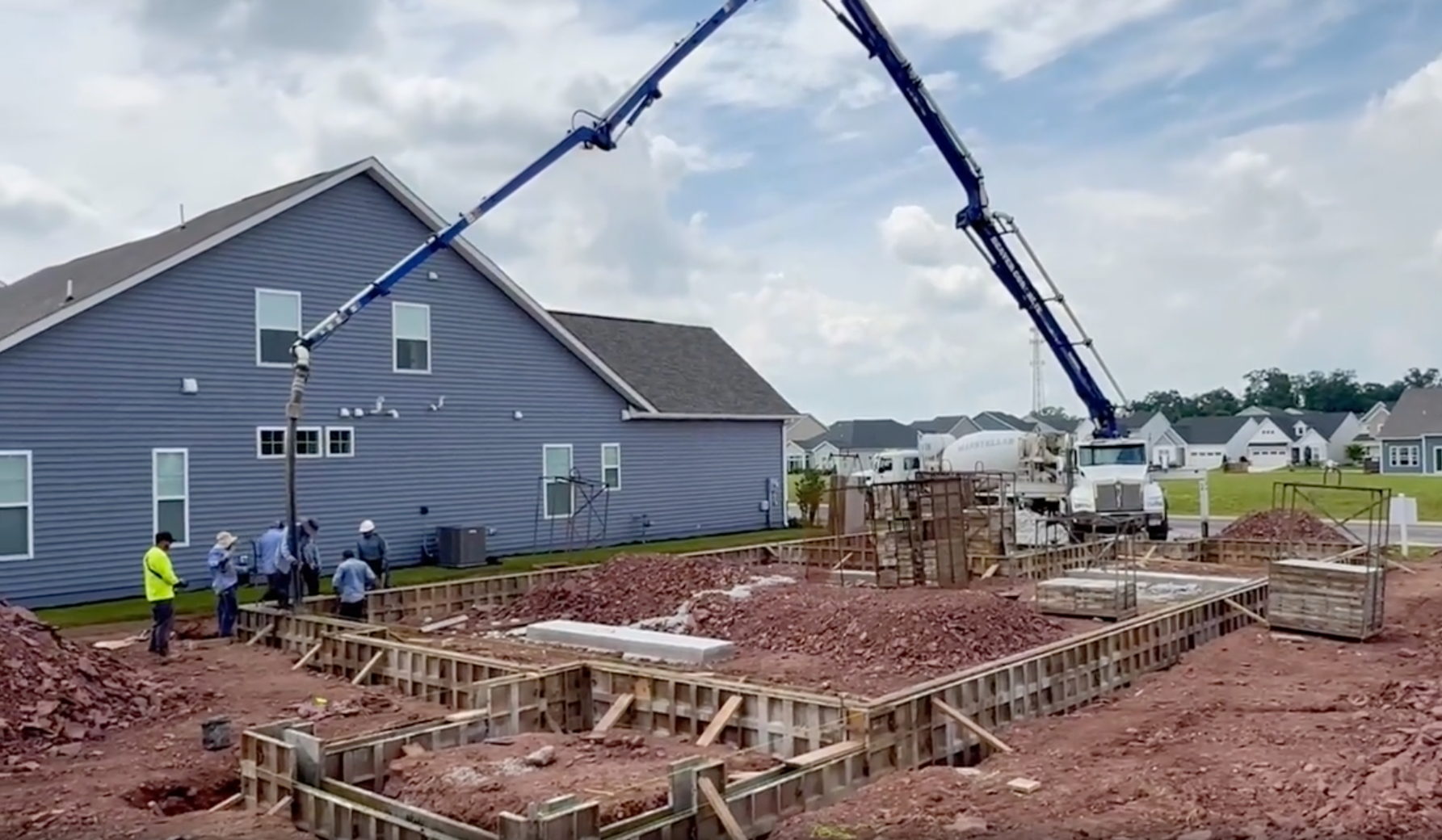
The summer heat can be relentless, but it hasn’t slowed down the Beaver Concrete Construction crew in Gettysburg, Pennsylvania. Amid soaring temperatures, this hardworking team poured a wall for a slab-on-grade home, keeping the project on schedule for builders working in this development.
Helping complete this pour were Pump Operator Gerardo, Team Lead Elias and crew members Daniel, Yobani, Erasmo, Melvin and Dorian. Their focus and energy under tough conditions highlight the pride they take in their craft and the reliability they bring to every project.
“Rain or shine, and even in the heat of summer, our Foundations Teams continue to rise to the occasion,” noted Beaver Concrete Construction leadership. “Their dedication is what allows us to consistently deliver for our clients and keep projects moving forward.”
The grit and determination of this crew showcase more than just technical skill. It’s a reminder that behind every solid foundation is a group of professionals willing to give their all, no matter what the conditions.
Do you have photos of exceptional work or aspects of your business “caught in action” you would like to nominate? Send them directly to CFA Membership Director, Trenton Baty, at trenton.baty@cfaconcretepros.org.
Happy Anniversary to Our Members!
Every year, the concrete industry achieves remarkable milestones, and 2025 is no different. This year, the CFA celebrates four standout members who are marking significant anniversaries. These milestones highlight the commitment and contributions these companies have made to the concrete foundations sector and beyond.
55TH ANNIVERSARY
Bartley Corporation
SILVER SPRING, MD.
Founded in 1970 by Robert “Buck” Bartley, his wife Marcia and his brother Tom, the company began with a station wagon, a good idea and the support of a friendly backer. Over the decades, The Bartley Corporation has grown into a multi-million-dollar operation, setting the benchmark for residential and commercial concrete foundation construction in the Mid-Atlantic region. Thoughtful innovation and a commitment to organized diversity have been key to its success, fostering a talented workforce of approximately 190 full-time employees. Buck Bartley always emphasized that “our people are our most important resource.”
The Bartley Corporation has consistently invested in cut-ting-edge equipment, such as crane trucks, screed machines, gravel stone slinger trucks and fully equipped communication vehicles, to support its employees in performing high-quality, efficient work. The Bartley Corporation’s enduring commitment to its people, innovation and quality has solidified its position as a leader in the concrete construction industry.
60TH ANNIVERSARY
Perma-Structo, Inc.
STURTEVANT, WIS.
This year marks a major milestone for Perma-Structo as the company celebrates its 60th anniversary, a legacy deeply rooted in the vision of its founder, Erwin “Buck” Sweet. Buck established Perma-Structo in 1965, and within just a decade, he had not only built a thriving business but also contributed to shaping the broader concrete industry. Since his passing, Buck’s vision has been carried forward by his daughter and son-in-law, Patti and Mark, who have dedicated themselves to growing the company while staying true to its core values.
Today, the third generation—Cole Beaudin and his sisters, Cassie and Lindsy—work alongside their parents in the daily operations, continuing the family’s commitment to excellence in concrete construction. Although Cole never had the chance to work directly with his grandfather, he feels Buck’s influence in every aspect of the company and takes pride in following in his footsteps. As Perma-Structo celebrates 60 years, the Beaudin family reflects on the foundation Buck built—not just in concrete, but in the values of dedication, craftsmanship and family that continue to guide the company today.
70TH ANNIVERSARY
Western Forms, Inc.
KANSAS CITY, MO.
For 70 years, Western Forms has been helping shape the way concrete is built. Known for their pioneering work in aluminum forming systems, the company has consistently provided contractors with tools that stand the test of time. As a founding member of the CFA, Western Forms has played a key role in supporting the association from the very beginning. Their focus on innovation and reliability has made them a trusted name across the industry, and CFA is proud to celebrate this milestone alongside them.
75TH ANNIVERSARY
Martinson Construction
WATERLOO, IOWA
Celebrating 75 years in business, Martinson Construction has built a legacy that spans four generations. From its roots in Waterloo, Iowa, the company has earned a reputation for quality, integrity, and dedication to the craft. As a long-standing CFA member, Martinson Construction continues to set the standard in the industry, and we’re honored to recognize this remarkable milestone.
These anniversaries showcase decades of innovation, adaptability and impact. From developing advanced technologies to delivering high-quality concrete solutions, these companies have played a critical role in shaping the infrastructure that supports our world. As we honor their achievements, we also recognize the ongoing drive and vision that will continue to propel them forward. Their legacies are measured not just in years but in the lasting structures, relationships and contributions they’ve made to the concrete industry and the communities they serve. Congratulations to these milestone companies on their remarkable journeys.
CFA Charter Member Passes: Robert Taylor “Buck” Bartley, Jr. 1938-2025
We are deeply saddened to share that Robert Bartley, “Buck” as he was known to everyone, the founder and heart of the Bartley Corporation, and one of the remaining founding members of the Concrete Foundations Association, passed away this past July, surrounded by his loved ones. In a paradox of timing, CFA received notification as we began the Board of Directors meeting, 50 years after the first official meeting of the Association in 1975.
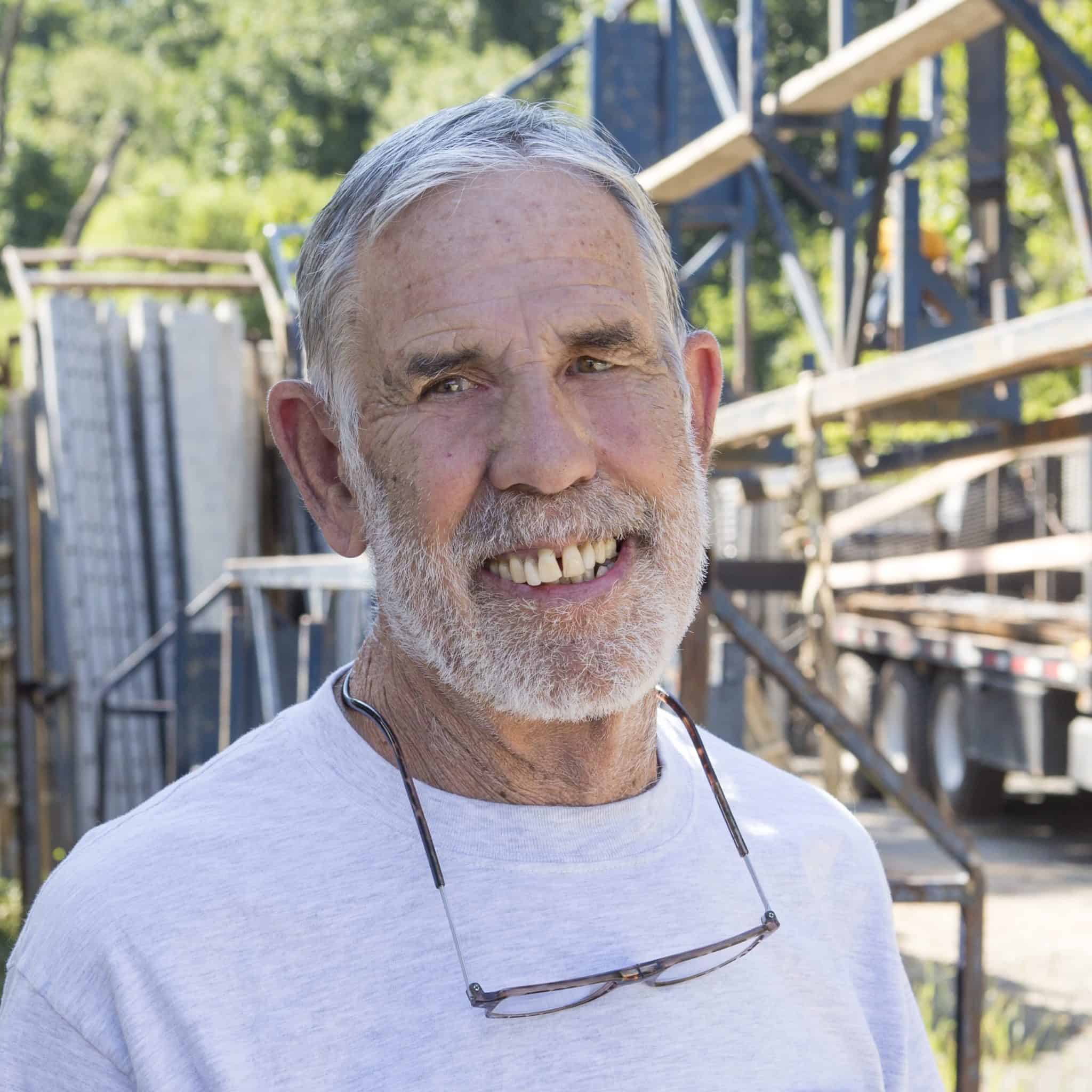
“In 2001, I was introduced to one of the most genuine, passionate and effective leaders the residential concrete industry has ever known,” remembers James Baty, Executive Director of the CFA. The setting was a committee meeting for the ACI where the continued work to develop a new residential standard had been underway for half a decade. “As a contractor, this person may have seemed outgunned or out-credentialed,” says Baty. “Instead, he dug in his heels, banged on the table and called out the more conservative minds in the room who were attempting to limit the practical performance standards proven day in and day out by a century-old industry. We drove forward and forged a new era for residential concrete, finalized in 2004.”
However, this wasn’t the first time Buck Bartley had made a difference for his peers. Buck started Bartley Corporation 55 years ago as a small, humble business built on hard work, honesty and a dream. Over the years, he grew it into a thriving operation, all the while never losing the kindness, humility and generosity that made him so loved by everyone who knew him.
“He wasn’t just our leader — he was the foundation of who we are,” stated Jim Bartley, Buck’s son and President of Bartley Corporation. “Truly one of the nicest people you could ever meet, Buck touched countless lives and led with warmth and deep compassion.”
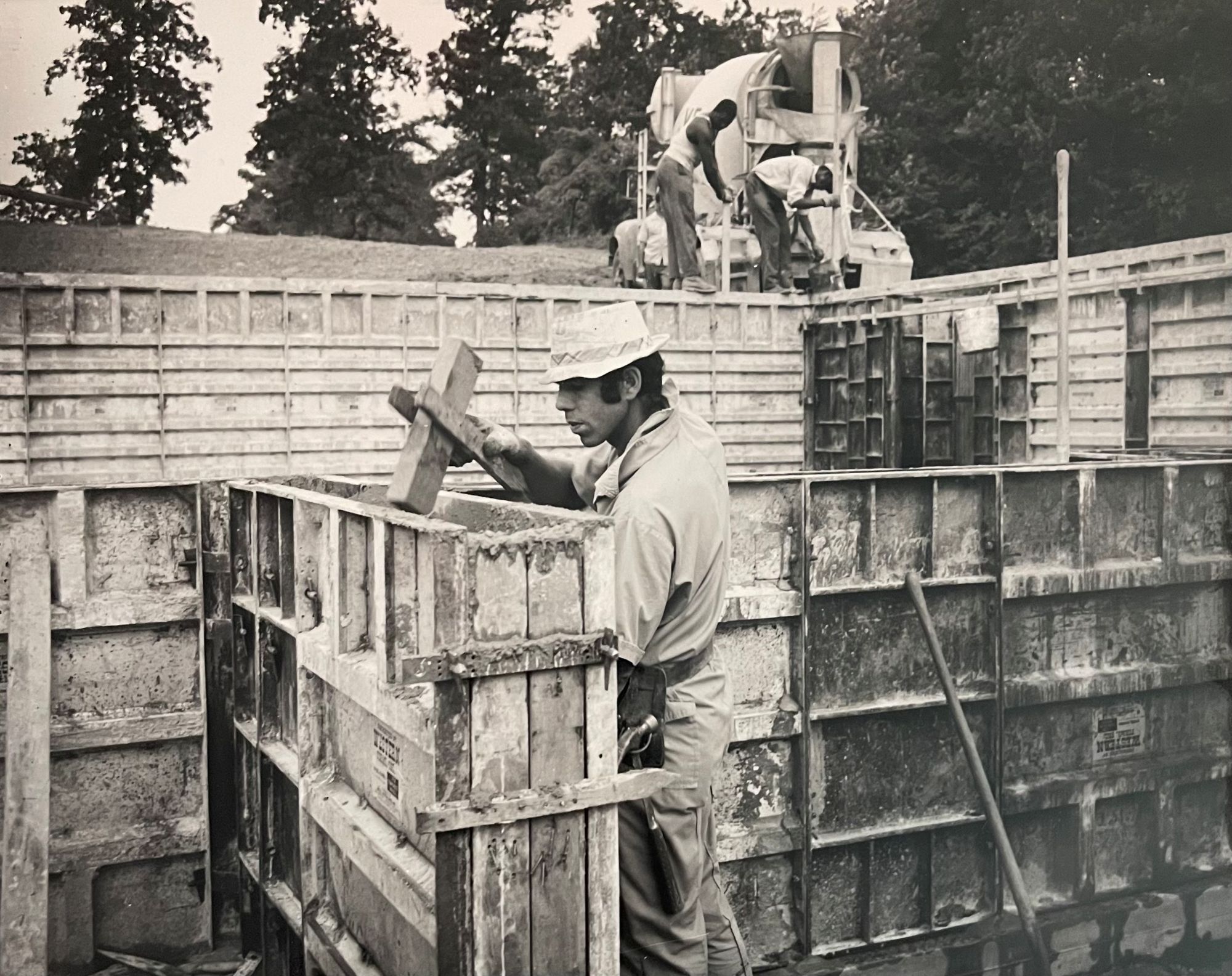
Buck was a beloved husband to the late Marcia Bartley and the late Susan Bartley, brother to Thomas Bartley (Martha) and the late Jane Bartley and a devoted father to six children: Audrey Patton (Keith), Elizabeth Taylor, Robert Bartley III, James Bartley (Margarita), Sarah Hais (Adam) and Rachel Bartley (Kemper). He was also the proud grandfather of 14 grandchildren and one great-grandchild.
Buck helped found the Concrete FoundationsAssociation in 1975 and served as its president from 1983 to 1984.
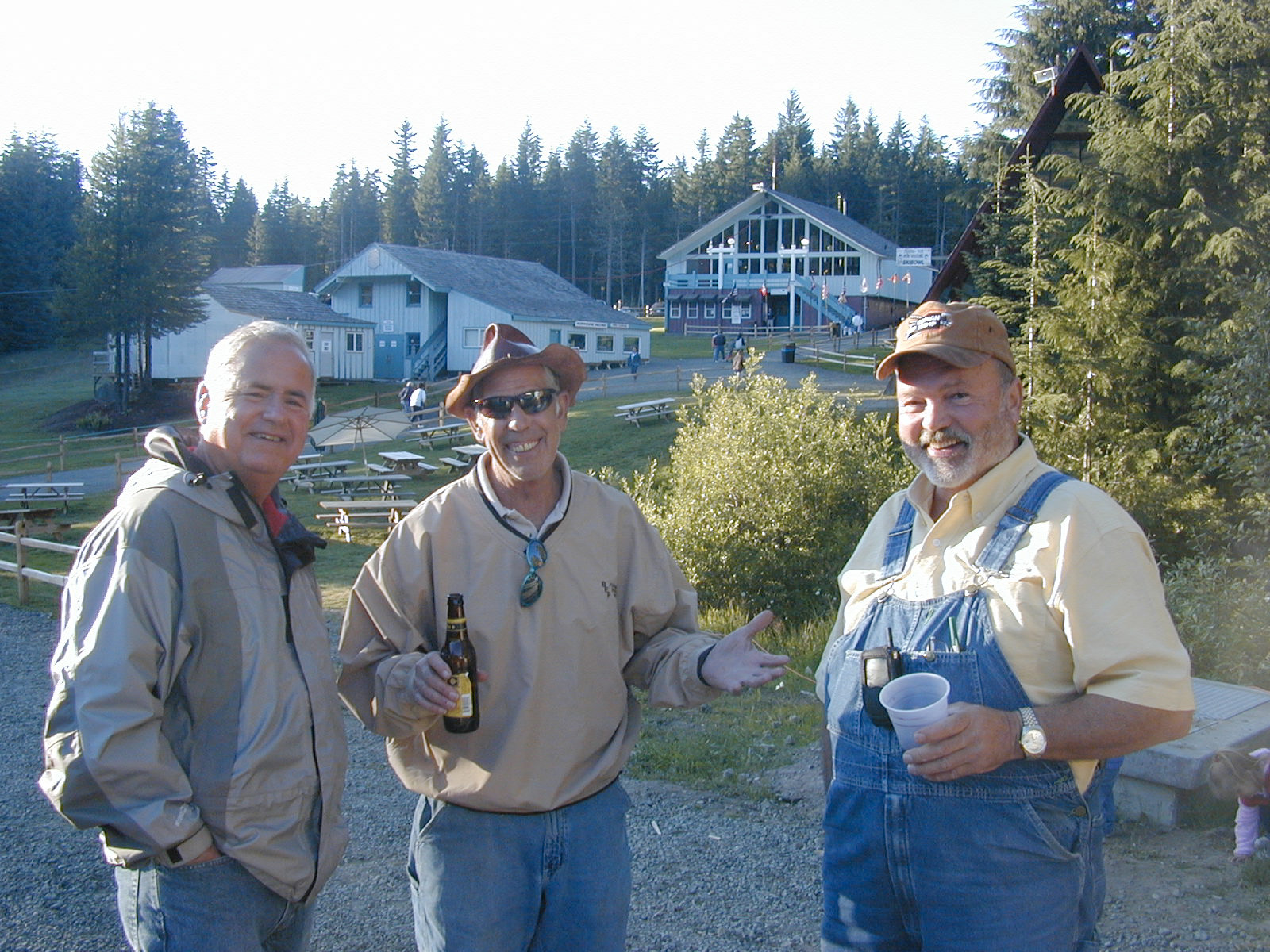
Gary Bromley (left), Buck Bartley (middle) and Ron Colvin (right) share time together at 2002 CFA Convention in Mt Hood, Oregon.
Born in Washington, D.C., in 1938, Buck was a graduate of Bethesda-Chevy Chase High School in Bethesda, Md., and the University of Maryland. Beyond his family, his greatest accomplishment was founding The Bartley Corporation, through which he pioneered the use of poured concrete foundations in the local area. He became part of the founding group for the Concrete Foundations Association in 1974, leading to its formation in 1975. He served as the CFA’s seventh president from 1983 to 1984 and continued to inspire the growth of the Association and passionate resource development, instilling in his family the value of networking. His son Jim Bartley followed him into leadership, serving as president of the CFA from 2012 to 2014.
“Buck Bartley was an inspiration. He encouraged me and supported me early in my career. Really going to miss him,” stated Scott J. Klevenhagen, PE, President of Construction Inspection Services, Inc.
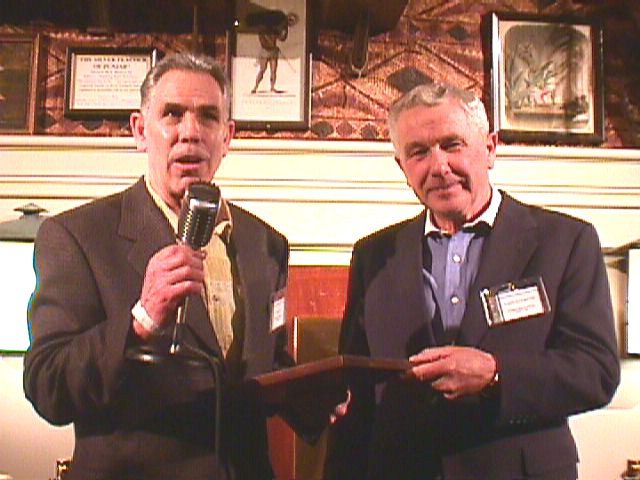
Larry Swearingin (right) presents Buck Bartley the 1999 Contractor of the Year Award during the World of Concrete Meeting in Orlando, Florida.
“We will certainly miss Buck,” added Robert Sculthorpe, consultant to the insulating concrete forms (ICF) industry. “I was saddened to receive the news. He was a wonderful man. I got to know him through ACI committee work. He was generous with his contributions and had a delightful sense of humor. It was always a pleasure to have him at committee meetings.”
“We all agree Buck Bartley was a great man and promoter of our Residential Concrete,” stated Raj Jalla, President of Consulting Engineers Corp.
Buck passed away peacefully at home on July 17, 2025. Visitation was held at St. Paul’s UMC in Kensington, Md., on Tuesday, July 22, and a memorial service was held on Wednesday, July 23.
“His legacy lives on through his family, who now proudly carry on the business with the same values he built it on,” offered Jim Bartley. “His spirit and achievements will always be a part of everything we do.”
The family is grateful for the outpouring of love and support. Information on how they will honor Buck’s memory will be shared soon.
When ICE Comes Calling: U.S. Immigration & Customs Enforcement on the Jobsite
Learn more at www.ice.gov.
This article was provided by and reprinted with permission from The National Association of Home Builder of the United States (NAHB).
The following information is not legal advice, and the National Association of Home Builders (NAHB) strongly encourages members to work with local counsel to establish a compliance protocol that suits their unique needs. To find an attorney in your area that specializes in immigration law, visit ailalawyer.com.
A U.S. Immigration and Customs Enforcement (ICE) agent arrives at your site on a hot, sunny afternoon. She has an audit notice but pushes to speak with workers and review your files immediately.
What do you do? What should your employees do if you aren’t there?
More NAHB members are facing this and other worksite enforcement scenarios as ICE has ramped up oversight of employers’ obligations to verify the validity of each employee’s identity and employment.
In July 2018, ICE and Homeland Security Investigations (HSI) announced the results of a nationwide operation in which Form I-9 audit notices of inspection had been served to more than 5,200 businesses since that January.
In addition to Form I-9 audits, ICE and HSI conduct worksite raids to create a “culture of compliance” among employers. Worksite raids have escalated dramatically under the Trump administration.
For example, during a June 2018 search warrant execution, authorities identified 146 employees working at an Ohio meat processor who were subject to arrest for immigration violations. And in August 2018, during a multi-state operation led by ICE and HSI, authorities served search warrants for worksite hiring violations at agricultural firms in Nebraska and Minnesota. During the execution of these search warrants, 133 workers were administratively arrested for immigration violations.
Now more than ever, employers should be aware of their obligation to comply with the law and know how to handle visits from ICE. Employers who knowingly hire illegal workers or continue to employ unauthorized workers could face criminal prosecution.
NAHB has teamed up with the immigration law experts at Greenberg Traurig, including Laura Foote Reiff, who has worked with builders across the country, to provide NAHB members with information on what to expect during an ICE visit.
The Basics
WHAT IS THE LAW?
The Immigration Reform and Control Act of 1986 (IRCA) requires employers to verify the identity and U.S. employment authorization of all employees hired after Nov. 6, 1986. IRCA imposes civil and criminal penalties for employment-related violations.
To document compliance with this verification requirement, employers must use the Form I-9: Employment Eligibility Verification Form. Employers must maintain the original Form I-9 records for all active employees and certain former employees and make them available for inspection.
HOW IS THE LAW ENFORCED?
ICE enforces the employment verification laws using two different kinds of inspections: Administrative Audits and Raids Authorized by a Judge.
The Administrative Audit begins when ICE issues a Notice of Inspection (NOI) to compel the production of Forms I-9 and related materials. By law, employerssare provided with at least three business days to produce the Forms I-9. A subpoena (a court order to produce documents) may also accompany the NOI.
ICE reviews the records for compliance with the statutory requirements described above. Generally, violations fall into two categories: procedural and substantive. Procedural, or technical, violations are defined as paperwork errors that do not prevent a finding of authorized employment in the U.S. Substantive violations are more serious deficiencies in the Form I-9 that call into question the validity of employment authorization itself.
In a Raid Authorized by a Judge, the ICE officer must have a warrant, and will often have a subpoena, that authorizes the immediate inspection and review of the employer’s premises and the files. A raid occurs much less frequently than an administrative audit. Nonetheless, an employer should be prepared for either occurrence.
HOW DOES AN EMPLOYER PREPARE FOR A VISIT FROM ICE?
Employers should consult with immigration counsel and establish a response protocol in case of a raid or audit.
•Document a uniform process for responding to ICE worksite visits, including the receipt of a NOI and any accompanying subpoenas and warrants.
•Train personnel to speak to an ICE officer and where to direct him/her from the time of arrival until the end of the visit.
◦Ask for identification from the ICE officer
◦Ask for authorizing documentation (NOI or warrant)
◦Let ICE agents know the company is represented by outside counsel and/or has a protocol for ICE visits
•Ensure that experienced immigration counsel is on standby to provide guidance during and after an ICE visit.
•Ensure that a senior company leader or the construction site is designated to receive service of the NOI or warrant and escalate the response process through internal channels, as needed.
Administrative Audits
HOW DOES AN EMPLOYER RESPOND TO ANADMINISTRATIVE AUDIT?
It is key to remember that documents given to ICE cannot be taken back. The same is true for statements made to an ICE officer, including the unintentional sharing of adverse information. And remember, an ICE officer, though seemingly friendly, should not be considered a “friend.”
There may be a temptation to accelerate the NOI process. Instead, make full use of the three-business-day response time permitted under the law, and consult with counsel to determine if an extension is possible.
Even if all Form I-9 records appear to be in order, always review them closely with counsel—cross-referencing employment verification records against payroll rosters—to ensure accuracy and prepare a complete and easy-to-follow documentary response.
WORKSITE ENFORCEMENT OF EMPLOYERS’ FORM I-9 RECORDS
| Characteristics of the Law | Administrative Audit | Authorized Raid |
|---|---|---|
| Notice of Inspection (NOI) issued to compel employers to produce Forms I-9 and related materials | X | |
| Employers provided at least three (3) business days to produce the Forms I-9 | X | |
| Paperwork errors that are uncorrected can lead to more serious employer penalties and charges. | X | |
| Court or administrative order (subpoena) for documents may accompany NOI | X | X |
| Court or administrative order (subpoena) for documents may accompany warrant | X | X |
| Immediate inspection and review of employer's premises and files | X | |
| ICE warrant to search construction/work site | X | |
| Authorized by a Judge | X | |
| Arrests may happen on site | X | |
| ICE may take 3 to 6 months to review documents | X | X |
Carefully review, with outside counsel where possible, the NOI and any accompanying subpoena to clearly understand the scope of ICE’s request. NOIs and subpoenas can come in different versions and may be drafted in different ways.
ICE audits can vary greatly depending on the relevant ICE office, the officer assigned to the case, and local policies, so it is important to pay close attention to what the NOI requests, for what period, and in what format. It is also important to confirm the exact time and date of the ICE officer’s return to pick up the requested items (if picked up in hard copy).
Take down the ICE officer’s contact information or keep a copy of his or her business card when the NOI is served. Because of the variation in how ICE audits are carried out, it is always a good idea to work closely with an attorney to confirm relevant timelines, expectations and next steps.
Another item to note: the specific company entity, branch or location that is subject to the NOI. For example, if ICE services a specific location and the NOI does not indicate otherwise, the audit may apply only to the particular site visited by the ICE officer.
What to do if an ICE Agent arrives at a construction site with an audit notice and asks to review personnel records for all workers? What if he/she pushes to speak with workers and to review the files immediately?
Contact the construction site manager to discuss the audit notice with the agent. The agent should be informed that the employer will comply with the notice, but that there is no immediate need to do so. The law permits a three-day period and time extensions of this timeframe are often granted upon request. The manager should let the agent know that someone from the employer and/or counsel will contact the ICE agent’s office that day to schedule a follow-up compliance review.
WHAT CAN HAPPEN AFTER AN ADMINISTRATIVE AUDIT?
ICE will notify the audited party, in writing, of the results of the inspection once completed. The following are the most common notices:
Notice of Inspection Results— also known as a “compliance letter,” used to notify a business that it was found to be in compliance.
Notice of Suspect Documents— advises the employer that based on a review of the Forms I-9 and documentation submitted by the employee, ICE has determined that an employee is unauthorized to work and advises the employer of the possible criminal and civil penalties for continuing to employ that individual. ICE provides the employer and employee an opportunity to present additional documentation to demonstrate work authorization if either believes the finding is in error.
Notice of Discrepancies— advises the employer that based on a review of the Forms I-9 and documentation submitted by the employee, ICE has been unable to determine his or her work eligibility. The employer should provide the employee with a copy of the notice and give the employee an opportunity to present ICE with additional documentation to establish eligibility.
Notice of Procedural Failures— notes procedural violations identified during the inspection and gives the employer 10 business days to correct the forms or otherwise become substantive violations.
Warning Notice— issued in circumstances where substantive verification violations were identified, but circumstances do not warrant a monetary penalty and the employer is expected to comply going forward.
Notice of Intent to Fine (NIF)— may be issued for substantive, uncorrected procedural violations, or knowingly hiring and continuing to employ unauthorized workers.
Raids Authorized by Judges
HOW DOES AN EMPLOYER RESPOND TO A RAIDAUTHORIZED BY A JUDGE?
Unlike an audit, an ICE officer is permitted to enter the property as long as the ICE officer has a warrant signed by a judge. ICE officers can only go to places described in the warrant. Even if the warrant allows for access to the construction site, try to delay access to any areas that pose safety concerns. Call counsel and instruct employees to follow the company’s protocol and call a senior company leader or construction site manager right away. Employees should be instructed to never consent to a search on behalf of the company. During the search, legal or factual issues should not be discussed. Instead, raise these issues with counsel later so that the discussions remain protected by attorney-client privilege and confidential.
Do not destroy or conceal materials. Employees are under no obligation to speak with ICE agents, but the company cannot instruct employees not to speak with agents.
Should subcontractors alert the homebuilder’s construction site manager and/or senior company leader if ICE comes to the worksite?
If the agent has an NOI, the party named in the NOI should be alerted. If the party is the subcontractor, the subcontractor should handle scheduling its own follow-up NOI procedures. This follow-up should not happen at the home builder’s site. In the case of a raid, ICE officers should only speak with the subcontractor’s employees, and the subcontractor should handle the investigation.
During the raid, ICE officers may take possession of FormI-9 records and other documents. ICE officers may also take individuals into custody for various reasons, such as criminal allegations or outstanding orders or deportation.
ICE agents have a subpoena in hand and approach the site with a search warrant. How should it be handled?
The construction site manager should review the warrant and make certain that only the site identified on the warrant is searched. If there are hazardous places on the site, ICE should be made aware. The construction site manager should immediately alert counsel and/or senior company leadership.
After ICE has left the jobsite, senior company leaders, construction site managers and counsel debrief and reflect. Now isa good time to recreate files that were taken. Employees should be debriefed as well—especially important if senior company leaders or a construction site manager were not onsite during the inspection—to get a fuller picture of what took place.
WHAT TO DO AFTER AN ICE VISIT
Take this opportunity to reassure employees that the company is responding appropriately to ICE and following established protocol. If an audit was prompted by a company employee (a “whistleblower”), it is important to remember that the employer cannot retaliate against an employee for bringing potential violations to the attention of the federal officials. Be sure to direct all communications with ICE through outside counsel.
Following the audit or raid, ICE will review the I-9 documents for compliance with both procedural and substantive requirements. This generally takes three to six months. Once complete, ICE will notify the employer of its findings. ICE may request that the employer correct the forms and/or may issue a notice of intent to fine including penalties of procedural and substantive violations. If there is a determination that the employer has hired undocumented workers, there is a potential for criminal prosecution. Federal government inspections can be intimidating, and ICE visits are no exception. However, planning ahead will facilitate compliance and place you and your company in a far more confident position.
Additional ICE worksite information can be found at www.ice.gov.
NAHB Contacts:
Sam Gilboard, Government Affairs, sgilboard@nahb.org
Jeff Augello, Legal Advocacy, jaugello@nahb.org
Mackenzie Payne, Legal Advocacy, mpayne@nahb.org.
CHECKLISTS
During Search
- Do not consent to search on behalf of company—may bind company.
- Do not discuss legal or factual issues to protect privilege concerns.
- Do not destroy or conceal materials.
- No employee is obligated to speak with agents, but the company cannot instruct employees not to speak with agents.
- Minimize and coordinate public statements to maintain confidentiality.
After Search
- After search, debrief with counsel and employees, and review any agent contacts.
- Provide reassurance to employees.
- Direct all communications with ICE through outside counsel.
- Beware of whistleblower and retaliation concerns.
- Recreate files that were taken.
Celebrating 50 Years of CFA: CFACON25, Deadwood, South Dakota
By Trenton Baty, Membership & Marketing Directors, CFA
Each summer, the CFA Convention is a date circled on the calendar for many of our members. This year’s convention in Deadwood, S.D., was no exception, and in many ways, it felt bigger than ever. Not only did we gather contractors, national associates, and consulting members from all over the country, but we also kicked off our 50th anniversary celebration. Fifty years of CFA is no small milestone, and there couldn’t have been a better time to start the celebration.

From the first morning to the final day, the week was filled with connections. The one-on-one speed networking and group socials were the highlights for many, whether it was catching up with long-time friends or meeting someone new who understands the challenges and rewards of this industry. These in-between moments, away from the hustle of daily work, are where ideas are swapped, partnerships begin and friendships are built. This year we had a staggering 35 exhibitors, all of whom are on the cutting edge of technology, moving the concrete industry forward.
CFACON25 wasn’t just about catching up with fellow members, it was also a chance to learn directly from some of the best in the business. Our education sessions covered a wide range of timely topics, from OSHA updates and safety priorities to the financial health of the industry and strategies for boosting profitability. We were fortunate to hear from incredible keynote speakers, Amy Woodall and Sandy Gennaro, whose energy and insights left a lasting impression. Each session gave attendees something valuable to take home whether it was a fresh perspective, a practical tool or the motivation to tackle new challenges head-on.
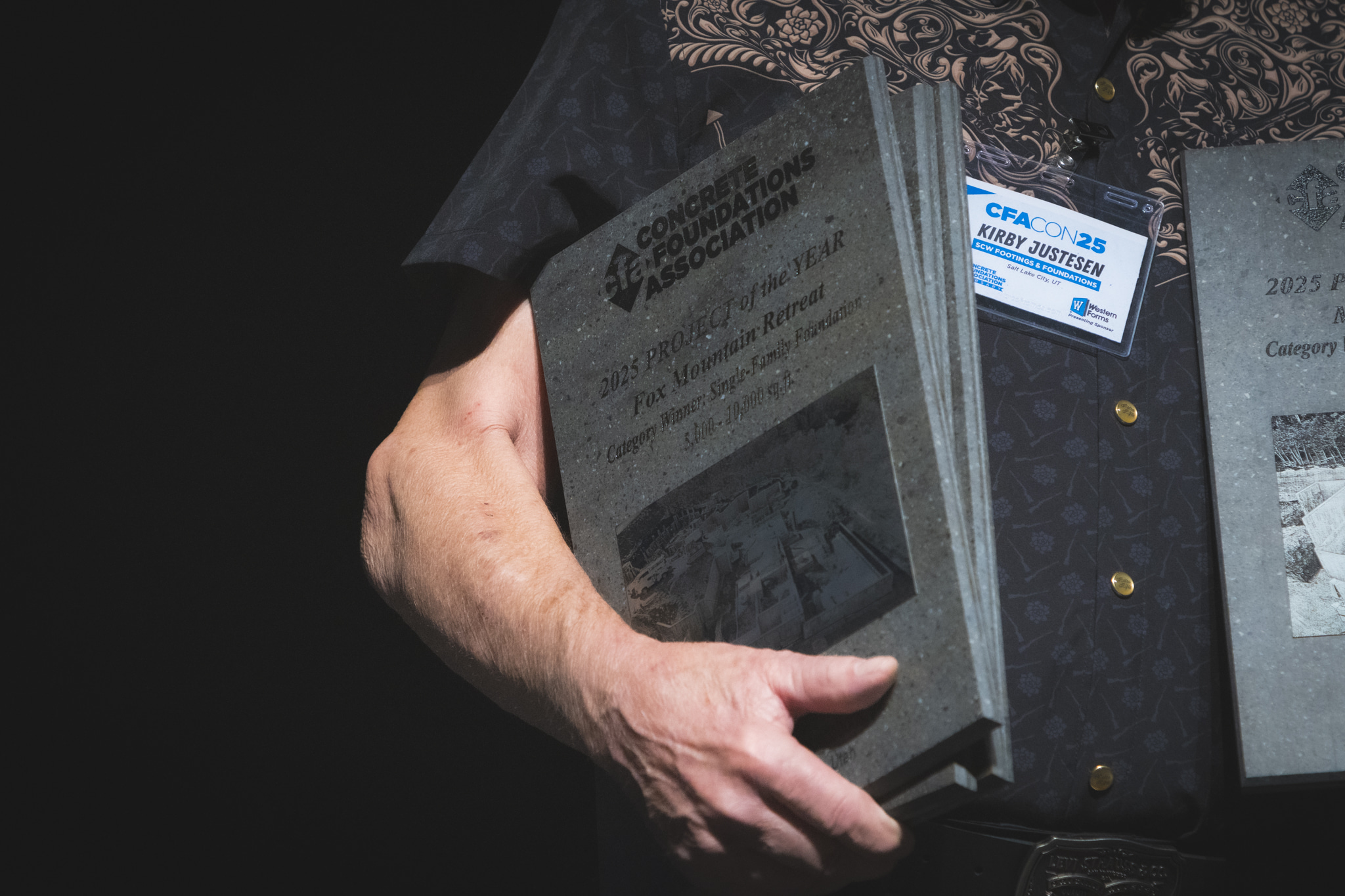
After packed days of networking and education, our evening socials were the perfect end to a full day. The highlight of the evenings was without a doubt the CFA Project of the Year and Professional Awards gala. It was a night filled with celebration as we honored outstanding projects, exceptional craftsmanship and individuals whose leadership continues to elevate our industry. Of course, the rest of the social events added their own charm, including the line dancing party, and a chance to enjoy Deadwood’s unique character with a reenactment of the Trial of Jack McCall, a local staple.

As CFACON25 came to a close, it was clear this wasn’t just another convention—it was the start of something special. We kicked off our 50th anniversary year by honoring our history, strengthening our relationships and setting the stage for the decades ahead. For those who missed it, you missed more than an event; you missed the energy, the connections and the moments that remind us why being part of the CFA matters. But there’s good news: our celebration of 50 years is just getting started. Stay tuned for the announcement of where we’ll gather in 2026, because if Deadwood was any indication, you won’t want to miss what’s coming next.
Why Membership Matters: Jeff Dumas Concrete Construction
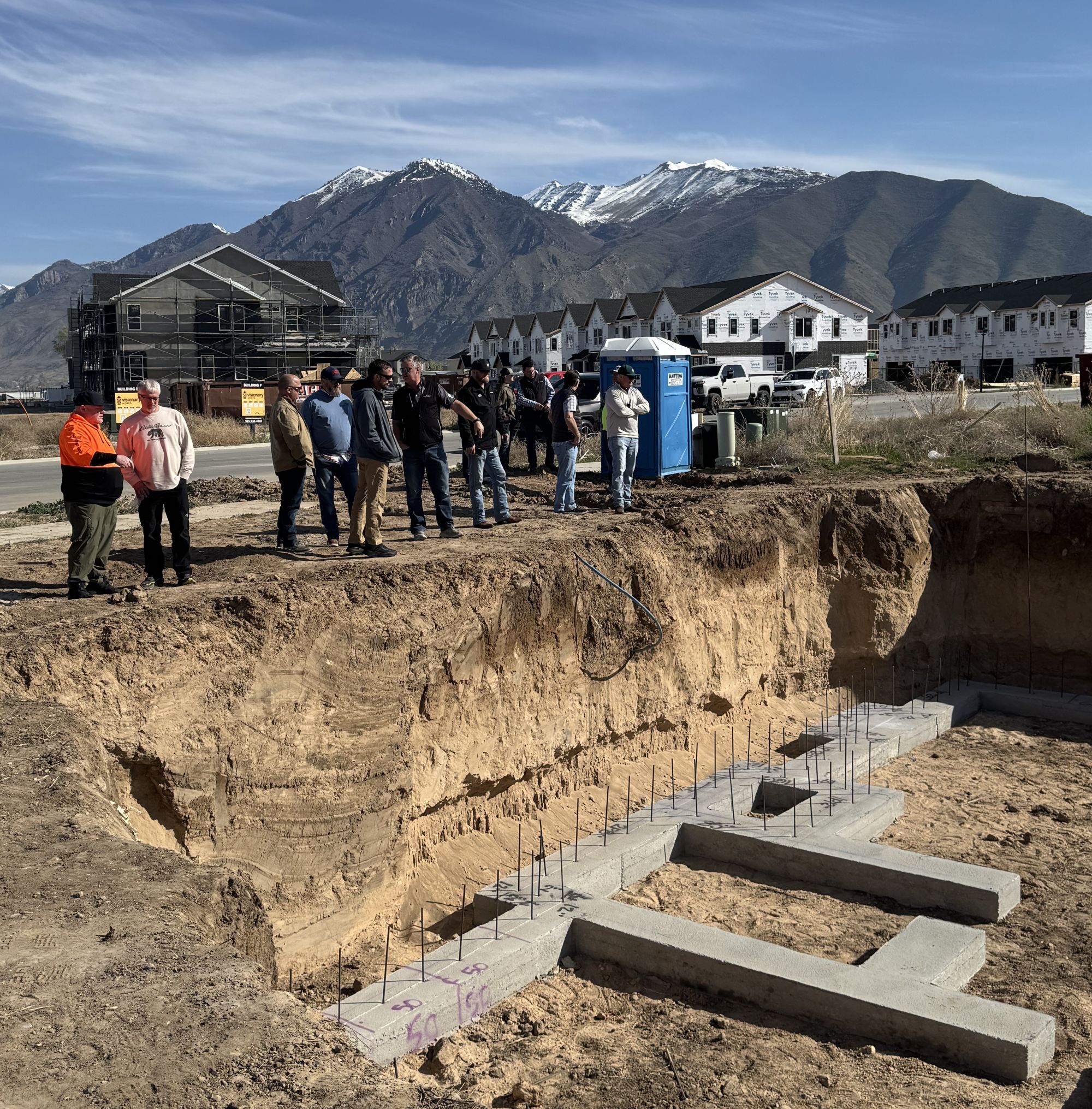
For more than two decades, Jeff Dumas Concrete Construction has set the standard for foundation work across Utah, serving everything from custom homes and subdivisions to commercial offices and small businesses throughout Salt Lake City and the surrounding areas. Specializing in concrete footings and foundations, the company brings both craftsmanship and innovation to every project.
Since joining the CFA in 2024, Jeff and his team have been all-in. They’ve made their presence felt by attending nearly every CFA event, from CFACON to the Winter Meeting at World of Concrete, showing a commitment not just to networking, but to ongoing education, collaboration and growth alongside their peers in the industry.
In 2025, Jeff Dumas and his team took that involvement even further by hosting the CFA Spring Executive Retreat in Salt Lake City. Members from across the country were welcomed with the same warmth and professionalism that define the company’s work. Jeff not only shared his hospitality but also took attendees out to one of his active project sites, where the crew was actively working and preparing to pour a wall. That first-hand look at the precision and teamwork behind their projects highlighted the real-world value of the craft, and the strength of sharing knowledge within the CFA community. This event didn’t just give other members a look into Dumas’ operations but gave them a chance to receive feedback and advice on how to continue to improve and evolve their operations. For both hosts and attendees, the experience reinforced why these gatherings matter: they are opportunities to learn, to build relationships and to showcase the pride of the industry.
That proactive engagement and willingness to step forward early earned them the Kick-Starter Membership Award at CFACON25 this July. This award recognizes how intentionally they tapped into CFA’s professional network within their first year. The most valuable part of joining an organization is diving in and finding the networking, interaction, support and resources that truly move your company forward. Jeff Dumas Concrete Construction embodied that spirit from the start, showing how early involvement can yield lasting value.
While they may be rooted in Utah, Jeff Dumas Concrete Construction’s vision is worldwide: strong foundations, lasting partnerships and continual innovation. Their story illustrates how joining the CFA with purposeful intent doesn’t just benefit one business, it enriches the industry as a whole.
Building Back Better: Reinforcement for Concrete Homes
By Joe Nasvik
People who love concrete tend to believe that it’s magic because it performs well under a wide variety of conditions: fires, earthquakes, high winds, hurricanes and tornados. It can do all this and more, but it requires a special ingredient: reinforcement. Reinforcement added to concrete, designed by structural engineers, provides concrete structures that are safe and resilient.
Bringing concrete and steel together creates a building material that has both great compressive and tensile strength.
Concrete has great strength under compression (forces that push concrete against itself), but it has little strength intension (forces that pull concrete apart). Reinforcement, especially steel reinforcement, has great tensile strength, while its compressive strength is much less. Sometimes the placement of rebar in a slab causes additional compression in the concrete when loads are applied, aiding in the overall performance.
When you build a concrete house, local building codes require engineers to design the reinforcement in concrete walls, floors, beams and columns to provide the tensile strength needed for homes to resist the natural forces common to an area. For example, much of California experiences earthquakes, so local codes require engineers to design structures that can resist seismic forces.
The mix design requirement for concrete homes remains fairly constant, and compressive strengths of approximately 4,000 pounds per square inch (psi) are usual. It’s the reinforcement that changes to meet different needs. To understand how reinforcing requirements change when engineers design structures to resist natural forces assume that a concrete wall is being engineered to meet the objectives for each of the following conditions.

Fire resistance
A primary function for concrete in a fire situation is to protect steel reinforcement. When the temperature exceeds 800 degrees Fahrenheit, steel rebar becomes soft and pliable and moves in whatever direction forces move it. Concrete, on the other hand, is a good insulator, and it takes approximately one hour for a temperature of 800 degrees to penetrate one inch of concrete thickness. So for maximum fire resistance, steel reinforcement placed in the middle of a concrete wall thickness gives it the most protection for the longest time period. Bikash Sigdel, an engineering team leader for Tamarack Grove Engineering, Meridian, Idaho, says current Los Angeles (LA) building code fire ratings require 1–1/2 inches of cover. This means the minimum concrete wall thickness allowed by code would have to be about 4–1/2 inches. It also means it’s important to extinguish fires within that time period.
High Wind Speeds
Sigdel says that when his company designs concrete walls to resist static winds in LA, they usually design for wind speeds of 100 mph and higher. He adds that designing for wind resistance is fairly easy because wind tends to come from a single direction and is therefore fairly easy to plan for. Typically only one “mat” of rebar is needed to provide the tensile strength needed.
Earthquakes
Seismic forces are dynamic in that they involve forces coming from all directions. Sigdel calls them “rock-and-roll forces,” and they tend to dominate all other natural events with regards to reinforcement requirements. Engineers have to plan for changing compression and tension forces all along a concrete wall. However, Sigdel adds that engineers can design concrete walls to withstand any earthquake level.
If you design a wall to withstand earthquakes, you are also protecting for wind and fire. Two rebar mats are typically required by code for seismic protection, and this means that concrete wall thickness increases to provide for the required cover protection of steel reinforcement for fire resistance. This means that wall thicknesses can be eight inches thick or more.
Tornadoes
Tornado winds are much like seismic ones; they are dynamic forces that push on concrete walls from all directions. Wind speeds can be much higher than straight-line winds, so Sigdel says they often design for wind speeds of 200 mph or more. Engineers can design structures to withstand any tornado force, but it comes at a price and can become quite expensive.
Structural fibers
Another way to structurally reinforce concrete is with steel fibers that are rated for their structural ability. Dan Bromley, president of ABI Corporation, Kansas City, Mo., says his company installs footings and foundations. In 2013 he heard about Helix steel fibers, one of only a few companies making steel fibers rated for structural use. They cost more than rebar (he typically adds nine pounds per yard of concrete), but the installed cost is less when labor to install rebar is factored in. “The length of time to complete a job is less and that’s a benefit too,” he adds.
Luke Pinkerton, president of Helix Steel, based in Ann Arbor, Mich., says the University of Michigan developed and researched twisted steel fibers in the 1990s. “Twisted fibers lock into concrete better allowing them to be classified as structural,” he says. Structural steel fibers can replace rebar in some applications, but he adds that this doesn’t apply to seismic reinforcement. Bromley says ABI still uses rebar around windows and other locations where sheer forces can crack concrete.
Finding less expensive ways
Brent Anderson is the president of BDA Engineering Consulting Group, Minneapolis, Minn., and has engineered concrete for home construction for much of his career. During that time he has seen requirements for residential concrete wall thicknesses go down to as little as four inches, making concrete homes more affordable. As a structural engineer he says there are ways to keep the costs as reasonable as possible. For example, designing wind resistant walls required thicknesses of six inches several years ago, but today this can be accomplished with four-inch-thick walls. He also replaces portions of rebar reinforcement with fibers to reduce costs, and when concrete is used to construct ceilings (also referred to as decks) costs can be reduced by shortening the length of spans. He cautions that home designs that include all kinds of angles add to construction costs. Another way to lower costs is to build inside non-structure supporting walls with either steel or wood studs—also reducing the installation cost of plumbing and electrical.
Reinforcing concrete to increase tensile strength is important for concrete homes. It provides the needed protection against earthquakes, high winds and tornados. It’s the primary material structural engineers work with, and it’s invisible in the finished product. It’s the quality that makes your home a safe place for you and your family. Anderson believes that, 100 years from now, all homes in the U.S. will be built with concrete.
In the final article in this series, sustainable and resilient building systems will be discussed.
CFA Celebrates Excellence with the 2025 Professional Awards
The most compelling evidence of an individual’s influence lies in their dedication and service to advancing the industry. This sentiment strongly resonates with the Concrete Foundations Association as it reflects on this year’s nominations and professional awards.
Set against the historic backdrop of Deadwood, S.D., CFACON25 provided a one-of-a-kind setting for attendees to connect, learn and immerse themselves in the rich history and charm of the old West. Participants were treated to a wealth of valuable insights, including inspiring thought leadership, innovative approaches to integrating technology and for many, an unmatched opportunity to foster and expand business relationships in a relaxed and engaging atmosphere.
The Opening Gala Celebration was a highlight of the event, where CFA’s executive director, James Baty, took center stage to announce the much-anticipated winners of the Association’s project and professional awards. These selections, determined by the voting membership, showcased the exceptional talent and innovation within the industry. A detailed look at the award-winning projects can be found here.
What truly elevated the evening, however, was the recognition of leadership—those members who have gone above and beyond to make a lasting impact on the Association and the industry as a whole. Their contributions serve as a testament to the power of commitment and collaboration in shaping the future of concrete foundations.
Golden Tie Membership Development Award
This year, the Concrete Foundations Association proudly celebrated two exceptional leaders in membership development with the prestigious Golden Tie Awards. As one of the Association’s most anticipated annual honors, the Golden Tie Award recognizes companies or individuals who demonstrate extraordinary dedication to fostering membership growth and strengthening the CFA’s network year after year.
Western Forms, Inc.
Kansas City, Missouri
Western Forms, Inc. earned the National Associate Golden Tie Award for an impressive third consecutive year, a testament to their unwavering commitment to the CFA community. Through consistent outreach, active promotion of the Association’s mission and a dedication to building meaningful connections across the industry, Western Forms has set a notable benchmark for associate engagement and impact.
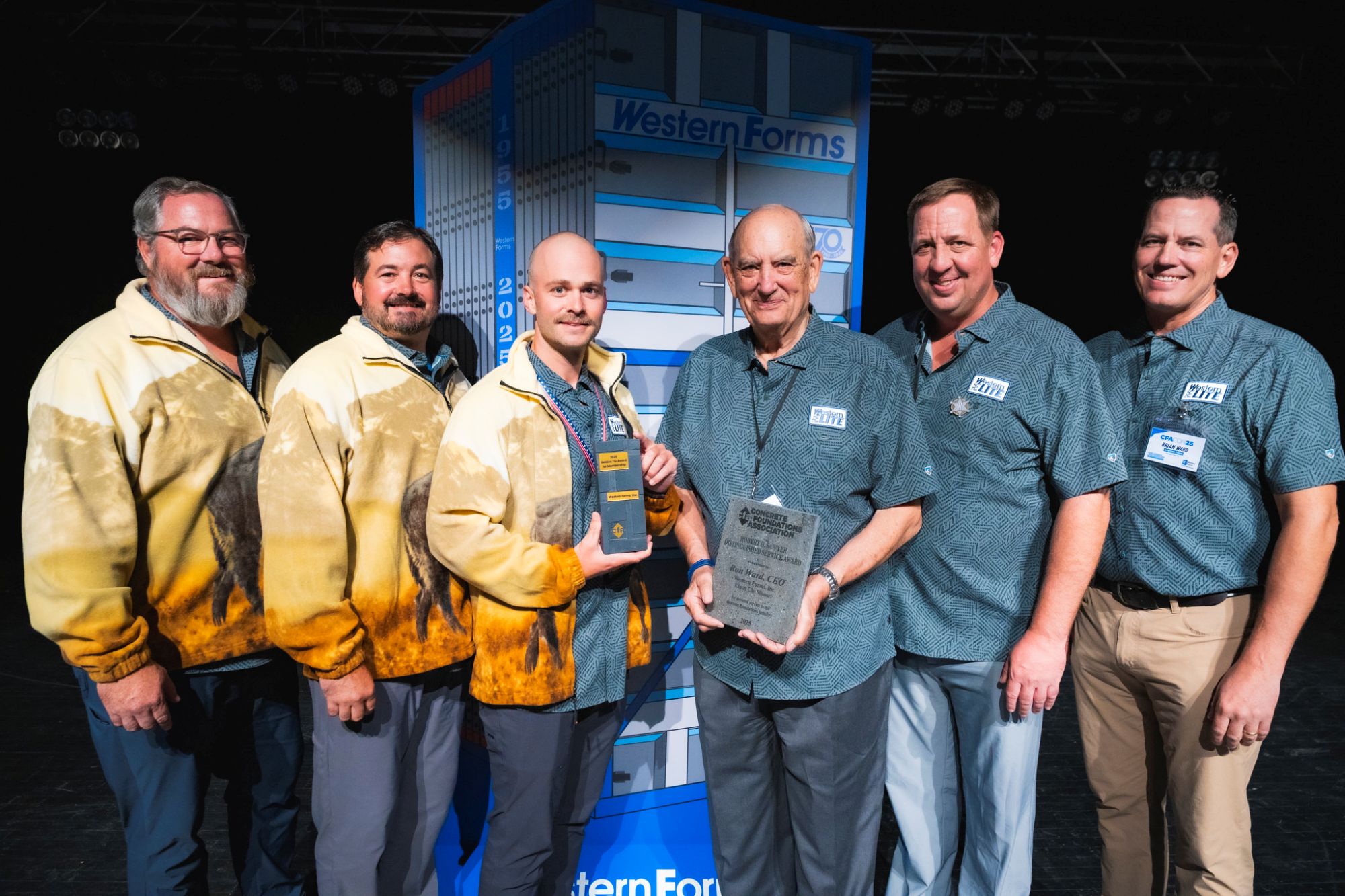
Accepting their 3rd consecutive Golden Tie Award during the Awards Gala are, from left to right, Jim Aylward, Tom Carkhuff, Evan Resetar, Ron Ward, Chris Ward and Brian Ward on behalf of Western Forms, Inc.
Russ Talpey
Talpey Construction LLC
Old Saybrook, Connecticut
On the contractor side, Russ Talpey of Talpey Construction made history as the inaugural recipient of the Contractor Golden Tie Award. Talpey’s enthusiasm for expanding the CFA network, encouraging peer involvement and championing the value of membership has made a significant and lasting impact in just the first year of this new category.
Together, these honorees exemplify the true spirit of the Golden Tie Award: driving membership growth, fostering engagement and promoting collaboration across the CFA community. Their contributions inspire others to strengthen the association and advance the industry as a whole.
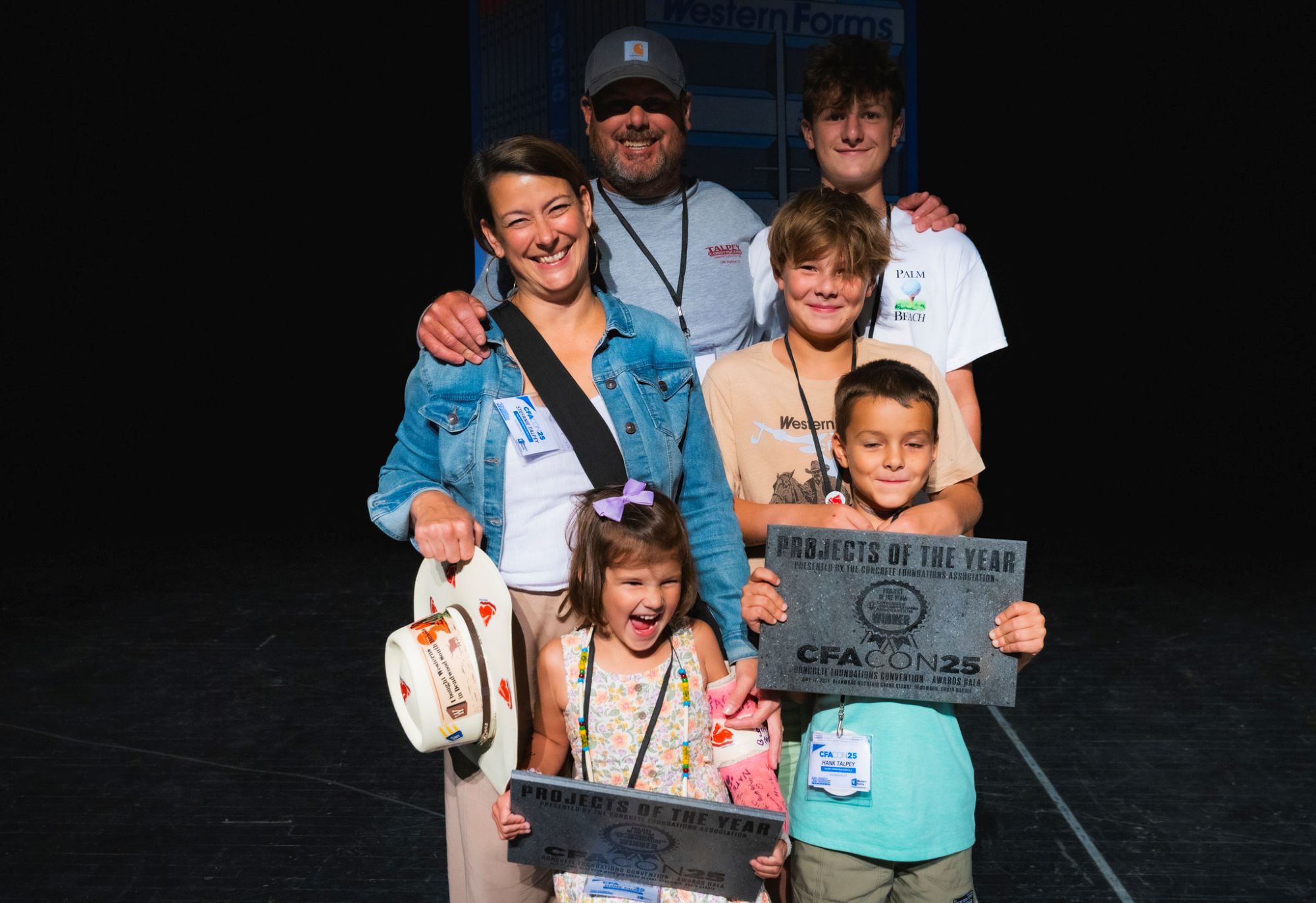
Russ Talpey and family pose with two Projects of the Year Awards received by Talpey Construction LLC during the Awards Gala.
Kick-Start Member of the Year
Jeff Dumas Concrete Construction
West Jordan, Utah
From the time Jeff Dumas Concrete Construction joined the Concrete Foundations Association in 2024, they have wasted no time making the most of their membership. From the very beginning, they leaned in with enthusiasm, attending multiple CFA events, engaging with fellow contractors and industry partners and even taking the initiative to host an Executive Retreat. Dumas and his team have fully embraced the wealth of resources, connections and opportunities the Association offers, using them to strengthen their business and contribute to the broader industry. Their proactive involvement has quickly made them a valued member of the CFA community.
The Kick-Starter Membership Award, first introduced in 2015, recognizes members in their first three years of membership who intentionally dive into the CFA network, leveraging interaction, support and shared expertise to advance the Association’s goals. Jeff Dumas Concrete Construction stood out this year for their initiative-taking approach, eagerness to collaborate and genuine interest in contributing to industry conversations. Their participation has gone beyond simply attending events—they’ve actively sought to build meaningful relationships, share insights and learn from others, embodying the collaborative spirit that defines the CFA.
Their commitment to building relationships and tapping into the CFA community reflects the true essence of this award, proving that early and intentional involvement can create lasting value for both the company and the Association. Jeff Dumas Concrete Construction exemplifies the type of contractor member the CFA seeks—one that is passionate about learning from others, willing to share their own experiences and dedicated to fostering growth within the industry. Their efforts serve as a model for new members, showcasing how active engagement can lead to both personal and professional success while strengthening the CFA as a whole.
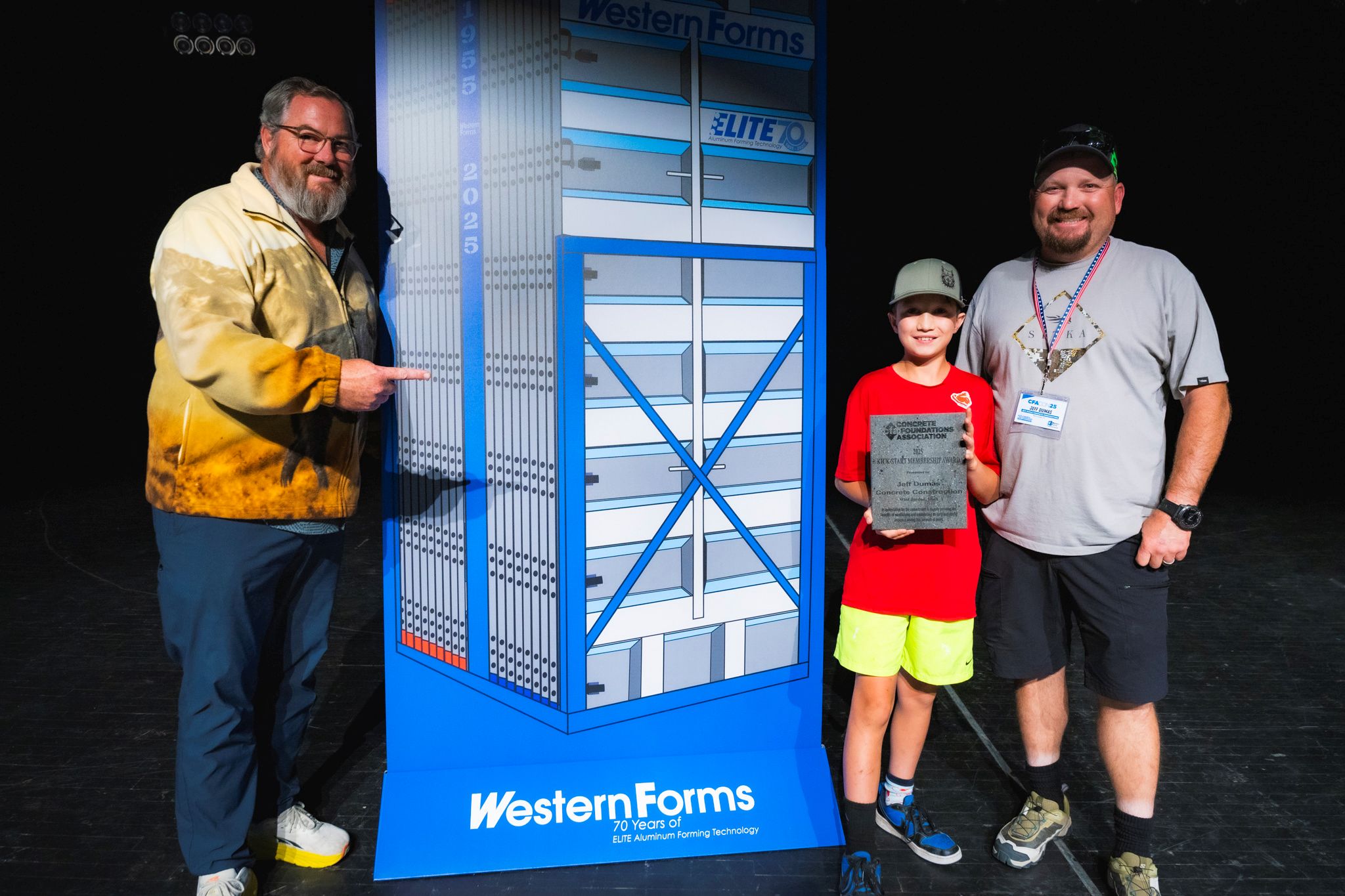
Jeff Dumas and his son, pictured here with Western Forms Regional Director Jim Aylward, accept the 2025 Kick-Start Membership Award on behalf of Jeff Dumas Concrete Construction.
National Associate of the Year
Jimmy Ingman
Progressive Foam Technologies
Beach City, Ohio
Since becoming a member of the CFA in 2019, Jimmy Ingman of Progressive Foam Technologies has demonstrated unwavering dedication to the Association’s mission and its members. Over the years, Ingman has become a cornerstone of the CFA community, consistently contributing his time, expertise and enthusiasm to advance the organization and the industry as a whole. His peers, who deeply value his collaborative spirit and proactive approach, nominated him for this prestigious recognition. Ingman has continually gone beyond traditional participation, sharing his knowledge, fostering strong relationships and championing initiatives that drive industry growth and innovation.
The Associate of the Year award is a distinguished honor that celebrates National Associate members who exemplify exceptional commitment to both the CFA and the broader concrete foundations industry. This year, Ingman earned this accolade through his remarkable engagement in CFA events, his willingness to support contractors with in-depth product knowledge and practical solutions and his ability to cultivate meaningful connections among members. Whether it’s through his active involvement in educational programs, his contributions to industry discussions or his efforts to bridge gaps between members, Ingman has proven himself to be an invaluable asset to the CFA community.
Ingman’s professionalism, boundless energy and steadfast dedication embody the very best qualities of CFA’s National Associate membership. His efforts not only enhance the Association’s initiatives but also inspire others to contribute to the collective success of the industry. As the recipient of the 2025 Associate of the Year award, Ingman stands as a shining example of what it means to be a leader, collaborator and advocate within the CFA. This well-deserved recognition highlights his significant impact and reaffirms his role as a driving force in the continued growth and success of the concrete foundations industry.
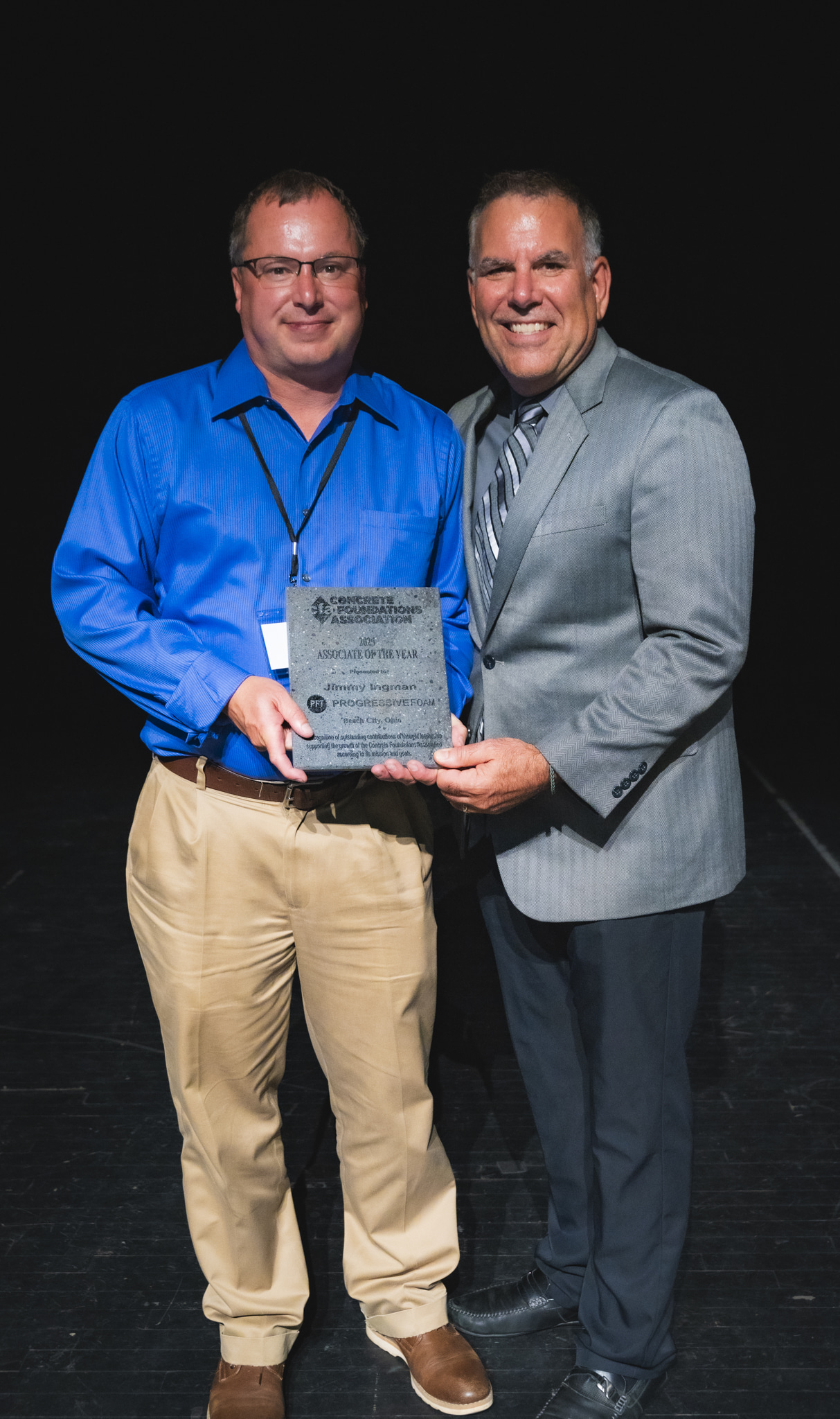
Jimmy Ingman of Progressive Foam Technologies accepts the Associate of the Year Award from CFA Director James Baty.
Innovative Contractor of the Year
Erik Rusin & Katie Walker, Reti, Inc.
Elbert, Colorado
The spirit behind the Innovative Contractor award was to create recognition for the way contractors innovate both formally and informally. Over the years, award recipients have brought forward concepts that have given rise to marketable products, others remain unique to their operations and get shared among friends. This year’s award recognized a shining example of hard work from leaders of a Colorado-based CFA Contractor member to become an influential software platform.
Although Retti, Inc. officially joined the CFA in 2025, Erik Rusin and Katie Walker have been long-time contributors to the Association, dedicating their efforts to developing innovative solutions that help contractors work leaner, smarter and with far less stress. Their commitment to advancing the industry and their hands-on approach to problem-solving earned them the prestigious Most Innovative Contractor award this year. This recognition highlights their ability to think outside the box and create tools that address real-world challenges faced by contractors in the field.
Retti is a purpose-built software platform designed specifically for concrete contractors, bringing scheduling, logistics and real-time communication into one place. It helps streamline crew scheduling, coordinate trade partners, manage inventory and optimize formwork deliveries, while giving full visibility into job status and progress so projects run smoother, faster and with less stress. This groundbreaking tool epitomizes practical innovation, simplifying workflows while maintaining the high standards of quality that the industry demands. By streamlining processes and improving efficiency, Rusin and Walker’s solution empowers contractors to focus on what they do best: delivering exceptional results. What sets Rusin and Walker apart is not just their creativity but also their willingness to share their knowledge and solutions with the CFA community. Their problem-solving mindset and collaborative spirit have inspired others to embrace new ways of thinking, proving that even a time-tested industry like poured wall construction can evolve in meaningful and impactful ways. Their work demonstrates that innovation doesn’t have to be complex to be transformative—it just needs to address the core needs of the people it serves.
Rusin and Walker’s contributions have left a lasting impression on the CFA, showcasing how forward-thinking ideas can drive progress and elevate the entire industry. Their recognition as the Most Innovative Contractor is not only well-deserved but also a testament to their vision for a smarter, more efficient future in cast-in-place concrete construction.
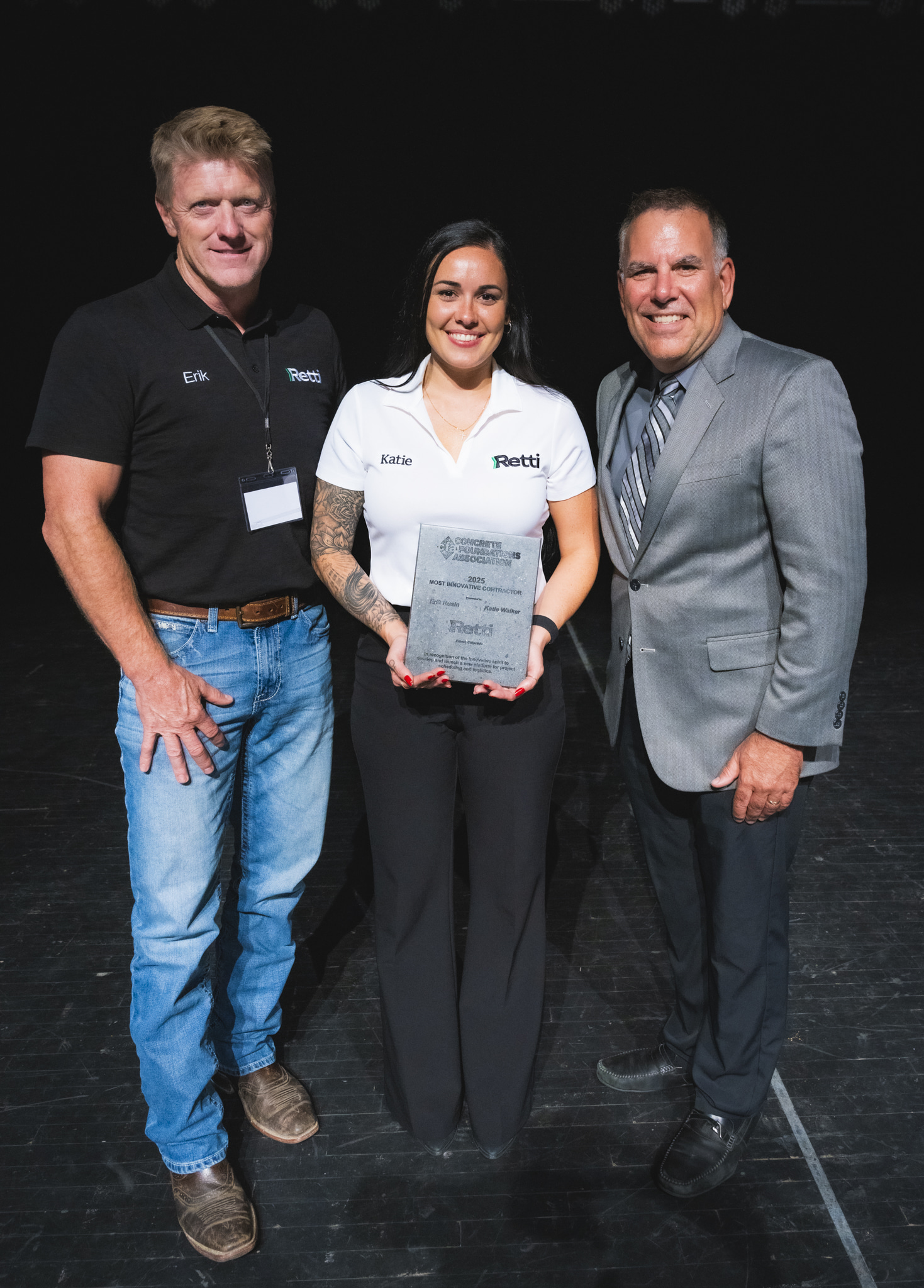
Erik Rusin and Katie Walker of Retti, Inc. accept the Innovative Contractor of the Year Award from CFA Director James Baty.
Contractor of the Year
Custom Concrete
Westfield, Indiana
A CFA member since 1986, Custom Concrete Inc. has established itself as a trusted leader in the poured wall industry for nearly forty years. This family-owned business has built its reputation on providing employees, customers, partners and the broader community with a solid foundation for quality—whether that means offering rewarding career opportunities, delivering exceptional projects or contributing to an enhanced quality of life.
Custom Concrete’s commitment to excellence extends far beyond its construction sites. The company has become synonymous with superior craftsmanship, cutting-edge innovation, and an unwavering dedication to helping others succeed in the industry. Their collaborative approach has made them a cornerstone of the poured wall community, earning them recognition that extends throughout the Midwest and beyond.
This year, Custom Concrete was nominated for the prestigious Contractor of the Year award—a distinction that recognizes their work reaching far beyond their own projects and immediate market area. The company has consistently demonstrated leadership through knowledge sharing and supporting best practices that elevate the entire poured wall sector.
The Contractor of the Year award celebrates contractors who masterfully combine technical skill, exceptional service and visionary leadership to advance poured wall construction as a whole. Custom Concrete embodies these qualities through its daily operations and industry involvement. Their consistent leadership, unwavering focus on quality, and deep commitment to excellence reflect the highest standards of CFA membership. These qualities, combined with their dedication to advancing the industry and supporting their peers, make Custom Concrete Inc. a deserving recipient of this year’s Contractor of the Year award—a recognition that celebrates not just their business success, but their lasting impact on the poured wall construction industry.
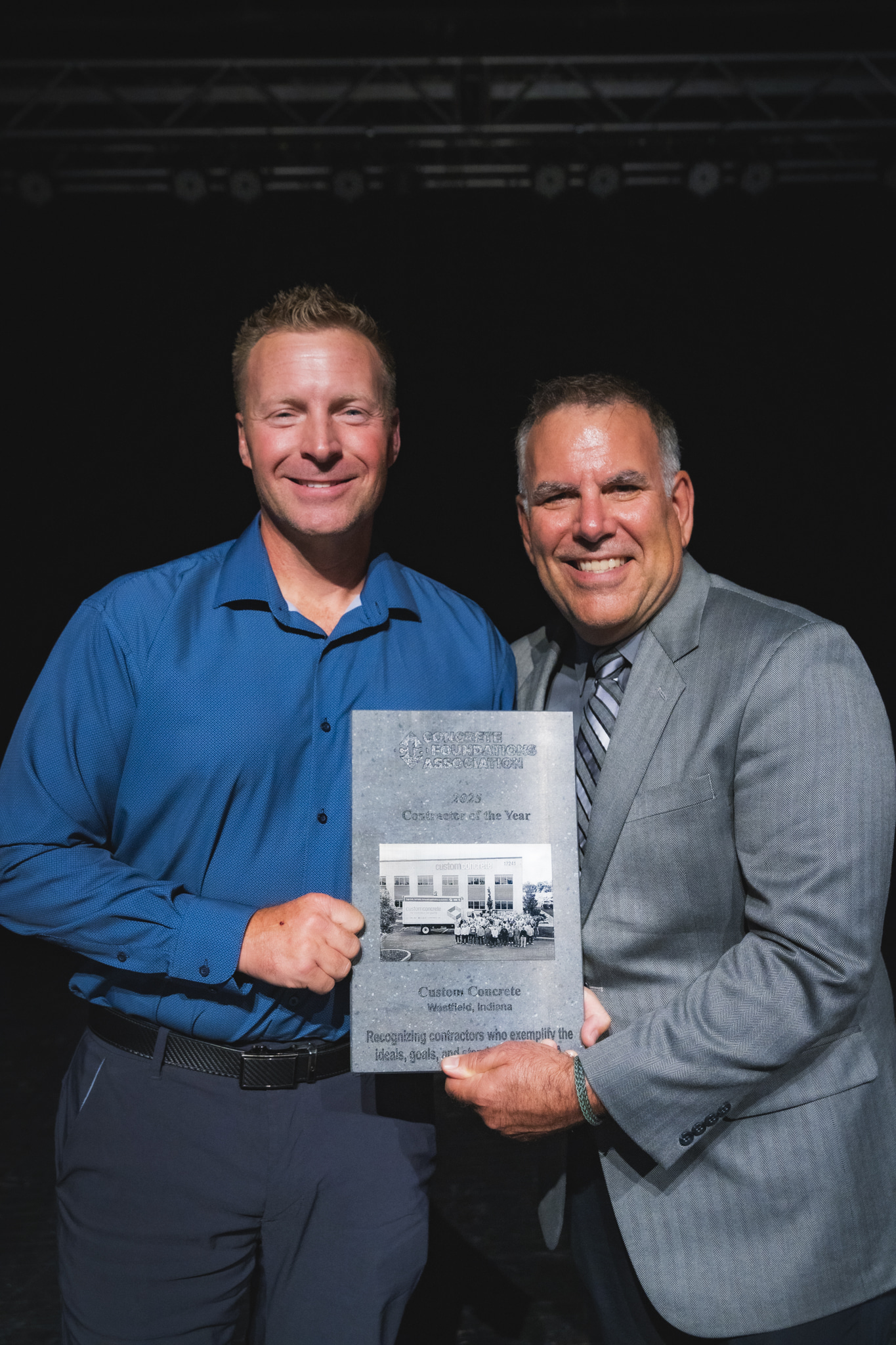
On behalf of Custom Concrete, Jason Ells, president, accepts the Contractor of the Year Award from CFA Director James Baty.
2025 Robert D. Sawyer Distinguished Service Award
Ron Ward
Western Forms, Inc.
Elbert, Colorado
In honoring Ron Ward this year, the Concrete Foundations Association recognizes not just his professional achievements, but the legacy of service he continues to build, one that reflects the spirit and dedication of Bob Sawyer himself.
As one of the original members of the CFA and the current CEO of Western Forms, Ward has dedicated decades to advancing the concrete foundations industry. His visionary leadership, generosity with his time and unwavering commitment to supporting contractors embody the very essence of the Robert D. Sawyer Distinguished Service Award, the Association’s most prestigious recognition. Ward’s contributions have left an indelible mark on the CFA and the industry, making him a true champion of poured wall construction.
Named in honor of the CFA’s first Executive Director, this award celebrates individuals whose depth of involvement and lasting contributions have shaped both the Association and the broader industry. Ward has consistently exemplified these qualities, serving as a leader, mentor and advocate for innovation and collaboration. His efforts have not only advanced the technical and operational aspects of the industry but have also strengthened the sense of community among contractors, suppliers and industry partners. Throughout his career, Ward has been a driving force behind initiatives that promote growth, education and excellence in poured wall construction. His ability to inspire others, share his expertise and foster meaningful connections has elevated the CFA’s mission and created opportunities for countless professionals to thrive. Whether mentoring emerging leaders, championing innovative technologies or advocating for industry standards, Ward’s impact is both profound and far-reaching.
In honoring Ward this year, the CFA celebrates not just his remarkable professional achievements but also the enduring legacy of service he continues to build. His dedication reflects the spirit and commitment of Bob Sawyer himself, serving as a reminder of the values that define the CFA. Ward’s contributions will undoubtedly inspire future generations to carry forward the torch of innovation, collaboration and excellence in the concrete foundations industry.
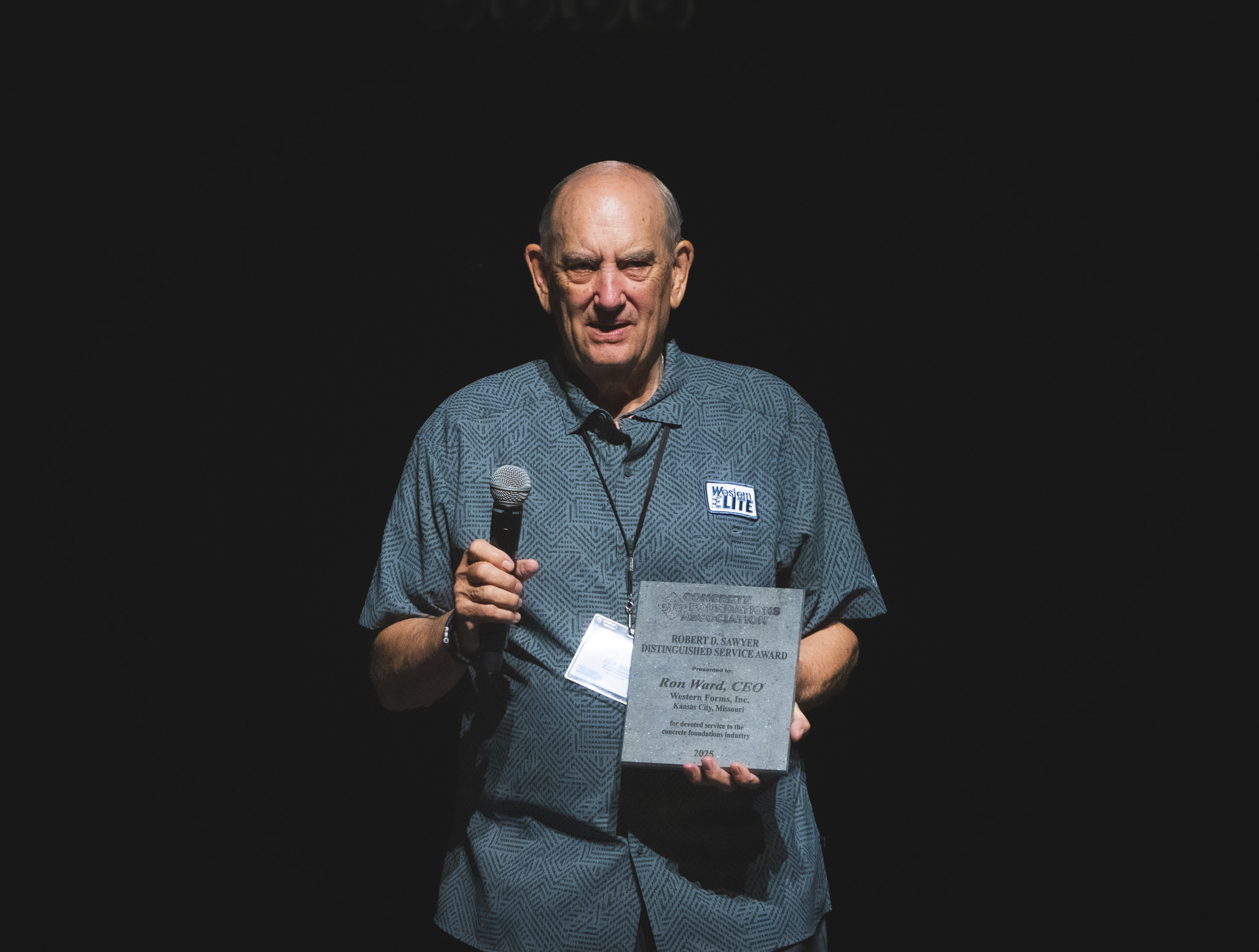
Ron Ward of Western Forms, Inc. accepts the 2025 Robert D. Sawyer Distinguished Service Award at the Awards Gala