Fox Blocks New Additional Resources Now Available in Spanish
Español | Translation Provided by the CFA

Fox Blocks, an Insulated Concrete Forms manufacturer, with much anticipation has announced the availability of new resources in Spanish. This is an exciting development for the company, as we are now able to make everything more accessible to a large portion of our disproportionally underserved demographic. We’re proud to have these resources conveniently located in our Resource Library on our website. Please be on the lookout for more developments, as they are coming soon.
Reflexiones desde el campo
English | Translation Provided by the CFA
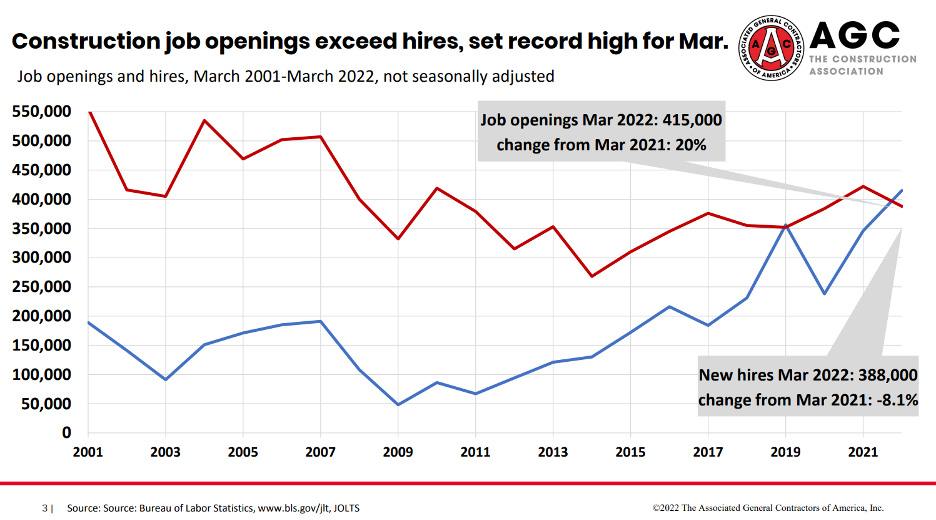
Los salarios más altos no son la respuesta a la reducción de nuestra fuerza laboral
A medida que la industria de la #construcción continúa quejándose por la falta de trabajadores, continuamos viendo declaraciones de que el aumento de sueldos es la respuesta para atraer una mayor fuerza laboral. Pero ¿es realmente lo que se necesita? ¿Los salarios bajos son realmente el obstáculo que estamos enfrentando para atraer a los trabajadores? No lo creo. De hecho, creo que aumentar el pago por hora para atraer más trabajadores no es nada más que poner un apósito en una herida que necesita limpiarse y suturarse.
El salario en la industria de la construcción generalmente siempre ha sido bueno (https://www.bls.gov/oes/current/oes472061.htm). En mi opinión, nuestro reto para atraer una fuerza laboral más grande es un problema mucho más complicado. Nuestro problema reside más en las cuestiones de respeto e imagen. Estas cuestiones son impulsadas por la estructura fragmentada de la industria de la construcción. Esta es una estructura que no desaparecerá, de modo que es importante reconocer y aceptar primero esa estructura.

La fragmentación en la industria de la construcción
No es difícil investigar acerca de la fragmentación en la industria de la construcción y encontrar artículos que hablan sobre este problema. Para entender el análisis y la inquietud, uno solo necesita entender cómo funciona realmente la construcción. Tradicionalmente, comenzamos con un propietario de proyecto que contrata a un equipo de diseño para diseñar y un contratista general para construir. Pero el diseño requiere información de muchos especialistas y la construcción requiere el uso de muchos trabajadores expertos.
En el lado de la construcción, los contratistas generales siempre son pregonados como las compañías que construyen los proyectos, pero casi nunca tienen la verdadera capacidad para “construir” sin emplear a contratistas especializados (también conocidos como subcontratistas). Estas son las compañías que realmente emplean a los trabajadores expertos. Sí, hay muchos contratistas generales que directamente emplean uno o más contratistas especializados. Sin embargo, en raras ocasiones implementan estas especialidades en todos sus proyectos e incluso cuando lo hacen, es solo una o dos especialidades. Esto deja que la mayoría de la construcción real en un proyecto sea llevada a cabo por decenas de diferentes contratistas especializados. Algunos son grandes, algunos son pequeños y algunos están en medio de estos. Este es el origen de la llamada fragmentación en la industria de la construcción.
Algunos sugieren que necesitamos resolver este problema al reducir la fragmentación y aceptar una integración vertical, como una fábrica. Creo que esto es un error. No es algo práctico y antes de que esto se convierta en un análisis aún más largo, vamos a decir que, como industria, llegamos a donde estamos por un motivo. La estructura de los contratistas generales y los contratistas especializados es necesaria, funciona por muchos motivos diferentes y está aquí para quedarse. Basta ver lo que le sucedió al ahora desaparecido Katerra (https://www.failory.com/cemetery/katerra) si quiere ver lo que sucede cuando intenta implementar una integración vertical al tiempo que ignora las realidades de la industria de la construcción.
La fragmentación conduce a la falta de respeto
Aunque no creo que necesitemos abordar la llamada fragmentación de la industria de la construcción, sí creo que esta estructura de la industria contribuye a la falta de respeto por las mismas personas de las que dependemos para construir nuestras estructuras, las personas que necesitamos en cada proyecto que siempre pone la primera piedra: las personas especializadas y expertas. ¿Por qué?
Muy simple, porque gestionar a un montón de personas que salen al campo para construir cosas complejas es algo realmente difícil. Estas compañías tienen que gestionar y equilibrar constantemente las ganancias con la productividad, calidad y seguridad. Tienen que averiguar qué capacitación necesitan sus empleados y cómo ofrecer esa capacitación. Deben averiguar cómo obtener la información y las instrucciones correctas, cada día en cada proyecto. Deben averiguar cómo mantenerlos en movimiento, al tiempo que se aseguran de que no trabajen demasiado y queden agotados. Deben evaluar constantemente las necesidades de sus empleados e intentar cubrir esas necesidades al tiempo que mantienen las ganancias. Y deben hacer todo esto con una fuerza laboral que está constantemente en movimiento y cambiando. Una fuerza laboral que en raras ocasiones “va a la oficina”. Una fuerza laboral que se reporta en una obra que está bajo el control de otra persona (el contratista general) y una obra que está llena de muchos contratistas especializados diferentes.
Aquí es donde comienzan nuestros problemas de imagen y respeto.
Primero, tenemos una obra que está (o se supone que está) bajo el control directo de ese contratista general. Cada contratista especializado no puede establecer los elementos necesarios del sitio de trabajo como las áreas de descanso, los baños, las instalaciones sanitarias o las áreas de comedor. Cada contratista especializado no puede mitigar los riesgos creados por cada uno de los otros especialistas a medida que su trabajo avanza. Cada contratista especializado no puede pasar la cantidad de tiempo necesario para limpiar el desorden que dejan los otros especialistas; y no puede dejar que cada contratista especializado pelee por un espacio de trabajo en un área dada donde muchos especialistas están apilados unos contra otros. Muy a menudo, incluso la logística de mover y preparar los materiales está, al menos parcialmente, fuera de las manos del contratista especializado.
No solo los contratistas especializados se enfrentan con estos problemas, sino que también se enfrentan con problemas como los siguientes:
- Requisitos de capacitación constante
- Problemas de productividad provocados por cosas que están tanto dentro como fuera de su control
- Hacer malabares con los programas de varios sitios de obras que son controlados por diferentes contratistas generales
- Problemas generales que surgen al gestionar grupos de personas diversos que necesitan trabajar en equipo
Y no olvidemos cosas como el seguro de responsabilidad civil, la indemnización laboral, los salarios y las primas del seguro médico fuera de control.
Lamentablemente, la persona que a menudo sufre en todo esto es el trabajador individual que está allá afuera en el sitio de la obra. Es difícil cuidar de estos trabajadores y es fácil olvidarnos de ellos allá fuera en el sitio, lejos de la oficina central. El problema es que ellos son los que necesitan construir nuestro proyectos: nuestras carreteras, puentes, edificios, escuelas. Necesitamos a estas personas y esa necesidad no va a desaparecer a lo largo de nuestra vida (o al menos durante mi vida). Sí, automatizaremos, incorporaremos robots incluso cambiaremos fuera del sitio una parte de la productividad. Pero aún dependeremos de esta gente, estas personas especializadas y expertas.
Esta es la raíz de los problemas de nuestra industria. Calidad, productividad, programa, costo, seguridad…
Si nuestros empleados no tienen seguro médico, no están seguros cuánto se les pagará esta semana, no tienen un lugar para tomar sus descansos, deben usar algunas de las instalaciones “sanitarias” más sucias que se pueden encontrar, están peleando constantemente por tener un espacio seguro y productivo con otros especialistas, no tienen la capacitación y los equipos correctos para hacer bien el trabajo y ni siquiera tienen un lugar decente para comer, ¿qué tan motivados cree que estarán? ¿Qué tan motivados cree que están los jóvenes de trabajar en nuestra industria? ¿Cree que ignorarán estas cosas si les suma un par de dólares más por hora? ¿Cuánto tiempo cree que esto durará?
Resolver el problema
Entonces, ¿qué hacemos? De nuevo, algunos sugerirían la integración vertical, donde las compañías grandes contratan directamente a todos los contratistas especializados y abandonar la fragmentación. Pero de nuevo, vean la suerte que tuvo Katerra (https://www.failory.com/cemetery/katerra) si desean ver un ejemplo de cómo esto ha funcionado en el pasado. No es la respuesta. Algunos sugieren que el problema son los pequeños contratistas especializados y que las compañías grandes pueden manejar mejor todos los problemas. Existen muchos motivos, pero esta no es la respuesta tampoco, porque hay muchos motivos por los que necesitamos a los pequeños contratistas especializados.
Entonces, ¿qué hacemos? La respuesta es simple, pero la ejecución es difícil.
Simplemente necesitamos comenzar a desarrollar más respeto por los trabajadores en los diferentes roles y necesitamos comenzar a asumir las responsabilidades de nuestra compañía. Aquí es donde creo que necesitamos comenzar:
Contratistas generales
Los CG son la entidad controladora y deben asumir esa responsabilidad. Cada persona que pone un pie en su sitio de trabajo necesita un espacio de trabajo limpio, seguro y ordenado. Necesitan áreas sanitarias para tomar descansos, comer y usar el baño. El rol de proporcionar estos espacios pertenece al CG. No tiene sentido dejarlo en manos de cada contratista especializado porque eso sería una enorme duplicación de esfuerzos y no abordar estos problemas muestra una falta de respeto total hacia las personas que se necesitan para construir los proyectos.
Aceptar las teorías de productividad de Lean Construction (construcción eficiente) puede ayudarle a lograr el objetivo de respetar a las personas al tiempo que mejora lo demás en su proyecto, desde el rendimiento hasta la seguridad.
Contratistas especializados
Ustedes gestionan a las personas. Deben asumir esa responsabilidad. Si no desean gestionar a las personas, probablemente están en el negocio equivocado. No pueden resolver todos sus problemas de gestión al aventarlos a sus trabajadores individuales. Constantemente veo que las compañías hacen esto al decidir que el “trabajo-pieza” es la respuesta a todos sus problemas. La idea de que, si paga a todos en el campo por “pieza” en vez de por hora, ninguno de esos problemas tendrá importancia. Ya no son sus problemas.
Aunque esa última afirmación puede ser cierta a corto plazo, no se equivoque: esta es la maldición de nuestra industria. Es un factor contribuyente considerable a nuestra fuerza laboral decreciente. No puede resolver sus problemas de gestión dejándoselos a su fuerza laboral. Eso no hace que los problemas desaparezcan. Simplemente los asigna a un grupo que está aún menos preparado para gestionarlos. A corto plazo, sí se ve como una idea grandiosa. Como propietario o gerente, hago que mis problemas de productividad desaparezcan al instante. Sé exactamente cuánto estoy cobrando y sé exactamente cuánto voy a pagar. ¿A quién le importa si los trabajadores tienen problemas en el campo? ¿A quién le importa si no pudieron hacer nada porque los materiales no llegaron? ¿A quién le importa si otros contratistas especializados les estorbaban o si el trabajo no estaba listo?

Créanme, a esos trabajadores sí les importa. Quizá no inmediatamente. Pero a largo plazo, sí les importará. Y luego abandonarán la industria y nuestra fuerza laboral continuará reduciéndose. Contarán sus historias a otros, a sus amigos y sus hijos y continuaremos teniendo problemas para atraer a personas a la industria.
La respuesta a nuestra fuerza laboral decreciente no son salarios más altos. Es tener más respeto.
Thoughts From the Field
Español | Translation Provided by the CFA
with Jim Rogers
Higher Wages Are Not the Answer to Our Shrinking Workforce
As the construction industry continues to lament over the lack of workers, we continue to see statements about rising pay being the answer to attracting a bigger workforce. But is this really what is needed? Are low wages really the barrier we are facing to attracting workers? I don’t think so. In fact, I think that raising hourly pay to attract more workers is nothing more than putting a Band-Aid on a wound that needs to be cleaned and sutured.
Pay in the construction industry has generally always been good (https://www.bls.gov/oes/current/oes472061.htm). In my opinion, our challenge of attracting a larger workforce is a much more complicated issue. Our problem lies more with the issues of respect and image. These issues are fueled by the fragmented structure of the construction industry. This is a structure that is not going away, so it is important to first acknowledge and accept that structure.
Fragmentation in the Construction Industry
It’s not difficult to do a search on fragmentation in the construction industry and come up with articles that discuss this issue. To understand the discussion and the concern, one only needs to understand how construction actually works. Traditionally, we start with a project owner who hires a design team to design and a general contractor to build. But the design requires the input of many specialists, and the build requires the use of many skilled craft people.
On the building side, general contractor are always touted as the companies building the projects, but they almost never have the actual capacity to “build” without hiring trade contractors (also known as subcontractors). These are the companies that actually employ the skilled craft workers. Yes, there are plenty of general contractors out there that directly employ one or more skilled trades; however, they rarely implement these trades in all of their projects, and even when they do, it is just a trade or two. This leaves the bulk of the actual construction on a project to be performed by dozens of different trade contractors. Some large, some small, some in-between. This is the source of the so-called fragmentation in the construction industry.
Some suggest that we need to solve this issue by reducing fragmentation and embracing vertical integration, like a factory. I think this is a mistake. It is not practical, and before this becomes an even lengthier discussion, let’s just say that, as an industry, we got here for a reason. The structure of general contractors and trade contractors is necessary, it works for many different reasons, and it is here to stay. Look no further than the now defunct Katerra (https://www.failory.com/cemetery/katerra) if you want to see what happens when you try to vertically integrate while ignoring the realities of the construction industry.
Fragmentation Leads to Disrespect
While I do not believe we need to address the so-called fragmentation of the construction industry, I do believe that this industry structure contributes to a lack of respect for the very people we rely on to build our structures, the people we need on every project that ever breaks ground: the skilled craft people. Why is this?
Quite simply, it’s because managing a bunch of people who go out into the field to build complex things is really hard. These companies have to constantly manage and balance profits with productivity, quality, and safety. They have to figure out what training their people need, and how to deliver that training. They have to figure out how to get the right information and instructions into their hands, every day, on every project. They have to figure out how to keep them moving, while making sure they don’t get overworked and burned out. They have to constantly assess their people’s needs and attempt to fill those needs while maintaining profits. And they have to do all this with a workforce that is constantly moving and shifting. A workforce that rarely “comes to the office.” A workforce that reports to a jobsite that is under the control of someone else (the general contractor), and a jobsite that is populated with many different trade contractors.
This is where our image and respect problems begin.
First, we have a jobsite that is (or is supposed to be) under the direct control of that general contractor. Each trade contractor cannot establish necessary work-site elements such as break areas, restrooms, sanitary facilities, or eating areas. Each trade contractor cannot go around mitigating hazards created by every single other trade as they each progress in their work. Each trade contractor cannot spend the necessary amount of time to clean up after all the other trades, and each trade contractor cannot be left to fight for workspace in a given area when too many trades are stacked up against each other. Oftentimes, even the logistics of moving and staging materials are at least partially out of the hands of the trade contractor.
Not only are trade contractors faced with these problems, but they are also faced with problems like:
- constant training requirements
- productivity issues caused by things that are both in their control and out of their control
- juggling schedules from multiple jobsites, which are controlled by different general contractors
- general issues that arise when managing a diverse group of individuals who all need to work as a team
And let’s not forget about things like liability insurance, workers compensation, wages, and the out-of-control health insurance premiums.
Unfortunately, the person who often suffers in all of this is the individual worker who is out there at the jobsite. It is hard to take care of these workers, and it is easy to forget about them out there on the site, away from the home office. The problem is, they are the ones we need to build our projects: our roads, bridges, buildings, schools. We need these individuals, and that need is not going to subside in our lifetime (or, at least, not in my lifetime). Yes, we will automate, we will incorporate robotics, we will even move some productivity off-site. But we will still rely on those people, those individuals, those skilled craft people.
This is the root of our industry’s problems. Quality, productivity, schedule, cost, safety…
If our people do not have health insurance, are not sure what they are going to be paid this week, do not have a place to take needed breaks, have to use some of the nastiest “sanitary” facilities you can find, are constantly fighting for a safe and productive space with other trades people, do not have the right training and equipment to get the job done correctly, and do not even have a decent place to eat lunch, how motivated do you think they will be? How motivated do you think young people will be to join our industry? Do you think they will overlook these things if you give them another couple of dollars per hour? How long do you think that will last?
Solving the Problem
So, what do we do? Again, some would suggest vertical integration, where large companies directly hire all the trade contractors, doing away with the fragmentation. But again, look to the fate of Katerra (https://www.failory.com/cemetery/katerra) if you want an example of how this has worked out in the past. It is not the answer. Some suggest that it is the small trade contractors that are the issue, and that larger companies can better manage all the issues. There are many reasons this isn’t the answer, either, because there are many reasons we need the small trade contractors.
So, what do we do? The answer is simple, but the execution is difficult.
Quite simply, we need to start building more respect for workers in varying roles, and we need to start owning our company’s responsibilities. Here is where I think we need to start:
General Contractors
GC’s are the controlling entity, and they need to own that responsibility. Every person who steps onto your work site needs a clean, safe, uncluttered workspace. They need sanitary areas to take breaks, eat, and use the restroom. The role of providing such spaces belongs to the GC. It makes no sense to leave it to each trade contractor because that would be a huge duplication of efforts, and failing to address these issues shows a complete lack of respect for the individuals needed to build the projects.
Embracing theories of productivity like Lean can help you achieve the goal of respecting people while improving everything else on your project, from throughput to safety.
Trade Contractors
You manage people. You need to own that. If you don’t want to manage people, you are probably in the wrong business. You cannot solve all of your management problems by throwing them back at your individual workers. I constantly see this done by companies who decide that “piece-work” is the answer to all their problems. The thought being that if you pay everyone in the field by the “piece,” instead of by the hour, none of these issues will matter anymore. They are no longer your problems.
While that last statement may be true in the short term, make no mistake: this is the absolute bane of our industry. It is a substantial contributing factor to our diminishing workforce. You cannot solve your management issues by dumping them into the hands of your workforce. It does not make the problems go away. It simply shifts them onto a group that is even less equipped to handle them. In the short term, yes, it seems great. As an owner or manager, I instantly make my productivity problems disappear. I know exactly what I am charging, and I know exactly what I am going to pay. Who cares if the workers have issues in the field? Who cares if they couldn’t get anything done because the materials were not there? Who cares if the other trade contractors were in their way, or if the job was not ready?
Believe me, those individual workers care. Maybe not immediately. But in the long term, they will care. And then they will leave the industry, and our workforce will continue to shrink. They will tell their stories to others, to their friends and their children, and we will continue to find it difficult to attract people to the industry.
The answer to our shrinking workforce is not higher wages. It is more respect.
Is Your Company’s Practice to Plan for Top Employee Retention?
Español | Translation Provided by the CFA

By Bill Humbert, RecruiterGuy.com
When your company is lucky, employee retention simply happens. However, there is never really a “simply happens.” Obviously, your company is operating in a manner that retains your best employees. Congratulations!
Over the past few weeks, I have spoken with several of the CFA member companies. A couple of company executives told me that they are focusing on the retention of their employees currently and seeing some positive results.
Why Is Employee Retention Important?
Many of you, when you were new to concrete construction, were driven to learn and succeed. When I was 18, I worked at a Triangle Pacific Truss plant in the yard during the summer between college semesters. My job was to ensure that the saw man received the correct lumber on his rollers to cut at the correct angles depending on the truss design. We planned the day on three priorities:
- Rush orders
- Large orders
- Small orders
We knew what orders needed to be processed during that day. I would plan the use of a tow motor to bring the lifts of lumber so the rollers would be filled as required.
As I learned the process, I was able to plan my day in such a way that enabled my supervisors to use me for creating house packages between cuts. In short, I was motivated to succeed for my manager and my team. This motivation helped me anticipate the company’s needs ahead of time, before they were expressed.
Since you are a founder or leader of a concrete construction firm, I believe that you were motivated to learn and anticipate needs ahead of time, too.
Isn’t a motivated laborer a person you want to retain?
Retention is important because every person you retain is one you will not have to recruit and train in the future. More importantly, they may grow to be one of your leaders, possibly a talented estimator. How long does it take for your organization to bring a new, raw laborer up to speed on your concrete team? This training is a cost of doing business, and it can be minimized by retaining more employees.
Would You Like to Know a Secret About Job Seekers?
Since I coach people in their career searches during slow recruiting periods, they tell me their secrets. One important secret is that they HATE looking for a good job with a great company. They hope that they land with a company where they can work for the balance of their career—much like many of their fathers.
How important is this secret? If your company has a program in place where deserving employees can grow in responsibility and income, you are taking the first big step in the retention of top performers.
What Is the Secret Behind Great Retention Programs?
Consistency.
Well, that is simple—except when it is not. Dealing with human beings can be difficult because we all have personal lives with differing needs. This includes your foremen. Build a retention program that incorporates consistency so everyone knows what they need to accomplish to reach the next level. Some workers will grow quickly. Other workers will find their level of comfort and stay there, like a worker who is content to be great at finishing slabs (almost like it is their art). They may not be interested in learning new skills because they are proud of their work on slabs.
Have you ever had a laborer who was great until you gave them just a little more responsibility than they were comfortable with? When I was a construction superintendent on the Pinnacle Garden Apartment and Townhouse project in NE Washington, D.C., one of my laborers was JW (not his real name). It was an unusual project because all six of my laborers came from within four blocks of our project. The surrounding apartment buildings and row houses were old. Many of the surrounding buildings needed repair, but the landlords were not willing to improve them. Most of my laborers did not finish school. However, most laborers took pride in their work.
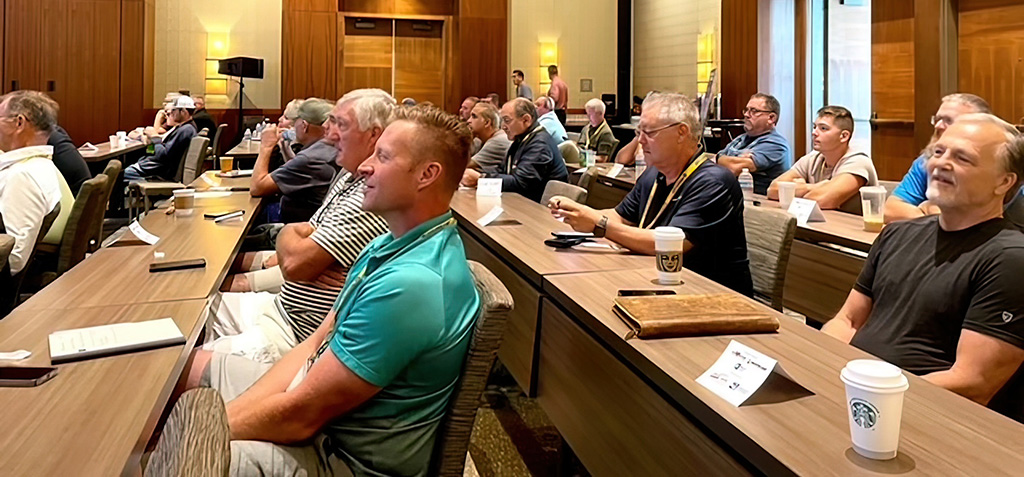
This was Section 8 housing in DC, so we were required to pay Davis-Bacon wages. In 1978, we paid our laborers $10.78 per hour. JW was my most skilled and dependable laborer—until I gave him too much responsibility. Then he went on a binge for a week. People need to be treated differently according to their abilities and their mental capacity. Today, the term that describes hiring people with differing mental limits is neurodiversity. JW is a great example of someone who excels at their job while being limited in their ability to grow. As a superintendent, I quickly learned JW’s limits—and accepted them. I have fond memories of JW and his work ethic.
Some of the executives with whom I spoke discussed how they created training for new laborers. Initially, the laborers learned important functional and safety skills. Once they achieved those goals, they were given recognition and a raise. Some people are driven more by positive recognition than money. I recommend that you read Drive: The Surprising Truth About What Motivates Us by Daniel Pink. After you read this book, you may decide that it is required reading for all your leaders. Understanding the difference between intrinsic motivation and extrinsic motivation is key to managing and retaining employees.
Create a growth program with specific, achievable goals for each level. Initially, the goals for new laborers should be simple, and once achieved, they should earn a small raise. As the training grows in difficulty, it will take longer to achieve the next level with appropriate recognition and wage increase. Some laborers will join your company at higher levels of experience. In this case, practice consistency by testing them through your process and determining where they belong in your training program. Most quality concrete construction companies are proud of how their processes differentiate them from other concrete companies.
Having a growth program conditions your employees to set and achieve goals from their first day on the job. By definition, a goal-setting and goal-achieving employee is an engaged employee. Engaged employees become retained employees.
Talent Retention Requires Foreman and Manager Training
It is one thing to know the technical aspects of a job (proper concrete reinforcement, pouring, finishing, curing, and workplace safety, for example), but coaching a team member is another important and very different thing.
How well have your foremen and superintendents been trained in proper management skills? As a leading talent attraction consultant, I agree with the following statement: “Workers leave managers, not their companies.”
Do you have a leader whose staff turns over often? They may be knowledgeable about the concrete business and yet costing your company by losing top talent. Of course, they will blame everything else—the location of the jobsite, the work, the weather, other subcontractors, etc.
The converse is true. Many times, I attempted to recruit a person from a company, and they informed me that they would not leave their manager. In one case, my client would have paid them 20% higher wages.
A foreman or project manager with good people skills will create a crew who is loyal to them—and to each other. As a concrete construction company leader, you will find that these leaders will retain their (your) employees. Retained teams are more efficient teams and more profitable teams.
¿Es práctica de su compañía planificar para retener a los mejores empleados?
English | Translation Provided by the CFA
Cuando una compañía es afortunada, la retención de los empleados es algo que simplemente sucede. Sin embargo, nunca existe realmente un “simplemente sucede”. Obviamente, su compañía está operando en una manera que retiene a sus mejores empleados. ¡Felicitaciones!
En las últimas semanas, he hablado con varias de las compañías miembros de la CFA. Un par de ejecutivos de compañías me dijeron que se están enfocando en la retención de sus empleados actualmente y buscan algunos resultados positivos.
¿Por qué es importante la retención de empleados?
Muchos de ustedes, cuando eran nuevos en la construcción de concreto, fueron obligados a aprender y tener éxito. Cuando tenía 18 años, trabajé en una planta de Triangle Pacific Truss en el aserradero durante el verano entre los semestres de la universidad. Mi trabajo era asegurar que el encargado de la sierra recibiera la madera correcta en sus rodillos para cortar a los ángulos correctos dependiendo del diseño del armazón. Planificamos el día con tres prioridades:
- Pedidos rápidos
- Pedidos grandes
- Pedidos pequeños
Sabíamos qué pedidos debían procesarse durante ese día. Planificaba el uso de un remolcador para llevar los levantamientos de madera de modo que los rodillos se llenaran según fuera necesario.
A medida que aprendí el proceso, pude planificar mi día de tal manera que permitía a mis supervisores usarme para crear paquetes para casas entre los cortes. En resumen, mi gerente y mi equipo me motivaron a tener éxito. Esta motivación me ayudó a anticipar las necesidades de la compañía por adelantado, antes de que las expresaran.
Debido a que ustedes son fundadores o líderes de empresas de construcción de concreto, creo que también fueron motivados a aprender y anticipar las necesidades antes de tiempo.
¿No es un trabajador motivado una persona que quisieran retener?
La retención es importante porque cada persona que retiene es una que no deberá contratar y capacitar en el futuro. Pero más importante aún, puede crecer para ser uno de sus líderes y posiblemente un estimador talentoso. ¿Cuánto tiempo tarda su organización en capacitar a un empleado nuevo y sin experiencia para que se trabaje bien con su equipo de concreto? Esta capacitación es un costo de hacer negocios y puede minimizarse al retener más empleados.
¿Le gustaría conocer un secreto acerca de los solicitantes de empleo?
Debido a que asesoro a las personas en sus búsquedas de carrera profesional durante los periodos de bajo reclutamiento, ellos me cuentan sus secretos. Un secreto importante es que ODIAN buscar un buen empleo con una compañía grande. Esperan llegar a una compañía donde puedan trabajar para equilibrar su carrera profesional, muy parecido a como lo hicieron sus padres.
¿Qué tan importante es este secreto? Si su compañía tiene un programa implementado donde los empleados que lo merezcan pueden crecer en responsabilidad e ingresos, usted está tomando el primer paso importante para la retención de empleados con el mejor desempeño.
¿Cuál es el secreto detrás de los programas excelentes de retención?
La consistencia.
Bueno, eso es sencillo, excepto cuando no lo es. Tratar con seres humanos puede ser difícil porque todos tenemos vidas personales con necesidades diferentes. Esto incluye sus jefes de obra. Desarrolle un programa de retención que incorpore la consistencia de modo que todos sepan qué es lo que deben lograr para alcanzar el siguiente nivel. Algunos trabajadores crecerán rápidamente. Otros trabajadores encontrarán su nivel de comodidad y permanecerán ahí, como un trabajador que está contento con ser muy bueno en acabar losas (casi como si fuera su forma de crear arte). Podría no estar interesado en aprender nuevas destrezas porque está orgulloso de su trabajo con las losas.
¿Alguna vez tuvo a un trabajador que era excelente hasta que le dio un poco más de responsabilidad con la que se sentía cómodo? Cuando era un superintendente de construcción en el proyecto Pinnacle Garden Apartment and Townhouse en el NE de Washington, D.C., uno de mis trabajadores era JW (no es su nombre real). Era un proyecto inusual porque seis de mis trabajadores provenían dentro de las cuatro cuadras de nuestro proyecto. Los edificios de apartamentos circundantes y las casas en hileras eran viejos. Muchos de los edificios circundantes necesitaban reparaciones, pero los arrendadores no estaban dispuestos a mejorarlos. La mayoría de mis trabajadores no terminaron la escuela. Sin embargo, la mayoría de los trabajadores se enorgullecían de su trabajo.
Este proyecto caía bajo viviendas de la Sección 8 en D.C., así que nos pedían pagar salarios Davis-Bacon. En 1978, pagábamos a nuestros trabajadores $10.78 por hora. JW era uno de mis trabajadores con más destreza y confiable, hasta que le di demasiada responsabilidad. Luego se dio un atracón por una semana. Las personas necesitan ser tratadas de manera diferente según sus habilidades y su capacidad mental. Actualmente, el término que describe la contratación de personas con límites mentales diferentes es neurodiversidad. JW es un gran ejemplo de alguien que sobresale en su trabajo al tiempo que tiene un límite en sus habilidades para crecer. Como superintendente, aprendí rápidamente los límites de JW y los acepté. Tengo recuerdos agradables de JW y su ética de trabajo.
Algunos de los ejecutivos con quienes hablé, mencionaron cómo crearon la capacitación para nuevos trabajadores. Inicialmente, los trabajadores aprendieron destrezas funcionales y de seguridad importantes. Una vez que alcanzaron estos objetivos, se les dio reconocimiento y un aumento. Algunas personas fueron motivadas más por el reconocimiento positivo que por el dinero. Recomiendo leer el libro Drive: The Surprising Truth About What Motivates Us (Impulso: la sorprendente verdad sobre qué nos motiva) de Daniel Pink. Después de leer este libro, pueden decidir si debiera ser una lectura obligatoria para todos sus líderes. Entender la diferencia entre motivación intrínseca y motivación extrínseca es la clave para manejar y retener a los empleados.
Creen un programa de crecimiento con objetivos específicos y alcanzables para cada nivel. Inicialmente, los objetivos de los trabajadores nuevos deben ser sencillos y, una vez que se alcancen, deben obtener un aumento pequeño. A medida que la capacitación crece en cuanto a dificultad, tomará más tiempo alcanzar el siguiente nivel con el reconocimiento y el aumento de sueldo apropiados. Algunos trabajadores se unirán a su compañía con niveles más altos de experiencia. En este caso, practique la consistencia al probarlos a lo largo de su proceso y determinar dónde pertenecen en su programa de capacitación. La mayoría de las compañías de construcción de concreto de calidad están orgullosas de cómo sus procesos las diferencian de otras compañías de concreto.
Tener un programa de crecimiento acondiciona a sus empleados a establecer y alcanzar sus objetivos desde su primer día en el empleo. Por definición, un empleado que se establece objetivos y logra objetivos es un empleado comprometido. Los empleados comprometidos se convierten en empleados retenidos.
La retención de talento requiere capacitar a los jefes de obra y gerentes
Una cosa es conocer los aspectos técnicos de un trabajo (el refuerzo, vertido, acabado, curado apropiados del concreto y la seguridad en el lugar de trabajo, por ejemplo), pero entrenar a un miembro del equipo es otra cosa importante y muy diferente.
¿Qué tan bien han sido capacitados sus jefes de obra y superintendentes en destrezas de liderazgo? Como un consultor líder en atracción de talento, estoy de acuerdo con la siguiente afirmación: “Los trabajadores abandonan a los gerentes, no a las compañías”.
¿Tiene un líder cuyo personal tiene una alta tasa de rotación? Es posible que tenga mucho conocimiento sobre el negocio del concreto, pero aun así le cuesta a su compañía perder talentos importantes. Por supuesto, el líder echará la culpa a cualquier cosa como la ubicación del sitio de la obra, el trabajo, el clima, otros subcontratistas, etc.
Lo contrario es cierto. Muchas veces, intenté contratar a una persona de una compañía y me informó que no dejaría a su gerente. En otro caso, mi cliente hubiera pagado a la persona un 20% más de salario.
Un jefe de obra o gerente de proyecto con buenas habilidades sociales crearán una cuadrilla que sentirá lealtad hacia ellos y sus compañeros de trabajo. Como líderes de compañías de construcción de concreto encontrarán que estos líderes retendrán a los empleados. Los equipos retenidos son equipos más eficientes y rentables.
NEW MEMBER SPOTLIGHT

Curtis Cowgill
Contractor member, President of Nies Foundations
Joining the CFA was a no-brainer for me. Since I’m new to the foundation industry, I was looking for a professional organization that I could be a part of to learn best practices from experienced industry professionals. I’ve found what I was looking for in the CFA! The monthly best practices calls have been an excellent resource for connecting with other business leaders in this industry and building a network of people dealing with the same issues. I would highly recommend that anyone in the industry, whether you are new or very experienced, join the CFA.
_____________________________________

Cory Deyell
National Associate member. DMX Plastics Limited.
DMX chose to join CFA because of the great reputation the association has in the concrete forming industry and for the networking opportunities to further grow our relationships. Our Foundation Wrap and Drain Boards are the next products in the building process to be installed after the walls are formed for waterproofing which makes the CFA a natural fit for us and our product lineup. We believe in having strong relationships with the concrete formers so that we can work together and ensure that customers will always receive the best protected foundations in the market. Our goal is to work and grow with CFA by partnering with the best formers in the United States, to further teach the industry about the benefits of our products and show them why the majority of large builders and formers in Canada will only trust their foundations to be wrapped with DMX.

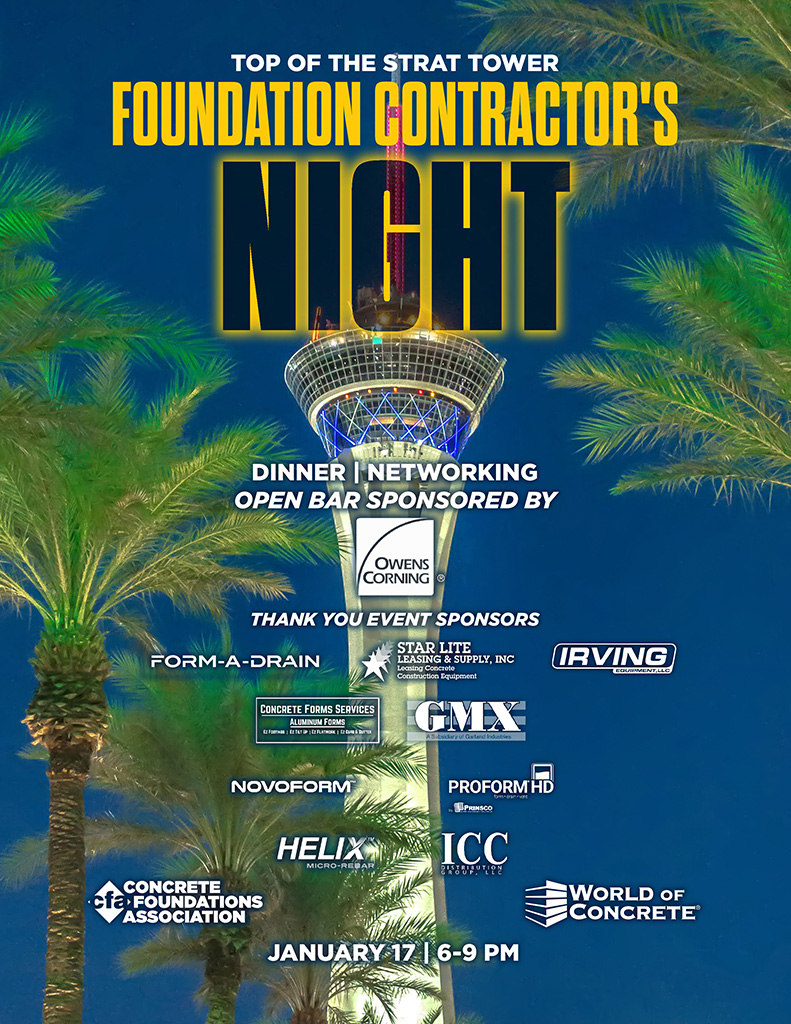
Foundation Contractor’s Night
2022 PROJECTS OF THE YEAR
Español | Translation Provided by the CFA
SETTING A CULTURE OF PRIDE
The North American landscape continues to hide the most creative and challenging concrete installations each year. Now in its 23rd year, this program continues with its vision to give voice and expression to the great work completed every day throughout the markets that serve, support, and establish the art and science of residential construction. Companies across membership have expressed the value of having projects be submitted to an awards program. It honors the crews involved and instills pride in them for their achievement. When selected as one of the unique projects in a given class, these companies recognize the importance of memorializing their accomplishments and sharing their appreciation with the customers and partners who trusted them to deliver on the challenge.
In early 2022, Association members were once again invited to consider projects from their portfolios they felt represent exceptional craftsmanship and construction quality, unusual achievement, project complexity, and integration of advancing technology to set new standards. These criteria are not often thought about in an industry where the finished product is quickly covered up as it is built upon. Yet, companies on the leading edge understand the value of looking closely to recognize the quality solutions produced in the field for the work requested by the customer, specified by designers, and commissioned by builders.
What does it take to submit a project? The major consideration involves planning, as it takes both the ability to describe requirements and results as well as photographic or video documentation of the performance. With these in hand, any company can take this opportunity to advance their company culture and contribute to industry advancement.
So, without further delay, the Concrete Foundations Association publishes the top achievements in concrete projects for 2022—the CFA Projects of the Year, which were awarded during #CFACON22, held in Boston, Massachusetts, this past July. Some familiar and some new recipients once again demonstrate the diverse landscape of project types, sizes, complexity, and experiences.

_________________________________________________________________________________
2K-5K SINGLE-FAMILY RESIDENTIAL FOUNDATION AWARD
PERMA-STRUCTO, INC.
Elizabeth Lake | Twin Lakes, Wisconsin
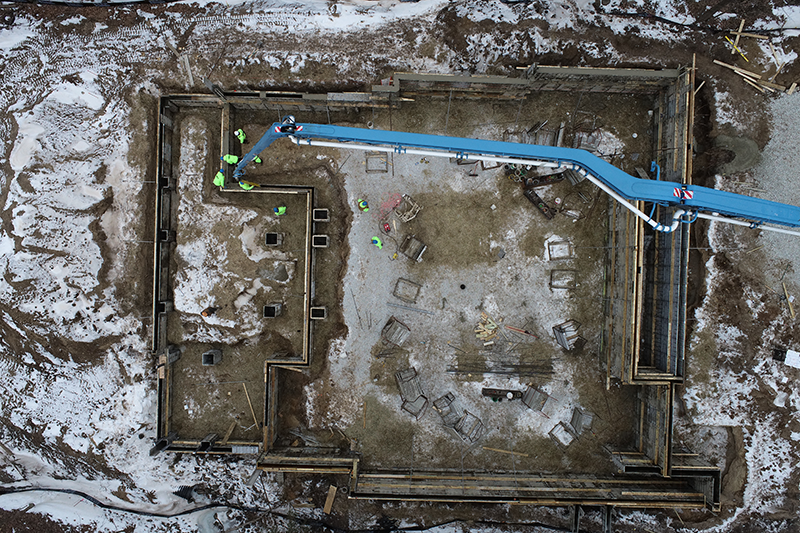
Tales of the Tape:
- Linear Feet of Wall: 614
- Square Feet: 4,370 (house) – 7,650 total (garage & porches)
- Yards of Concrete: 230
- Steel Reinforcement: 11,000 lbs.
- Wall Heights: 3′-4″ to 13’-0” (twelve heights)
- Wall Thickness: 10”, 12″ and 14”
This project had numerous steps in the footings due to soil conditions and its lakeside location along with taller than average wall heights. While mostly 10′ 0″ & 11′ 4″ walls, they reached as high as 13′-0″. Using modular aluminum forms, we were able to achieve this variety by stacking and using combinations of 5-ft , 4-ft, 2-ft, 6-ft, 8-ft and 9-ft forms. Given the prior experience on more complex jobs, we were able to participate in this project based on our reputation and deliver it with our attention to detail.
Among the complicated details, there was a dual-level back porch with one level for a hot tub and one level for seating. The wall detailing combined a stepping brick ledge along with a 16-in. deep floor joist interior ledge to facilitate a on-grade entrance for accessibility. The brick ledge stepped at 8-in., 1′-8″, 2′-8″, 3′-8″, 4′-8″, and 5′-8″). Finally, common to such large custom foundation structures, there were multiple, oversized window openings with treated wood bucks cast-in-place.
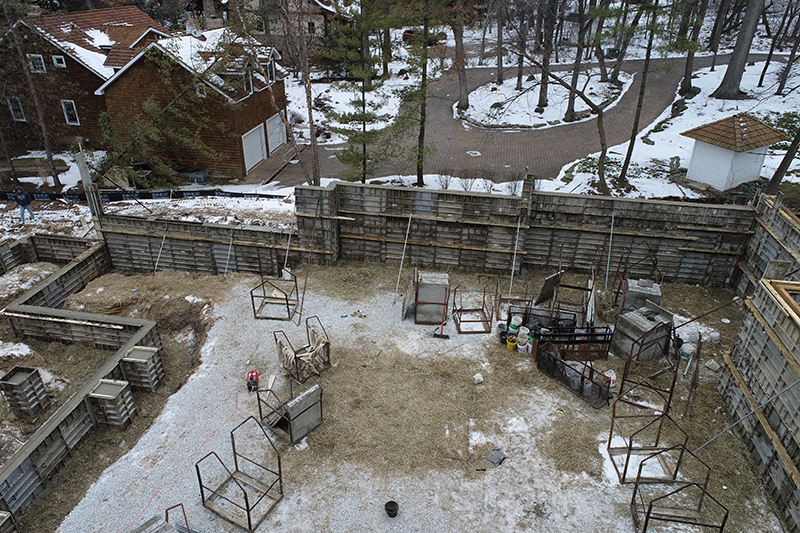
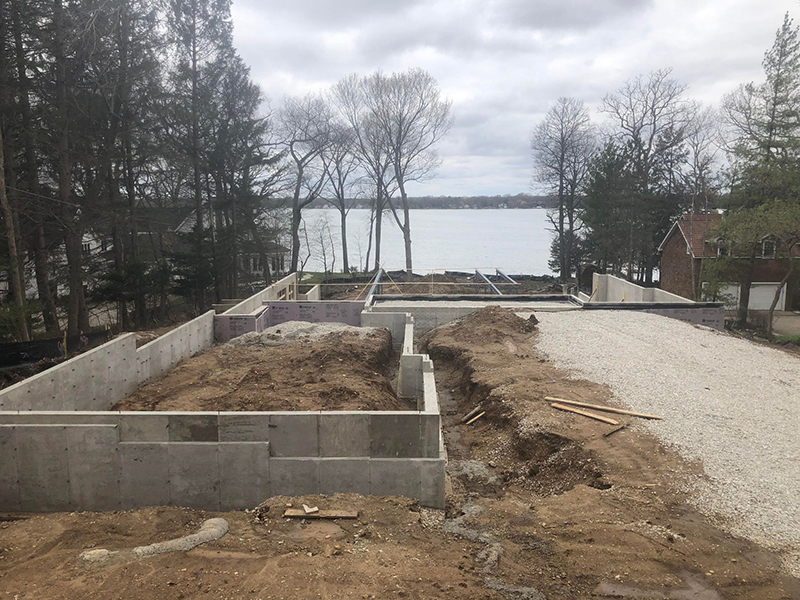
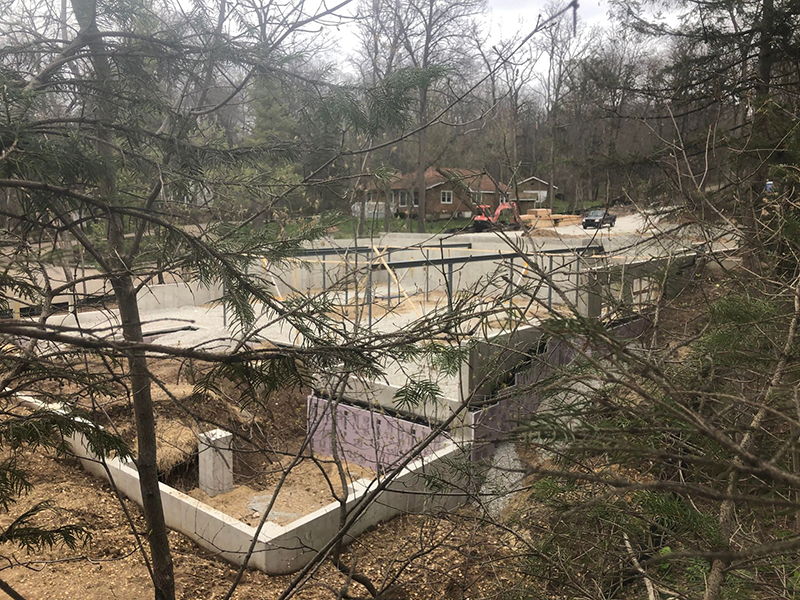
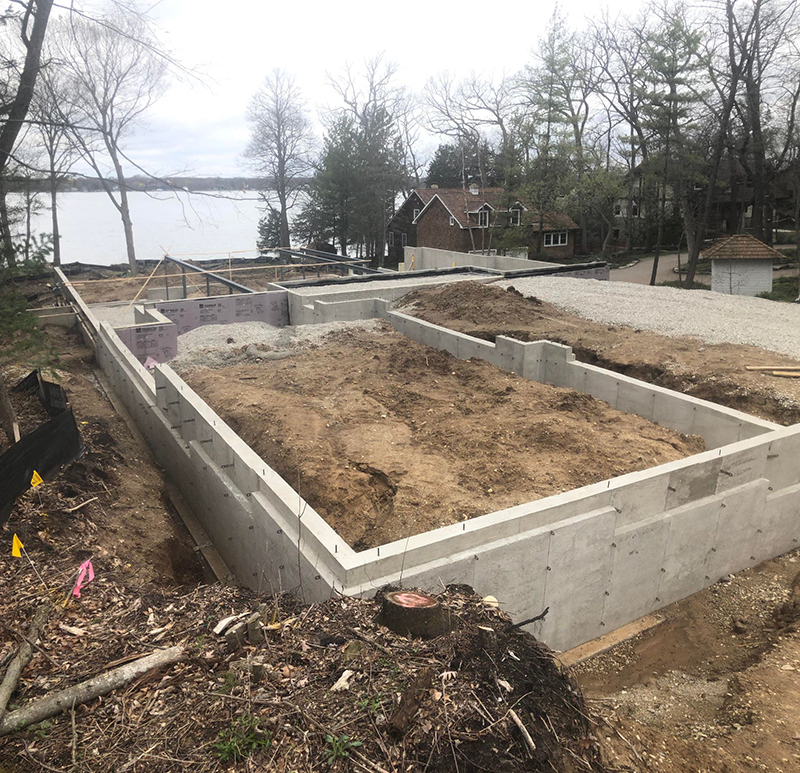
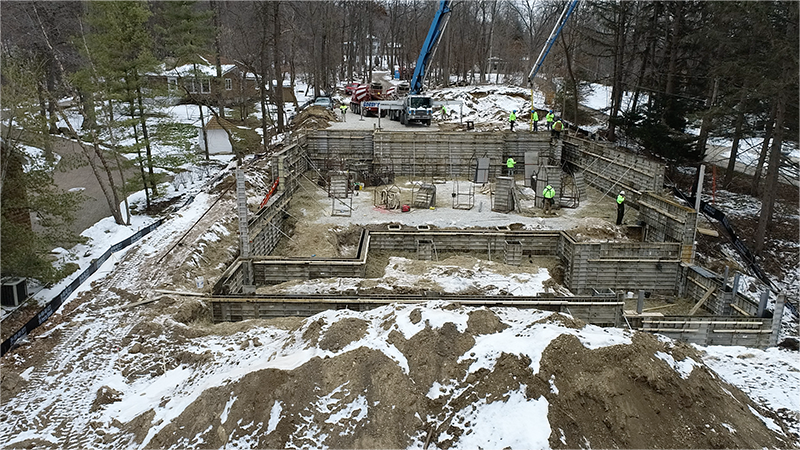
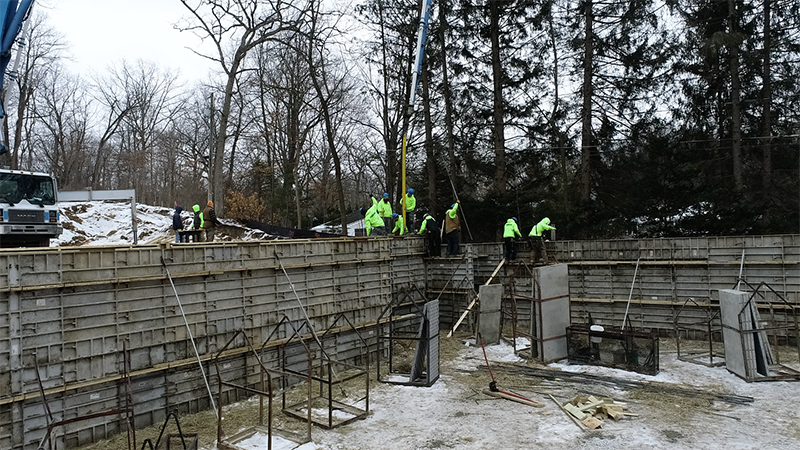
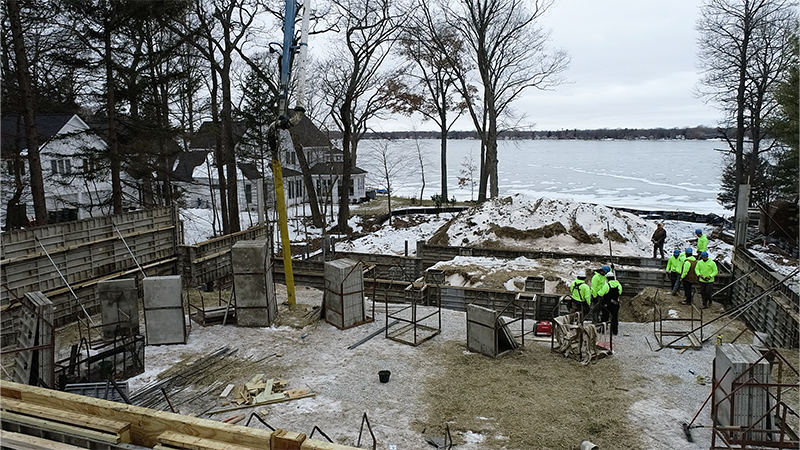
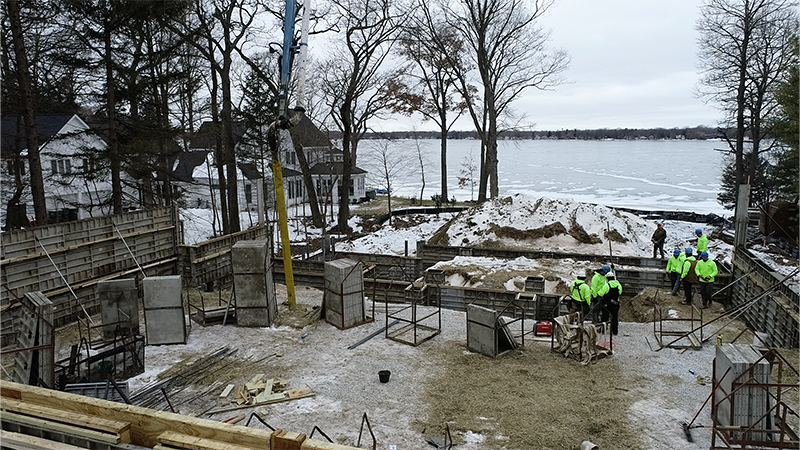
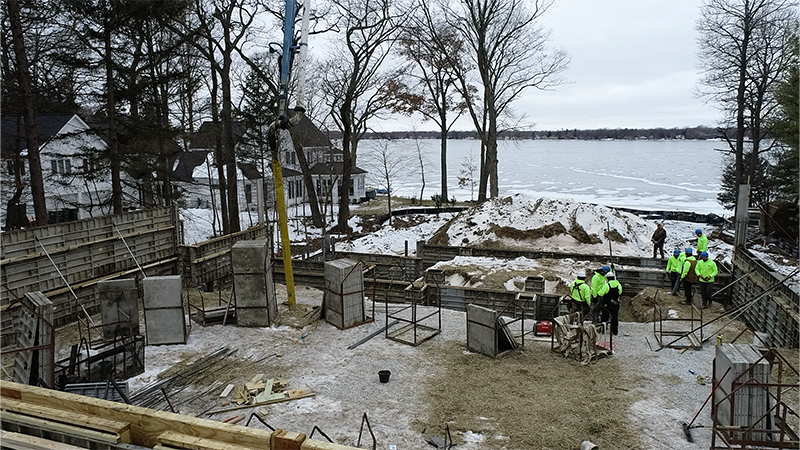
A phased approach to this project allowed our crews to work simultaneously on other projects with critical schedules. With the efficiency of our operations, all house footings were completed in two days and the walls in six days followed by the garage section with a day each for footings and walls, and finally the porch levels.
_________________________________________________________________________________
UNIQUE/SPECIAL PROJECTS: POOL FOUNDATION
CHAPIN CONCRETE CONTRACTORS INC.
River Bluff Pool Foundation | Chapin, South Carolina
Tales of the Tape:
- Linear Feet of Wall: 425
- Square Feet: 2,345
- Yards of Concrete: 325
- Steel Reinforcement: 40,000 lbs.
- Wall Heights: 1’-0” to 16’-0”
- Wall Thickness: 8” to 20”
- Excavation Mass: 580 cubic yards
- Backfill: 780 tons of #57 stone
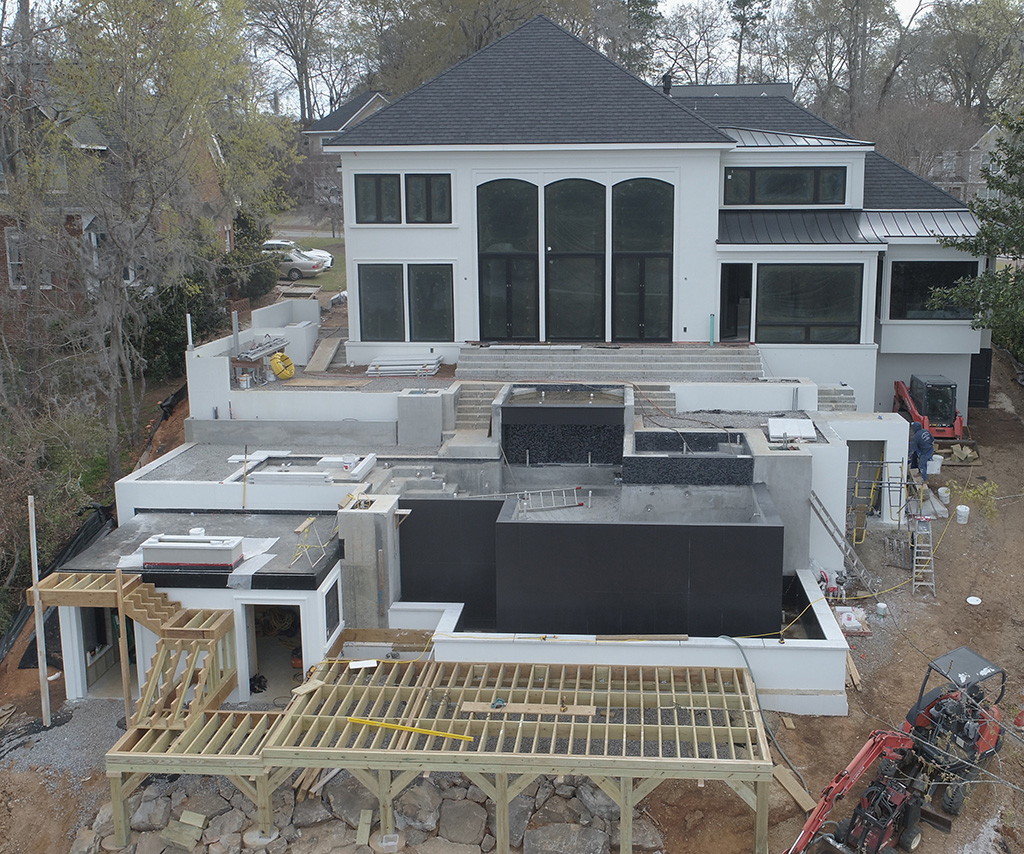
This project posed significant challenges not only from the complexity of the foundation work but also from the limited access and the extreme slopes we encountered. This project was constructed on a one-to-one slope. We managed to install a tremendous amount of foundation wall in a very small footprint. We met all the criteria for making a high-quality structure safely anchored into the slope—with zero incidents and virtually no rework or punch-list items to address at the end of the project.
We are extremely proud of all our efforts and the teamwork between our company, other
contractors, and the design professionals involved in this project. The project was so complex that an immense amount of the details had to be coordinated as we built the foundation. We spent hundreds of hours collaborating with everyone involved in the project. This was a once-in-a-career opportunity for our firm, and we are very pleased with our finished work. The success of this project is a testament to the hard work and dedication of our team.
_________________________________________________________________________________
ABOVE-GRADE CONCRETE HOME AWARD
TCB WALLS INC.
Nuvision Custom Homes | Melbourne, Florida
Tales of the Tape:
- Linear Feet of Wall: 301
- Square Feet: 4,217
- Yards of Concrete: 56
- Steel Reinforcement: 4,950 lbs. (bar) 7,560lbs. (Helix TSMR)
- Wall Heights: 10’-0”, 15-0” and 16’-9”
- Wall Thickness: 6” and 8”
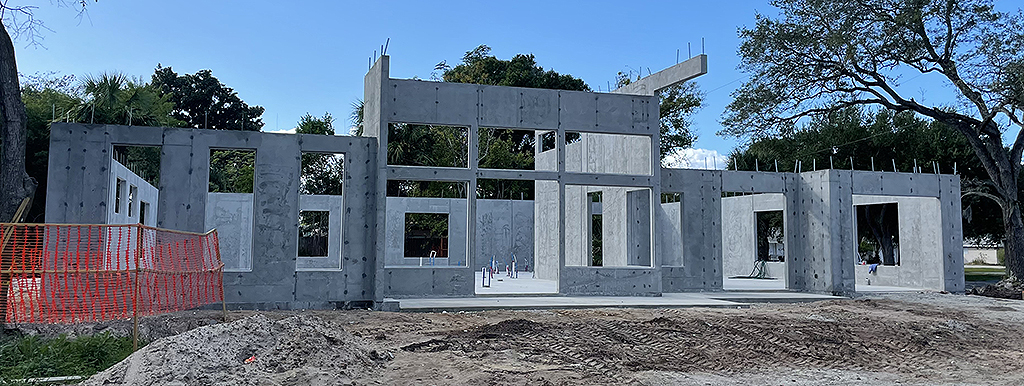
This project had a very busy front elevation that seemed to catch everyone’s eye once forms were removed. Many windows were incorporated in the design, resulting in some very thin beams along with a cantilevered beam for the front porch. The design resulted in a “floating roof” with no columns, which gives the finished home a very unique appearance.
While certainly not the largest project we completed during the year, it has a noticeable look, and it nicely features some of the options and character that can be incorporated into an above-grade cast-in-place concrete structure.
_________________________________________________________________________________
UNDER 2K SINGLE-FAMILY RESIDENTIAL FOUNDATION AWARD
O’RISKY EXCAVATING
DHL Cabin | Evansville, Indiana
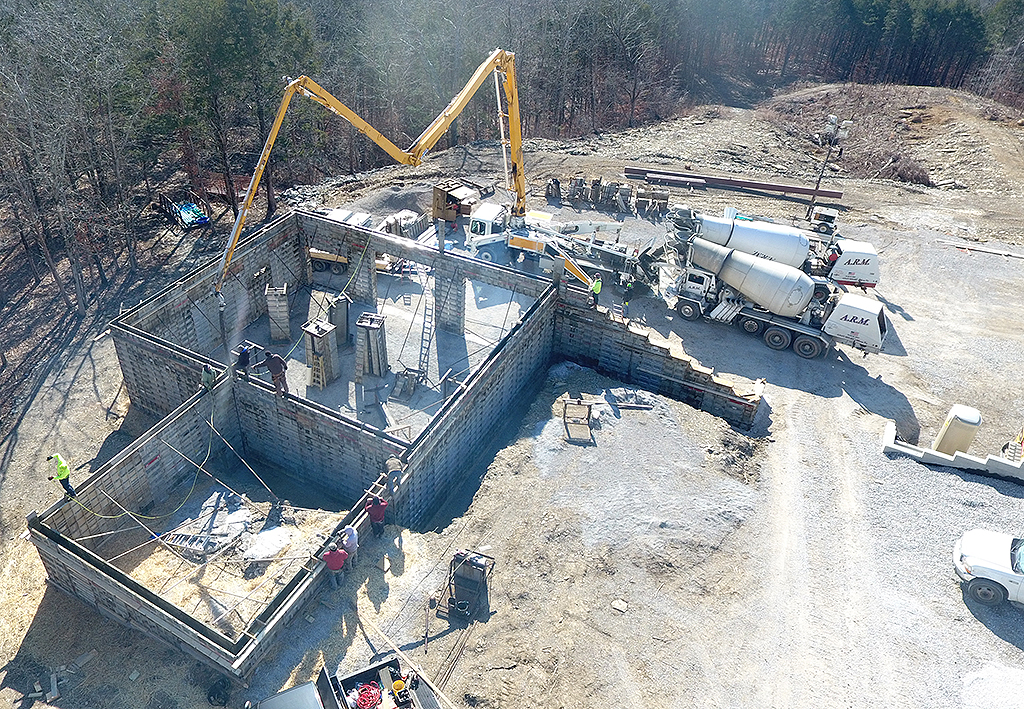
Tales of the Tape:
- Linear Feet of Wall: 300
- Square Feet: 1,920
- Yards of Concrete: 375
- Steel Reinforcement: 17,500 lbs.
- Wall Heights: 14’-0”
- Wall Thickness: 10”
- Steel Beams: 10,000 lbs.
- Excavation Mass: 10,000+ cubic yards
- Backfill: 5,000 lbs. of stone
This project, though small, had many challenges throughout. The difficult, rough terrain created multiple challenges, including a steep elevation change required to access the site from the county road. This made it necessary for us to produce a temporary concrete road with a rough, “boat ramp” finish to provide enough traction for construction equipment access.
The height of walls and the location were designed to maximize the view of the lake. The steep grade required multiple footing steps in the garage specifically. There was additional steel structural design to support hollow-core precast panels and hot-tub structure steel frame.
Our work gained the respect of local contractors and businesses who have worked and continue to work on this project, and this respect has been reciprocated.
_________________________________________________________________________________
MULTI-FAMILY/TOWNHOME AWARD
TCB WALLS INC.
Elbow Creek Townhomes | Melbourne, Florida
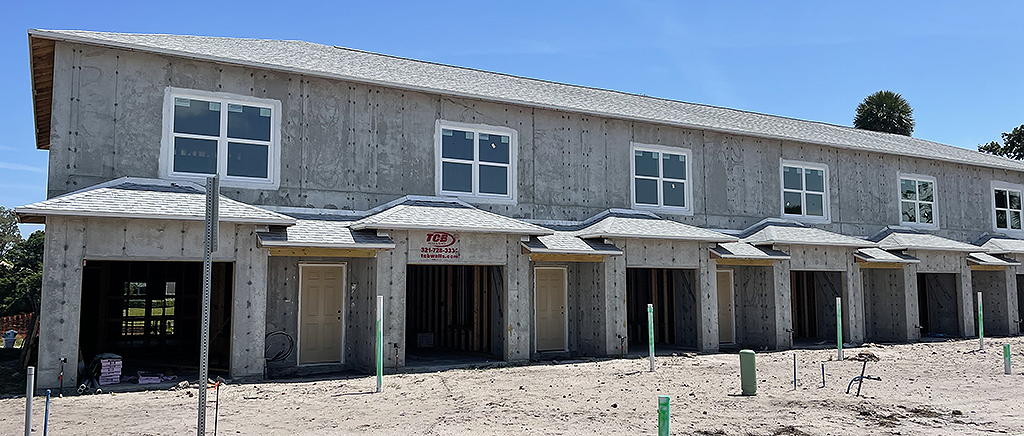
Tales of the Tape:
- Linear Feet of Wall: 3,120
- Yards of Concrete: 1,032
- Steel Reinforcement: 74,000 lbs. (bar)
- 11,127 lbs. (Helix TSMR)
- Wall Heights: 9’-0” and 20-0”
- Wall Thickness: 6” and 8”
This project is a great example of all that you can do with poured walls. We went from pouring a 9-foot-tall retaining wall to pouring 20-foot-tall townhome walls above it using all the same men and equipment. We were able to give this customer a much stronger structural frame than they could have with any other product, and we ended up with a very satisfied owner and general contractor, which is always our goal.
Access to this site was very limited with a river all along one side. The retaining wall was a priority for building up the rest of the property and supporting two of the seven-unit townhomes. They required 7-foot-wide footings with double-mat steel grids of #5 and #6 along and 48-inch dowels at 12-inch o.c.
_________________________________________________________________________________
UNIQUE/SPECIAL PROJECTS: RETROFIT/RENOVATION
TALPEY CONSTRUCTION
Gengras Cottage | Old Saybrook, Connecticut
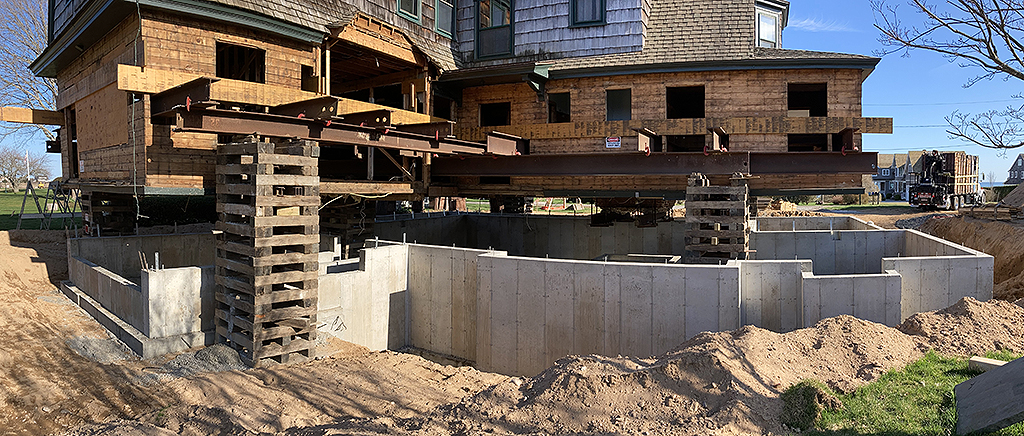
Tales of the Tape:
- Linear Feet of Wall: 400
- Square Feet: 3,000
- Yards of Concrete: 120
- Steel Reinforcement: 4,000 lbs.
- Wall Heights: 3’-10”, 5’-6”, and 8’-10”
- Wall Thickness: 8” and 10”
This project consisted of making a new foundation under a historic home that would also receive an addition. Footings were located off the existing house once it was jacked up. The new wing was added to the left side, and a big wraparound front porch and garage stepped up from the main house. Additionally, we had footings for column pads and a fireplace that could only be located in the field to match existing condition.
Working underneath a house is always tough. The crib piles are always closer than you’d like, the pours take extra planning because they take longer, and you are locked into whatever dimensions you pull off the existing house. This house also had a center fireplace that needed a foundation up underneath it—high enough for us to be able to make up the difference with a structural slab, low enough for the house lifter to be able to lower the structure without interference.
_________________________________________________________________________________
5K-15K SINGLE-FAMILY RESIDENTIAL FOUNDATION AWARD
WEBER CONCRETE CONSTRUCTION
Hussey Lane | Zionsville, Indiana
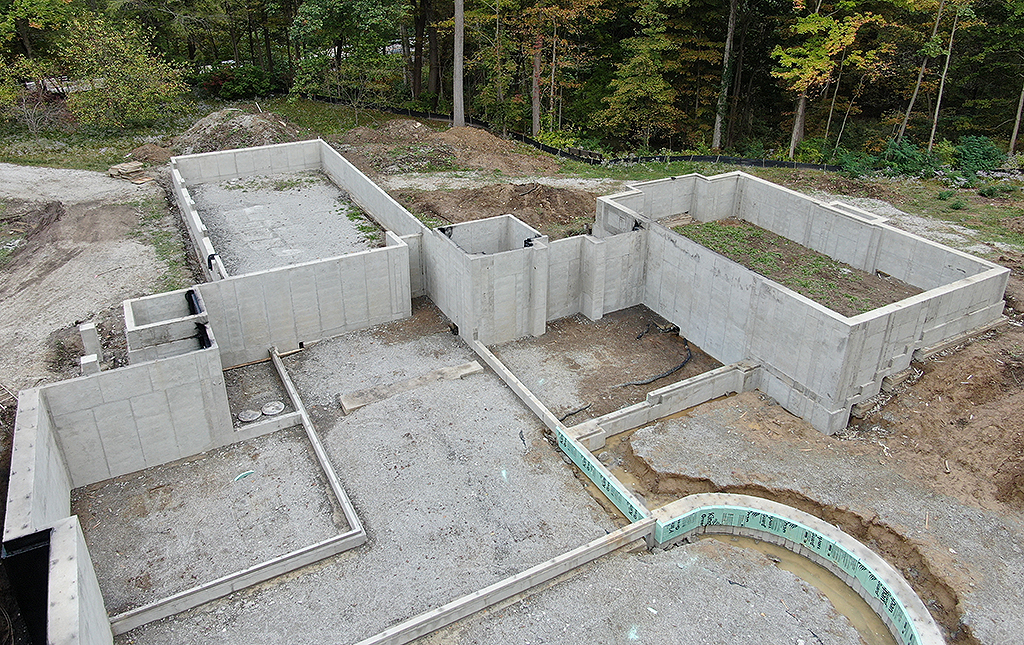
Tales of the Tape:
- Linear Feet of Wall: 2,672
- Square Feet: 8,569
- Yards of Concrete: 400
- Steel Reinforcement: 31,980 lbs.
- Wall Heights: 2’-0” to 13’-0” (six total)
- Wall Thickness: 8” to 22” (six total)
- Footing Sizes: 22” by 12” and 48” by 12”
Only a few homes are of estate caliber, and this was one of them. All big houses use large footings, unusual wall proportions, and special specifications for concrete. This was no different from those in other parts of the country, but very unique for our market. The beauty of this house, this estate, set on this lot with all the special features and finishes makes this one of our finest constructions.
The complexity of the project necessitated total organization and focus to ensure each measurement was exact. Our crews double- and triple-checked throughout the project and worked with the client’s engineer and architect throughout construction. This close attention began at the start of the project, where we had three people involved in estimating and detailing, checking each other’s work.
_________________________________________________________________________________
OVERALL GRAND PROJECT: OVER-15K SINGLE-FAMILY RESIDENTIAL FOUNDATION AWARD
SCW FOOTINGS & FOUNDATIONS
Sorensen Residence | Salt Lake City, Utah
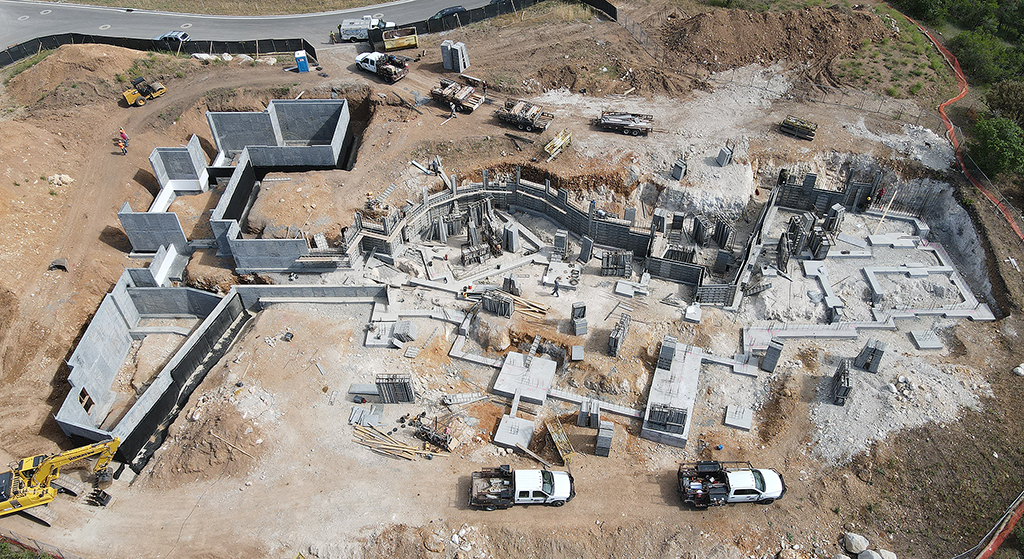
Tales of the Tape:
- Linear Feet of Wall: 1,274
- Square Feet: 19,943
- Yards of Concrete: 768
- Steel Reinforcement: 33,066 lbs.
- Wall Heights: 4’-0” to 30’-0” (House)
- 3’-0” to 15’-0” (Garage)
- Wall Thickness: 8”, 10”, and 12”
The massive size of this project meant that we needed to pour the footings and foundations in several sections to accommodate the reach of the pump as well as our available forms to build. The layout spans 275 feet across and consists of 1,144 linear feet of foundation wall. There was a total of 82 in-wall rebar cages/columns to receive post-installed embeds. There was 175 linear feet of shelved foundation to accept a precast floor system above.
The job included 25 separate footing steps, totaling 57 feet in vertical grade changes.
Continuous footing sizes ranged from 24 to 48 inches wide and 12 inches thick with most pad footing sizes ranging from 48 to 156 square inches and 12 to 25 inches thick. One pad footing was 29 feet by 10 feet 6 inches, and although originally designed to be 20 inches thick, site conditions required this to be constructed to 36 inches thick.
PROYECTOS DEL AÑO DE 2022
English | Translation Provided by the CFA
ESTABLECER UNA CULTURA DE ORGULLO
El panorama norteamericano continúa ocultando las instalaciones de concreto más creativas y desafiantes cada año. Ahora en su 23er año, este programa continúa con su visión de dar voz y expresión a las grandes obras terminadas cada día en todos los mercados que sirven, apoyan y establecen el arte y la ciencia de la construcción residencial. Las compañías en toda la membresía han expresado el valor de tener proyectos que presentaron para un programa de premios. Reconoce a las cuadrillas involucradas e infunde orgullo en ellas por su logro. Cuando son seleccionados como uno de los proyectos singulares en una clase dada, estas compañías reconocen la importancia de conmemorar sus logros y compartir su agradecimiento con los clientes y colaboradores que confiaron en ellos para cumplir con el reto.
A principios de 2022, los miembros de la Asociación fueron una vez más invitados a considerar proyectos de sus carteras que sentían que representaban una mano de obra y calidad de construcción excepcionales, un logro inusual, una complejidad del proyecto e integración de tecnología progresiva para establecer un nuevo estándar. Estos criterios a menudo no se consideran en una industria donde el producto terminado es rápidamente cubierto a medida que se construye sobre él. Sin embargo, las compañías de vanguardia entienden el valor de mirar de cerca a fin de reconocer las soluciones de calidad producidas en el campo para el trabajo solicitado por el cliente, especificado por diseñadores y encargado por los constructores.
¿Qué se necesita para presentar un proyecto? La consideración principal implica la planificación, ya que se necesita la habilidad de describir los requisitos y los resultados, así como la documentación fotográfica o de video del desempeño. Con esto en mente, cualquier compañía puede aprovechar esta oportunidad de avanzar la cultura de su compañía y contribuir al avance de la industria.
Así que, sin más demora, la Concrete Foundations Association presenta los principales logros en proyectos de concreto de 2022, los Proyectos del Año de la CFA, que fueron entregados durante la #CFACON22, que se celebró en Boston, Massachusetts este pasado julio. Algunos son ganadores conocidos y algunos son nuevos lo que demuestra una vez más el panorama diverso de los tipos, tamaños, complejidad y experiencias de los proyectos.
_________________________________________________________________________________
PREMIO DE CIMIENTOS RESIDENCIALES EN CASAS UNIFAMILIARES DE 2 MIL A 5 MIL
SCW FOOTINGS & FOUNDATIONS
Whispering Hawk | Salt Lake City, Utah
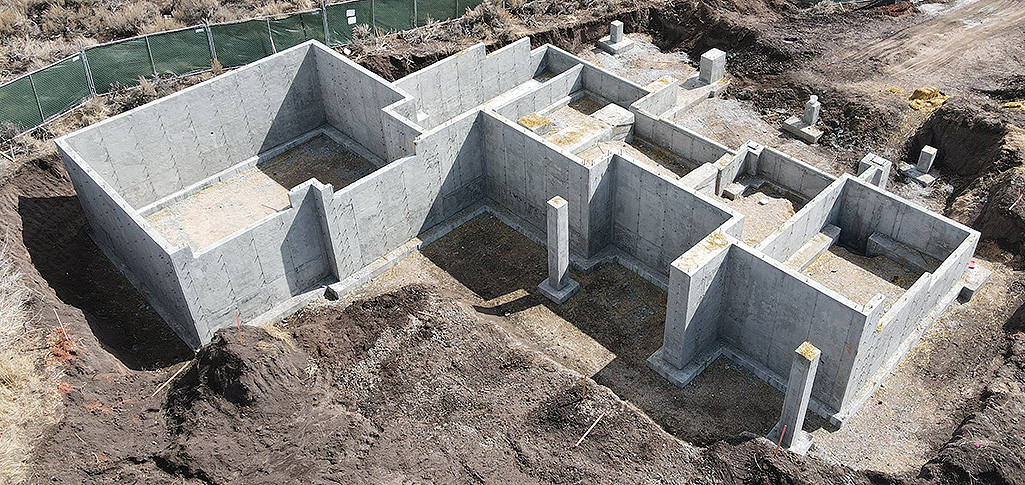
Datos del proyecto:
- Pies lineales de muro: 318
- Pies cuadrados: 4,120
- Yardas de concreto: 133
- Refuerzo de acero: 11,185 libras
- Alturas de muros: 4’-0” a 11’-0”
- Espesor de muros: 8” y 24”
Creemos que el éxito de cada proyecto comienza con el lanzamiento y la licitación. Nuestros estimadores y dibujantes de CAD contribuyen horas para asegurar la precisión y la rentabilidad para nosotros y el contratista. Ellos calculan todos los detalles y los programas de barras de refuerzo y simplifican los planes para la comunicación hacia y desde la obra. Los proyectos de este tipo pueden tardar semanas para terminarlos y el programa es fundamental para asegurar que no se descuiden otros trabajos.
El control y el aseguramiento de la calidad también son muy importantes. Los muros de 24 pulgadas de espesor y 11 pies de altura representan una mayor amenaza de fallas integrales que la mayoría de nuestros muros comunes. Las cuadrillas de campo verifican todos los tirantes, pasadores y cuñas antes de cualquier colocación del concreto para evitar fallas.
_________________________________________________________________________________
PROYECTOS SINGULARES/ESPECIALES: CIMIENTO PARA PISCINA
CHAPIN CONCRETE CONTRACTORS INC.
River Bluff Pool Foundation | Chapin, South Carolina
Datos del proyecto:
- Pies lineales de muro: 425
- Pies cuadrados: 2,345
- Yardas de concreto: 325
- Refuerzo de acero: 40,000 libras
- Alturas de muros: 1’-0” a 16’-0”
- Espesor de muros: 8” a 20”
- Masa de excavación: 580 yardas cúbicas
- Relleno: 780 toneladas de piedra #57
Este proyecto representó retos considerables no solo debido a la complejidad del trabajo de los cimientos, sino también debido al acceso limitado y las pendientes extremas que encontramos. Este proyecto se construyó en una pendiente uno a uno. Logramos instalar una tremenda cantidad de muros de cimientos en una huella muy pequeña. Cumplimos con todos los criterios para producir una estructura de alta calidad anclada con seguridad en la pendiente, con cero incidentes y prácticamente ningún retrabajo o elementos en la lista de pendientes para abordar al final del proyecto.
Estamos extremadamente orgullosos de todos nuestros esfuerzos y el trabajo en equipo entre nuestra compañía, otros contratistas y profesionales de diseño involucrados en este proyecto. El proyecto era tan complejo que una cantidad inmensa de los detalles tuvo que coordinarse a medida que construíamos la cimentación. Pasamos cientos de horas colaborando con todos los involucrados en el proyecto. Esto fue una oportunidad de una sola vez en la vida profesional para nuestra empresa y estamos muy complacidos con nuestro trabajo terminado. El éxito de este proyecto es testigo del arduo trabajo y dedicación de nuestro equipo.
_________________________________________________________________________________
PREMIO DE LA CASA DE CONCRETO POR ENCIMA DEL NIVEL DEL SUELO
TCB WALLS INC.
Nuvision Custom Homes | Melbourne, Florida
Datos del proyecto:
- Pies lineales de muro: 301
- Pies cuadrados: 4,217
- Yardas de concreto: 56
- Refuerzo de acero: 4,950 libras (barra)
- 7,560 libras (Helix TSMR)
- Alturas de muros: 10’-0”, 15-0” y 16’-9”
- Espesor de muros: 6” y 8”
Este proyecto tuvo una elevación frontal muy intensa que pareció atraer la atención de todos una vez que se quitaron los moldes. Se incorporaron muchas ventanas en el diseño, que resultó en algunas vigas muy delgadas a lo largo con una viga voladiza en el porche delantero. El diseñó resultó en un “techo flotante” sin columnas, que le aporta a la casa terminada una apariencia muy singular.
Aunque ciertamente no es el proyecto más grande que hemos completado durante este año, tiene una apariencia destacada e incluye algunas bellas opciones y carácter que pueden incorporarse en una estructura de concreto de colado en el lugar por encima del nivel del suelo.
_________________________________________________________________________________
PREMIO DE CIMIENTOS RESIDENCIALES EN CASAS UNIFAMILIARES MENORES A 2 MIL
O’RISKY EXCAVATING
DHL Cabin | Evansville, Indiana
Datos del proyecto:
- Pies lineales de muro: 300
- Pies cuadrados: 1,920
- Yardas de concreto: 375
- Refuerzo de acero: 17,500 libras
- Alturas de muros: 14’-0”
- Espesor de muros: 10”
- Vigas de acero: 10,000 libras
- Masa de excavación: Más de 10,000 yardas cúbicas
- Relleno: 5,000 libras de piedra
Este proyecto, aunque pequeño, tuvo muchos retos a lo largo de su construcción. El terreno difícil y escabroso creó varios retos, incluidos un cambio de elevación empinada necesaria para acceder al sitio desde la carretera rural. Esto requirió crear una carretera de concreto temporal con un acabado áspero “para rampa de embarcación” a fin de proporcionar suficiente tracción para el acceso del equipo de construcción.
La altura de los muros y la ubicación se diseñaron para maximizar la vista del lago. La pendiente empinada requirió varios escalones de zapatas específicamente en el garaje. Hubo un diseño estructural de acero adicional para sostener los paneles prefabricados huecos y el marco de acero estructural para el jacuzzi.
Nuestro trabajo se ganó el respeto de los contratistas y negocios locales que han trabajado
y continúan trabajando en este proyecto, y este respeto ha sido recíproco.
_________________________________________________________________________________
PREMIO DE CASA MULTIFAMILIAR/VIVIENDA EN SERIE
TCB WALLS INC.
Elbow Creek Townhomes | Melbourne, Florida
Datos del proyecto:
- Pies lineales de muro: 3,120
- Yardas de concreto: 1,032
- Refuerzo de acero: 74,000 libras (barra)
- 11,127 libras (Helix TSMR)
- Alturas de muros: 9’-0” y 20-0”
- Espesor de muros: 6” y 8”
Este proyecto es un gran ejemplo de todo lo que se puede hacer con muros vertidos. Pasamos de verter un muro de retención de 9 pies de altura a verter muros para viviendas en serie de 20 pies de altura por encima de ella usando los mismos trabajadores y equipo. Pudimos proporcionar a este cliente un marco estructural mucho más resistente de lo que hubieran podido obtener con cualquier otro producto y terminamos con un propietario y contratista general muy satisfechos, lo cual siempre es nuestro objetivo.
El acceso a este sitio era muy limitado debido a un río que corría a lo largo de uno de los lados. El muro de retención era una prioridad para construir el resto de la propiedad y sostener dos de las viviendas en serie de siete unidades. Estas necesitaban zapatas de 7 pies de ancho con mallas de acero de doble capa de #5 y #6 a lo largo y espigas de 48 pulgadas a 12 pulgadas desde el centro.
_________________________________________________________________________________
PROYECTOS SINGULARES/ESPECIALES: REDAPTACIÓN/RENOVACIÓN
TALPEY CONSTRUCTION
Gengras Cottage | Old Saybrook, Connecticut
Datos del proyecto:
- Pies lineales de muro: 400
- Pies cuadrados: 3,000
- Yardas de concreto: 120
- Refuerzo de acero: 4,000 libras
- Alturas de muros: 3’-10”, 5’-6” y 8’-10”
- Espesor de muros: 8” y 10”
Este proyecto consistió en construir una nueva cimentación debajo de una casa histórica que también sería ampliada. Las zapatas se ubicaron justo afuera de la casa existente una vez que se elevó. La nueva ala se agregó al lado izquierdo y un porche grande frontal envolvente y garaje se colocaron de manera escalonada desde la casa principal. Además, colocamos zapatas para las almohadillas de columnas y una chimenea que solo podía ubicarse en el campo para que coincidiera con las condiciones existentes.
Trabajar debajo de la casa siempre es difícil. Los depósitos siempre están más cerca de lo que usted cree, los vertidos requieren de planificación adicional porque toman más tiempo y usted está restringido a las dimensiones que obtuvo de la casa existente. Esta casa también tenía un chimenea central que necesitaba una cimentación debajo de ella, con la altura suficiente para que nosotros pudiéramos cubrir la diferencia con una losa estructural, suficientemente baja para que el levantador de la casa pudiera bajar la estructura sin interferencia.
_________________________________________________________________________________
PREMIO DE CIMIENTOS RESIDENCIALES EN CASAS UNIFAMILIARES DE 5 MIL A 15 MIL
WEBER CONCRETE CONSTRUCTION
Hussey Lane | Zionsville, Indiana
Datos del proyecto:
- Pies lineales de muro: 2,672
- Pies cuadrados: 8,569
- Yardas de concreto: 400
- Refuerzo de acero: 31,980 libras
- Alturas de muros: 2’-0” a 13’-0” (seis en total)
- Espesor de muros: 8” a 22” (seis en total)
- Tamaños de las zapatas: 22” por 12” y 48” por 12”
Solo algunas casas son de calibre de una finca y esta era una de ellas. Todas las casas grandes usan zapatas grandes, proporciones inusuales de muros y especificaciones especiales para el concreto. Esta no fue diferente de aquellas en otras partes del país, pero muy singular para nuestro mercado. La belleza de esta casa, esta finca, establecida en este terreno con todas las características y acabados especiales hace que sea una de nuestras mejores construcciones.
La complejidad del proyecto necesitó una organización y enfoque completos para asegurar que cada medida fuera exacta. Nuestras cuadrillas verificaron las medidas dos y tres veces a lo largo de proyecto y trabajaron con el ingeniero y el arquitecto del cliente durante toda la construcción. Esta atención estrecha comenzó al inicio del proyecto, donde tuvimos a tres personas involucradas en la estimación y los detalles que revisaban el trabajo unos de los otros.
_________________________________________________________________________________
PROYECTO GRANDE GENERAL: PREMIO DE CIMIENTOS RESIDENCIALES EN CASAS UNIFAMILIARES DE MÁS DE 15 MIL
SCW FOOTINGS & FOUNDATIONS
Sorensen Residence | Salt Lake City, Utah
Datos del proyecto:
- Pies lineales de muro: 1,274
- Pies cuadrados: 19,943
- Yardas de concreto: 768
- Refuerzo de acero: 33,066 libras
- Alturas de muros: 4’-0” a 30’-0” (casa)
- 3’-0” a 15’-0” (garaje)
- Espesor de muros: 8”, 10” y 12”
El tamaño enorme de este proyecto significó que necesitábamos verter las zapatas y cimientos en varias secciones para adaptar el alcance de la bomba, así como nuestros moldes disponibles para construir. La disposición se extiende a 275 pies a lo largo y consiste en 1,144 pies lineales de muros de cimientos. Hubo un total de 82 columnas/jaulas de barras de refuerzo dentro de muros para alojar las piezas empotradas después de la instalación. Hubo 175 pies lineales de cimientos almacenados para alojar el sistema de piso prefabricado en la parte superior.
El trabajo incluyó 25 escalones de zapatas, para un total de 57 pies en cambios de grado vertical. Los tamaños de las zapatas continuas variaron de 24 a 48 pulgadas de ancho y 12 pulgadas de espesor y la mayoría de los tamaños de las zapatas variaron de 48 a 156 pulgadas cuadradas y 12 a 25 pulgadas de espesor. Una zapata de almohadilla midió 29 pies por 10 pies 6 pulgadas y aunque fue diseñada originalmente para medir 20 pulgadas de espesor, las condiciones del sitio requirieron que se construyera para medir 36 pulgadas de espesor.
Concrete Foundations Association Drives Workforce Development as Advocate for the Trades
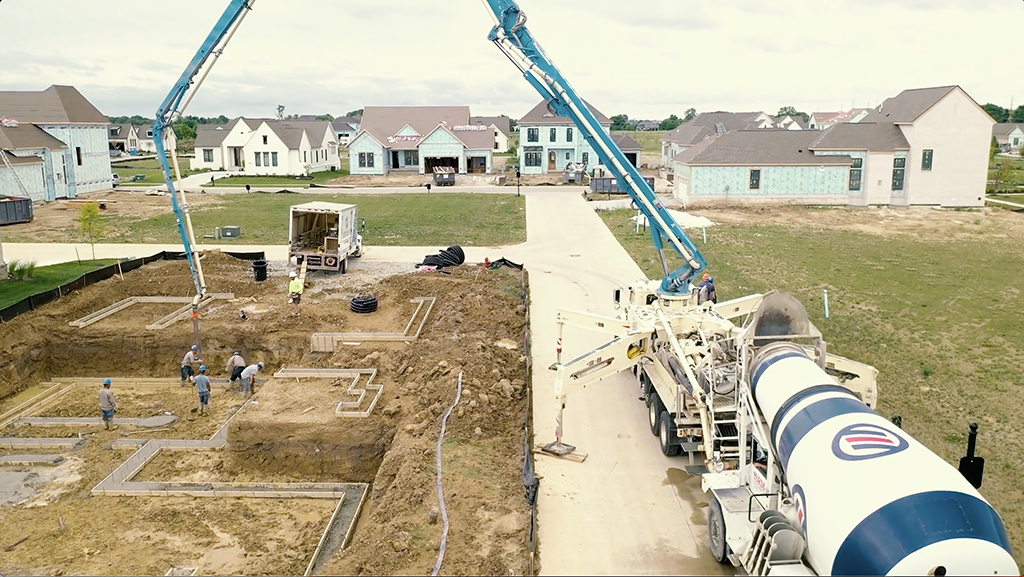
The Concrete Foundations Association (CFA) is excited to announce the completion of a national campaign designed to promote workforce development and career opportunities in the concrete construction industry.
CFA worked with Viewpoint, a unique educational platform, to develop the campaign.
For almost two decades the development team behind ViewPoint, with host Dennis Quaid, has been identifying key topics and issues found throughout the corporate and organization landscape that can be elevated to public awareness. Through a distribution model for Public Television, features are seen across the breadth of the U.S. television market.
“The Concrete Foundations Association has been developing a strategic approach to education and awareness of the needs and opportunities found in the trades,” states CFA Executive Director James Baty. “Many of our members have ongoing success building relationships and efforts for local and regional education outreach. This position became a strategic priority in 2020 to nationally recognize the great opportunities for careers in concrete construction. We are very pleased with the professionalism we have achieved with this ViewPoint partnership.”
The program has produced a variety of resources that span from public awareness to member promotion development kits. Beginning in November 2022, these products include:
- A CFA commercial to promote awareness of the Association and advocacy provided to be seen on national networks such as Fox Business News outwardly to an estimated 50 million households.
- A corporate profile awareness video to be seen on the Association’s website, Vimeo channel, World of Concrete Booth and promoted for use in local markets.
- A ViewPoint feature to begin airing on Public Television stations during programming breaks in December 2022 through the Fall of 2023. View this video here.
- Members-only access to a Promotion Development Kit for a customizable workforce development video, draft press release and education outreach strategies.
“This project was an exciting and engaging opportunity for the CFA,” states Jason Ells, Executive Vice President for Custom Concrete of Westfield, Ind. and current president for the Association. “Featuring key leaders in the industry, Association leaders and successes stories from the workforce, we were able to produce a message that some of the best careers await individuals that truly want to own their future and deliver it through a combination of working hard and alignment of their interest and skill set.”
Interested persons can learn more about the Concrete Foundations Association – ViewPoint partnership by visiting www.cfaconcretepros.org or looking for Concrete Foundations Association on Vimeo. Members can log in to their online account and access information about the Promotion Development Kit including the range of engagement options. For more information about this and other programs offered by the Association to its members, contact Skye Kelley at skelley@cfaconcretepros.org or by phone at 319-895-6940.