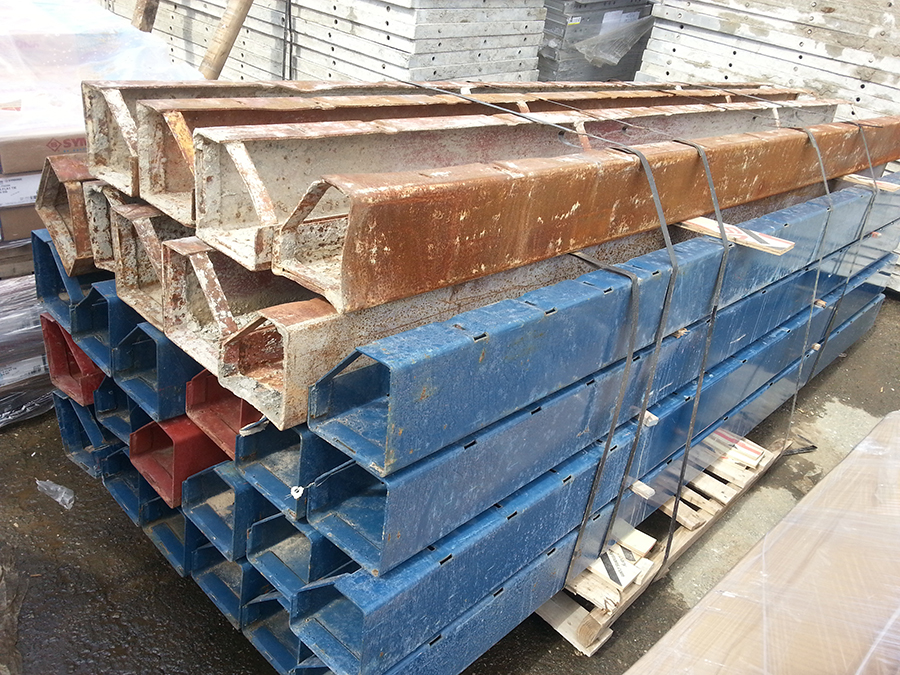
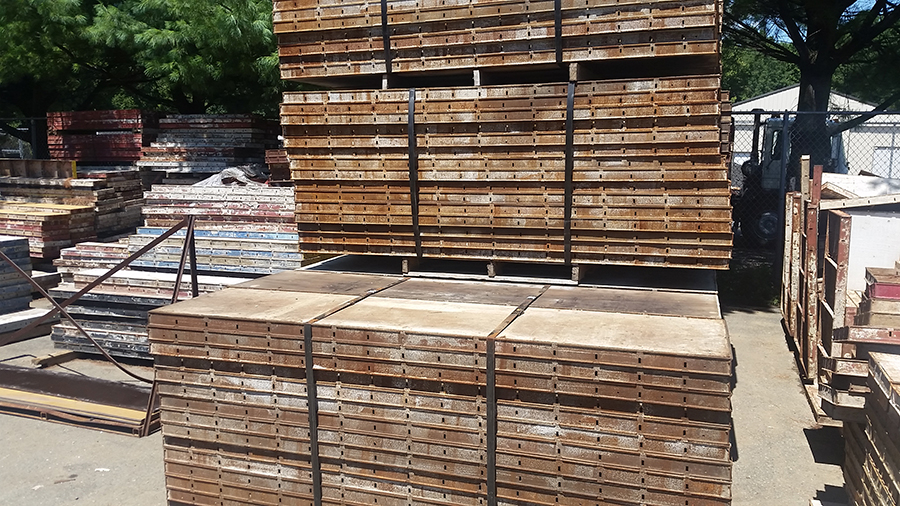
For Sale: Used Steel-Ply Forms
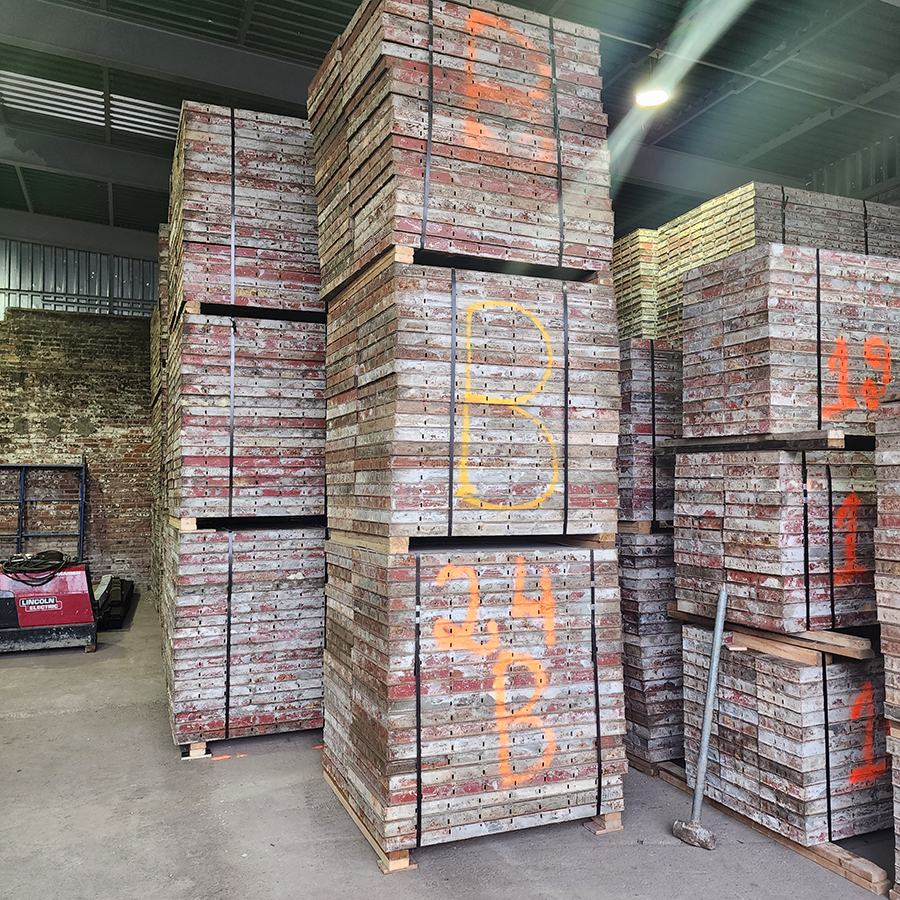
A CFA supplier member is offering a complete set of used 24″ x 8′-0″ steel ply. Total count over 500 forms along with fillers and corners.
Gratitude and a Sense of Accomplishment

Jason Ells Custom Concrete Company Inc. jasone@customconcrete.com
As I pen this farewell letter, it is with a heart full of gratitude and a sense of accomplishment that I reflect on my two years serving as your president. These past two years have been an incredible journey, marked by significant milestones, collaborative efforts, and shared triumphs.
One of the initiatives I am most fond of is reestablishing the executive retreats. These retreats allow us to step away from our day-to-day operations and spend quality time at various members’ places of work. These gatherings foster an environment where we can learn from each other, share best practices, and grow as companies and as a more cohesive Association. The insights and camaraderie we gain at these retreats prove invaluable, reinforcing our commitment to excellence and innovation within our industry.
Another significant accomplishment is conducting our first-ever 360 review at the board level. This comprehensive review allows us to gain a better understanding of our performance, strengths, and areas for improvement. The feedback gathered is instrumental in guiding our strategic focus and ensuring that we are continually aligning our efforts with the needs and expectations of our members. This initiative sets a new standard for accountability and growth within our leadership team.
We also undertook the ambitious project of revamping our website and member management system. This overhaul was aimed at enhancing user experience, improving accessibility, and providing more streamlined and efficient services to our members. The new website is now not only more visually appealing but also more functional, ensuring that our members have easy access to resources, updates, and networking opportunities. The updated member management system has simplified administrative processes, allowing us to focus more on delivering value to our community.
A highlight of my tenure is the launch of our Golden Tie Program. This initiative is designed to recognize companies and individuals who connect potential members to our association through warm introductions, referrals, and recommendations. Our current members are our best source for building our membership base, and this program celebrates their outstanding contributions. Celebrating the first award recipient at last year’s convention was a proud moment, and I look forward to seeing this program continue to honor excellence and inspire future leaders.
None of these accomplishments would have been possible without the unwavering support and dedication of our incredible staff and board members. Their hard work, passion, and commitment have been the driving force behind our successes. I am deeply grateful for the opportunity to have worked alongside such a talented and devoted team. Together, we have laid a strong foundation for continued growth and innovation.
As I step down from my role, I am filled with optimism for the future of our association. It is my great pleasure to welcome Sean Smith of MPW Construction Services as the incoming president. Sean is a second-generation leader of his business and a second-generation president of our board, bringing a wealth of experience, vision, and passion to this role. I have no doubt that under his leadership, our association will continue to thrive and reach new heights.
Thank you once again for the honor of serving as your president. I look forward to supporting Sean and witnessing the continued success of the Concrete Foundations Association.
Warm regards,
Jason Ells
Outgoing President
Concrete Foundations Association
It is Hard to Believe

James Baty jbaty@cfaconcretepros.org
June is here and with it a rush of activity in most of your businesses and the CFA. June is the last month of our fiscal year. It is the last month of significant work to get CFACON24 right. It is also the first true month of summer and the myriad of conflicts surrounding key conversations that will lead to and produce CFA’s future vision. Perhaps you might rationalize similar challenges occurring in your own businesses. Though the details may be different, what we all likely have in common is the feeling that it’s hard to believe we are here.
Reflecting on the past year I am overwhelmed with gratitude for and pride in our CFA community. This Spring we hosted the latest Executive Retreat. Modern Foundations and Bartley Corp, two of the longest tenured CFA members, played enormous roles in the framework that led to the retreat’s success. You’ll see some of the evidence of their great work on page __ in this issue or you can watch the recap video here: https://bit.ly/3UP3kzq. We entertained the new ACI President, Michael Paul, during our Board meeting at the impressive and new ACI Resource Center in Maryland. Our members experienced the legacy of the U.S. Naval Academy, dined together at the Annapolis Market House, and spent quality time together during bus transportation and shoulder moments in the lounge at The Hotel at Arundel Preserve. These snapshots of relationship building exemplifies the framework CFA has returned to accentuate the personal aspect of its membership. After twenty-three years in this role, it is hard to believe how, time and again, the progress and success we achieve remains new, exciting, and refreshing.
In his last letter as CFA President, Jason Ells shows his appreciation for all that has taken place. He has served for two years of amazing development, energy, and growth in this Association, and he deserves all our appreciation! What an amazing leader he has been, continuing the legacy of the amazing leaders I have worked with in the presidency of this Association. He committed to weekly teleconferences with me, monthly Executive Committee Zoom sessions, and re-establishing the quarterly Board meetings. Perhaps his biggest influence during his presidency, however, is his attention to metrics, both in the 360 evaluation, as well as the practice of setting goals and evaluation criteria. He has lived a leadership mantra of “if your WHY is not big enough your excuse will be.” It is hard to believe that two years are nearly gone since his predecessor, Doug Herbert handed him the reins. He now prepares to do the same to second generation president, Sean Smith.
It is hard to believe…and yet, just look around. This Association is changing lives, changing businesses, changing workforces, and changing the built landscape. As we look ahead to the start of our 50th year, I certainly understand the challenges to “invest in” or “work on” your business, however, if you read this and question whether you are, or know you are not a “CFA member” my challenge to you is to quit holding out. Let us help!
Caught-In-Action

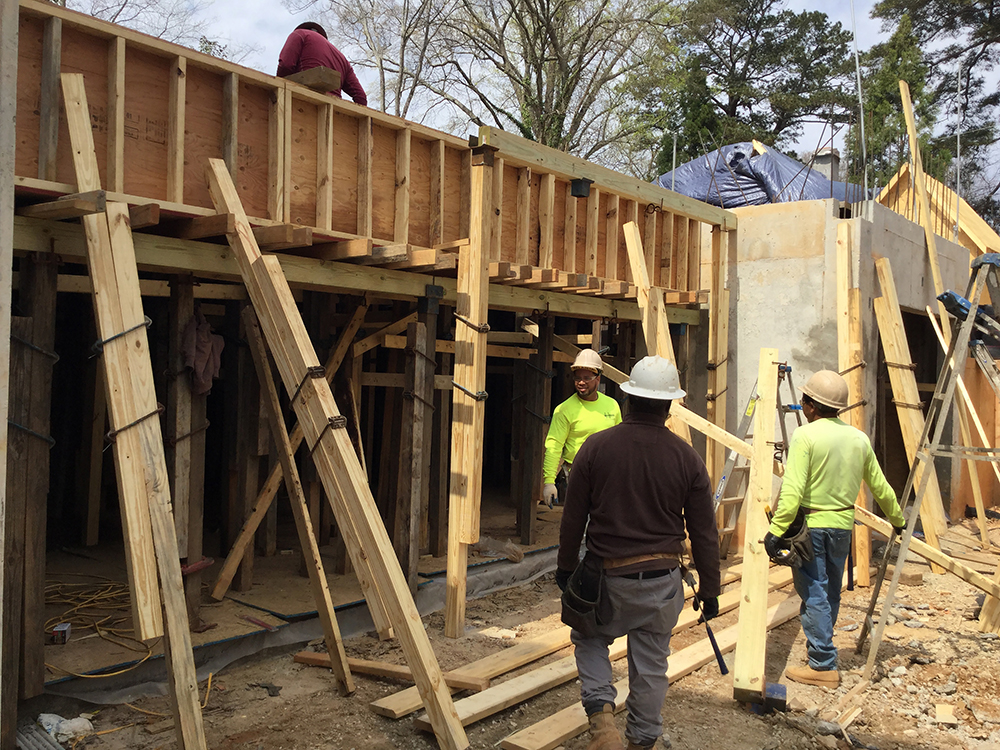
Challenging the industry to always improve, this photo was captured by a CFA member proud of one of their crews. “This photo shows some of our team members forming and shoring an elevated structural concrete slab,” states Doug Herbert, President of Herbert Construction Co. in Atlanta. “The award-winning project was made possible by the great group of guys in the photo (L-R): German Morales (top), Francisco Pena, Jermaine Clayton, and Miguel Perez. Their expertise in tackling tough projects, and their willingness to learn new skills are invaluable.” Doug added, “This project also included a tricky one-sided concrete wall poured against a 100-year-old home. With terrific team members like these guys, our company has become known for excelling at complicated projects like this one.”
Do you have photos of exceptional work or aspects of your business “caught in action” you would like to nominate? Send them directly to CFA Executive Director, James Baty at
jbaty@cfaconcretepros.org.
How Would Your Company Benefit From an Expert Talent Attraction Consultant?

By RecruiterGuy – Bill Humbert
Running a business is not easy. There are so many moving parts, not the least of which is recruiting (Talent Acquisition or Talent Attraction).
Does your business have a line of qualified candidates (Project Managers, Concrete Superintendents, Finish Superintendents, Commercial Drivers, and Laborers) outside your figurative gates desiring to work with you? If your company has that line at your gates, consider yourself fortunate. Your concrete business is one of 1,000 companies that ‘attracts candidates,’ instead of attempting to acquire ‘talented workers.’
How much money do you spend per year on newspaper ads or job boards to identify potential new employees? How much time is spent selecting the best candidates? How long do those employees remain with you before you need to begin the process over again? How much revenue are you spending training new employees to bring them up to your company’s expected performance quality? Has your business’ employee shortage led you to spend extra money for overtime employee compensation (that may not have been included in the estimate) to meet deadlines?
Wouldn’t it be better to turn that spending into profitability?
My experience includes 8 years working with two general contractors in the Washington, D.C./Baltimore area. My last position was as the Superintendent on a garden apartment/townhouse project in Northeast Washington, D.C. I understand the benefits of having talented labor working on your projects, something achievable by first attracting and securing the best, most qualified candidates.
To transform your company’s loss into a win, examine your recruiting practices. Do they follow this process?
Step One –Identify the NEED for a New or Replacement Employee. Most companies are on target with this first step. Generally, the top organizations ask the managers for some documentation to justify adding to the headcount. This justification can be simple (scope creep, weather, other contractors, etc.)!
Step Two – Create a Job Description that truly describes the expectations for employee success during the first year. For hourly workers, it is important to include how they may increase their wages by adding new skills. This also gives the company a way to measure starting wages for experienced labor (for instance, a candidate already has experience finishing concrete vs. someone with no or little experience in concrete labor).
Step Three – Source Potential Candidates. Consider – if your job description does not reflect the expectations for the first year of employment, your business will source the wrong candidates. Sourcing candidates correctly is more important than simply posting positions online and hoping the best candidates are looking at them. Hint—they are currently working, not looking at online postings or newspaper ads. According to metrics by the career transition industry, only 25% of all labor jobs are filled by responses to job postings or ads. One way to attract new employees is to add a small referral bonus for your current employees. Here you tell the current employees you will pay them a bonus of some amount (depending upon the level of concrete skills or position) for anyone they refer to the company and would enjoy working with again. Be sure to create a time requirement – paying an initial amount after the new employee stays with you for a month. The referring employee then receives the balance of the bonus if the new employee remains working with the company for 6 months (or some other amount of time)
Step Four – Candidate Interviews. Has your business trained your managers how to conduct effective interviews? If not, they have not been trained to identify and select the most qualified candidates.
Step Five – Candidate Offer. The candidate’s offer should reflect where the candidate’s skills and experience fit with other members of the manager’s team (Tied to Interview Training).
Step Six – Due Diligence. Due diligence includes drug testing, background investigation, and reference checks. Skip one of these due diligence steps and the company risks making a bad hire.
Step Seven – Offer Negotiation. Once a candidate has been vetted, an organization may negotiate the offer with the selected candidate. There are tools to use in this negotiation and I can help provide them. Remember titles may differ from contractor to contractor. In the labor market, their skills and concrete experience in connection with specific duties they’ll perform in your company determine their worth to you.
Step Eight – Close the Candidate. Remember when you last interviewed for a new job? What convinced you to accept the offer? Discuss with the candidate why your concrete contracting business provides them an opportunity to grow, work with a great team, receive benefits and security, etc.
Step Nine – Start the Selected Candidate. The start date to convert the candidate to an employee should be considered roughly the same length as the delivery of a product or service in the sales process. Each is established by the resources available to produce or prepare and the parameters should be set prior to offering the position, just like they are for offering product or solution.
Step Ten – Onboarding (or Orientation). This is an important opportunity to welcome new employees. Remember first impressions are remembered. Present them with their company hard hat, provide safety training, and discuss your process to grow their skills, as well as their advancement potential, etc.
Step Eleven – Engage Employees. When you engage new employees at the beginning of their employment – and continue to engage with them, you will increase employee satisfaction and encourage employees to engage in return.
Step Twelve – Employee Retention. Why is employee retention important? Considering that a contractor will invest in growing their employees’ skills the talent attraction process is made more efficient and effective when there is less energy necessary attempting to attract and train new laborers when you add more value to your team by retaining them. Retention of your best employees becomes a huge step in attracting new employees as candidates recognize the loyalty and longevity of your business.
Did you think attracting the best employees was “Just Recruiting?”
The Talent Attraction Process Strengthens Your Company
How do you determine the best Talent Attraction Recruiter for your concrete business? It depends on the size of your concrete company. If your company is small, you may recruit new business and new employees yourself. If your concrete business is large and growing, you may benefit from hiring an outside recruiter. Consider asking these three questions during an interview.
Does the prospective recruiter have Human Resource Recruiting or Professional Recruiting experience? Human Resources is an important function within your company. Successful professional recruiters are sales professionals. Consider – A professional recruiter typically is not an employee of a construction company, but their previous employer is a Recruiting firm, possibly with experience recruiting temporary labor for construction. This type of experience develops skills in developing clients as well as recruiting candidates to work with those clients. The duality and specificity of these skills provide the framework for successful recruiting.
Ask the prospective recruiter to walk you through how they would improve your recruiting process. If their response does not list the steps above, or worse, they suggest finding new boards to place job openings, it is time to thank them for their time.
Ask the recruiter, “Tell me when you used your favorite close to gain an offer acceptance from a reluctant candidate. Describe your close.”
Most companies can improve their recruiting. As the Leading organic search engine result for “Talent Attraction Consultant,” I am happy to assist your business in attracting the best workers. My consultancy will benefit your concrete business by helping you hire competent and qualified employees. I am RecruiterGuy and having listened to your stories as a consulting member, I am here to not just help you, I will also donate 40% of my fee to the Concrete Foundations Association. Let’s get to work!
Gearing Up For Success: Revolutionizing Workplace Culture
In today’s post-pandemic landscape, characterized by an employee-centric and highly competitive market, organizations across the board are grappling with the challenges of attracting and retaining talent. The notion that “Times are changing” might sound cliche, but the reality is undeniable. We are not going back to the “good old days” of 2019. This article will give you effective strategies to keep your top talent from becoming someone else’s.
Drawing on my thirteen-year journey in industrial sales, which includes seven-years in the welding industry, combined with my current role focusing on manufacturing, construction, and skilled trades, I have had the privilege of witnessing firsthand the practices that set the most successful organizations apart. The common thread among these leading entities is their adept fusion of Gratitude and Strategy—a concept I call Grategy®. When you have a Grategy, you create a workplace where excellence thrives and loyalty is fostered.
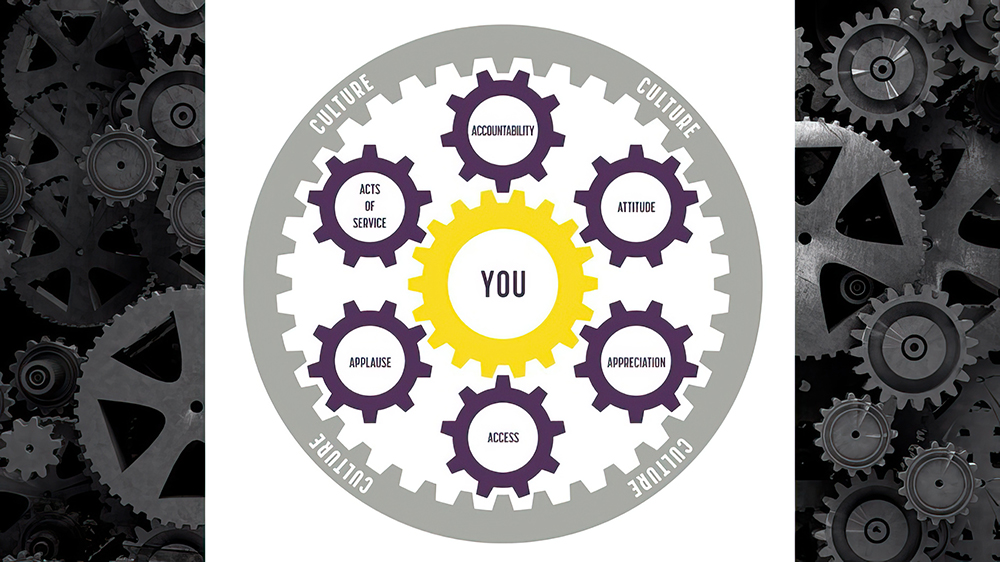
To simplify this concept and change how we think about workplace culture, I’ve created these “Gears of Grategy.” This isn’t just another toolkit; it’s a whole new approach designed to attract and keep the best talent by fostering an environment where #positivity, #recognition, and personal #growth aren’t just buzzwords—they’re the foundation on which an organization’s culture is built.
By bringing these gears into your organization, you’re making a strong commitment to a culture that not only attracts the brightest and best but also supports them in thriving and contributing to your collective success. I’d love to hear about your journey with these gears—how have they shifted things in your company?
The Six Gears of Grategy®:
 #Attitude: The Foundation: Attitude sets the stage for everything else in the Gears of Grategy®. It’s the bedrock upon which all other gears rest. Think about it: without the right attitude, nothing else truly matters. It’s about having the courage to face yourself and your business honestly, and being open to making necessary changes. When you approach challenges with a positive mindset, it’s like striking a match that ignites the enthusiasm of your team. It’s not about ignoring obstacles, but rather tackling them head-on with a focus on finding solutions. Keeping the right attitude among your team members is key—it’s what keeps everyone motivated and optimistic, shielding them from negativity.
This foundational gear highlights the importance of fostering the right mindset to cultivate a thriving culture. Let’s be real here: without the proper mindset, your efforts will fall short. They say only babies with dirty diapers enjoy change, and let’s face it, even they aren’t thrilled about the messy process. But if you stay open to new ideas and put in the effort, you’ll witness your workplace undergo an extraordinary transformation! The beauty of attitude lies in its controllability—it’s entirely up to you. So, choose wisely, and watch as your workplace evolves into something truly remarkable!
 #Appreciation: The Personal Touch of Gratitude: The second gear in the Grategy® model is appreciation, where you embrace gratitude on a personal level. My own journey with gratitude began back in 2009, and let me tell you, it’s been a game-changer in both my life and my business. It got me through tough times, especially during the recent pandemic, which hit my business hard. Gratitude isn’t just about being positive; it’s a mindset that encourages us to find the good in every situation. And here’s the kicker: there’s solid research backing it up. Gratitude isn’t some fluffy concept—it literally rewires your brain to focus on the good stuff, not to mention the physical benefits it brings. When you make gratitude a regular practice, it’s not just about feeling good; it becomes second nature to spot the positives, even in the toughest of times.
But wait, there’s more! Practicing gratitude extends beyond the workplace. It opens your eyes to the goodness in all aspects of life, making it easier to recognize and celebrate the unique contributions of each team member. It’s about showing genuine appreciation for their efforts and valuing their presence in your organization. Appreciation isn’t just a part of the Grategy® model; it’s woven into the very fabric of everything we do. It’s a critical tool in your leadership toolbox, enriching every interaction and fostering a culture of gratitude and acknowledgment.
 #Access: Open Doors, Open Minds: Now that you’re starting with the right attitude are finding the good in your business and your life, the third gear, Access, is about making leadership approachable and accessible, creating an atmosphere where everyone feels valued and heard. When you break down the barriers between employees and management, you’re not just opening doors – you’re opening minds.
Access isn’t just about physical accessibility; it’s about providing opportunities for personal and professional growth. That means offering robust training programs and accessible resources that empower individuals to flourish both in and out of the workplace. Because when people feel supported in their development, they bring their best selves to the table.
Gone are the days of one-size-fits-all company cultures. Today, workplaces must adapt to meet the unique needs and expectations of team members. Leaders should make themselves available to their people, actively listening to feedback, and tuning into the pulse of the workforce through “stay” interviews. These conversations offer invaluable insights into employees’ dreams, aspirations, and concerns, providing an opportunity to address them proactively and stem the risk of turnover.
By fostering open communication and accessibility, you build trust and loyalty – the cornerstones of retention. The Access gear ensures that communication flows freely in both directions, creating a culture of transparency and support that fuels employee engagement and drives organizational success.
 #Applause: Recognizing and Celebrating Success: The fourth gear in the Grategy® model is #Applause. When you verbally appreciate someone, it’s like creating a beautiful memory, but when you go the extra mile with a handwritten note or letter, you create a treasure. Whether it’s shouting out big wins or cheering on small victories, publicly recognizing the efforts driving the company forward is crucial. It’s like fuel for motivation, boosting morale, and reinforcing behaviors that are key for our success.
Now, here’s the thing about recognition: personalization matters. You can use an “All About Me” sheet to find out exactly what each of your team members like. After all, there’s no one-size-fits-all approach to saying thanks. And the best part? Recognition doesn’t have to be complicated or expensive. A genuine “thank you,” a heartfelt note, or a shout-out in the company newsletter can make someone’s day. Plus, when you encourage peer-to-peer recognition, it builds camaraderie and makes everyone feel like they’re part of something special.
 #ActsOfService: Contributing to a Greater Mission: The fifth gear, Acts of Service, expands the notion of gratitude beyond the workplace by integrating corporate social responsibility (#CSR) and volunteerism into your company culture. Your team wants to feel they’re part of something larger than themselves, and are making a meaningful impact. It’s essential to showcase the positive initiatives your organization undertakes to improve the community, region, or even the world. Reflect on what drew you to your industry originally. Why are you still there? What ignites your passion? Find ways to instill that sense of purpose in your team. It goes beyond job duties and compensation; you must demonstrate how their work contributes to a greater mission, fostering a sense of belonging and meaning. This gear underscores how giving back to the community can strengthen team unity, attract socially conscious talent, and build a brand that stands for more than just financial gains.
 #Accountability: Ensuring Alignment and Continuous Improvement: Finally, Accountability, the sixth gear, ties everything together. Here, the focus shifts to ensuring the process remains ongoing rather than treating it as a one-time event. It’s a continuous journey, with mechanisms like using KPIs in place to measure success and a readiness to adjust and refine as needed. Serving as the glue that binds everything, #accountability emphasizes that moving through the gears isn’t the end goal; it’s an ongoing journey of implementation, refinement, and perpetual progress. After all, what works today may not work tomorrow, underscoring the importance of constant adjustment. This gear fosters a culture where continual improvement isn’t just welcomed but embraced, fostering ownership from both leaders and employees to sustain the momentum of the Grategy® model. Accountability doesn’t mark the end; instead, it kickstarts the process anew with each iteration, fostering an environment of continuous growth and evolution.
Why the Gears of Grategy® Matter
As you can see, the Gears of Grategy® are more than mere components of a model; they form the foundation of a workplace culture that attracts and retains top talent. In today’s world, where employees seek more than just a paycheck, these gears provide a roadmap for cultivating an environment that values, respects, and nurtures its workforce. By embracing the Gears of Grategy®, you empower your teams, enhance performance, and establish a legacy of positive #workplaceculture. For visionary leaders, the Gears of Grategy® represent more than just a strategy; they symbolize a dedication to excellence. It’s about creating a workplace where every employee feels valued, heard, and essential to the mission.
As you navigate the complexities of the modern business landscape, the Gears of Grategy® serve as a guiding light for those committed to leading with heart, #integrity, and an unwavering pursuit of excellence. Use these gears to set a new standard for what it means to be a truly exceptional place to work. If this resonates with you and you want to use these gears to set the standard for your workplace, let’s connect.
 Lisa (Roman) Ryan, CSP
Keynote Speaker, Author, Emcee. Ready to help you keep your top talent from becoming someone else’s. #Grategy
Spring Executive Retreat – Baltimore, Maryland: How to Find a $100,000 Idea


Doug Herbert President of Herbert Construction Co. Chairman, CFA Board of Directors
“Wait, say that again,” I asked.
My contractor friend explained again what he was doing in his business that was different from what we are doing in ours.
I quickly pulled out my phone and punched some numbers into the calculator.
I wanted to see how much we could reduce our costs by doing it his way. I pushed the “equals” button and couldn’t believe what it said…
$100,698.49
One hundred thousand dollars?! For a better safety initiative at our company?!
Holy cow. This is huge.
I stood there in shock for a moment. I was with a group of CFA members touring my friend’s Maryland facility during the CFA Spring Executive Retreat this past April.
We had all come from different parts of the country to visit Jim Bartley’s company, Bartley Corp., in the morning. Then, in the afternoon, we toured the facilities of Modern Foundations, led by Bruce, Jason, and Michael Neale.
During the two-day event, we also held our quarterly Board Meeting, took an incredible tour of the U.S. Naval Academy, and ate great food.
But the main reason for all of us to attend was to learn about fellow CFA members’ businesses to help our own.
And here I was, halfway through the first company tour and I had already found a way to save $100,000 per year at our company. It was awesome!
Ideas to Implement
At Herbert Construction, we’ve been learning from CFA members like this for over 30 years. Constant improvement is a big thing at our company. We will often travel to fellow members’ offices to tour and dissect their company.
I’ll admit, we don’t often find a $100k idea. But we always walk away with something that can improve our company. And, hopefully, leave them with something that’ll improve theirs.
A Small Bracket for a Big Project
At the Fall Executive Retreat in Oklahoma City last year, CFA members toured some job sites of contractor member Mike Hancock of Basement Contractors. At one job site, Mike showed me a special bracket he made for forming tall walls.
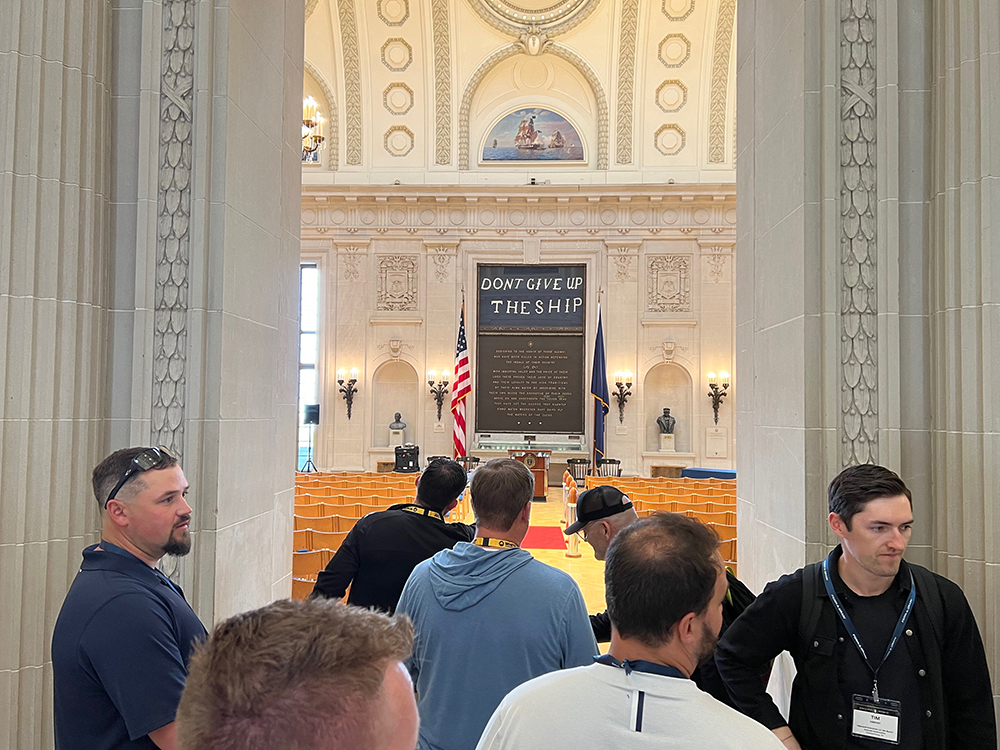
A tour of the U.S. Naval Academy was the surprise networking event.
With Mike’s permission, I snapped a bunch of photos and took the dimensions of the bracket for our use. In the next two weeks, we’ll use a variation of Mike’s bracket on a $1million+ foundation with 32’-0” tall walls. Thanks to Mike’s bracket, we won’t tie up as many forms while the project is underway. And, we’ll finish the project faster. Cha-ching!
Four Yearly Events
The CFA hosts four main events each year. The largest event is the Convention. Held in the Summer at a different location each year, this is the place to be for residential concrete contractors. It is filled with terrific speakers, valuable vendors, and fun activities. This year’s event will be held in Puerto Rico and it’s going to be outstanding. (FYI: If you haven’t already reserved your room at the resort, then do it now because it’s going to sell out early.)
During the World of Concrete Convention in Las Vagas, the CFA hosts its Winter Social. If you’ve attended that event recently, you know how exciting it is.
Then, in the Spring and Fall, the CFA invites members to its Executive Retreat. Each event takes place near a member’s facility. This can be an associate member who can host a plant tour. Or, it can be a contractor member who will open up their business and share what they are doing for the benefit of the attendees.
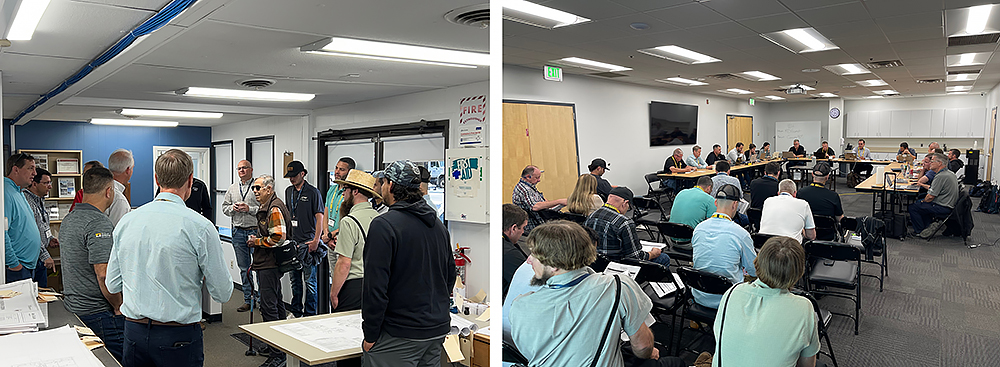
Founding member of the CFA and of Bartley Corp, Buck Bartley regales the history of the Association.
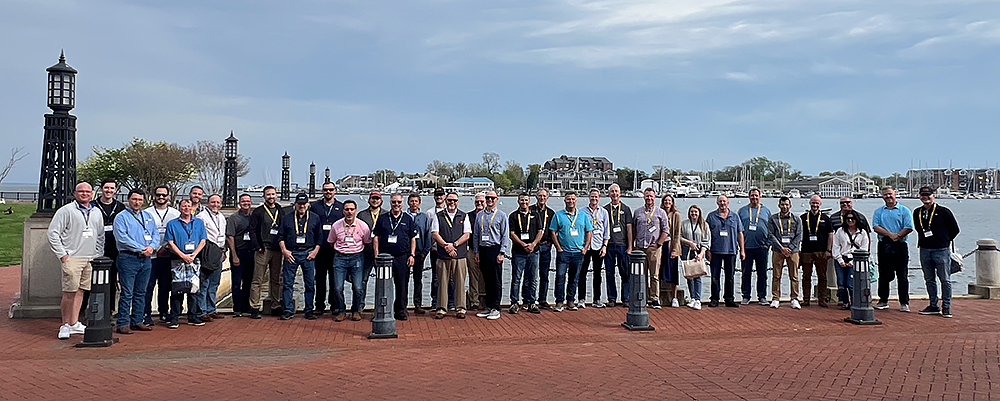
A record attendance for CFA Executive Retreats as the group wrapped up the US Naval Academy tour
As you can tell from my experiences, these Executive Retreats are incredibly valuable.
I’d encourage you to get involved in any or all these four CFA yearly events. Meet new members. Ask dumb questions. Keep your mind open to alternative ways of doing things. And share what you know.
You’ll be amazed at what you can get out of it.
And just maybe, you’ll get a $100,000 idea.
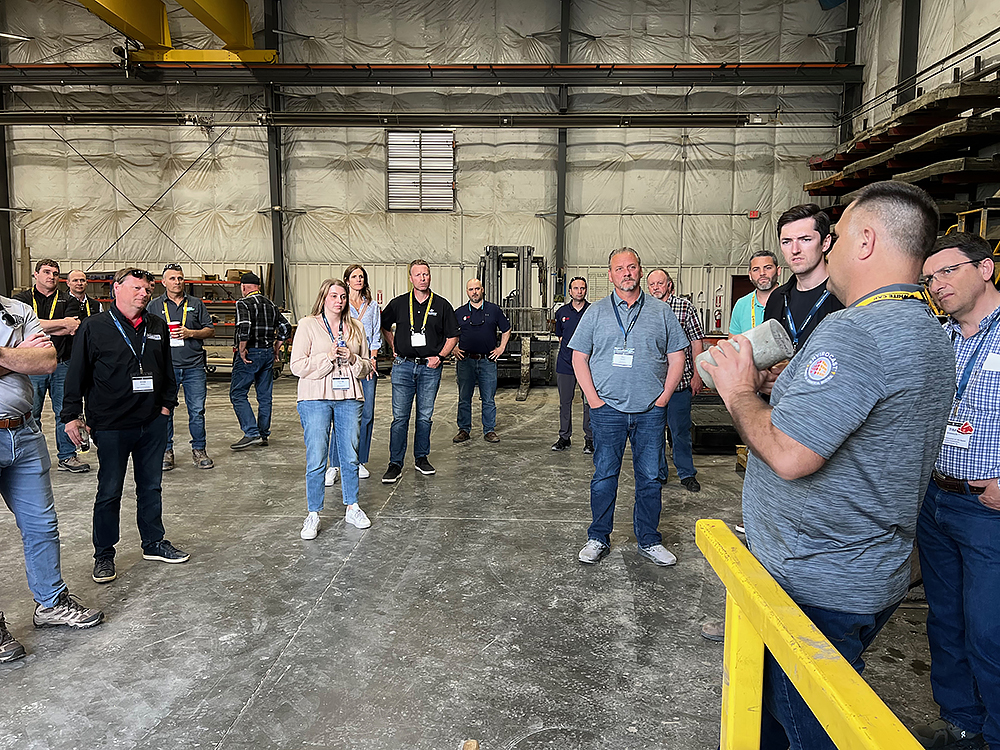
Michael Neale of Modern Foundations and MFI Concrete holds court during a tour of facilities to explain their quality control requirements for precast operations
Laying the Foundation for Safety: The CFA’s Take on OSHA’s Top 10 Violations
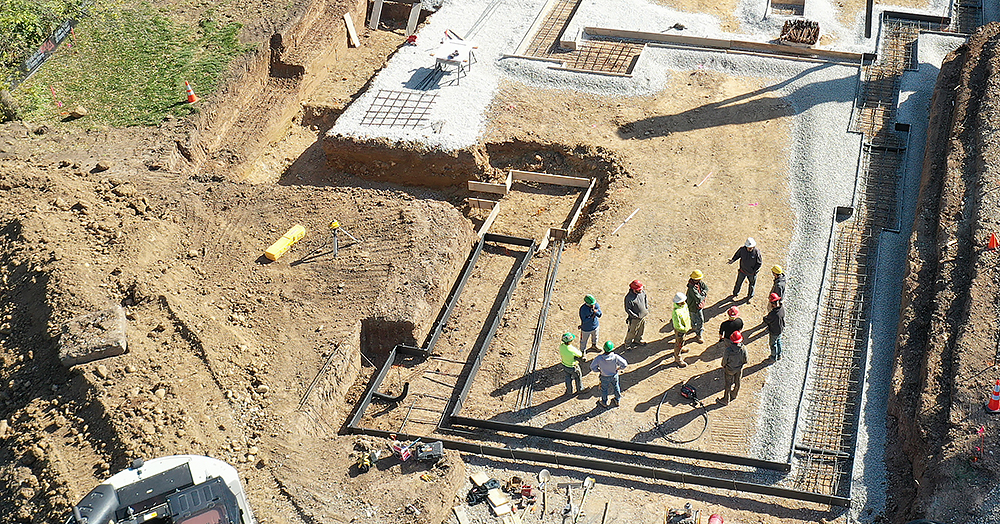
Safety communication and PPE on display as CFA member, Coello & Associates improves performance
I. Introduction
Construction and workplace safety are ever-evolving, with the consistent imperative being to adapt and improve. A critical tool in this endeavor is the annual list of the top ten safety violations released by the Occupational Safety and Health Administration (OSHA). This list does more than just highlight prevalent safety issues—it serves as a compass, pointing toward the areas that demand the most vigilance and intervention.
For professionals in the concrete industry, the implications of OSHA’s findings are profound. In response to OSHA, the Concrete Foundations Association (CFA) has taken preventative action, conducting a survey that mirrors OSHA’s list against the self-assessed readiness and compliance of CFA members. This initiative is not just about recognizing areas of risk, but also acts as an opportunity for a deep investigation into how these violations apply to, and at times differ within, the specifics of the concrete sector.
As we sift through the data, patterns emerge and an industry-specific “Top 10” safety list begins to take shape, challenging the one-size-fits-all view previously suggested by OSHA’s “Top 10.” It is through this lens that the article will discuss the CFA’s findings, juxtaposing member and competition grades, while delivering a narrative that is both educational and critical for the advancement of workplace safety in our industry.
II. Methodology of the CFA Survey
To distill a realistic snapshot of industry compliance and safety, the Concrete Foundations Association embarked on a survey that delves into OSHA’s Top 10 Safety Violations. The methodology was meticulous and thoughtful, designed to yield insights that are as actionable as they are instructive.
The survey reached out to a targeted group within the CFA’s membership, calling upon industry leaders to not only self-assess but also provide a comparative analysis against their competitors. This dual perspective offers a rich, multifaceted view of safety standards across the field.
Participants were asked to grade their company on each of OSHA’s noted violations, using a familiar letter grade system—ranging from A to F. An ‘A’ grade corresponds with a high level of compliance and initiative, suggesting that the company not only meets but exceeds OSHA standards by using proactive safety measures. A ‘B’ score reflects significant compliance with acknowledged room for improvement. A ‘C’ grade aligns with the minimum OSHA standards—compliant, yet perhaps lacking progressive safety measures. Grades descending from ‘D’ to ‘F’ indicate areas of increasing concern, highlighting potential risks and oversight, or situations where the standard may not seem directly relevant to the company’s operations.
It’s through this grading that CFA aimed to uncover not just the average level of safety adherence but also to gain a nuanced understanding of where the industry sees itself compared to how it perceives its peers in the context of these critical safety benchmarks.
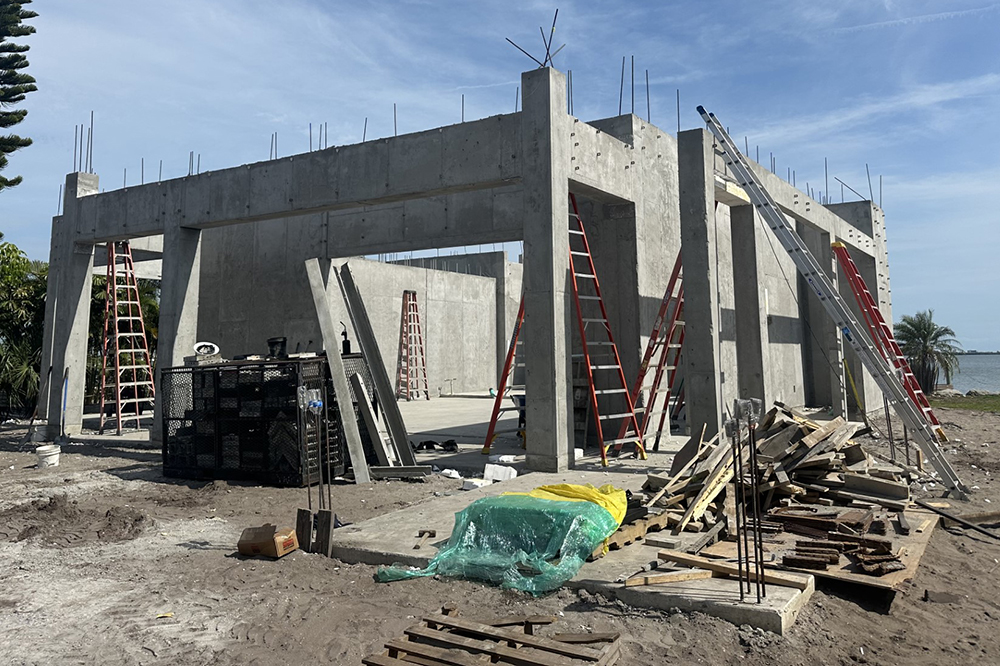
Ladders are often assumed to not be significant for cast-in-place concrete, however, ladder safety should be a priority, as CFA Member, TCB Walls demonstrates
III. Analysis of Survey Results
The CFA survey results provide a revealing cross-section of the industry’s safety practices as measured against OSHA’s Top 10 Safety Violations for 2023. Let’s take a closer look at each category and decipher the narrative behind the numbers.
Fall Protection – General Requirements topped the list with a B+ average, underscoring a strong adherence to safety measures but also a candid acknowledgment of slips, trips, and falls still being significant issues. The ‘C’ rating from the competition’s perspective suggests a more critical view, hinting at complacency in the broader industry that needs addressing.
Hazard Communication averaged a B grade, reflecting a respectable level of safety communication within companies. However, the fact that some competitors are rated ‘D’ hints at inconsistent practices across the field, emphasizing the need for continuous education and reinforcement of safety protocols.
Ladders, while receiving a C+ average, brought to light the variability in usage and safety practices, with a notable number of respondents feeling this area was not applicable to their operations. This indicates a potential undervaluation of ladder safety in certain sectors.
Scaffolding stood out with a B+ average, showcasing a commitment to enhancing equipment and training, particularly for complex commercial projects. In contrast, the ‘F’ grade given by one member to their competition is a stark reminder of the disparities in industry opinions for what constitutes a ‘safe practice.’
For Powered Industrial Trucks, participants reported an average grade of B+. This suggests robust training and operational safety, yet the absence of a consensus on competition grades begs the question of how we can achieve industry-wide consistency in this area.
Lockout/Tagout practices received a mixed response with a B average, reflecting well on adherence to proper procedures but also exposing the occasional use of incorrect tagging methods. As a result, this area appears ripe for targeted improvement.
Respiratory Protection scored a solid B+ on average, indicating a noteworthy achievement in engineering out many respiratory hazards despite the occasional ‘Fs’ from the competition which points to potential practice discrepancies.
Fall Protection Training requirements received a B+ average, with respondents acknowledging the challenges of training workers for unfamiliar tasks, exemplifying the importance of ongoing education in this area.
The category of Personal Protective and Lifesaving Equipment – Eye and Face Protection received one of the highest averages at A-, demonstrating strong compliance and pinpointing an area where the industry takes considerable pride. Nevertheless, issues like seasonal transitions affecting PPE adherence signal a need for continued attention.
Finally, Machine Guarding, with a B average, was noted as an area that’s sometimes overlooked, particularly with material conveyor trucks, emphasizing the importance of maintaining vigilance in equipment safety.
These results paint a picture of an industry earnestly striving for safety, while also shining a spotlight on areas where improvement is not just possible but essential. As we juxtapose member grades with competition perceptions, it is evident that while some companies lead the way in safety standards, the industry as a whole has significant room for growth.
IV. Commentary and Insights from Industry Leaders
The raw data from the CFA survey is brought to life by the experiences and reflections shared by the respondents. Their commentary sheds light on the multifaceted challenges of adhering to safety protocols within the concrete industry.
For example, the survey revealed that ladders, while not frequently used by all, represent a significant safety challenge when they are employed. The underutilization in certain sectors, such as ladder safety, suggests that routine proficiency might be lacking, creating a blind spot that requires targeted attention.
In discussions about respiratory protection, it was noted that although comprehensive hazard controls have reduced the need for respirators, there are still pockets within the industry where their use is inconsistent, particularly for infrequent tasks. This points to the need for reinforced training and vigilance, especially for occasional high-risk activities.
Machine guarding was another area of focus, with respondents underscoring the critical nature of this safeguard, especially in the context of material conveyor trucks. A past incident involving a missing guard was cited as a pivotal learning moment, emphasizing the continuous need for stringent safety checks and a culture that proactively addresses every detail.
The survey also illuminated the complexities surrounding fall protection training. While general training received high marks, members recognized the difficulty in adapting training for workers transitioning to unfamiliar tasks, illustrating that safety education must be flexible and task-specific to be fully effective.
In terms of personal protective equipment (PPE), the industry generally excels, but challenges in compliance were noted. Variability in adherence, particularly affected by seasonal changes or amongst different demographics within the workforce, suggests an ideal area for improvement.
Collectively, the feedback from industry leaders demonstrates a significant theme: adherence to safety standards is not uniform, and the depth of understanding and applying these standards can vary considerably across the industry. It is evident that areas often perceived as strongholds of safety could benefit from renewed focus and enhanced training initiatives.
V. Confronting Workforce Challenges in Compliance
The concrete industry, like many sectors today, faces a complex challenge: an aging workforce juxtaposed against a newer generation of workers. This demographic shift brings about unique compliance challenges within the landscape of workplace safety.
The seasoned professionals, who are approaching retirement, carry with them invaluable experience and a deep-rooted understanding of safety protocols. However, this group is contending with the inevitable changes in dexterity, mobility, and flexibility. It’s essential that their knowledge is effectively passed on and adapted to fit the evolving nature of the field.
On the other end of the spectrum, the industry is being infused with a younger, more diverse workforce. While they bring athleticism and a fresh perspective, they often lack the years of experience that inform safe practices. This gap is not insurmountable, but it does require a deliberate approach to training and mentorship. Fostering a culture that values safety as much as productivity is key.
Adapting to these demographic shifts means revisiting and potentially revamping training programs. Microlearning modules, hands-on skill assessments, and mentorship programs are examples of strategies that could enhance the learning experience and retention for a workforce that spans generations.
Moreover, the survey highlights a need for a better understanding of compliance. Being ‘compliant’ with OSHA standards, as indicated by a grade of ‘C’, might meet the minimum requirements, but the aim is to exceed them. Striving for an ‘A’ reflects a commitment to not just following rules but actively fostering a safe work environment.
In light of these challenges, the industry is called to not only maintain high safety standards but also innovate and adapt. Embracing technology, prioritizing continuous education, and recognizing the value of a diverse workforce are steps towards a future where safety and productivity go hand in hand.
VI. Refining the OSHA Top 10 for the Concrete Industry
The general list of OSHA’s Top 10 Safety Violations serves as a benchmark for workplace safety across various sectors. However, within the specialized context of the concrete industry, a tailored approach is warranted to address its unique challenges and risks.
The CFA survey suggests a conceptual shift from a generalized “Top 10” to a more industry-specific “Top 7.” This is due to the interrelated nature of some violations, especially within fall protection categories. These interconnected issues suggest that a singular, comprehensive strategy could be more effective than addressing each category in isolation.
Moreover, it’s crucial to examine the survey’s implications for categories that some members considered non-applicable or irrelevant. For instance, violations pertaining to machine guarding or ladders might not seem immediately relevant to all segments within the industry, but their impact on safety is undiminished. Ignoring these areas can lead to vulnerabilities that compromise worker safety and operational integrity.
The nuanced reality reflected in the survey results points to a need for a custom safety checklist that prioritizes the most impactful risks. By focusing on the “Top 7” tailored to concrete professionals, the industry can channel its resources and training efforts more efficiently. This targeted approach aims to enhance not only compliance but also the practical application of safety standards where they matter most.
To refine the list, the industry must draw from both the data and the qualitative insights provided by the respondents. This includes recognizing the significance of seemingly minor or rare issues and understanding that the foundation of a safety-conscious culture lies in attention to detail.
This recalibrated safety list isn’t about reshuffling priorities, but rather developing a deeper understanding that some categories carry a weight beyond their frequency of citation. It’s about recognizing that in the dynamic environment of the concrete industry, what seems non-critical today could be tomorrow’s primary concern.
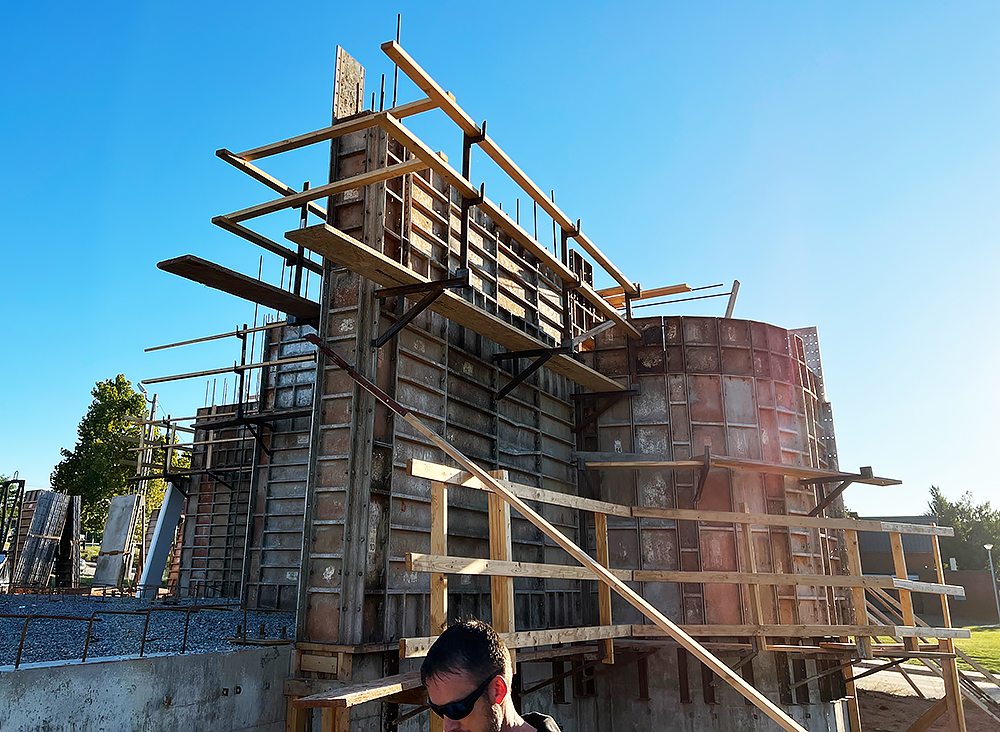
Scaffolding safety and complying regulations are a must in today’s world of taller wall foundations, knows CFA Member, Basement Contractors of Oklahoma
VII. Conclusion
The CFA survey, set against the backdrop of OSHA’s Top 10 Safety Violations for 2023, has illuminated the unique challenges and strengths within the concrete industry. By juxtaposing the self-assessments of CFA members with the broader metrics of industry compliance, a compelling narrative emerges—one that speaks to both achievements and areas for improvement.
The survey’s findings underscore a vital truth: while certain safety standards are universally applicable, the concrete industry faces specific challenges that demand bespoke solutions. The nuanced understanding and application of these standards, as revealed through the survey, highlight the industry’s commitment to meet and exceed safety expectations.
The dialogue around the “Top 7,” as opposed to the generic Top 10, is a testament to the industry’s proactive stance on safety. It reflects a keen understanding that the real work lies not in merely adhering to standards but in embedding a culture of safety that permeates every aspect of operations. This approach acknowledges that safety is not a checklist but a continuous journey of learning, adaptation, and vigilance.
Moving forward, the industry is called upon to leverage the insights gained from the survey to bolster safety practices. This entails a focused effort on education, mentorship, and the integration of innovative technologies that can make safety protocols more intuitive and effective. It also requires a collective commitment to fostering an environment where safety is the cornerstone of operational excellence.
In conclusion, the path to enhanced workplace safety in the concrete industry is multifaceted. It requires a concerted effort to address the specific challenges identified through the CFA survey. By doing so, the industry simultaneously safeguards its workforce and sets a benchmark for safety that resonates beyond its confines. The journey towards exceptional safety practices is ongoing, and with each step, the industry moves closer to achieving an environment where every worker returns home safely at the end of the day.
default
Lessons to be Learned from a Sad Story
By Wayne Schooling
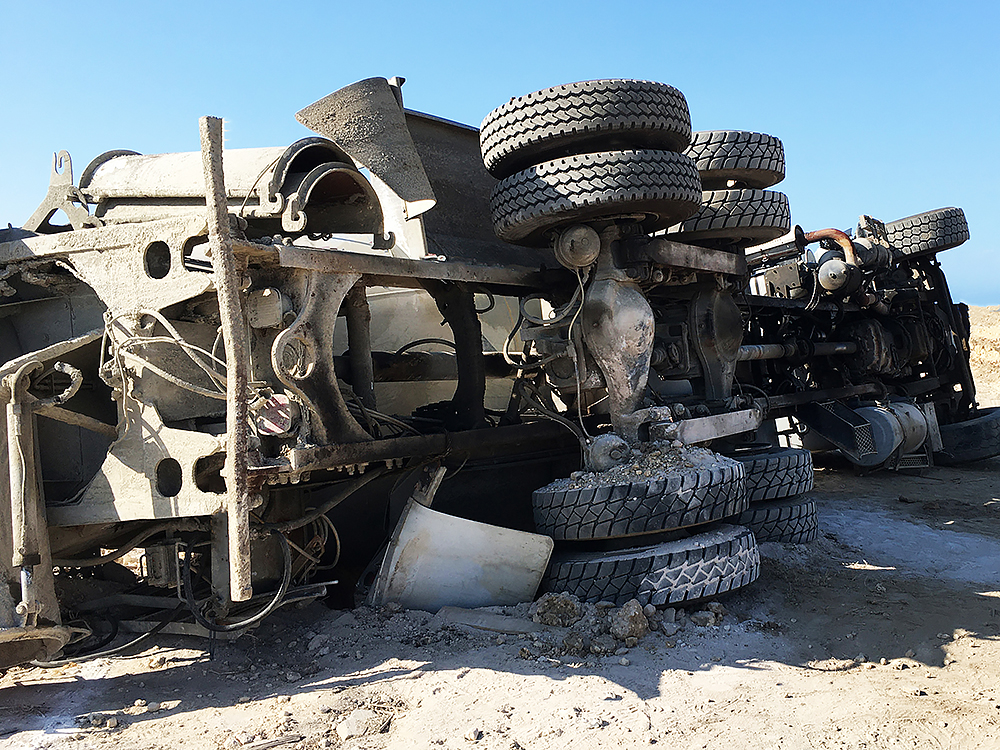
On March 22, 2024, a concrete pumper truck veered into oncoming traffic on State Highway 21 in Texas, striking a school bus full of children and ultimately killing a 5-year-old and an adult. At the time of the crash, the bus was transporting 44 children and 11 adults’ home from a field trip to the Texas Zoo.
According to reports, the driver of the concrete truck, 42 year-old Jerry Hernandez, admitted to law enforcement he had smoked marijuana the night before the accident, had used cocaine the morning of the accident, and had only obtained around 3 hours of sleep the night before. Hernandez was subsequently arrested and charged with criminally negligent homicide. Court records reveal Hernandez was in so-called “prohibited” status in the federal Drug & Alcohol Clearinghouse due to a prior refusal to submit to a reasonable suspicion test in 2020.
Investigators also met with FJM Concrete, LLC, the company that operates the concrete truck involved in the crash, according to court records. The owner of FJM allegedly admitted he had not verified the status of Hernandez’s CDL or his Clearinghouse record.
The accident is now under investigation by the NTSB.
Sometimes accidents are just accidents; by all accounts, this wasn’t one of them. Based on available information, this one was very much preventable. Had the employer of this driver taken the basic steps required of it by federal and/or state law, this driver wouldn’t have been operating the truck at the time of the accident and people wouldn’t have died.
Enough is enough! When are carriers going to learn their lesson and put in the work and effort it takes to keep our roadways safe? Complying with laws that exist to help accomplish this goal is the bare minimum. If you’re not doing that, shame on you; you are part of the problem. But fixing this problem requires a bigger commitment. What are you doing to truly improve safety? Anything?
There are plenty of lessons fleets can/should take away from this particular case. Here are just a few that come to mind…
If you aren’t using the Clearinghouse,
you better start
In January 2020, the Federal Motor Carrier Safety Administration (FMCSA) rolled out its Drug & Alcohol Clearinghouse, which it describes as an “online database [that] helps keep roads safer for all drivers by identifying, in real time, drivers prohibited from performing safety-sensitive functions, such as operating a commercial motor vehicle (CMV), due to a drug and alcohol program violation.”
Anyone who employs or engages commercial drivers to operate vehicles that require a CDL is obligated to run Clearinghouse queries on these drivers to ensure they are not prohibited from operating due to prior drug/alcohol violations.
It’s been four years since FMCSA mandated carriers use the Clearinghouse; however, I’m routinely shocked when fleets tell me they haven’t been using it. Why not? It takes a few minutes to sign up for a Clearinghouse account and run a required query, and it costs less than $2 to do so. It’s also required by law. So, what exactly is your excuse?
|
All Drivers (with at least 1 Violation |
226,598 |
|
CDL Drivers in Prohibited Status |
158,330 |
|
RTD Process not started |
120,676 |
|
SAP Requests sent |
1,477 |
|
SAP Designation confirmed |
4,619 |
|
SAO Request declined |
961 |
|
Initial SAP Assessment complete |
7,414 |
|
Eligible for RTD testing |
23,183 |
|
CDL Holders in Not-Prohibited Status |
68,258 |
According to Clearinghouse data, as of January 2024, there are over 158,000 commercial drivers in “prohibited” status due to prior drug/alcohol testing violations. By law, these drivers are NOT eligible to operate commercial vehicles. They shouldn’t be on the road.
Turning back to the case at hand, according to available information, FJM had a regulatory obligation but failed to run a Clearinghouse query on Hernandez. Had it done so, it’s my understanding FJM would have discovered that Hernandez was in “prohibited” status and could have kept him out of the truck. That simple step could have spared two lives in this case.
Simply put, if you’re hiring individuals to operate CDL-sized equipment and you’re not utilizing the Clearinghouse like you’re supposed to, you’ve got a big problem. You need to register for an account and start using it ASAP.
Also, in November of 2024, state drivers’ licensing agencies will be compelled to automatically downgrade the CDLs of drivers who are put into prohibited status in the Clearinghouse. That should help fill a gap that currently exists in the system, which allows drivers to keep their CDLs despite being prohibited from operating vehicles that require them. But this will not eliminate the burden that rests on the shoulders of fleets to ensure their drivers are properly qualified, including via required Clearinghouse queries.
Employing drivers with prior drug/alcohol violations is risky; you better have a plan
In this case, Hernandez allegedly had a history of drug use. It’s unclear whether FJM knew of that history when it hired him; however, this situation is exceedingly common in our industry. Drivers with prior drug/alcohol testing violations apply to drive for new carriers, and the question is whether those new carriers should hire these drivers despite their history.
It’s not an easy question to answer. The federal drug/alcohol regulations prescribe the steps that regulated drivers can take to “return to duty” once they violate the drug/alcohol testing rules. In other words, the regulations themselves allows drivers to keep driving after a drug/alcohol testing violation, so long as they jump through the required hoops. Of course, that doesn’t mean subsequent putative employers are required to hire them.
Some–perhaps many–carriers make it a matter of company policy that they will not hire someone who has previously violated the drug/alcohol testing rules. To them, it’s too risky to hire these drivers even though they’ve completed the return-to-duty steps. This case is a good example of that.
Even if Hernandez had gone through the steps to “return to duty,” he clearly had a persistent drug abuse problem, which ultimately led to a catastrophic accident. Simply stated, putting drivers with a known history of drug/alcohol problems behind the wheel of heavy trucks and buses is inherently risky, even if technically allowed by the regulations.
Are you willing to take that risk? If so, you better have some guard rails in place to help you mitigate that risk. What I mean is that if you intend to hire drivers with a history of drug/alcohol problems, you should ensure you’re not turning a blind eye to their potential relapse. If you do and that leads to a catastrophic accident, you may be partly to blame.
So, what can you do to help minimize that exposure? Well, there are several options. You could subject those drivers to more frequent non-DOT random drug/alcohol testing. You could ensure you are having regular interactions with them to look for signs of impairment. You could provide them ongoing education and support. In short, be sure you’re doing something.
You should have plenty of folks trained in reasonable suspicion
The regulations require any carrier whose drivers operate CDL-sized vehicles to train their driver supervisors in reasonable suspicion. In other words, anyone who interacts regularly with these drivers must be trained to detect the signs and symptoms of drug/alcohol impairment.
Specifically, they must receive at least one hour’s worth of training on drug use and another hour’s worth of training on alcohol use. If they detect impairment, then they must direct the driver to submit to a reasonable suspicion drug/alcohol test.
In the case at hand, Hernandez admitted to using marijuana the night before and cocaine the morning of the accident. He also admitted to sleeping only 3 hours the night before, and court records indicate he was falling asleep during interrogations shortly after the accident.
What we don’t know is whether FJM had any interactions with Hernandez prior to the accident and whether he exhibited any signs of impairment. I have to think there’s a good chance he did. If so, and had FJM detected that impairment and directed Hernandez to submit to a reasonable suspicion test, then maybe they could have avoided this accident altogether.
Long story short, fleets need to ensure they are training their driver supervisors in reasonable suspicion. They have a critical role to play in that they are the front-line defense against drivers operating while impaired.
Monitoring drivers’ available hours is basic compliance
In this case, Hernandez admitted to only sleeping for three hours the night before the accident. And court records indicate he was falling asleep in his post-accident interrogations. Whether due to his drug use or lack of sleep, Hernandez was clearly fatigued and should not have been operating the vehicle at the time of the accident.
Driver fatigue has historically and continues to be a significant contributor to highway accidents. Indeed, it’s the impetus for the hours-of-service regulations that we’ve had in place in this country since the 1930s. It also happens to be a common trigger for so-called nuclear verdicts against trucking companies, as detailed by the American Transportation Research Institute (ATRI) in its 2020 study of these types of cases. That’s not surprising, yet many fleets continue to struggle mightily with hours-of-service compliance. Electronic logging devices (ELDs) were meant to help, but the jury’s still out on whether they do.
In my experience, the fleets that struggle the most with hours-of-service compliance are simply not putting in the work it takes to get control of the issue. Plenty of blame gets passed around, but ultimately it really comes down to closely monitoring drivers’ hours and holding them accountable to violations.
As a general rule, carriers are not (1) keeping a close enough watch on HOS; and (2) forceful enough when it comes to dealing with repeat HOS offenders. If nothing else, ELDs make it easier for carriers to keep track of each driver’s available hours and to sniff out any funny business in their logging. But too often, carriers are just ignoring that data, which inevitably leads to violations and could lead to serious crashes.
So, first thing’s first, fleets need to be routinely checking driver logs and confirming drivers are within their allowable limits before dispatching them. Had FJM done that in this case, it presumably would have discovered Hernandez had not obtained the required 10 hour-off duty break and shouldn’t have been on the road.
Beyond monitoring drivers’ compliance with the HOS rules, carriers also need to be more aggressive in holding drivers accountable for violations. Too often they’re letting these issues slide. There need to be real “teeth” to a carrier’s progressive discipline program. Drivers who repeatedly violate the law need to be effectively suspended and ultimately terminated, or else the issues will persist.
I understand fleets are hesitant to do this when drivers are hard to come by and expensive to onboard, but those are just excuses that won’t ultimately matter in the context of a catastrophic accident. Contractor fleets, this also applies to you! That you’re balancing the employment-status of your drivers against safety in limiting your “control” over them will be cold comfort to the families of the folks that your drivers end up killing or injuring or the juries who will be hearing the cases.
Safety technology should be higher on your priority list
It’s unclear whether FJM had any safety technology installed on the concrete truck Hernandez was driving. Would lane departure warnings have made a difference here? What about automatic emergency braking? Hard to say until we get the full details, but it’s hard to imagine those technologies would have hurt.
I get it. It’s expensive for fleets to install equipment that isn’t currently mandated by regulation. But as with most things, it’s a cost/benefit analysis. If there’s even some remote likelihood that a given technology could potentially prevent the death of a 5-year-old, it should at least be considered.
Maybe the economics of it don’t work for you at the moment, but what precludes you from placing it in line for implementation down the line? Also, as more and more fleets begin to voluntarily adopt these technologies across the country, the more likely they will be considered the industry standard against which you will be judged in highway accident litigation.
Conclusion
As they say, hindsight is 20/20. But if we as fleets aren’t learning lessons from accidents like this one and taking steps to keep ourselves out of them, we are doing ourselves a tremendous disservice and dooming ourselves to a similar fate. This particular case highlights the importance of complying with applicable drug/alcohol testing and hours-of-service regulations, to name just a couple.

Press Release: Euclid Chemical Introduces Innovative Fast-Setting Concrete Repair Mortar
Euclid Chemical Introduces Innovative Fast-Setting Concrete Repair Mortar
CLEVELAND, Ohio (June 11, 2024) – Euclid Chemical, a leading manufacturer of concrete and masonry construction products, announced the launch of VERSASPEED RMC, a fast-setting, one-component, cementitious repair mortar that is shrinkage compensated, pozzolan and microfiber modified, and contains an integral corrosion inhibitor. The new product is designed for horizontal and formed vertical repairs as well as overhead structural repairs.
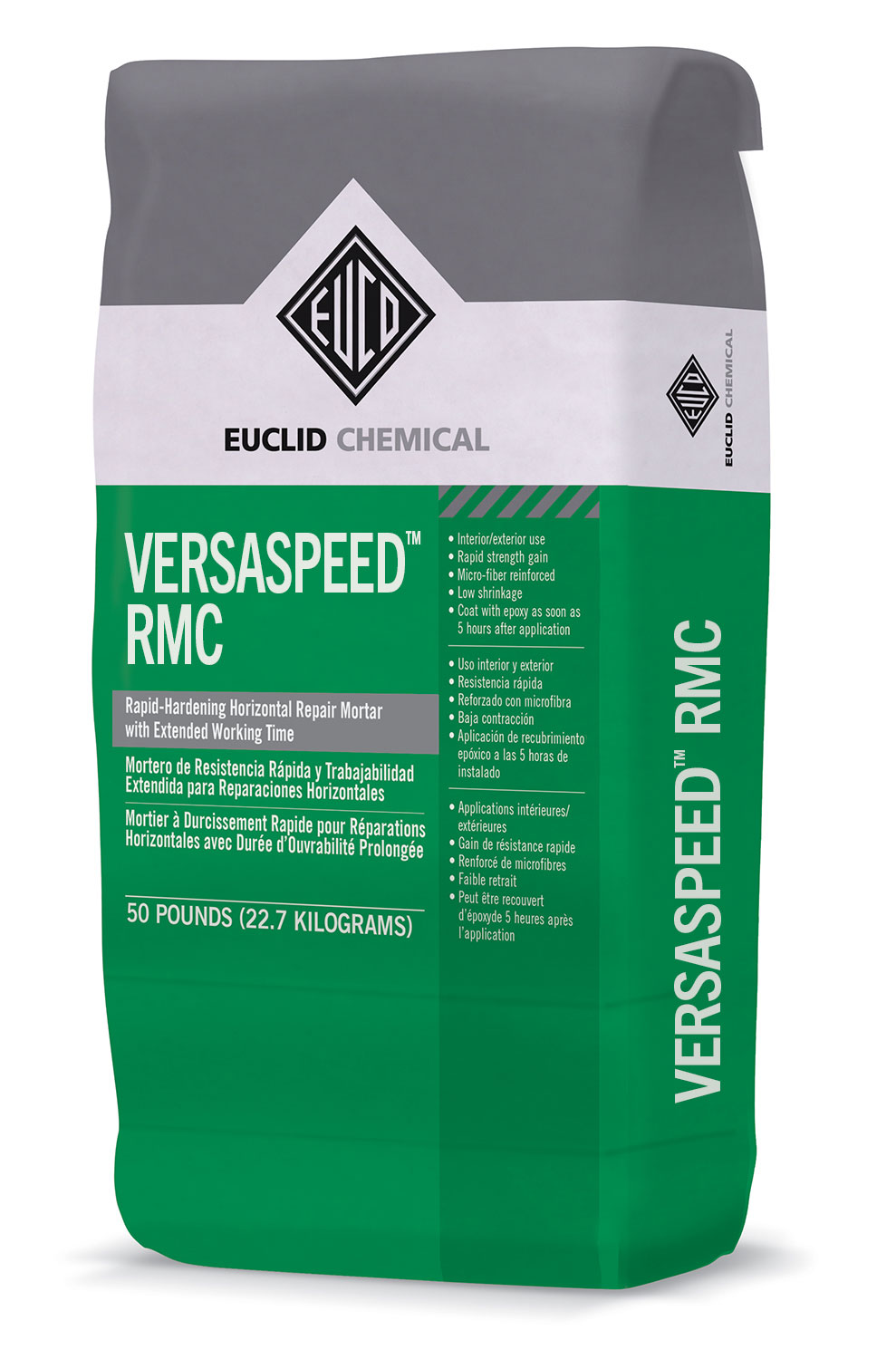
Appropriate for applications from 1 inch to full depth where a faster return to service is required, the non-metallic and non-staining material is uniquely formulated—making it great for projects that require repairs on sloped grades. Typical applications include:
- Parking decks
- Joint repairs
- Balconies
- Equipment bases
- Pavements
- Beams
- Vertical and overhead formed repairs
Pre-mixed with pea gravel, VERSASPEED RMC is ready-to-use. The product offers low permeability with excellent freeze-thaw resistance and is designed to minimize cracking. Due to its rapid hardening, this concrete repair mortar allows users to strip forms the same day, and it can be coated 5 hours after the final setting.

VERSASPEED RMC meets ASTM C928 Standard Specification for Rapid-Hardening Cementitious Materials for Concrete Repairs requirements and is packaged in 50-pound bags that yield 0.37 ft³per bag when mixed with 4.25 pints of water.
For additional rapid-hardening concrete repair mortars, check out Euclid Chemical’s full line of VERSASPEED products, including VERSASPEED 100 and VERSASPEED LS100.
About Euclid Chemical
Headquartered in Cleveland, Ohio, Euclid Chemical has served the global building market for more than a century as a leading manufacturer and supplier of specialty products and technical support services for the concrete and masonry construction industry. Euclid Chemical’s expansive product line includes admixtures, fiber reinforcement, concrete repair products, flooring materials, decorative concrete systems, and more. Learn more at www.euclidchemical.com.
# # #