The Limits of Colloidal Silica for Concrete Densification, Strength and Abrasion Resistance
By Derick Rainey, Vice President Nox-Crete Inc.
This white paper has been reproduced with approval from Nox-Crete Inc.
Executive Summary
This white paper critically examines the claims surrounding colloidal silica as a densifier for Type 1L concrete, specifically regarding its efficacy for enhancing strength, densification and abrasion resistance. While colloidal silica is widely promoted for these benefits, it often falls short compared to alternative silicate-based densifiers, such as lithium, sodium or hybrid-type silicates. The critical limitation lies in colloidal silica’s reliance on hydrogen bonding, which forms weaker, less durable connections within the concrete matrix than the covalent bonds created by other silicate-based densifying agents. As a result, colloidal silica-treated concrete may exhibit only superficial improvements in surface hardness, with reduced long-term resilience under environmental stressors.
Despite these limitations, colloidal silica does offer unique advantages when applied to concrete flat work during the finishing stage. It improves the workability of wet concrete, facilitating easier application and reducing worker effort. Additionally, colloidal silica helps control moisture loss, minimizing common defects like shrinkage and craze cracking, curling, scaling. These benefits make colloidal silica a viable option for improving surface finish quality in specific applications, even if it does not provide the deeper, more permanent densification and durability that other products achieve.
This article concludes that colloidal silica has practical applications, especially for enhancing workability and addressing early-stage finishing issues. However, it should not be considered a comprehensive solution for densification, strength or abrasion resistance in Type 1L concrete. Alternative silicate-based densifiers that establish stronger chemical bonds within the concrete are recommended for projects prioritizing long-term durability.
Introduction
Type 1L cement, also known as Portland-limestone cement (PLC), is gaining wider acceptance in North America due to its environmental and performance benefits. This cement type has become more common throughout the world as sustainable construction practices grow and the industry seeks to reduce its carbon footprint.
Type 1L can sometimes produce a “stickier” mix due to the finely ground limestone particles essential to the mixture. This can make concrete flat work harder to place and finish, especially in hot, dry conditions when concrete sets more quickly. PLC may require more water to achieve the same workability as traditional Type I cement. This can be an issue when strict water-to-cement (w/c) ratios are required for structural applications, as adding more water to the mix can affect strength and durability.
Type 1L concrete tends to have reduced water bleed compared to traditional mixtures. For Type 1L, water bleed is minimized due to the use of finer cement and limestone particles. This characteristic can make the concrete more challenging to finish, especially if it is not fluid enough to allow for a smooth, workable surface.
Treatment with a colloidal silica-based finishing aid is highly touted as the solution to these issues, making strong claims to its positive effects on extending working times and increasing durability, strength and finish quality. However, some of these claims are often overstated, exaggerating the efficacy of colloidal silicas in densifying, strengthening and resisting abrasion in concrete, especially over the long term. This article describes these claims and clarifies the actual beneficial properties of colloidal silicas in concrete finishing applications.
Overview of Colloidal Silica
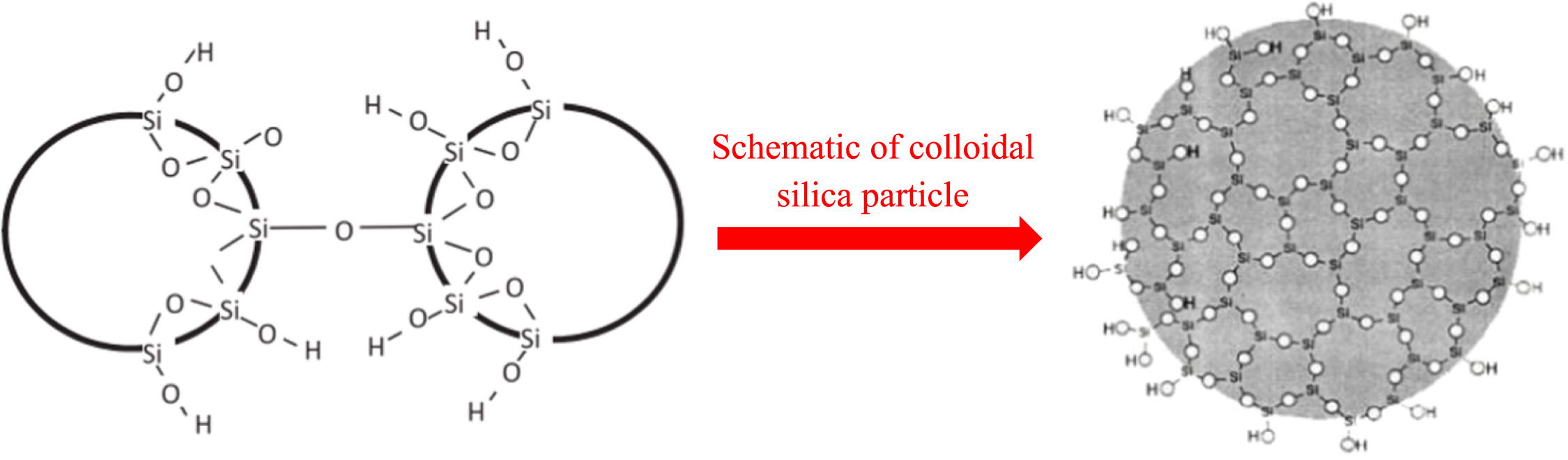
Colloidal silica is a suspension of fine, nano-sized silica particles dispersed in a liquid, typically water. The particles are between 5 and 100 nanometers in diameter, creating a stable, homogeneous mixture that is neither fully solid nor fully dissolved. This gives them an enormous amount of surface area relative to their weight. Due to its small particle size and chemical structure, colloidal silica combines with calcium hydroxide and other calcium silicate-based compounds in the concrete mix to form calcium silicate hydrate (C-S-H) gels, filling surface pores and capillaries. It slows moisture loss at the surface by binding internal water, restricting moisture transmission through the surface, and reducing premature drying. Colloidal silica is stable, non-toxic, mildly acidic to neutral pH, low-VOC and inert.
How Colloidal Silica Works
Purpose of Colloidal Silica in Concrete
Colloidal silica is valued for its ability to improve the overall handling and finishing of concrete, making it a practical choice for various applications. It can be used in concrete as an additive replacing fly ash to reduce alkali silica reaction (ASR), though its efficacy in this area is limited. However, it has been determined to be very useful when used in a topical application, where improving finish quality and managing moisture loss on concrete flat work is important. By filling micro-pores in the concrete, colloidal silica helps to create a denser surface that can reduce the risk of common issues like shrinkage and craze cracking.
Chemical Mechanism
Colloidal silica is an inert pozzolan that chemically reacts through hydrogen bonding with calcium hydroxide and other calcium-based compounds in concrete to form supplementary calcium-silicate hydrates — the backbone of concrete strength. When a colloidal silica-based finishing aid is worked into the surface of fresh concrete, it increases the amount of cement paste with only a small addition of water. Incorporating this added silica and excess water into C-S-H makes the overall cement matrix denser. The degree of cement hydration is increased, the w/cm ratio is effectively lowered, and the paste contains smaller and fewer pores.
Benefits
Colloidal silica offers several unique benefits in concrete applications, particularly during the finishing stage. These advantages make it a valuable tool in certain situations, especially where improving workability, ease of application and reduction of early surface issues are a priority.
Improved Workability and Lubrication
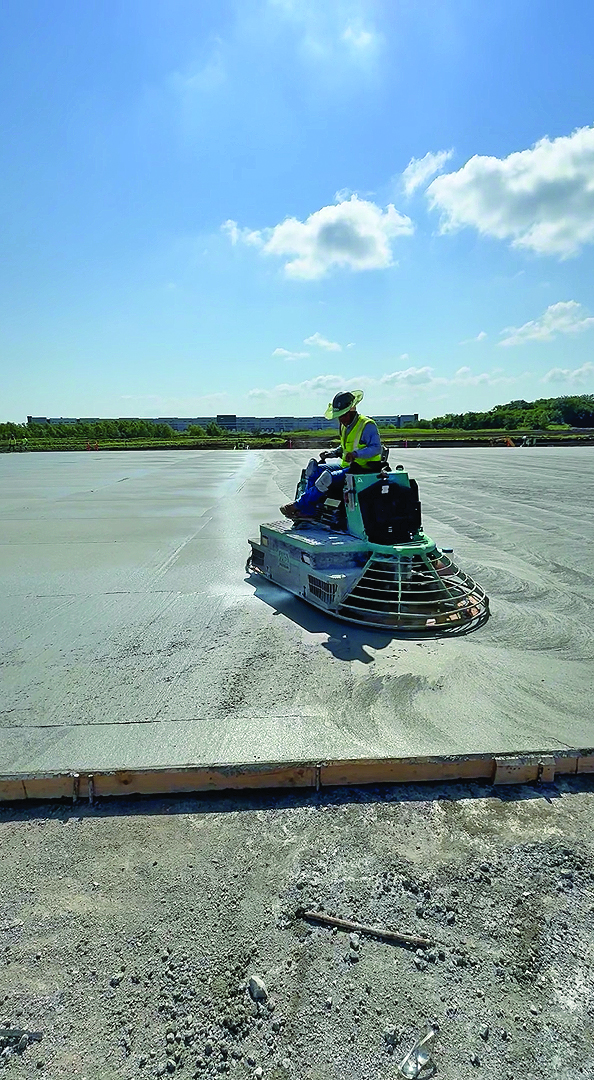
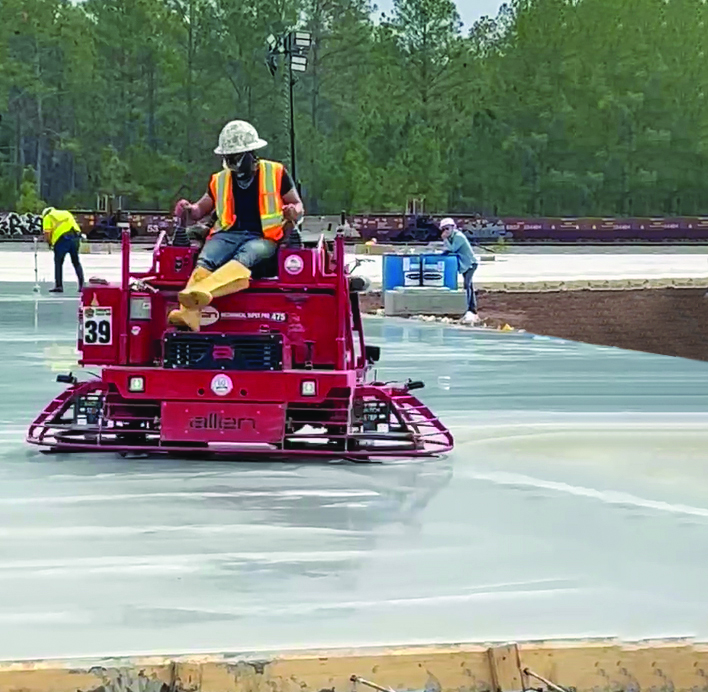
One of the notable benefits of colloidal silica is its capacity to act as a lubrication aid during troweling. When applied to wet concrete, colloidal silica particles create a ball-bearing effect, reducing friction between the trowel and the concrete surface. This effect allows for smoother, easier movement of the trowel, requiring less effort from workers and ultimately improving the efficiency of the finishing process. Colloidal silica reduces worker fatigue by lowering tool resistance and helps produce a more consistent, polished surface.
In addition to easing troweling, colloidal silica increases the workability window of wet concrete by as much as 40%. This added workability allows for more manageable spreading and leveling, which is particularly beneficial in large-scale pours where even distribution and control are essential. Colloidal silica use can also reduce tool wear over time, as workers can achieve a smooth finish with less force.
Reduced Shrinkage Cracking and Curling
Colloidal silica can enhance concrete’s resistance to shrinkage cracking and curling, two common issues that arise as concrete cures and experiences shrinkage. By filling the micro-pores near the surface, colloidal silica reduces the amount of moisture loss during the finishing process, helping to prevent the rapid drying that often leads to cracking. This moisture-retaining property helps control shrinkage and, in turn, reduces the likelihood of both visible surface cracking and internal microcracking, which can compromise concrete’s durability over time.
Curling, which occurs when the top of the concrete slab dries and shrinks more quickly than the bottom, is also minimized with colloidal silica. By slowing down surface drying, colloidal silica helps create a more uniform moisture profile throughout the slab, reducing the tension between layers that leads to curling. This is particularly beneficial in thinner or wide-spanning concrete applications, where curling can be a significant structural concern.
Protection Against Scaling and Crazing
Scaling and crazing are two surface issues that can detract from concrete’s appearance and functionality. Scaling occurs when surface layers flake off or spall due to freeze-thaw cycles, deicing chemicals or poor curing practices. By promoting a denser surface layer, colloidal silica can improve freeze-thaw durability, making the concrete more resistant to scaling. This benefit is especially useful in exterior concrete exposed to harsh weather or deicing salts.
Crazing, the formation of a network of fine hairline cracks on the surface, is often caused by rapid drying and shrinkage during the late stages of finishing and early stages of curing. Colloidal silica’s moisture-retaining properties and ability to densify the top layer help prevent crazing by ensuring that surface layers dry at a more controlled rate. This makes it a valuable tool in applications where a visually smooth, crack-free finish is desired.
Applications
Colloidal silica can be highly effective for specific concrete flatwork applications, particularly in adverse environmental conditions. When applied to surfaces exposed to direct sunlight, low humidity, high temperatures or windy environments, colloidal silica helps prevent rapid moisture loss, reducing the risk of common surface defects like shrinkage cracking and curling. This moisture retention property is essential for achieving a consistent finish in challenging outdoor conditions, which is especially valuable on commercial, industrial, warehouse and retail flooring and parking structures.
For decorative concrete applications, colloidal silica is critical in preserving appearance and minimizing surface defects, such as crazing and scaling, which can mar the finish of colored or patterned surfaces. Promoting uniform finishing ensures a consistent look, which is vital for decorative concrete projects where aesthetics are a priority. Additionally, colloidal silica’s benefits extend to interior slabs, where reduced dusting, lower vapor transmission and improved resistance to abrasion and liquid penetration enhance the longevity and functionality of exposed concrete floors or surfaces designed to be covered. These properties make colloidal silica an optimal choice for various flatwork applications that require both durability and a high-quality, defect-free finish.
Limitations of Colloidal Silica
Colloidal silica is often marketed as an effective solution for concrete densification, increased strength and improved abrasion resistance. However, it frequently falls short of these claims, particularly in comparison to other concrete densifiers like lithium and sodium silicate-based products. The underlying reasons relate to the physical and chemical interactions of colloidal silica within the concrete and its limited bonding strength.
Weaker Chemical Bonds
Colloidal silica is often marketed for concrete densification due to its ability to penetrate and fill micro-pores, creating a denser surface. However, its effectiveness is limited compared to other densifying products when it comes to providing long-term strengthening and bonding, and this is mainly due to the nature of the bonds it forms within the concrete matrix.
Covalent vs. Hydrogen Bonds
Silicate-based densifiers create covalent chemical bonds with the calcium hydroxide in concrete to form C-S-H, the primary component that strengthens and hardens concrete. For maximum durability, densifiers ideally form covalent bonds, which are strong and stable due to the sharing of electrons between atoms. These bonds are robust against environmental stressors like moisture and temperature changes, making them ideal for concrete facing various weather conditions and loads over time.
Colloidal silica, however, relies primarily on hydrogen bonding. Hydrogen bonds are generally weaker than covalent bonds because they are based on attractions between polar molecules rather than the sharing of electrons. Consequently, colloidal silica lacks the chemical foundation to create strong, enduring C-S-H bonds, leading to a relatively weak interaction within the concrete matrix. Over time, these hydrogen bonds may break down under conditions of moisture or stress, diminishing the long-term performance of the treatment.
Silicate-based densifiers form covalent bonds with concrete, producing a more stable and permanent C-S-H structure. This more robust bonding results in a more durable and resilient concrete surface, as covalent bonds are less susceptible to breaking under environmental stress. As a result, while colloidal silica can offer short-term densification, it often does not provide the same level of strengthening and durability as products capable of forming covalent bonds.
Densification Issues
Effective densification in concrete relies on the depth and permanence of the densifier’s integration with the concrete’s pore structure. Colloidal silica particles are typically larger than those in lithium or sodium silicate-based products, limiting their ability to penetrate deeply into the concrete matrix. This shallow penetration means that colloidal silica can only densify the uppermost surface layers, which can wear down more quickly over time. Conversely, silicate-based densifiers can penetrate deeper, promoting densification throughout a more significant portion of the concrete matrix, resulting in greater structural integrity over the life of the concrete.
Due to its limited penetration and shallow action, colloidal silica cannot achieve the same level of pore filling as other densifiers, potentially allowing more water infiltration and weakening over time. Colloidal silica densification tends to quickly wear down over time, especially under mechanical stress or exposure to moisture, freezing and thawing. This can lead to premature deterioration in high-wear applications, such as industrial floors, driveways and exterior pavements.
Abrasion Resistance
Abrasion resistance is critical for concrete surfaces that undergo heavy forklift or other vehicle loads, frequent foot traffic, or environmental exposure. Abrasion resistance depends heavily on the densifier’s ability to bond firmly and uniformly within the concrete matrix. Since colloidal silica’s bonds are relatively weak, the treated surface often lacks the durable, abrasion-resistant quality that other densifiers provide.
Colloidal silica densifies only the topmost layer of the concrete due to its limited penetration depth. This initial improvement in hardness and abrasion resistance on the surface may appear beneficial right after application. However, this dense layer wears down more quickly than a deeply densified surface. As surface layers erode under traffic, the untreated layers beneath are exposed, rapidly reducing abrasion resistance. Lithium and sodium silicate-based densifiers develop a harder, more resilient surface that can withstand wear better. Their chemical reaction produces a denser, more integrated C-S-H structure, making the concrete less prone to abrasion.
Concrete surfaces exposed to exterior environmental conditions, such as freeze-thaw cycles, rain and deicing chemicals, are prone to abrasion and degradation. Colloidal silica’s shallow penetration makes it less able to protect concrete in these challenging environments. As the surface layer wears down due to freeze-thaw cycles or chemical exposure, the untreated layers below are more easily affected by environmental stressors. This can lead to scaling, flaking, and increased abrasion susceptibility. Silicate-based densifiers are better suited to these conditions because they penetrate deeper and create a more robust, integrated surface layer. This stronger layer can better resist environmental abrasion, making it more durable and reducing the need for frequent maintenance or re-application.
Conclusion
In conclusion, while colloidal silica presents certain advantages for concrete applications, particularly during the finishing stage, its limitations as a densifier for Type 1L concrete become evident when assessed against competing silicate-based densifier products. This white paper has highlighted that colloidal silica, despite its widespread promotion, often fails to deliver on its claims regarding enhanced strength, densification and abrasion resistance. The reliance on hydrogen bonding within the concrete matrix results in a weaker, less durable interaction than the covalent bonds formed by lithium and sodium silicate-based densifiers.
Colloidal silica may provide superficial surface hardness and initial workability improvements, yet these benefits do not translate into long-term resilience or structural integrity. As discussed, its shallow penetration limits its effectiveness in achieving deeper densification, ultimately leaving the concrete susceptible to wear and environmental stressors. Alternative silicate-based densifiers applied after concrete curing combined with colloidal silicas applied during the finishing process should be considered for projects that demand lasting durability and performance to ensure the concrete’s strength and abrasion resistance meet the necessary standards. Therefore, while colloidal silica can be a valuable tool in specific contexts, it is essential to recognize its constraints and select the appropriate densifier for specific project requirements to achieve optimal concrete performance.